Safety first. This is general information, not a substitute for hands-on instruction. Follow your range's rules and your firearm's manual, and consider a certified safety course. See our gun safety rules.
The chart, as far as it goes
Here is every thickness figure we could verify on a maker's own page for the steel targets this site covers. We will not fill the gaps with figures from forums.
| Maker and line | Published thickness | Maker's stated use |
|---|---|---|
| Caldwell AR500 1/4" line | 1/4 in | Named in the product titles: "Rimfire/Handgun" |
| Champion Center Mass AR500 | "3/8" Steel" | Sold in Champion's centerfire steel category |
| Champion Centerfire Hanging Gong | Not stated on the product page | "Built to withstand centerfire calibers" (maker's claim) |
| Do-All Outdoors 8 in AR500 gong | Not stated on the product page | "AR500 rated", described for the long-range rifle shooter |
That is the honest state of the published data: one maker names a thickness in the product line itself, one prints it in the description, and two publish a grade and an intended use without a thickness. If a page you are reading gives you a confident thickness chart for every steel target on the market, ask where it came from.
What AR500 actually means
AR500 is an abrasion-resistant steel specification. The number refers to hardness rather than to thickness, which is the first thing to get straight: AR500 is what the plate is, not how thick it is. A quarter-inch AR500 plate and a three-eighths AR500 plate are the same steel at different thicknesses, and they behave very differently when hit.
It also matters that AR500 is a material designation and not a safety certification for shooting. Nobody certifies a plate as safe for a given cartridge — what a responsible maker does instead is publish limits, and that is where the next section comes in.
Bench & Berm does not shoot steel for testing and publishes no performance figures of its own. Everything here is a maker's published statement, linked in Sources.
Thickness by what you shoot
With that caveat in place, the market does divide along two thicknesses, and the division is visible in how makers name their products.
- 1/4 inch — rimfire and handgun. Caldwell does not leave this to inference; it names the line "AR500 1/4" Rimfire/Handgun" and sells plates, bowling pins, prairie dogs and soda-can targets under it. That is a maker telling you in the product title what the thickness is for.
- 3/8 inch — centerfire rifle. Champion publishes "3/8" Steel" for its Center Mass AR500 targets, which sit in its centerfire steel category.
The logic is straightforward even without a lab: a rifle bullet arrives with far more energy than a handgun bullet and will crater or hole thin steel that a 9mm would only dimple. Thicker steel buys service life against energy. It does not buy permission to shoot something the maker has excluded.
If you only shoot a handgun, our best steel targets for beginners page is the place to start, and paper vs steel targets argues the case for waiting on steel entirely.
The spec that matters more
Here is the thing that should change how you shop. Champion's published steel target warnings do not set a thickness-by-caliber rule at all. They set distance rules by ammunition class, with a velocity and energy ceiling:
- "15 yards is the minimum shooting distance when using non-magnum class handgun, supersonic .22LR rimfire, and shotgun birdshot ammunition."
- "50 yards is the minimum shooting distance when using magnum class handgun ammunition, and shotgun slugs."
- "100 yards is the minimum shooting distance when using standard rifle ammunition under 2,500 fps upon impact and less than 3000 ft/lb of energy upon impact", and 250 yards for magnum rifle ammunition within the same limits.
Read the rifle line carefully. The limit is not a caliber and it is not a plate thickness — it is a velocity and an energy figure at impact. That is the number that decides whether a plate survives and whether the fragments go where they should. Our steel target safe distance page works through the distance side in full.
What makers do not publish
Being explicit about the gaps is more useful than papering over them:
- Thickness, often. Two of the four lines in the table above do not state one. Champion's hanging gong publishes neither grade nor thickness on its product page, and names the Center Mass line as the AR500 one.
- Brinell hardness. AR500 implies a hardness range, and we did not find a maker publishing a measured hardness figure for a shooting target.
- Service life. No maker publishes how many rounds a plate takes before it is finished, because it depends entirely on what you shoot at it and from how far.
- A thickness-by-caliber table. The makers themselves do not publish one. The ones circulating online are somebody's inference.
Where a page we write needs a number nobody publishes, we say it is not published. That is the rule across this site, and steel targets are where it bites hardest.
Distance and angle beat thickness
If you are choosing between a thicker plate and a longer distance, take the distance. Champion's own warnings make the hierarchy clear: the minimum distances are stated as absolutes by ammunition class, with no thickness exemption. There is no plate you can buy that makes fifteen yards safe for a rifle.
The mounting angle is the second half, and it is the part people improvise. Champion recommends the shooting face angled 10 to 20 degrees down from vertical, which directs splatter into the ground rather than back up the range. A plate hung on chain so it can swing, angled down, at the published distance, is the setup the warnings describe. Our best target stands page covers the stands built for it, including Caldwell's dedicated Ultimate Steel Target Stand, and DIY target stand covers the 2x4 route for paper.
What actually destroys steel
Thickness is a response to energy, but the thing that ruins plates fastest is not energy at all — it is the wrong projectile. Champion publishes an explicit exclusion list for its steel: it is not rated for sub-sonic rimfire, steel shot, non-lead pellets or BBs, steel core, steel jacketed, bi-metal jacketed, incendiary, armor piercing, tracer, A-frame style, solids, solid brass or solid copper bullets.
Two of those are common and surprising. Steel-core and bi-metal-jacketed ammunition — much cheap imported rifle ammunition — will pit AR500 of any thickness, because the penetrator is harder than the plate. Solid copper and solid brass bullets, often bought as premium hunting ammunition, are also excluded.
So before you buy a thicker plate because your last one got holed, check what you were shooting at it. Buying up in thickness will not fix a steel-core problem. Our types of shooting targets page covers what else is available, including the self-healing polymer targets that handle some of these cases better than steel.
What to buy
Our picks for this
Steel we will recommend, and the stand for it
Our gate for any steel pick is that the maker publishes a minimum safe distance. These do. Two of them also tell you what the steel is not rated for, which is rarer and more useful.
- ChampionNo image
Best first steel target (outdoor ranges)
Champion Center Mass AR500 Steel Target
5.1/10ResearchedThe pick: Champion names it AR500, publishes 3/8 inch steel for the line, and publishes minimum distances and a mounting angle rather than leaving you to guess.
Check price · Amazon#ad · Price as of November 3, 2026 · How we make money for the link to Champion Center Mass AR500 Steel Target
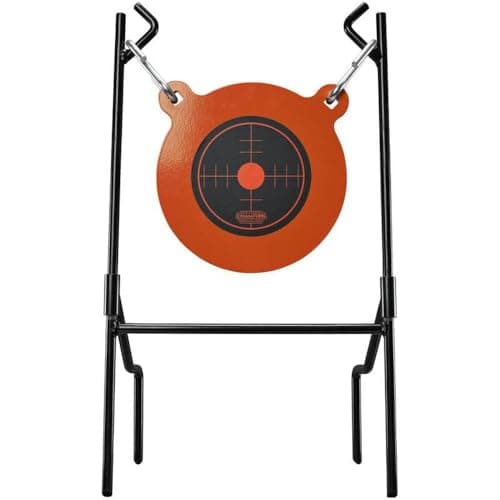
Champion steel gong for centerfire
Champion Centerfire Hanging Gong
4.6/10ResearchedCovered by the same published Champion warnings, and built to withstand centerfire calibers by Champion's own account - but the page states no grade or thickness, which we flag rather than fill in.
$135.16Amazon#ad · Price as of November 3, 2026 · How we make money for the link to Champion Centerfire Hanging Gong
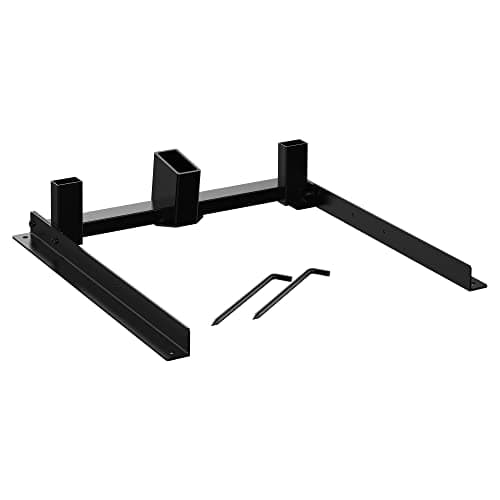
Best stand for steel or paper on lumber
Caldwell Ultimate Steel Target Stand
7.3/10ResearchedThe angle and the hang are what make steel safe, and this is a stand built for AR500 plates rather than for cardboard.
$44.99Amazon#ad · Price as of November 3, 2026 · How we make money for the link to Caldwell Ultimate Steel Target Stand
Buying rules
- Buy the thickness the maker names for your firearm. A quarter inch where the maker says rimfire and handgun; three eighths where the maker says centerfire.
- Do not buy steel you cannot shoot at the published distance. Fifteen yards minimum for non-magnum handgun, one hundred for standard rifle, in Champion's warnings. Indoor ranges are out entirely.
- Check the exclusion list against your ammunition. Steel core, bi-metal, solid copper and solid brass are all excluded by Champion.
- Angle the face down, 10 to 20 degrees from vertical. This is a published instruction, not a preference.
- Treat a missing thickness as missing information. Ask the maker, or buy the product that publishes it.
- Wear eye protection, always. Steel produces splatter by design. Our ballistic shooting glasses page is for exactly this case, and the NSSF rules of firearm safety put knowing your target and what is beyond it first.
How we scored this
Every pick, scored on numbers you can check
Every pick here is labeled Researched: we compiled each maker's published specs (the EPA-labeled NRR on hearing protection, the Z87+ mark on glasses), read the manuals, checked the standards behind them, and scored everything on a public rubric. Every figure links to where it came from, and marketing claims are labeled “maker's claim,” so you can see exactly why a pick ranks where it does.
Scores are editorial judgments built from that documented research. Commissions never set a score or decide a pick. The rubric and its weights are published.
Questions
Common questions
How thick should an AR500 steel target be?
Is 1/4 inch AR500 enough for a rifle?
Does AR500 mean a thickness?
What ammunition should you not shoot at AR500 steel?
Why don't steel target makers publish thickness?
Does a thicker plate let me shoot closer?
Where this comes from
Sources
- Champion, Center Mass AR500 Steel Targets product page (3/8 in steel), accessed 2026-10-17
- Champion, steel target warnings (minimum distances, mounting angle, exclusions), accessed 2026-10-17
- Champion, Centerfire Hanging Gong product page, accessed 2026-10-17
- Caldwell, AR500 steel target category (AR500 1/4 in Rimfire/Handgun line), accessed 2026-10-17
- Caldwell, Ultimate Steel Target Stand product page, accessed 2026-10-17
- Do-All Outdoors, 8 in AR500 steel gong product page, accessed 2026-10-17
- NSSF, Rules of Firearm Safety
Specs come from each maker's own pages and data sheets (linked on every product); ratings like NRR and Z87+ are explained from the standards and agencies behind them. Prices are set by Amazon and change often, so the buy button always takes you to the current one. Where a figure isn't published, we say so. Read the full method.