Safety first. This is general information, not a substitute for hands-on instruction. Follow your range's rules and your firearm's manual, and consider a certified safety course. See our gun safety rules.
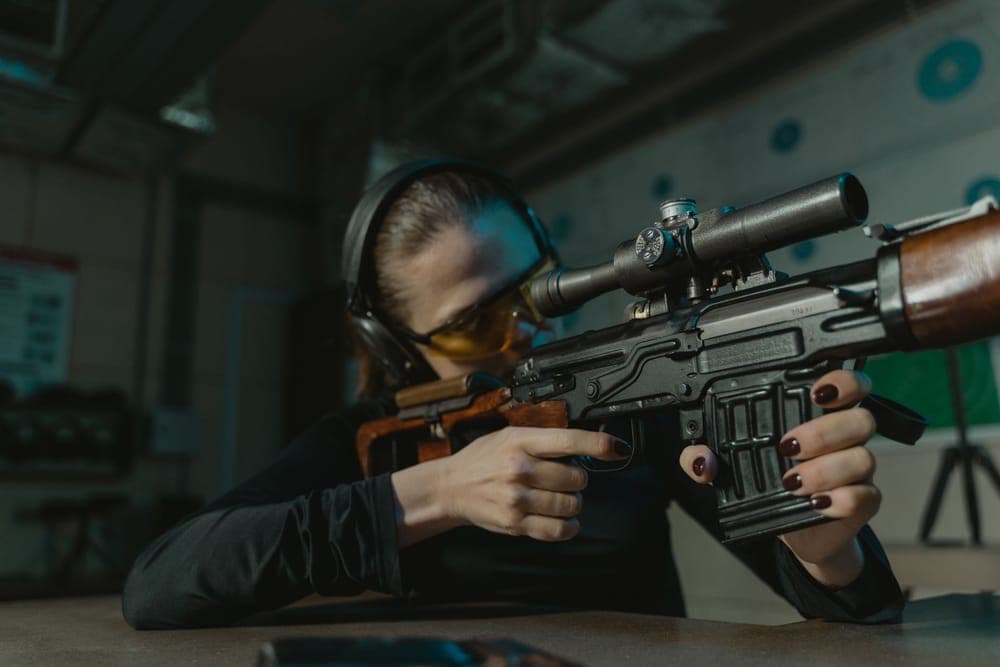
Gun safety comes down to a short list of habits that never switch off: treat every gun as loaded, point it somewhere safe, keep your finger off the trigger, and know what you're shooting at and what's behind it. Those four are the core of the gun safety rules. The NRA and the NSSF (the National Shooting Sports Foundation) each publish a longer list built on the same ideas.
This page quotes those rules word for word from the pages that publish them, with one plain-English line on each. We're not affiliated with either organization, and a web page is no substitute for hands-on instruction. What it can do is make sure you walk into your first range visit, or your first safety class, already knowing the words the staff will use.
The 4 rules of gun safety most people mean
When people talk about "the four rules," they usually mean some version of this list. The NSSF's beginner site, Let's Go Shooting, publishes it on its New Shooters page:
- "Treat all the firearms as if they are loaded". Let's Go Shooting explains: "By treating every firearm as if it is loaded, a habit of safety is developed." In plain English: never decide a gun is empty because someone told you so, or because you think you checked it earlier. Handle it as if it could fire, every single time.
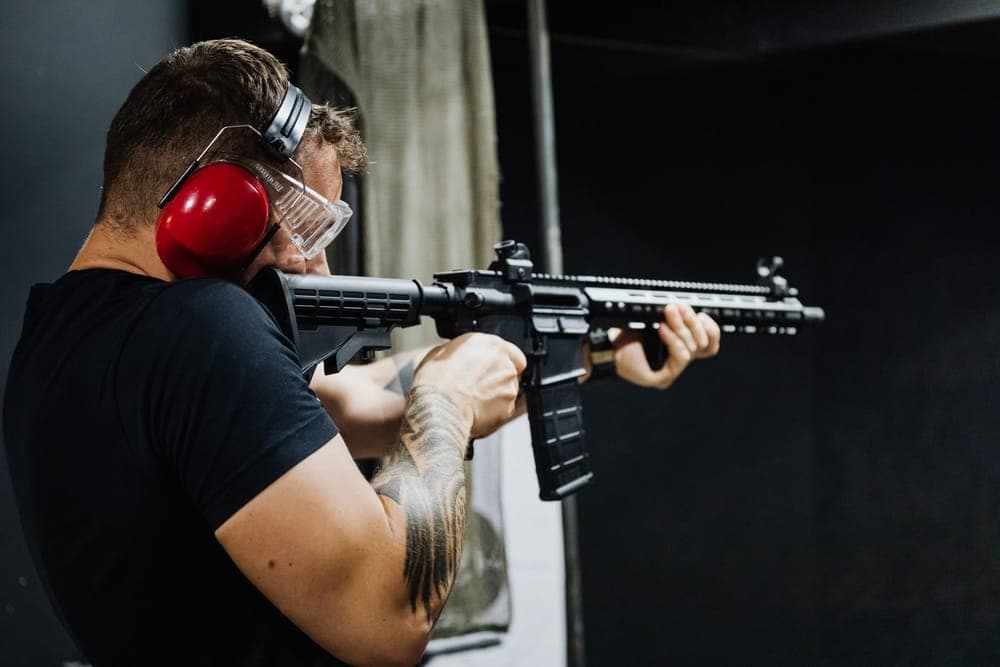
- "Always keep the firearm pointed in a safe direction". Their definition: "A 'safe direction' means that the gun is pointed so that even if an accidental discharge occurred, it won't cause an injury." At a range that almost always means downrange, toward the backstop or berm. This is what instructors call muzzle discipline: knowing where the muzzle (the open end of the barrel) points at every moment, including when you pick the gun up, set it down or turn to talk to someone.
- "Always keep your finger off the trigger". The detail: "Rest your finger outside the trigger guard or along the side of the gun until you are actually ready to fire." In plain English: your finger lies straight along the side of the gun until your sights are on the target and you've decided to shoot.
- "Always know your target and what is beyond". In plain English: a bullet doesn't stop because it missed or because it passed through the target. Know what's behind it, which at a range means the backstop, and never shoot at anything you haven't clearly identified.
The rules overlap on purpose. If one of them slips for a second, the others still keep anyone from getting hurt: a gun you treat as loaded, pointed somewhere safe, with your finger off the trigger, can't cause an injury.
The NRA's gun safety rules
The NRA publishes its rules on a dedicated page, NRA Gun Safety Rules. It opens with three rules it calls "The fundamental NRA rules for safe gun handling". Here they are with the NRA's own explanation and ours.
1. "ALWAYS Keep The Gun Pointed In A Safe Direction"
The NRA: "This is the primary rule of gun safety. Common sense dictates the safest direction, depending on different circumstances."
What it means: if you only remember one rule, remember this one. The safe direction changes with where you are. On the firing line it's downrange. Everywhere else, it's wherever an accidental shot couldn't injure anyone.
2. "ALWAYS Keep Your Finger Off The Trigger Until Ready To Shoot"
The NRA: "When holding a gun, rest your finger alongside the frame and outside the trigger guard. Until you are actually ready to fire, do not touch the trigger."
What it means: treat the trigger guard as a boundary. Your finger goes inside it only when you've decided to fire, and comes straight back out when you stop, when you lower the gun, or when anything around you changes.
3. "ALWAYS Keep The Gun Unloaded Until Ready To Use"
The NRA: "If you do not know how to open the action or inspect the chamber(s), leave the gun alone and get help from someone who does."
What it means: a gun gets loaded at the firing line, when it's time to shoot, and not before. And the NRA's advice for a beginner is refreshingly plain. If you don't yet know how to check whether a gun is loaded, don't guess: ask the range staff or an instructor to show you on that gun, and read its manual.
The NRA's additional rules
The page goes on: "When using or storing a gun, always follow these additional NRA rules:"
- "Know your target and what is beyond." The same idea as the fourth rule above: identify what you're shooting at and what's behind it before you fire.
- "Know how to use the gun safely." Read the manual for your specific gun before you shoot it, and have someone qualified walk you through how it works.
- "Be sure the gun is safe to operate." If something about the gun looks, sounds or feels wrong, stop and get it checked before you shoot it again.
- "Use only the correct ammunition for your gun." Your gun's manual says what it's made to fire. If the ammunition doesn't match exactly, it doesn't go in the gun.
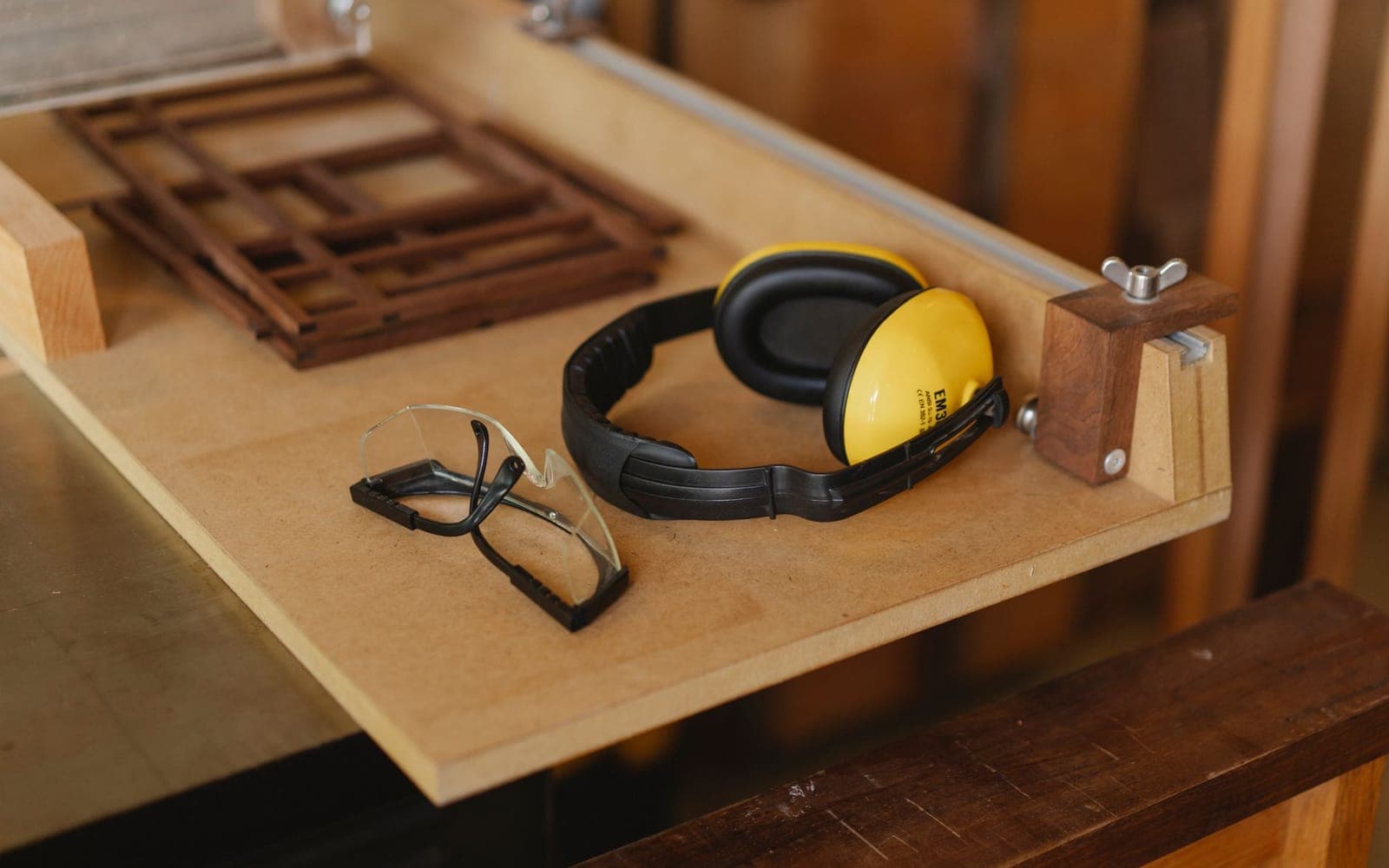
- "Wear eye and ear protection as appropriate." The NRA explains: "Guns are loud and the noise can cause hearing damage. They can also emit debris and hot gasses that could cause eye injury. For these reasons, shooting glasses and hearing protection should be worn by shooters and spectators." Note the last word: spectators too. If ear pro (hearing protection) is new to you, start with what NRR you need for shooting; for eyes, our explainer on Z87 vs Z87+ safety glasses covers the marking to look for.
- "Never use alcohol, over-the-counter drugs or prescription drugs before or while shooting." Shooting takes clear judgment and steady hands. Anything that dulls either one waits until after. If you take a medicine and aren't sure, talk to your doctor.
- "Store guns so they are not accessible to unauthorized persons." Covered in the storage section below.
- "Be aware that certain types of guns and many shooting activities require additional safety precautions." Different guns and different kinds of shooting come with their own rules. Your range and your manual will tell you what they are.
NSSF's 10 rules of safe gun handling
The NSSF's safety page, Firearm Safety: 10 Rules of Safe Gun Handling, is the longer list. The ten headlines below are quoted from that page (we rechecked the wording on September 19, 2026), each with a line from NSSF's own text and a plain-English note.
- "Always Keep the Muzzle Pointed in a Safe Direction". NSSF: "This is the most basic safety rule." It's first on every list for a reason.
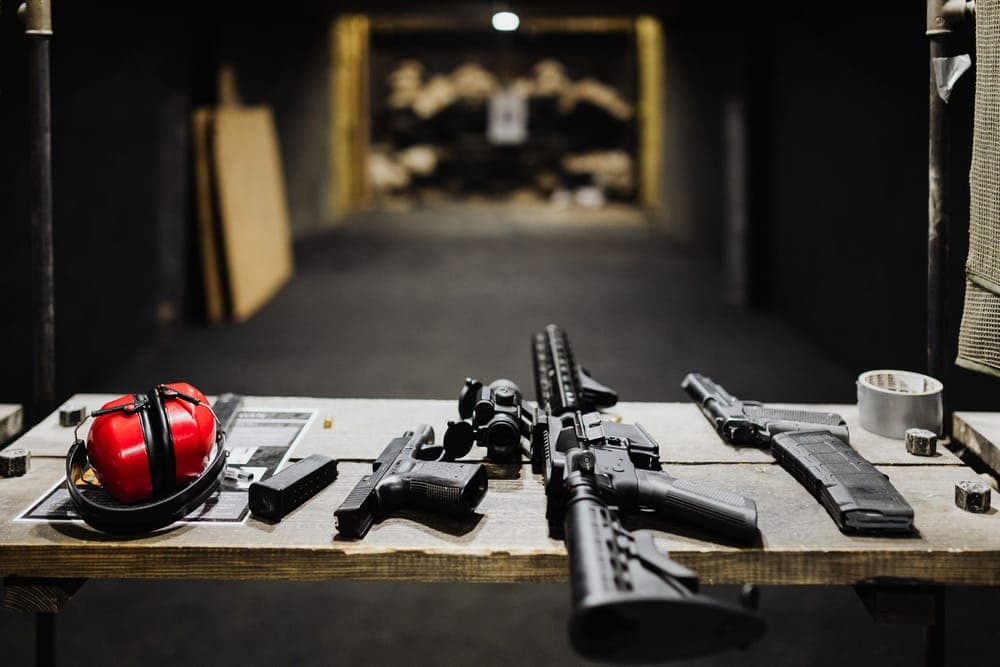
- "Firearms Should Be Unloaded When Not Actually in Use". NSSF: "Firearms should be loaded only when you are in the field or on the target range or shooting area, ready to shoot." In plain English: you load at the firing line, not in the parking lot, and the gun is unloaded again before it leaves the line.
- "Don't Rely on Your Gun's 'Safety'". NSSF: "Treat every gun as though it can fire at any time." A safety is a mechanical part, and NSSF warns it "can become inoperable at the worst possible time." It's a backup, never a stand-in for the first rules.
- "Be Sure of Your Target and What's Beyond It". NSSF: "No one can call a shot back." Once you fire, where the bullet goes is out of your hands.
- "Use Correct Ammunition". NSSF tells shooters to "Read and heed all warnings, including those that appear in the gun's instruction manual and on the ammunition boxes."
- "If Your Gun Fails to Fire When the Trigger is Pulled, Handle with Care!". NSSF: "If this occurs, keep the muzzle pointed in a safe direction." Range rules spell out what comes next. Georgia's state ranges, for example, tell the shooter to keep the firearm pointed downrange and "advise all persons at the firing line of the malfunction" ( Georgia DNR range rules). At a staffed range, that means getting the range safety officer's attention and letting them help.
- "Always Wear Eye and Ear Protection When Shooting". NSSF: "All shooters should wear protective shooting glasses and some form of hearing protectors while shooting."
- "Be Sure the Barrel is Clear of Obstructions Before Shooting". NSSF: "Before you load your firearm, open the action and be certain that no ammunition is in the chamber or magazine. Be sure the barrel is clear of any obstruction." If you don't know how to check yet, that's a question for the range staff or your instructor.
- "Don't Alter or Modify Your Gun, and Have Guns Serviced Regularly". NSSF warns that an alteration "can make the gun dangerous and will usually void any factory warranties." Regular care matters too; our guide to how often to clean your gun covers what makers recommend.
- "Learn the Mechanical and Handling Characteristics of the Firearm You are Using". NSSF: "Not all firearms are the same." A rental or a friend's gun is a new gun to you, so ask how it works before you shoot it.
Where the lists agree
Three organizations, three lists, and the same handful of ideas. Here's where each idea sits on each list:
| The idea | NRA | NSSF 10 rules | Let's Go Shooting |
|---|---|---|---|
| Muzzle pointed in a safe direction | Fundamental rule 1 | Rule 1 | Rule 2 |
| Finger off the trigger until ready | Fundamental rule 2 | Not one of the 10 headlines | Rule 3 |
| Treat it as loaded; unloaded until use | Fundamental rule 3 | Rules 2 and 3 | Rule 1 |
| Know your target and what's beyond | Additional rule | Rule 4 | Rule 4 |
| Correct ammunition | Additional rule | Rule 5 | Not listed |
| Eye and ear protection | Additional rule | Rule 7 | Not listed |
| Know the gun you're using | Additional rule | Rule 10 | Not listed |
| Secure storage | Additional rule | Rule 2 (body text) | Not listed |
Learn the first four rows and you know the core of every list. The rest is how those four apply to ammunition, protection, storage and the specific gun in your hands.
How the rules show up at the range
At a range, the rules turn into range rules and range commands. Every range writes its own, so treat these as examples from state-run ranges rather than universal law:
- Florida's FWC: "Always keep your gun unloaded until you are at the firing line and the range is declared 'HOT.'" and "Firearms must be safe (unloaded - magazines removed and actions opened) when entering or exiting the range." (FWC range safety rules). That's the unloaded-until-use rule in range form.
- Mississippi's MDWFP: "Keep your finger off of the trigger, outside of the trigger guard, until ready to fire, after the range has been declared 'hot.'" (MDWFP shooting facility rules).
- Florida's FWC again, on the command that overrides everything: "Cease Firing: Immediately stop shooting when anyone calls 'Cease firing.'"
- Texas Parks and Wildlife's hunter education rules: "While shooting at the range, you must wear hearing and eye protection at all times." ( TPWD shooting safety rules).
Our guide to shooting range etiquette and range commands explains what each command means and what to do when you hear it, and your first time at a shooting range walks through a whole visit, from check-in to cleanup.
Safe storage and cleaning: the rules that follow you home
Some of the rules are about what happens after the range. The NRA's is short: "Store guns so they are not accessible to unauthorized persons." NSSF's second rule adds the detail: "When not in use, firearms and ammunition should be secured in a safe place, separate from each other."
In plain English: locked away from anyone who shouldn't have access, especially children and visitors, with the ammunition stored separately. What that looks like depends on your home and who lives in it. If you're not sure what your state expects, check its official guidance.
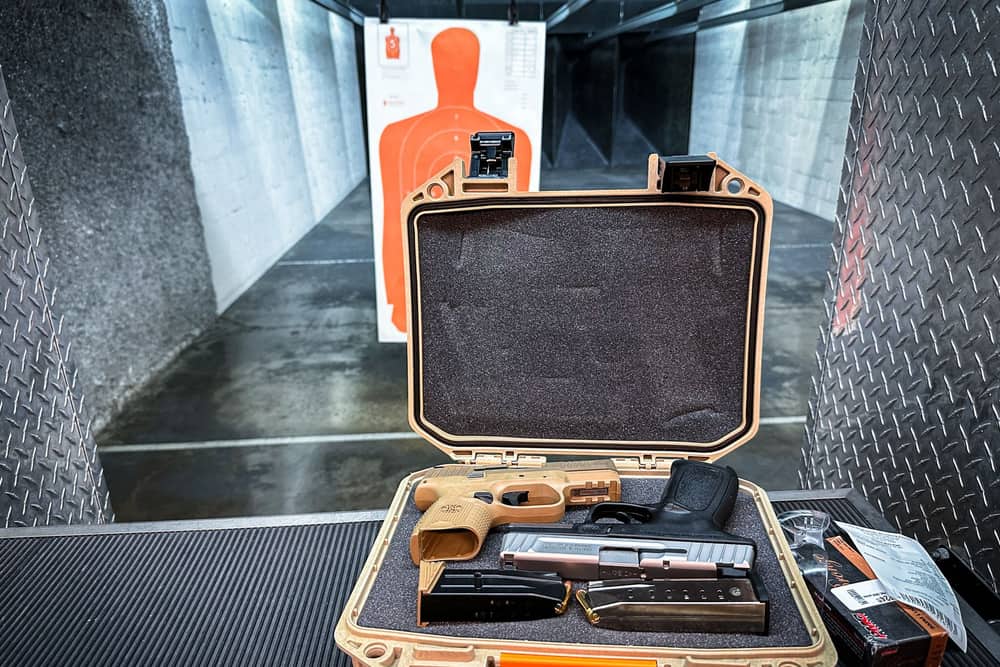
Getting to and from the range is part of it too. NSSF puts it bluntly: "There is never any excuse to carry a loaded gun in a scabbard, a holster not being worn or a gun case." Our guide on how to transport a gun to the range covers the federal basics and why rules vary by state, and our look at lockable pistol cases explains what to look for in a case you can lock.
The same care applies at the cleaning table. The NRA's cleaning advice: "Before cleaning your gun, make absolutely sure that it is unloaded. The gun's action should be open during the cleaning process. Also, be sure that no ammunition is present in the cleaning area." Our step-by-step on how to clean a pistol starts with exactly that.
Take a hands-on safety course
Reading the rules is step one. Practicing them with a qualified person watching is step two, and it's the step a web page can't do for you.
- Let's Go Shooting notes that "Classes and clinics such as NSSF's First Shots abound for first-time firearms owners".
- It also advises: "On your first visit to any range, ask the range manager, safety officer or counter staff to go over the range rules and fees. If you're new to shooting, let them know so they can guide you through the appropriate safety orientation."
- Some ranges require training before you can shoot there at all. Connecticut's Glastonbury state range, for example, says shooters "will be required to show proof of firearms training, such as a Conservation/Education Firearms Safety certificate or equivalent", and lists other documents it accepts (CT DEEP, Glastonbury range).
- State hunter education programs teach safe handling too. Texas Parks and Wildlife publishes its shooting safety rules as part of its hunter education program.
Tell the instructor you're brand new. That's exactly who beginner classes are for, and nobody running one expects you to know anything yet.
Your next step
This page deliberately carries no product picks: the rules shouldn't share space with a shopping list. When you're ready to put a kit together, our guide to the best shooting range gear for beginners covers the ear pro, eye pro, bag, targets and cleaning gear a first-timer actually needs, and what to bring to the shooting range turns it into a checklist you can pack from.
Questions
Common questions
What are the 4 rules of gun safety?
What is the most important gun safety rule?
What does "treat every gun as if it is loaded" mean?
What is muzzle discipline?
Can you rely on a gun's safety?
Do you need a safety course before going to a shooting range?
Where this comes from
Sources
- NRA, NRA Gun Safety Rules, accessed 2026-09-19
- NSSF, Firearm Safety: 10 Rules of Safe Gun Handling, accessed 2026-09-19 (headlines rechecked 2026-09-19)
- NSSF Let's Go Shooting, New Shooters, accessed 2026-09-19
- Florida Fish and Wildlife Conservation Commission, Range Safety Rules, accessed 2026-09-19
- Mississippi Dept. of Wildlife, Fisheries, and Parks, Shooting Facility Rules & Regulations, accessed 2026-09-19
- Georgia DNR Wildlife Resources Division, Firearm Range Rules, accessed 2026-09-19
- Texas Parks & Wildlife Dept., Shooting Safety Rules (hunter education), accessed 2026-09-19
- Connecticut DEEP, Glastonbury Shooting Range, accessed 2026-09-19
We haven't tested the gear on this page and we don't pretend to. Specs come from each maker's own pages and data sheets (linked on every product); ratings like NRR and Z87+ are explained from the standards and agencies behind them. Prices are set by Amazon and change often, so we don't print them. Where a figure isn't published, we say so. Read the full method.