Not medical advice. This page shares general guidance from the public-health sources linked in the text. If you're worried about your hearing or lead exposure, talk to a doctor.
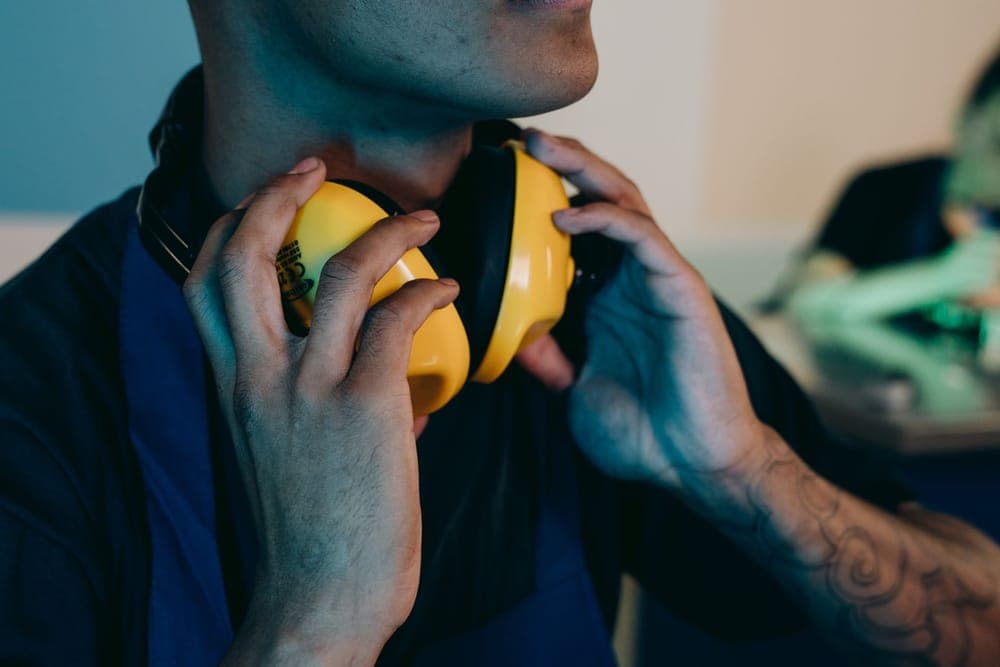
Every pair of earmuffs and every box of earplugs sold in the United States carries a Noise Reduction Rating, a single number in decibels. It is the only comparison figure printed on the package, so it is the number every new shooter fixates on. It is worth understanding what it measures, because the rules that created it are unusually blunt about what it does not.
This page explains the rating in plain language, using the federal rule that mandates it and the agencies that interpret it. If you want the ranked picks instead, they are in best hearing protection for shooting.
The short version
- NRR is a laboratory-derived estimate, required on the package by the EPA, measured with steady noise, not gunshots.
- The scale is narrow. The EPA requires the label to state that the range of ratings "is approximately 0 to 30 (higher numbers denote greater effectiveness)." A handful of foam plugs are rated above that.
- OSHA does not use the printed number as-is. Its workplace math subtracts 7 dB from it before estimating what reaches the ear.
- For gunfire specifically, the NIOSH-authored sources below recommend wearing earplugs and earmuffs together rather than relying on one high number.
What the NRR actually is
The rating comes from an EPA regulation, 40 CFR Part 211 Subpart B, which still governs the label today. It defines the Noise Reduction Rating as "a single number noise reduction factor in decibels, determined by an empirically derived technique which takes into account performance variation of protectors in noise reducing effectiveness due to differing noise spectra, fit variability and the mean attenuation of test stimuli at the one-third octave band test frequencies" (§ 211.203(q)).
Unpacked: a laboratory measures how much a panel of listeners actually hears through the protector at a set of test frequencies, then compresses that into one number. The rule also requires the packaging to carry the phrase "(When used as directed)" under the rating, and a warning that "improper fit of this device will reduce its effectiveness in attenuating noise." Fit is not a footnote to the number. It is a condition of it.
OSHA's Technical Manual describes the same figure more briefly: "It is a laboratory-derived numerical estimate of the attenuation achieved by the protector."
One more detail worth knowing when you compare two muffs: where a headband can be worn in more than one position, the EPA requires "the worst case NRR" to be the one printed (§ 211.204-1(b)(2)). The number on the box is the unfavorable case, not the best one.
The caveat printed on the label
This is the part almost no gear roundup mentions, and it is the single most important thing on this page. The same EPA rule that requires the rating also requires the package to carry this statement:
OSHA's Technical Manual repeats the point in its own words: the NRR "is based on the attenuation of continuous noise and may not be an accurate indicator of the protection attainable against impulse noise."
So the rating is a comparison tool, not a guarantee for a gunshot. A muff rated 30 will reduce more than a muff rated 22 under the same conditions. Neither figure was produced by firing a handgun next to a microphone. For what a gunshot actually measures, see how loud is a gunshot.
The federal arithmetic: subtract 7
The EPA rule states that the noise reaching a protected ear "is closely approximated by the difference between the A-weighted environmental noise level and the NRR" (§ 211.204-4(b)). OSHA does not use the rating that directly. Its Appendix B method is to subtract 7 dB from the NRR, then subtract the remainder from the A-weighted exposure. The Technical Manual gives a worked example: a 100 dBA exposure with an NRR 19 muff estimates to 100 minus (19 minus 7), or 88 dBA.
That 7 dB is a units correction, not a safety margin. OSHA applies a separate 50% safety factor in some circumstances, writing that it "acknowledged that in most cases, this number overstated the protection afforded to workers."
Why the lab number overstates it
In 1998, NIOSH recommended derating the labeled rating by protector type: subtract 25% for earmuffs, 50% for slow-recovery formable earplugs and 70% for all other earplugs (NIOSH 98-126, Section 1.5). The same document reported that "the laboratory NRRs consistently overestimated the real-world NRRs by 140% to 2,000%."
You will still see those percentages quoted as current advice. They are not. In January 2025, NIOSH published a science policy update that supersedes the derating guidance and recommends individual fit testing instead: "NIOSH recommends individual, quantitative fit testing of hearing protection in lieu of the derating scheme" (NIOSH 2025-104). Fit testing produces a Personal Attenuation Rating for one person wearing one protector.
Fit testing is a workplace service, not something you will find at a public range. The practical takeaway for a beginner is simpler than the policy history: the gap between the label and reality is mostly a fit problem, so how you put the protection on matters at least as much as which number you bought.
Is NRR 22 enough for a gun range?
We cannot answer that as a yes or no, and anyone who does is guessing on your behalf. What we can do is put the published numbers side by side.
OSHA's standard says "exposure to impulsive or impact noise should not exceed 140 dB peak sound pressure level", and NIOSH uses the same 140 dB peak limit. A NIOSH-authored review of recreational firearms puts peak levels at roughly 140 to 175 dB, with most recreational firearms larger than a .22 between 150 and 165 dB (Meinke et al., 2017).
Against that, NIOSH measured what protection actually removes from a peak, which is a different measurement from the NRR. In its indoor-range alert, "the mean peak reduction for earmuffs was 26dB, while earplugs alone provided a mean peak reduction of 24dB. The mean peak reduction for the combined earmuff and earplugs was 44dB" (NIOSH 2009-136). The same paragraph records a detail worth remembering: earmuffs worn with safety glasses had a peak reduction of 18 dB, against 26 dB for muffs alone.
Put those together and the arithmetic explains the recommendation you keep meeting. One protector often does not bring a 160 dB peak below 140 dB. Two do more. That is why NIOSH researchers recommend "that hunters and shooters use double hearing protection every time a weapon is fired", and why ASHA's advice for shooters is to "double-protect your ears by putting earmuffs over earplugs when shooting firearms" ( ASHA, 2024).
What to look for
With the number in perspective, here is what we would actually weigh when buying a first set:
- The highest rating you will wear for every shot. Protection you take off between strings protects nothing. Comfort is not a luxury feature here.
- A design that fits your head and your glasses. The NIOSH glasses figure above is why slim-temple glasses and a good cup seal belong in the same decision. See ear protection with glasses.
- Whether you can hear range commands. Passive protection at a high rating makes a range officer hard to hear. Electronic muffs exist for that reason.
- Room for a second layer. If you shoot indoors, buy assuming you will wear foam plugs under the muffs, which is what the sources above recommend.
Our picks for this
The ratings we cover, from highest down
Four protectors that bracket the useful range: the highest-rated foam plug we cover, the highest-rated electronic muff, the highest-rated passive muff, and the starter muff most new shooters actually buy.
- Stock photo
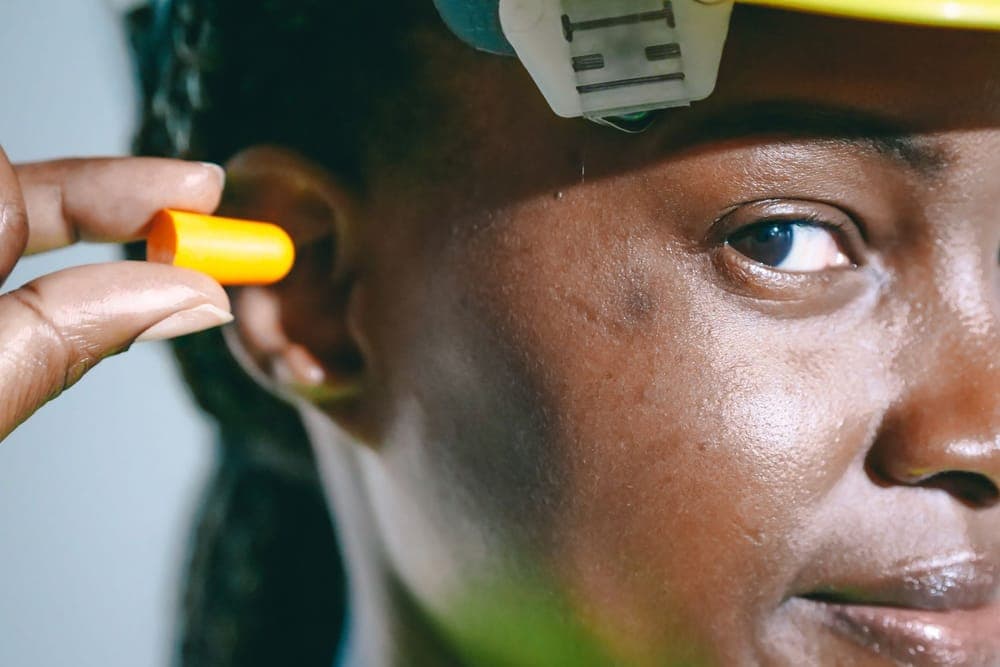
Highest-NRR earplug
Howard Leight MAX-1
NRR 337.1/10ResearchedNRR 33, the highest rating we cover, in a 200-pair box. Disposable foam, and the layer that goes under muffs indoors.
Check price · Amazon#ad · Price set by Amazon · How we make money for the link to Howard Leight MAX-1
- Stock photo
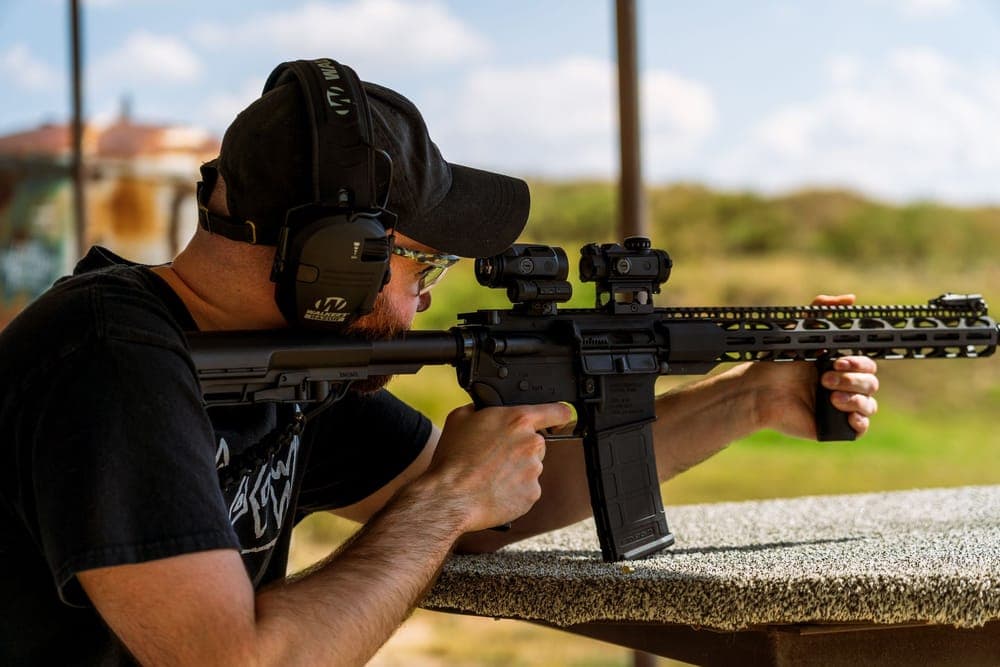
Best electronic muff for indoor ranges
Howard Leight Impact Pro
NRR 307.4/10ResearchedNRR 30, the highest of the electronic muffs we cover, so you keep range commands without giving up the rating.
Check price · Amazon#ad · Price set by Amazon · How we make money for the link to Howard Leight Impact Pro
- Stock photo
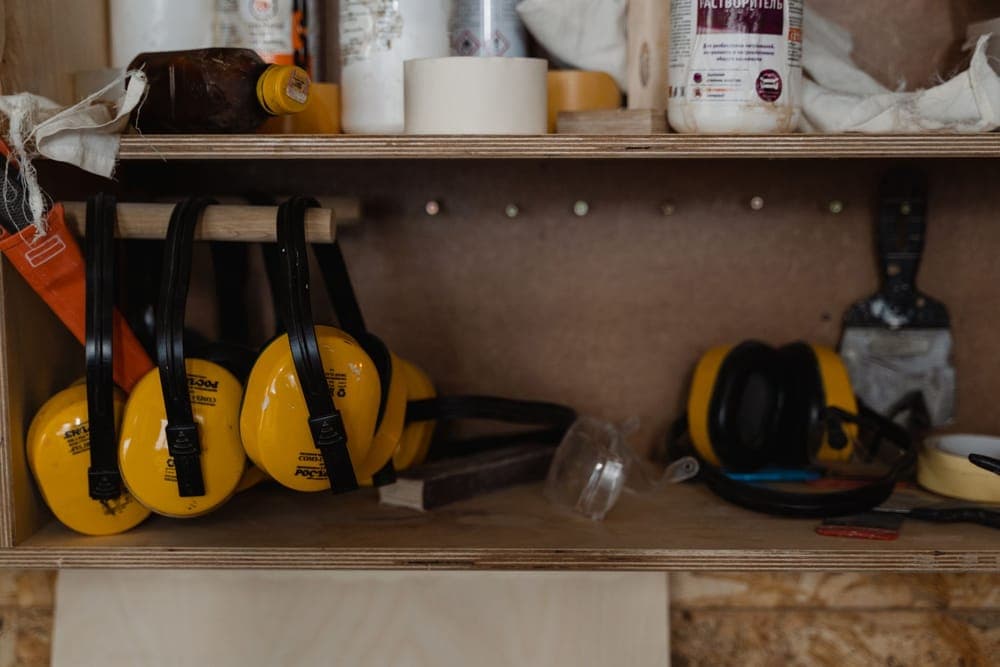
Best passive muff for indoor pistol bays
Howard Leight Leightning L3
NRR 306.7/10ResearchedNRR 30 with no batteries and nothing to switch on. The simplest route to a high rating.
Check price · Amazon#ad · Price set by Amazon · How we make money for the link to Howard Leight Leightning L3
- Stock photo
Best first electronic muff
Howard Leight Impact Sport
NRR 227.2/10ResearchedNRR 22, the lowest here, and the one to pair with plugs indoors. It earns its place on comfort and stock clearance, not on the number.
Check price · Amazon#ad · Price set by Amazon · How we make money for the link to Howard Leight Impact Sport
The ratings above come from the MAX-1 listing on Honeywell's licensed store, the Impact Pro page and the Leightning L3 page. Each card links its own sources.
When to wear plugs and muffs together
Doubling up does not add the two ratings together. OSHA's method is to take the higher NRR, subtract 7 if you are working in dBA, then add 5 dB for the second protector. Its own note is explicit: "It is important to note that using such double protection will add only 5 dB of attenuation."
Five decibels sounds small. It is also the difference between clearing a limit and not, which is why the recommendation survives. The measured peak figures from NIOSH 2009-136 above, 44 dB combined against 26 and 24 alone, tell the same story from the other direction. The full walkthrough, including how to seat plugs under a muff without breaking the seal, is in double hearing protection.
How electronic muffs fit in
An electronic muff amplifies quiet sound and cuts the loud, which is how you hear a range officer while wearing protection. Its NRR is measured with the electronics off, and that is the number that matters when a shot goes off. The Meinke review explains why: "the passive attenuation characteristics of the electronic protector (i.e., electronics turned off) will determine the attenuation for high-level impulse sounds greater than 150 dB SPL. The circuitry is too slow to respond."
In other words, an electronic muff protects you like the plain muff it is built from. The electronics buy you conversation, not protection. Compare the two in electronic vs passive ear muffs.
Kids and smaller heads
The NIOSH-authored review notes that the World Health Organization "recommends peak SPLs not exceed 140 dB for adults and 120 dB for youth," a lower ceiling than the adult figure. A child also needs a cup that seals on a smaller head, which is a fit question no rating answers. Our kids ear protection picks cover the sizing wording each maker publishes, and taking kids to the range covers the rest of the trip.
How we scored this
Units we claim to have tested: none
Most gear sites say they tested thirty muffs. We haven't put these on a sound meter, and we say so. Every pick here is labeled Researched: we compiled each maker's published specs (the EPA-labeled NRR on hearing protection, the Z87+ mark on glasses), read the manuals, and scored everything on a public rubric. Every figure links to where it came from, and marketing claims are labeled “maker's claim.”
Scores are editorial judgments from that documented research, not test results. Commissions never set a score or decide a pick. The rubric and its weights are published.
Questions
Common questions
What NRR do I need for shooting?
Is NRR 22 good for shooting?
Is a higher NRR always better?
Do you add the NRR of earplugs and earmuffs together?
Why does the NRR not apply to gunfire?
What is the highest NRR available?
Where this comes from
Sources
- eCFR, 40 CFR Part 211 Subpart B, Hearing Protective Devices (NRR definition and required label statements), accessed 2026-09-19
- OSHA Technical Manual, Section III Chapter 5 (Noise), Appendix F: Noise Reduction Rating, accessed 2026-09-19
- OSHA, 29 CFR 1910.95 Occupational noise exposure, accessed 2026-09-19
- OSHA, 29 CFR 1910.95 Appendix B, Methods for Estimating the Adequacy of Hearing Protector Attenuation, accessed 2026-09-19
- NIOSH, Criteria for a Recommended Standard: Occupational Noise Exposure, Revised Criteria 1998 (Pub. 98-126, CDC Stacks PDF), accessed 2026-09-19
- NIOSH Science Policy Update, Individual Fit-Testing Recommendation for Hearing Protection Devices (Pub. 2025-104, January 2025, PDF), accessed 2026-09-19
- NIOSH Alert 2009-136, Preventing Occupational Exposures to Lead and Noise at Indoor Firing Ranges (PDF), accessed 2026-09-19
- Meinke, Finan, Flamme, Murphy, Stewart, Lankford and Tasko, Prevention of Noise-Induced Hearing Loss from Recreational Firearms, Seminars in Hearing 2017 (CDC Stacks PDF), accessed 2026-09-19
- Murphy, Byrne and Franks (NIOSH), Firearms and Hearing Protection, The Hearing Review 2007 (CDC Stacks PDF), accessed 2026-09-19
- ASHA, Recreational Firearm Noise Exposure (Audiology Information Series PDF), accessed 2026-09-19
- Honeywell Store, Howard Leight MAX-1 disposable foam earplugs listing, accessed 2026-09-19
- Howard Leight, Impact Pro product page, accessed 2026-09-19
- Howard Leight, Leightning L3 product page, accessed 2026-09-19
We haven't tested the gear on this page and we don't pretend to. Specs come from each maker's own pages and data sheets (linked on every product); ratings like NRR and Z87+ are explained from the standards and agencies behind them. Prices are set by Amazon and change often, so we don't print them. Where a figure isn't published, we say so. Read the full method.