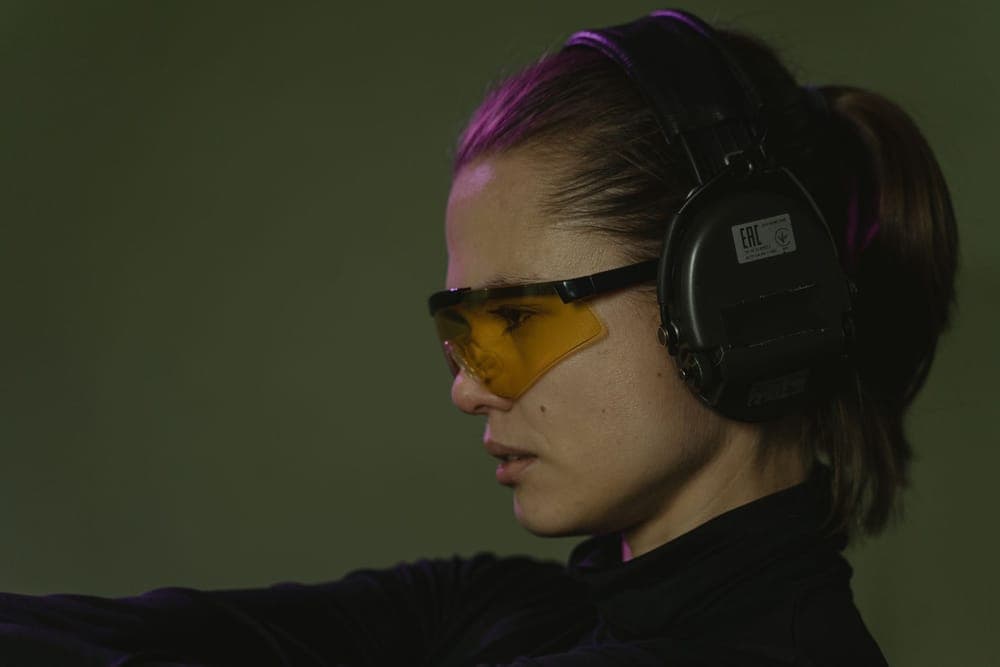
The contenders
Side by side
- Stock photo

Simplest Z87+ first pair
Pyramex Intruder
Z87+6.9/10An easy first pair: Pyramex states ANSI/ISEA Z87.1-2020 + High Impact, sells it in seven lens tints, and offers it without anti-fog or with Standard or H2MAX anti-fog.
Check price · Amazon#ad · Price set by Amazon · How we make money for the link to Pyramex Intruder
- Stock photo
Quotes the exact Z87+ clause
Revision StingerHawk Eyewear
Z87+7.3/10Revision's page names the clause: "ANSI Z87.1-2020 clause 7.1 Impact Protector (Z87+)", and adds a MIL-PRF-32432A Class 1 ballistic claim. Regular and Large frame sizes.
Check price · Amazon#ad · Price set by Amazon · How we make money for the link to Revision StingerHawk Eyewear
- Stock photo
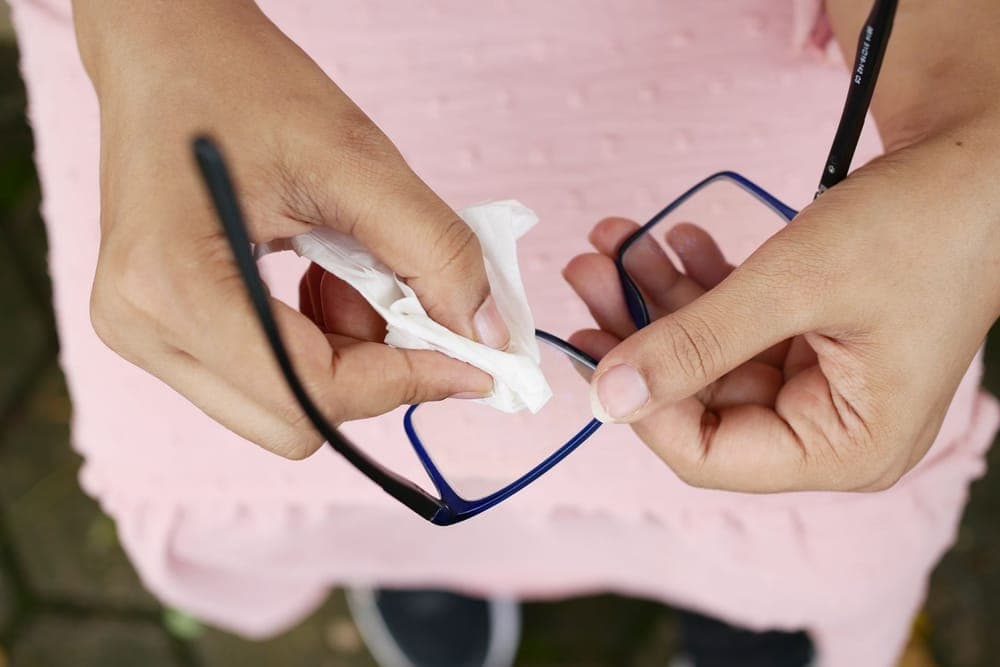
Z87+ over prescription glasses
Pyramex OTS
Z87+7.1/10The over-the-glasses pick with a published fit: Pyramex says the OTS fits over frames up to 5 3/8 in wide by 1 3/4 in high (137 x 44 mm) and states Z87.1-2020 + High Impact.
Check price · Amazon#ad · Price set by Amazon · How we make money for the link to Pyramex OTS
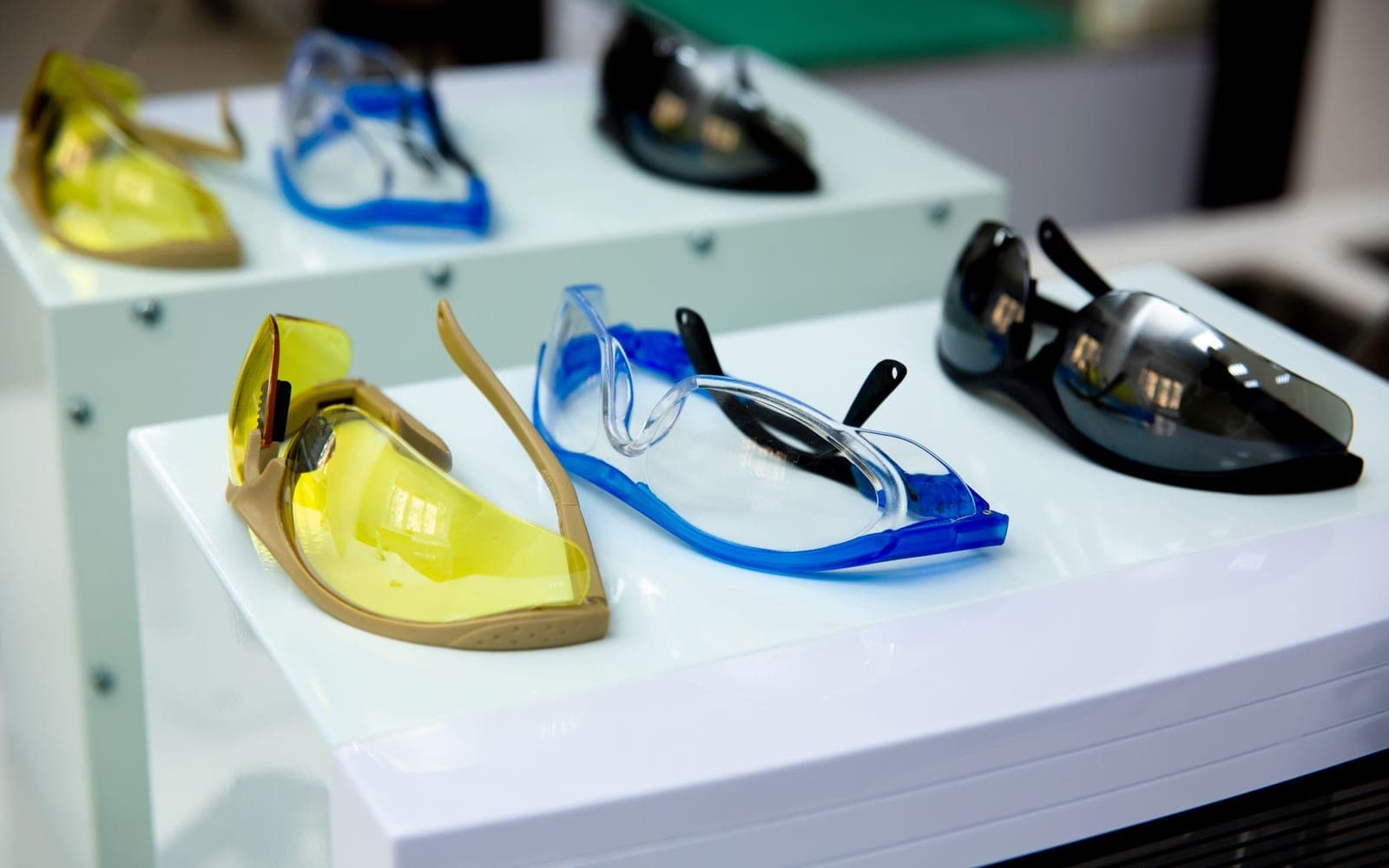
Z87 vs Z87+ is the standard nobody at the gun counter explains, and the marks are tiny. This page covers what each mark means, what the tests involve as the eyewear makers who publish them describe them, where the mark sits on the frame, and whether plain Z87 glasses are good enough for shooting. The short version: they pass a real test, but only the plus means the pair passed the tests closest to what flies at a range.
One thing up front: we haven't read the full text of the standard. Everything below about the tests comes from ISEA, the group that runs the standard, and from two eyewear makers, HexArmor and Wiley X, that publish plain-language summaries. Each claim is linked so you can check it.
What ANSI Z87.1 is
ANSI/ISEA Z87.1 is the U.S. standard for safety glasses, goggles and face shields. The International Safety Equipment Association (ISEA) says "ISEA is the Z87 Secretariat". It describes the current edition this way: "ANSI/ISEA Z87.1-2025 prescribes the design, performance specifications, and marking of safety eye and face products." It was developed by the Z87 Committee on Safety Standards for Eye Protection, which ISEA administers.
The newest edition is Z87.1-2025. ISEA announced it on January 8, 2026 as "the updated national standard defining performance, testing, and marking requirements for eye and face protective devices used in workplace and educational settings" (ISEA press release). ISEA lists what changed, including:
- "Clearer, more standardized product markings to better communicate intended hazard protection"
- "Updated performance language for impact testing, lens performance, and minimum coverage"
- It "also retains options introduced in recent editions, including relaxed optics and anti-fog performance"
Notice what's missing from that description: shooting. Z87.1 is a workplace and school standard. Shooters borrow it because it's the national standard for safety eyewear, the one OSHA's eye-protection rule incorporates. That's also why a shooting-glasses maker and a hardware-store safety-glasses maker can print the same mark.
You'll see different edition years on labels. Walker's cites the 2010 edition for its IKON Vector. Howard Leight cites 2015 for its HL100 over-the-glasses pair. Pyramex and Revision cite 2020. The year tells you which edition the maker certified to. We haven't compared the editions line by line, so we don't rank pairs by year. We look for the high-impact claim in whichever edition the maker names.
Z87 vs Z87+ at a glance
| Z87 | Z87+ | |
|---|---|---|
| What the mark tells you | The pair is Z87.1 compliant: "Eye protection that's Z87.1 compliant is marked with 'Z87.'" (HexArmor) | "Z87+ means that the eyewear meets a higher impact standard and goes through a much tougher set of tests than Z87." (HexArmor) |
| Impact test, as HexArmor describes it | Drop ball: a one-inch steel ball, roughly 2.4 oz, dropped from 50 inches | High mass: a 500-gram pointed weight dropped from about 50 inches onto lenses on a head form. High velocity: a quarter-inch steel ball shot at 20 specified impact points |
| High-velocity speed | Not part of the basic test | 102 mph for safety glasses, 170 mph for goggles (HexArmor); 150 fps and 250 fps (Wiley X) |
| Where the mark goes | The temple arm ("sidearm") or the right side of the lens | The same places, with a "+" next to Z87 or the maker's mark, or a W+ on the lens |
| For shooting | Basic impact only. Not our pick for the range | Our minimum for every pair we recommend |
The two speed figures are the same speed in different units: 150 feet per second is about 102 mph, and 250 is about 170. HexArmor and Wiley X agree.
| Published spec | Pyramex Intruder | Revision StingerHawk Eyewear | Pyramex OTS |
|---|---|---|---|
| Impact rating | ANSI/ISEA Z87.1-2020 + High Impact; CAN/CSA Z94.3-2020 | "ANSI Z87.1-2020 clause 7.1 Impact Protector (Z87+)"; EN 166 FT | ANSI/ISEA Z87.1-2020 + High Impact |
| Ballistic rating | Not published | "MIL-PRF-32432A clause 3.8.4.1 Ballistic fragmentation characteristics Class 1" | Not published |
| Fits over | No (not an over-the-glasses design) | Not published | Frames up to 5 3/8 in W x 1 3/4 in H (137 mm x 44 mm) |
| Lenses | Clear, gray, I/O mirror, amber, Infinity Blue, silver mirror, blue mirror | Sold as kits: 1 Lens Kit, Photochromic, 3 Lens Vermillion and Polarized Kit | Clear, gray, I/O mirror |
| Score | 6.9/10 | 7.3/10 | 7.1/10 |
What the impact tests involve
Here are the three tests in plain terms, as the makers who publish them describe them. The descriptions come from HexArmor's guide to lens markings and Wiley X's ballistic eyewear page. ISEA says the 2025 edition updated its "performance language for impact testing", so the fine print in the newest edition may read differently. The basic idea hasn't changed: Z87 is one test, and Z87+ adds the harder ones.
The basic test (Z87): drop ball
HexArmor: "For safety eyewear to pass the basic Z87.1 standard, it must pass the Drop Ball Impact Test. This test involves a steel ball (that is one inch in diameter and weighing roughly 2.4oz) being dropped from a test height of 50 inches." It's the entry-level check, a blunt knock from a one-inch ball, and the only impact test a plain Z87 pair has to pass.
High mass (Z87+): the heavy pointed weight
HexArmor: "This test consists of dropping a 500-gram pointed weight from a height of about 50 inches (or 4.2 feet) onto lenses that are mounted on a head form." Five hundred grams is a little over a pound, and it's pointed rather than round. Where the drop ball is light and blunt, this one is heavy and sharp.
High velocity (Z87+): the small, fast projectile
HexArmor: "This test involves a ¼ inch steel ball being shot at 20 different specified impact points," at 102 mph for safety glasses and 170 mph for goggles. Wiley X states the same test in feet per second: "Wiley X ANSI Z87.1+ frames and lenses must withstand the impact of a .25" diameter steel ball. For spectacles the projectile must be traveling 150 fps and for a goggle 250 fps."
For a shooter, this is the test that matters most. What your glasses face at a range includes debris, hot brass and, around steel targets, fragments (the sources are further down). A plain Z87 pair hasn't been put through the high-velocity test. A Z87+ pair has, at 20 specified impact points.
Where to find the mark
HexArmor says that "With safety glasses, you can find markings either on the sidearm of the frames or on the right side of the lens." For the plus: "If the eyewear passed the high impact standard, you will see a '+' next to the Z87 or W marking on the sidearm or you'll see a W+ on the lens. 'W' is simply the manufacturer's mark." On goggles, "the markings will be found on the top of the seal."
The "W" in HexArmor's example stands in for whatever letter or logo the maker uses. OSHA's workplace rule requires that mark too: "Eye and face PPE shall be distinctly marked to facilitate identification of the manufacturer" ( 29 CFR 1910.133(a)(4)). So on a legitimate pair you should find two things, the maker's mark and the Z87 mark, usually with the plus.
A practical routine for a first pair:
- Before you buy: read the maker's own product page for the rating. The listing may not quote it, so we link the maker's page on every card.
- When it arrives: check the inside of the temple arm, then the right lens, for Z87+ (or Z87 with a plus beside the maker's mark).
- At the range: if you borrow or rent glasses, check the arm the same way. It takes five seconds.
One caution: ISEA says the 2025 edition brings "clearer, more standardized product markings." Pairs made to the newest edition may print their codes differently from older stock. If the frame and the maker's page don't match what you expected, ask the maker before you rely on the pair.
Reading a maker's Z87 claim
Product pages word the claim many ways, and some wording promises less than it seems to. These are real examples from maker pages we read on September 19, 2026:
| Maker's wording | Whose page | What it tells you |
|---|---|---|
| "ANSI/ISEA Z87.1-2020 + High Impact" | Pyramex Intruder | High impact (Z87+) |
| "ANSI Z87.1-2020 clause 7.1 Impact Protector (Z87+)" | Revision StingerHawk | High impact (Z87+), with the clause named |
| "exceed ANSI Z87.1-2010 High Impact Requirement" | Walker's IKON Vector | High impact, to the 2010 edition |
| "meets ANSI Z87.1-2015 (High Impact) standard" | Howard Leight HL100 OTG | High impact, to the 2015 edition |
| "Complies with ANSI Z87.1 standards" | Radians Explorer | Z87.1, with no plus or high-impact wording |
| "ANSI Z87 impact resistance rated" | Allen Fit Over Shooting Glasses | Z87, with no plus or high-impact wording |
| "Ballistic rated for four times the impact protection of ANSI Z287+" (sic) | Champion Over-Specs | A comparison with a typo, not a statement that the pair is marked Z87+ |
The rule we use on every roundup: the maker must say the pair meets the high-impact level, in words like "Z87+", "Z87.1+" or "High Impact". A plain "meets Z87.1" doesn't clear the gate. Neither does a comparison ("four times") or a sports-eyewear standard. Wiley X's Youth Force frames, for example, say their lenses "meet rigorous ASTM F803 sports safety standards" ( Wiley X WX Flash). That's a different standard from Z87.1, so those frames aren't on our kids' list.
Are Z87 glasses good for shooting?
Plain Z87 glasses have passed a real test, and they're far better than no eye protection. But for shooting, we recommend Z87+, and every pair on our roundups carries it. Here's the reasoning.
The things that reach your eyes at a range are small and fast. The NRA's safety rules say guns "can also emit debris and hot gasses that could cause eye injury" ( NRA Gun Safety Rules). Brass comes out hot and to the side. Ruger's rimfire rifle manual warns that "Empty cartridge cases are hot and are normally ejected from the rifle to the right. They could cause injury to any person who is standing too closely alongside the shooter" (Ruger American Rimfire manual). Steel targets add fragments. Champion's steel-target warnings start with "Always wear proper eye and ear protection while shooting" and warn that damaged steel "can present a hazardous situation due to unpredictable bullet fragmentation or ricochet" ( Champion steel target warnings).
The high-velocity test, a small steel ball fired at the lens and frame, is the closest of the three tests to that kind of hazard. Only Z87+ glasses have passed it. That's the case for the plus.
What OSHA and ranges actually require
OSHA's eye-protection rule, 29 CFR 1910.133, is an employer rule. It tells workplaces what to put on their employees, including the people who work at a range. It doesn't govern you as a paying customer. It's still the clearest official description of what "protective" means:
- Side protection: employers must ensure "eye protection that provides side protection when there is a hazard from flying objects." Clip-on or slide-on side shields are acceptable.
- Prescription wearers: eye protection that "incorporates the prescription in its design," or that "can be worn over the prescription lenses without disturbing the proper position of the prescription lenses or the protective lenses."
- Marking: gear must be "distinctly marked to facilitate identification of the manufacturer."
- The standard: the rule incorporates "ANSI/ISEA Z87.1-2010, Occupational and Educational Personal Eye and Face Protection Devices" by reference.
Range rules are separate, and they vary. Some examples: Texas Parks and Wildlife's hunter-education rules say "While shooting at the range, you must wear hearing and eye protection at all times" ( TPWD). The Range 702 in Las Vegas says "Eye and ear protection are mandatory on the range" (The Range 702). None of the range rules we've read name Z87 or Z87+. At least one range says outright that "Prescription eyeglasses are an approved replacement for standard eye protection" ( Triangle Shooting Academy dress code).
That's the range's policy for getting in the door, not a safety standard. Your everyday glasses may carry no impact rating at all. So the range decides what it will let you wear, and the standard tells you what has been tested. We go by the standard. Call your range before your first trip to check its rules, and see your first time at a shooting range for the rest of the visit.
What about sunglasses and prescription glasses?
If it isn't marked, you have no published rating. That applies to most fashion sunglasses and most everyday prescription frames. It doesn't mean all tinted glasses are out. Wiley X sells a whole line it calls ballistic sunglasses, and that page says: "Eyewear meets ANSI Z87.1+ and MIL-PRF-32432A impact testing standards." Revision sells a polarized StingerHawk kit whose page states Z87+. The question is never "sunglasses or not". It's "is this pair marked?" Our shooting glasses vs sunglasses page goes through it.
If you wear prescription glasses, OSHA's two routes are the practical ones: prescription safety glasses that carry the Z87 mark, or a Z87+ frame built to go over your own. Pyramex publishes a fit-over size for its OTS (frames up to 137 x 44 mm) and its OTS XL (up to 151 x 49 mm), so you can measure before you buy. See best shooting glasses for glasses wearers and can you wear glasses at a shooting range?
Other marks you'll see next to Z87
- MIL-PRF-32432: a U.S. military ballistic eyewear standard. Wiley X describes its spectacle test as a .15 caliber projectile traveling "640-725fps depending on Mil-Standard and model." It's an extra on top of Z87+, not a replacement. See ballistic vs safety glasses.
- CSA Z94.3: the Canadian certification. Pyramex lists it as "Canadian certification CAN/CSA Z94.3" (Pyramex), and lists CAN/CSA Z94.3-2020 for the Intruder.
- EN 166: another eyewear standard, which you'll see beside CE or UKCA marks. Revision lists "EN 166 FT" for the StingerHawk, and Pyramex lists "CE/UKCA EN 166" for the OTS XL. For a U.S. range, it doesn't replace the Z87+ claim.
- Anti-fog: since the 2020 edition, the standard itself covers anti-fog lenses. ISEA says "The 2020 version includes testing, performance and marking criteria for lenses with anti-fog properties" (ISEA, 2020). A maker's own coating name (H2MAX, Scotchgard and so on) is a separate claim. Our fogging guide covers the rest.
- ASTM F803: a sports-eyewear standard (as on Wiley X's Youth Force frames). It's a different standard from Z87.1, so it doesn't count toward our gate.
Three Z87+ pairs to start with
The three pairs below show the plus in three situations a beginner runs into. The Pyramex Intruder is the simplest first pair: Pyramex states "ANSI/ISEA Z87.1-2020 + High Impact" and sells seven tints. The Revision StingerHawk is the most fully documented: Revision names the exact clause and adds a MIL-PRF-32432A ballistic claim. It also comes in Regular and Large frames. The Pyramex OTS is for prescription wearers: the same Pyramex high-impact claim, plus a published limit on the frames it fits over.
For more choices, every one gated on Z87+, see our best shooting glasses roundup. For children and smaller faces, see our kids shooting glasses. If you're putting together a whole first kit, start at the first range kit.
In detail
The contenders, in full
Simplest Z87+ first pair
Pyramex Intruder
An easy first pair: Pyramex states ANSI/ISEA Z87.1-2020 + High Impact, sells it in seven lens tints, and offers it without anti-fog or with Standard or H2MAX anti-fog.
Published specsResearched · not tested by us
How the 6.9 score breaks down
- Ballistic rating (MIL-PRF-32432) (20%)
- 5
- Lens options & tints (20%)
- 8.5
- Fit: OTG, youth, thin temples (30%)
- 6.5
- Anti-fog & scratch coating (30%)
- 7.5
What the specs support
- Pyramex states the Z87.1-2020 high-impact rating on its own page
- Seven lens tints, including clear for indoor ranges and gray for sun
- Choice of Standard or H2MAX anti-fog
Where it falls short
- No MIL-PRF-32432 ballistic claim on Pyramex's page
- Not made to fit over prescription glasses
- Frame sizing isn't published by the maker
Skip it if…
…you wear prescription glasses at the range; the Intruder isn't built to go over them, so look at the Pyramex OTS instead.
#ad · Price set by Amazon · How we make money for the link to Pyramex Intruder
Quotes the exact Z87+ clause
Revision StingerHawk Eyewear
Revision's page names the clause: "ANSI Z87.1-2020 clause 7.1 Impact Protector (Z87+)", and adds a MIL-PRF-32432A Class 1 ballistic claim. Regular and Large frame sizes.
Published specsResearched · not tested by us
How the 7.3 score breaks down
- Ballistic rating (MIL-PRF-32432) (20%)
- 9.5
- Lens options & tints (20%)
- 7.5
- Fit: OTG, youth, thin temples (30%)
- 8
- Anti-fog & scratch coating (30%)
- 5
What the specs support
- Quotes the exact Z87+ clause and the MIL-PRF-32432A Class 1 ballistic clause
- Two frame sizes, Regular and Large
- Several lens kits, including photochromic and polarized
Where it falls short
- The Polarized Kit was out of stock on Revision's store on 2026-09-19
- Anti-fog coating isn't among the specs we could confirm on the maker page
- Kit choice takes more reading than a single-lens pair
Skip it if…
…you want one simple clear pair for an indoor range; picking a StingerHawk kit and size is more than a first trip needs, and the Pyramex Intruder is simpler.
#ad · Price set by Amazon · How we make money for the link to Revision StingerHawk Eyewear
Z87+ over prescription glasses
Pyramex OTS
The over-the-glasses pick with a published fit: Pyramex says the OTS fits over frames up to 5 3/8 in wide by 1 3/4 in high (137 x 44 mm) and states Z87.1-2020 + High Impact.
Published specsResearched · not tested by us
| Impact rating | ANSI/ISEA Z87.1-2020 + High Impact |
|---|---|
| Fits over | Frames up to 5 3/8 in W x 1 3/4 in H (137 mm x 44 mm) |
| Lenses | Clear, gray, I/O mirror |
| Anti-fog | H2X anti-fog option |
How the 7.1 score breaks down
- Ballistic rating (MIL-PRF-32432) (20%)
- 5
- Lens options & tints (20%)
- 6.5
- Fit: OTG, youth, thin temples (30%)
- 9
- Anti-fog & scratch coating (30%)
- 7
What the specs support
- Publishes the largest prescription frame it fits over, so you can measure first
- Pyramex states the Z87.1-2020 high-impact rating
- H2X anti-fog option
Where it falls short
- No MIL-PRF-32432 ballistic claim on Pyramex's page
- Three lens tints only
- Frames wider than 137 mm won't fit, by Pyramex's own numbers
Skip it if…
…your prescription frames are wider than 137 mm (5 3/8 in) or taller than 44 mm (1 3/4 in); Pyramex's published limit says they won't fit.
#ad · Price set by Amazon · How we make money for the link to Pyramex OTS
How we scored this
Units we claim to have tested: none
Most gear sites say they tested thirty muffs. We haven't put these on a sound meter, and we say so. Every pick here is labeled Researched: we compiled each maker's published specs (the EPA-labeled NRR on hearing protection, the Z87+ mark on glasses), read the manuals, and scored everything on a public rubric. Every figure links to where it came from, and marketing claims are labeled “maker's claim.”
Scores are editorial judgments from that documented research, not test results. Commissions never set a score or decide a pick. The rubric and its weights are published.
Questions
Common questions
Are Z87 glasses good for shooting?
Is ANSI Z87.1 the same as Z87+?
What does W+ mean on safety glasses?
Where is the Z87 mark on safety glasses?
Does Z87+ mean ballistic or bulletproof?
What is the current edition of ANSI Z87.1?
Where this comes from
Sources
- ISEA, Eye & Face Protection (Z87 Secretariat; Z87.1-2025 scope), accessed 2026-09-19
- ISEA, ISEA Releases Updated ANSI/ISEA Z87.1 Standard for Eye and Face Protection (January 8, 2026), accessed 2026-09-19
- ISEA, ISEA Publishes ANSI/ISEA Z87.1 Eye and Face Protection Standard Update (April 13, 2020), accessed 2026-09-19
- HexArmor, Safety eyewear: What do lens markings and ANSI Z87+ mean?, accessed 2026-09-19
- Wiley X, Ballistic Sunglasses page (Z87.1+ and MIL-PRF-32432A test descriptions), accessed 2026-09-19
- OSHA, 29 CFR 1910.133 Eye and face protection, accessed 2026-09-19
- NRA, NRA Gun Safety Rules, accessed 2026-09-19
- Champion Targets (Primos), Steel target warnings, accessed 2026-09-19
- Ruger, Ruger American Rimfire instruction manual (PDF), accessed 2026-09-19
- Texas Parks and Wildlife Department, Shooting Safety Rules, accessed 2026-09-19
- The Range 702, First-Time Indoor Range Visit guide, accessed 2026-09-19
- Triangle Shooting Academy, Dress Code, accessed 2026-09-19
- Pyramex, Intruder product page, accessed 2026-09-19
- Pyramex, OTS product page, accessed 2026-09-19
- Pyramex, OTS XL product page, accessed 2026-09-19
- Pyramex, H2MAX anti-fog coating press release (March 18, 2019), accessed 2026-09-19
- Revision, StingerHawk Eyewear Polarized Kit product page, accessed 2026-09-19
- Walker's, IKON Vector Glasses product page, accessed 2026-09-19
- Howard Leight Shooting Sports, HL100 Series OTG Glasses, Clear Lens, accessed 2026-09-19
- Radians, Explorer Shooting Glass product page, accessed 2026-09-19
- Allen Company, Fit Over Shooting Glasses product page, accessed 2026-09-19
- Champion (Primos), Over-Specs Ballistic Shooting Glasses product page, accessed 2026-09-19
- Wiley X, WX Flash (Youth Force) product page, accessed 2026-09-19
We haven't tested the gear on this page and we don't pretend to. Specs come from each maker's own pages and data sheets (linked on every product); ratings like NRR and Z87+ are explained from the standards and agencies behind them. Prices are set by Amazon and change often, so we don't print them. Where a figure isn't published, we say so. Read the full method.