Safety first. This is general information, not a substitute for hands-on instruction. Follow your range's rules and your firearm's manual, and consider a certified safety course. See our gun safety rules.
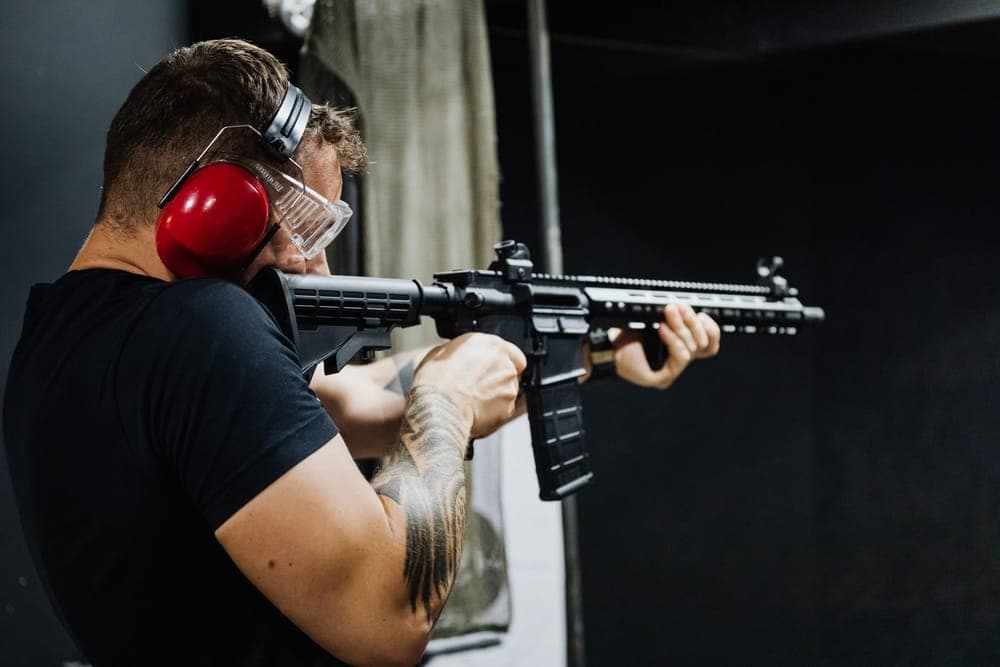
Shooting range etiquette sounds like a set of unwritten rules you're supposed to absorb by osmosis. The good news for a first-timer: most of it is written down. Ranges publish their rules, and nearly every one exists for the same reason, which is keeping everyone on the line safe. The rest is ordinary courtesy.
This is gun range etiquette for beginners, explained without judgment. Everyone at the range had a first day, and the regulars who seem to know everything learned it the same way you will: by watching and asking. The examples below are quoted from rules that real ranges publish. Your own range's rules always win, so read them or ask at the counter.
Most range etiquette is really safety
Read a few range rule sheets side by side and a pattern jumps out. The "etiquette" that regulars care about (don't touch your gun while people are downrange, stop instantly on a cease fire, keep the muzzle pointed at the berm) is the core of the gun safety rules translated into how a shared firing line works.
Ranges take it seriously. Connecticut's Glastonbury state range puts it plainly: "Participants must heed all range commands without hesitation or risk expulsion from the site" ( CT DEEP). That isn't aimed at beginners. It's a sign that the commands are the one part of range life nobody gets to improvise, which makes them the first thing worth learning.
Range commands, in plain English
Range commands are the short phrases used to start and stop shooting. The wording varies from range to range. These are the commands, and the wording, published by the ranges we checked:
| Command | What it means | What you do | Published by |
|---|---|---|---|
| "Cease fire" / "Cease firing" | Stop shooting, right now. | Stop immediately, finger off the trigger, then make the gun safe the way your range specifies. | Florida FWC, Georgia DNR, Mississippi MDWFP, Shoot Indoors |
| "The range is cold" / cold range | No shooting. People may be going downrange. | Hands off your gun. Stay back from the firing line unless you're going downrange. | Florida FWC |
| "The range is hot" / hot range | Shooting is allowed. | Shooters only at the line. Load and fire following the range's rules. | Florida FWC |
| "Commence firing" / "Begin Fire" / "Resume Fire" | Shooting may start, or start again. | Return to the line and carry on. | Shoot Indoors, Georgia DNR |
Florida's FWC defines the two states of the line. On a cold range, "No one is permitted to handle firearms or stand at the firing line." On a hot range, "Only shooters are permitted on the firing line" and shooters are permitted to commence firing (FWC range safety rules). Georgia's state ranges name "Begin Fire commands, Cease Fire commands, and Resume Fire commands" as the ones every person on the range must obey (Georgia DNR).
Cease fire: the command anyone can call
Mississippi's state ranges are emphatic: "The command 'CEASE FIRE' will be observed IMMEDIATELY, no matter who says it! Anyone may call a cease fire" (MDWFP). Two things follow. You stop the instant you hear it, even mid-string, even if you're not sure who said it. And you're allowed to call it yourself if you see something unsafe.
A cease fire isn't always an emergency. Shoot Indoors, a commercial range in Pennsylvania, explains that "There could be a medical issue or a need to walk downrange to check equipment" ( Shoot Indoors). Some ranges schedule them: Glastonbury says "Halfway through each session will be a planned cease fire for target change."
"Make it safe" means different things at different ranges
Every range agrees on the first step of a cease fire: stop shooting. What happens next is where they differ, which is exactly why you ask during your first safety briefing:
- Shoot Indoors: "Remain behind the line and do not touch any firearm during a cease-fire."
- Glastonbury: "Shooters may not handle their firearms in any manner during the 'Cease Fire' command."
- Georgia DNR: "Any person on the range shall immediately obey a Cease Fire command by grounding all firearms with actions open."
- Louisiana's state ranges: "During a cease fire, properly rack all firearms, unloaded with actions open; Ensure the range is cold before going down range" ( LDWF).
Hands-off at one range, unload and rack at another. Neither is wrong; they're different ranges. If nobody tells you which one yours uses, ask before you shoot, not during the cease fire.
The firing line: never go forward of it while the range is hot
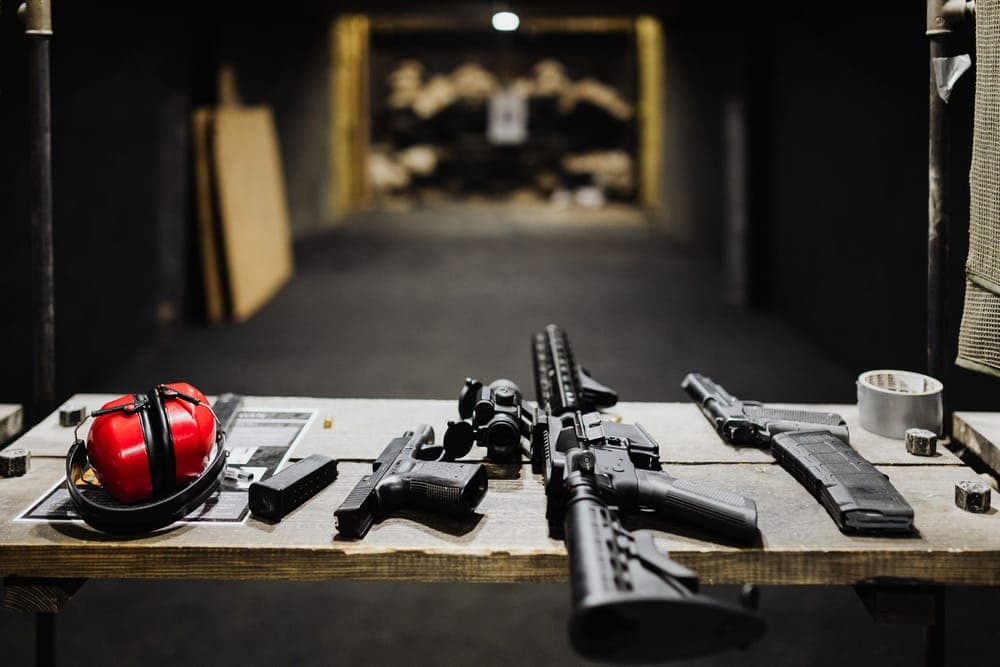
The firing line is the boundary between where shooters stand and where the bullets go. The biggest rule of range etiquette is simple: you never step forward of it unless the range has been declared cold and every gun on the line has been made safe. The published wording is blunt:
- Mississippi: "FIREARMS SHALL NOT BE HANDLED WHILE ANYONE IS DOWN RANGE! This includes while setting up or packing up your gear!"
- Louisiana: "No handling firearms when anyone is down range."
- Georgia: "All firearms on the firing line must be grounded and unloaded, with actions open whenever anyone is downrange."
- Florida, before anyone walks out: "Shooters must check with others to ensure firearms are unloaded, actions open and firearms laid down on the shooting bench before going down range."
Notice the second half of Mississippi's rule. The mistake beginners make here isn't shooting; it's tidying up. When the line goes cold and people head out to change targets, packing your gun away counts as handling it at that range. Step back from the bench, keep your hands off your gun, and wait for the line to go hot again.
Muzzle downrange, every time
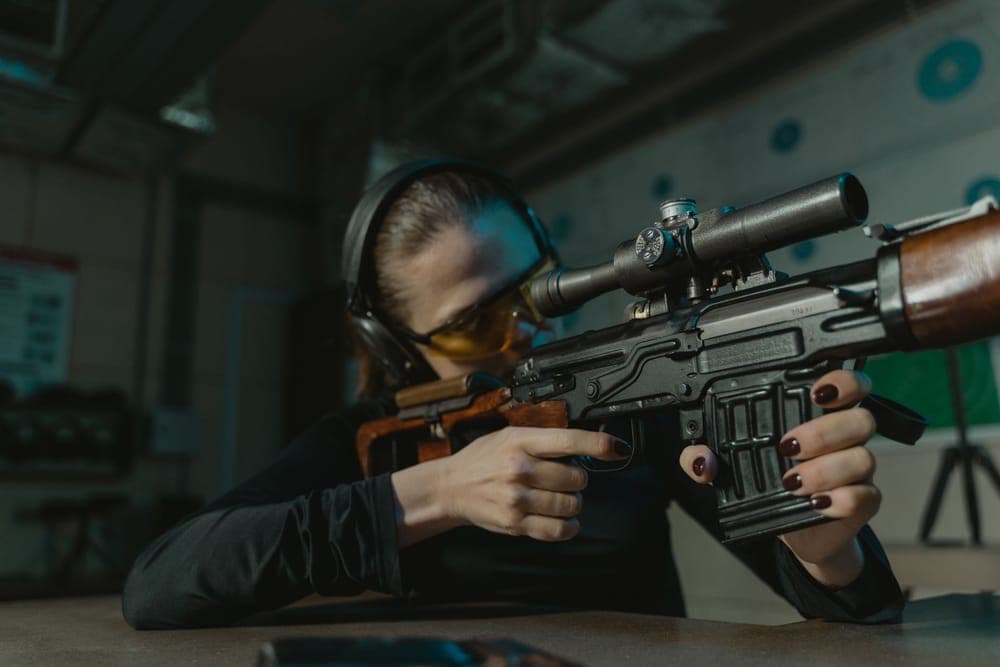
On a firing line, "a safe direction" means downrange, toward the backstop. Beginners rarely point a gun at someone on purpose. It happens in the in-between moments: turning around to ask a friend a question with the gun still in hand, reacting to a malfunction, or flinching when something hot lands on you.
- Turning to talk. Set the gun down on the bench, pointed downrange, before you turn around. Your head can turn; the muzzle can't.
- A malfunction. Georgia's rule: "the shooter shall keep his/her firearm pointed down range, advise all persons at the firing line of the malfunction, and unload as soon as possible." At a staffed range, that means getting the range officer's attention and letting them help.
- Hot brass. The Range 702, a Las Vegas indoor range, advises: "If brass lands against your skin, don't panic. Keep the weapon pointed in a safe direction and carefully put it on the shooting platform" ( The Range 702). Our guide to what to wear to a shooting range helps it not happen in the first place.
The same care applies when you arrive and leave. Ranges differ on where a gun can come out of its case. Louisiana says "Firearms must be uncased, unloaded, magazines removed, and actions open when entering the range," while Shoot Indoors says "It is required that you bring any outside firearms into the range cased and unloaded." Only uncase where your range tells you to, and ask if you're not sure. For getting there, see how to transport a gun to the range.
When in doubt, ask the range safety officer
The range safety officer (RSO, sometimes just "range officer") runs the line: calling commands, watching for unsafe handling and helping shooters who need it. At Georgia's state ranges, "Range Safety Officers may call a Cease Fire at any time an unsafe condition is recognized on the range." Some ranges also check your gun on the way in; The Range 702 notes that "The range officer will likely want to inspect your weapon before allowing you to take it on their range."
Asking the RSO a question isn't a faux pas. It's the most respected thing a new shooter can do, because it means you won't guess. Good first-visit questions:
- Where am I allowed to uncase my gun?
- During a cease fire, do you want guns left alone, or unloaded and set down with the action open?
- Is there a limit on how fast I can shoot?
- Can I pick up my own brass, and where does it go?
- Which targets are allowed, and where do I hang them?
And if anything goes wrong on the line, whether it's a malfunction, hot brass or simply not knowing what to do next, the answer is the same: muzzle downrange, finger off the trigger, and get the RSO's attention.
Brass: whose it is and where it goes
"Brass" is range slang for the empty cartridge cases a gun throws out after each shot. Two things to know.
First, it comes out hot and fast. Ruger's manual for one of its rimfire rifles warns that "Empty cartridge cases are hot and are normally ejected from the rifle to the right. They could cause injury to any person who is standing too closely alongside the shooter" ( Ruger American Rimfire manual). Give the shooter next to you room, and don't crowd a friend while they shoot.
Second, it isn't automatically yours. Mississippi's rule: "Shooters may collect their own brass, but may not collect someone else's brass," especially while that person is still shooting. Florida asks shooters to put "your spent brass into the recycling receptacles." Some ranges keep what's on the floor, so if you want your brass, ask first, and never reach forward of the line for a case that rolled away.
Lane courtesy
Past the written rules sits plain courtesy. None of this will get you thrown out, but all of it makes you the shooter people are happy to stand next to:
- Stay in your lane. Shoot only at your own target, and keep your gear on your own bench.
- Mind your pace. Some ranges limit how fast you shoot. Georgia's state ranges say "Shooters shall allow at least one second between shots," and Louisiana prohibits "rapid fire (more than 1 round/second)." If you don't know your range's rule, shoot slowly until you do. It's better practice anyway.
- No food or drink on the line. Florida's rule: "Food, beverages and smoking are not allowed on the firing line. You should wash your hands and face after shooting." Our page on lead exposure at the shooting range explains why.
- Ask before you touch. Someone else's gun, bag or spotting scope is theirs. Admire from your lane, and ask before you handle anything.
- Coach your own group, not strangers. If you see something unsafe, tell the RSO, or call a cease fire if it can't wait. Mississippi's rule says anyone may.
- Leave the lane cleaner than you found it. Targets down, trash in the bins, brass where the range wants it. Florida calls it "Respect the Range."
Hearing commands through your ear pro
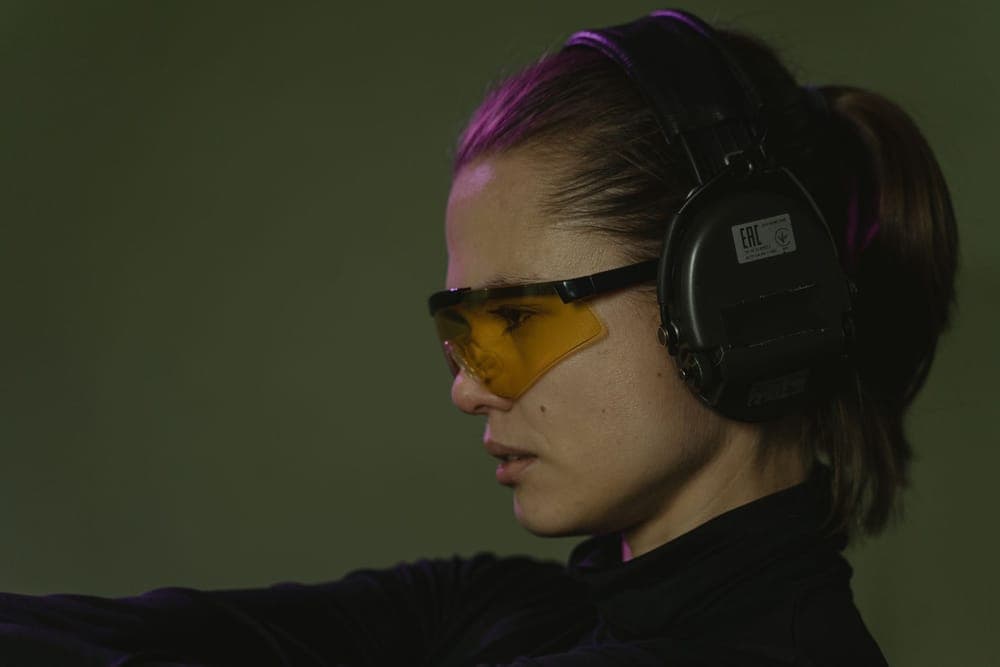
Here's the catch for a beginner: you need to hear "cease fire" instantly, but you also need ear pro (hearing protection) on the whole time. Foam plugs and passive muffs can muffle the command along with the gunfire, and doubling up muffles it more; NIOSH researchers note that double protection "can severely compromise one's ability to communicate when both devices are passive" ( Murphy, Byrne and Franks, NIOSH, 2007).
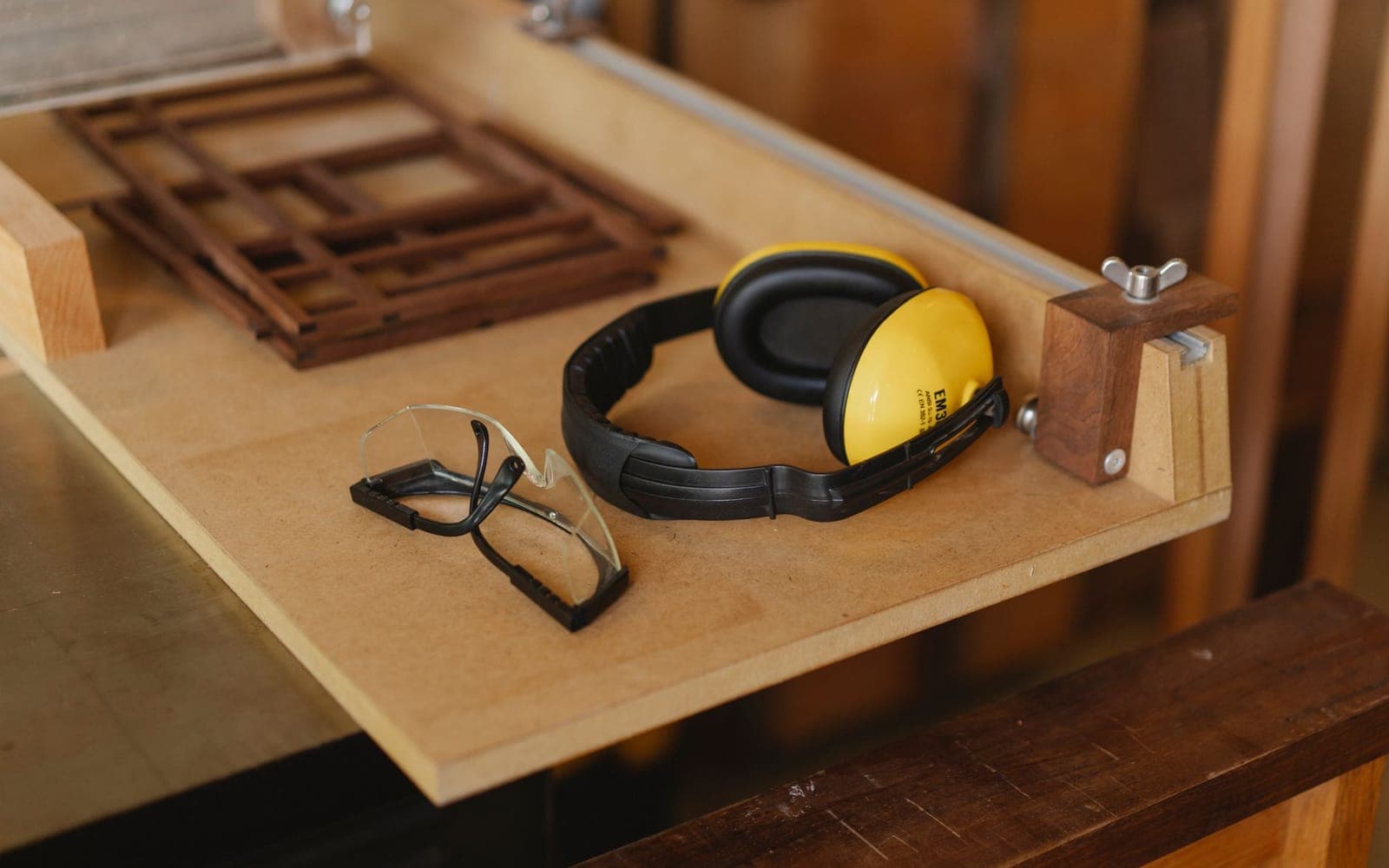
Electronic earmuffs are the usual fix. ASHA describes how they work: "Electronic HPDs allow for sounds to pass through that are soft or average in volume but detect when there is a loud noise. The device then becomes hearing protection" (ASHA, Recreational Firearm Noise Exposure). The same NIOSH authors add that "The use of an electronic level-dependent earmuff with a deeply-inserted foam earplug can compensate for this loss of communication ability." And in its guidance for indoor range workers, NIOSH recommends "electronic level-limiting or sound restoration earmuffs with passive earplugs" for shooters who need better communication (NIOSH Alert 2009-136).
What to look for in an electronic muff for the line
- A published NRR. The NRR (Noise Reduction Rating, the number on the package) still matters, because the electronics only help you hear; the cups do the protecting. Our guide to what NRR you need for shooting explains the number.
- An auto shut-off. A muff that switches itself off won't be dead the next time you open your bag.
- A cup that suits your gun. If you shoulder a rifle or shotgun, look for a slim or low-profile cup; for handguns it matters less.
- Room for plugs underneath at indoor ranges. Indoor bays are louder, which is why NIOSH's pairing is muffs plus plugs.
Both picks below come from our ranking of the best electronic ear muffs for shooting, where every muff carries a published NRR. Howard Leight lists the Impact Sport at NRR 22 with a 4-hour auto shut-off, and the Impact Pro at NRR 30 with the same shut-off. Still weighing electronic against passive? See electronic vs passive ear muffs.
Our picks for this
Electronic muffs that help you hear the line
Two electronic muffs with a published NRR and a 4-hour auto shut-off. Wear foam plugs underneath at indoor ranges.
- Stock photo
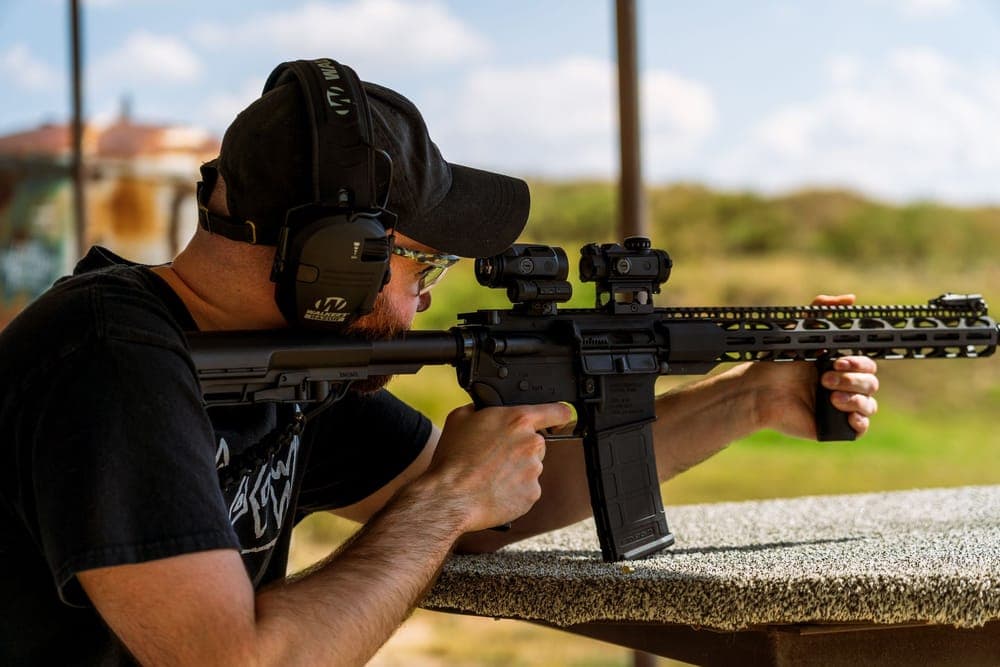
Best first electronic muff
Howard Leight Impact Sport
NRR 227.2/10ResearchedThe easy first muff: NRR 22, a 4-hour auto shut-off and a slim cup Howard Leight says clears a firearm stock. Add foam plugs underneath indoors.
Check price · Amazon#ad · Price set by Amazon · How we make money for the link to Howard Leight Impact Sport
- Stock photo
Best electronic muff for indoor ranges
Howard Leight Impact Pro
NRR 307.4/10ResearchedNRR 30, the highest of the electronic muffs we list, with the same 4-hour shut-off. The one to pick if your range is an indoor pistol bay.
Check price · Amazon#ad · Price set by Amazon · How we make money for the link to Howard Leight Impact Pro
If you're new, say so
The single best piece of range etiquette for a first-timer comes from the NSSF's Let's Go Shooting: "On your first visit to any range, ask the range manager, safety officer or counter staff to go over the range rules and fees. If you're new to shooting, let them know so they can guide you through the appropriate safety orientation" (Let's Go Shooting).
Nobody on a firing line minds a beginner who asks. What makes a line nervous is someone who guesses. For the full walk-through of a visit, from waiver to cleanup, read your first time at a shooting range, and pack with our what to bring to the shooting range checklist.
How we scored this
Units we claim to have tested: none
Most gear sites say they tested thirty muffs. We haven't put these on a sound meter, and we say so. Every pick here is labeled Researched: we compiled each maker's published specs (the EPA-labeled NRR on hearing protection, the Z87+ mark on glasses), read the manuals, and scored everything on a public rubric. Every figure links to where it came from, and marketing claims are labeled “maker's claim.”
Scores are editorial judgments from that documented research, not test results. Commissions never set a score or decide a pick. The rubric and its weights are published.
Questions
Common questions
What are the basic rules at a shooting range?
What does cease fire mean at a shooting range?
What is the difference between a hot range and a cold range?
Can you pick up brass at a shooting range?
Is rapid fire allowed at a shooting range?
Where this comes from
Sources
- Florida Fish and Wildlife Conservation Commission, Range Safety Rules, accessed 2026-09-19
- Georgia DNR Wildlife Resources Division, Firearm Range Rules, accessed 2026-09-19
- Mississippi Dept. of Wildlife, Fisheries, and Parks, Shooting Facility Rules & Regulations, accessed 2026-09-19
- Louisiana Dept. of Wildlife and Fisheries, Shooting Range Information, accessed 2026-09-19
- Connecticut DEEP, Glastonbury Shooting Range, accessed 2026-09-19
- Shoot Indoors (King of Prussia, PA), Pistol Range Etiquette: 4 Things To Know, accessed 2026-09-19
- NSSF Let's Go Shooting, New Shooters, accessed 2026-09-19
- The Range 702 (Las Vegas), First-Time Indoor Range Visit guide, accessed 2026-09-19
- Ruger, Instruction Manual for Ruger American Rimfire (PM300), accessed 2026-09-19
- ASHA Audiology Information Series, Recreational Firearm Noise Exposure (PDF), accessed 2026-09-19
- Murphy WJ, Byrne DC, Franks JR (NIOSH), Firearms and Hearing Protection, The Hearing Review 2007 (CDC Stacks), accessed 2026-09-19
- NIOSH Alert 2009-136, Preventing Occupational Exposures to Lead and Noise at Indoor Firing Ranges, accessed 2026-09-19
- Howard Leight Shooting Sports, Impact Sport Electronic Earmuff product page, checked 2026-09-19
- Howard Leight Shooting Sports, Impact Pro Electronic Earmuff product page, checked 2026-09-19
We haven't tested the gear on this page and we don't pretend to. Specs come from each maker's own pages and data sheets (linked on every product); ratings like NRR and Z87+ are explained from the standards and agencies behind them. Prices are set by Amazon and change often, so we don't print them. Where a figure isn't published, we say so. Read the full method.