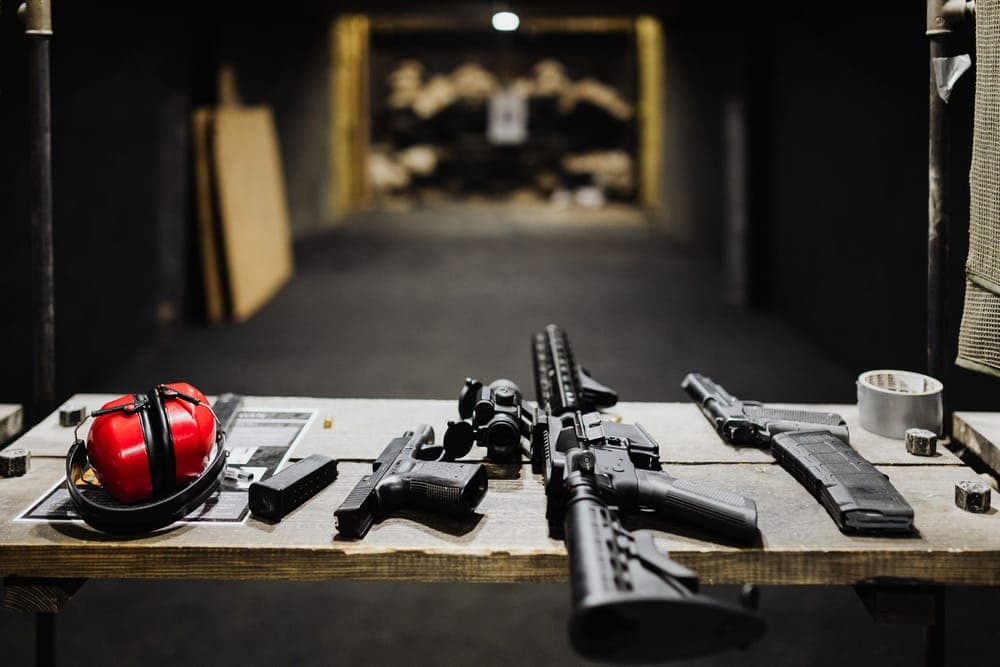
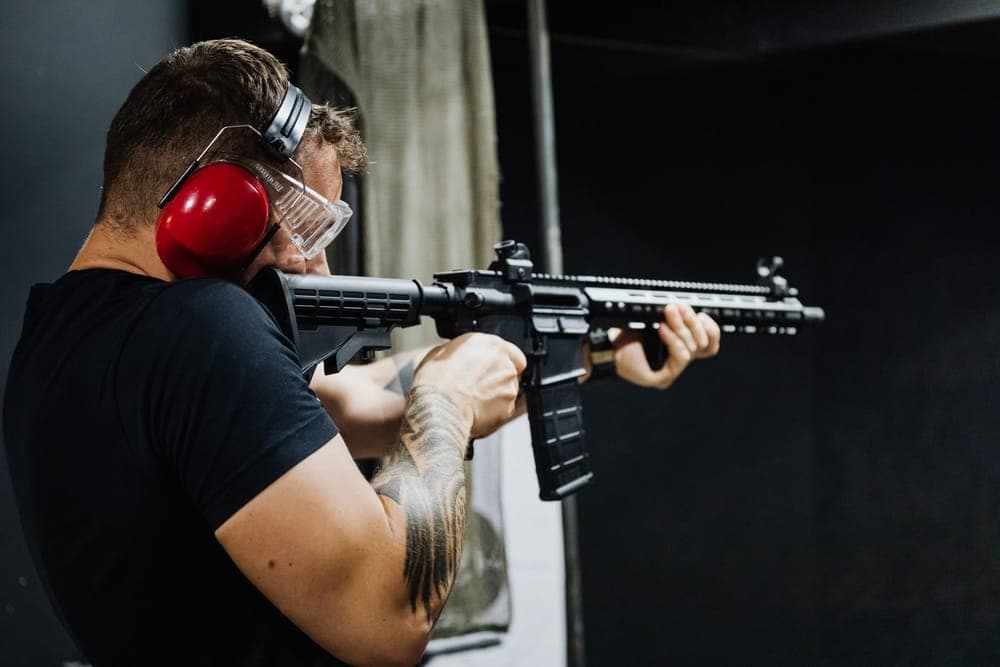
Safety first. This is general information, not a substitute for hands-on instruction. Follow your range's rules and your firearm's manual, and consider a certified safety course. See our gun safety rules.
The short list: what to bring to the shooting range
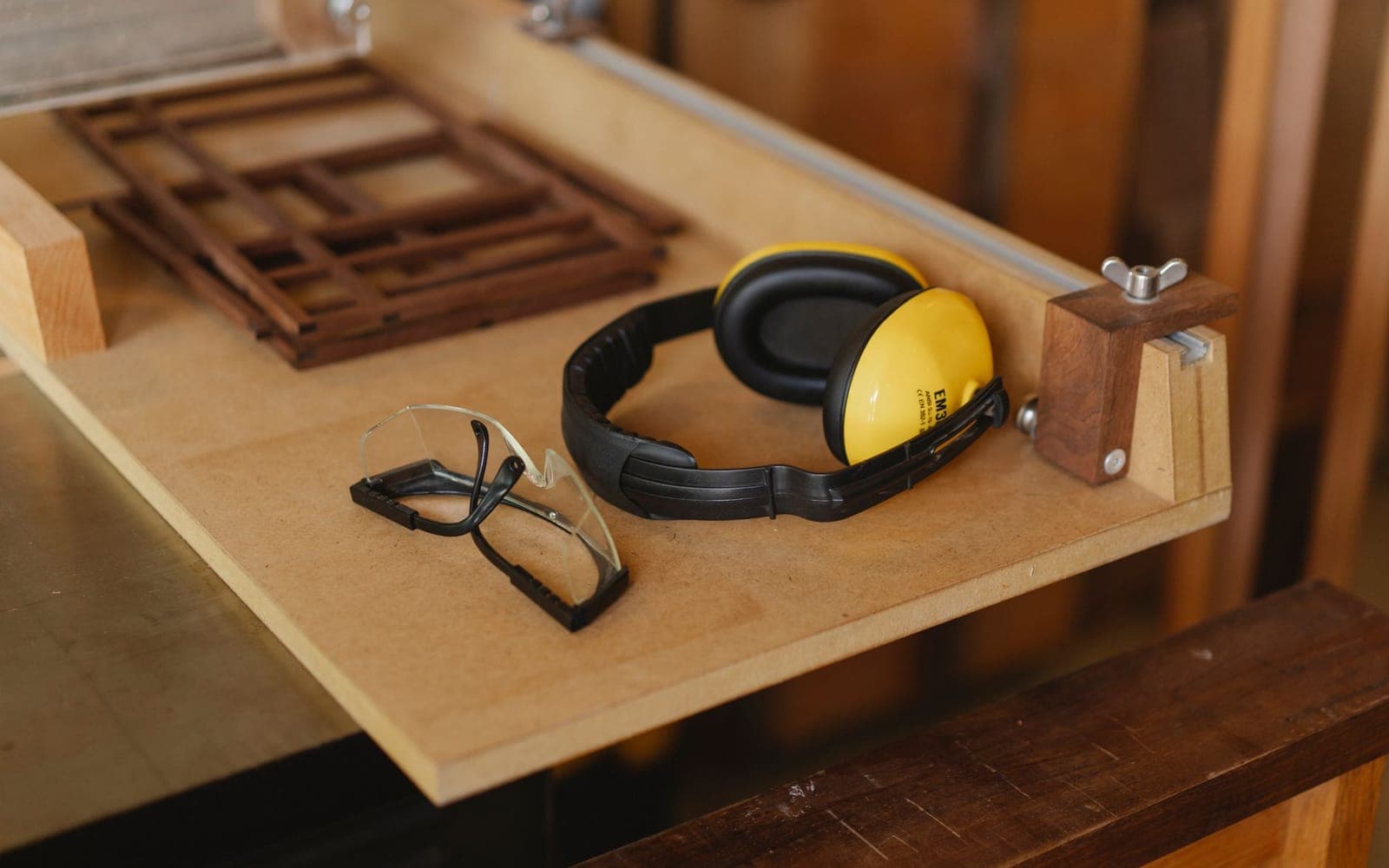
If you only read one part of this page, read this. Here's what to bring to the shooting range on a first trip, in order of importance:
- Eye protection marked Z87+ (the high-impact mark on safety glasses).
- Ear protection with a published NRR (Noise Reduction Rating, the number on the package), and foam plugs to wear under muffs at an indoor range.
- A government-issued ID.
- Your firearm, unloaded and cased, if you're bringing one.
- Ammunition that matches your firearm and that the range allows.
- Targets, if the range doesn't sell them.
- A signed waiver, if the range lets you sign online first.
- The right clothes: a high neckline, closed-toe shoes and a cap.
Everything else makes the day easier but won't stop you from shooting. The rest of this page explains each item, what to add as you go more often, what to leave at home, and what changes between an indoor and an outdoor range. Where we quote a range's rule, it's an example: every range writes its own.
Call the range first
Most of the "do I need to bring..." questions have one honest answer: it depends on the range. NSSF's advice for a first visit is to "ask the range manager, safety officer or counter staff to go over the range rules and fees" ( Let's Go Shooting). Doing that by phone before you pack saves you from driving back for a forgotten item, or carrying something the range won't let you use. Ask:
- Do you provide, rent or sell eye and ear protection?
- Do you sell targets, and are there rules about which targets I can use?
- Do you rent firearms, and what do I need to rent one?
- Can I sign the waiver online, and what ID do I need?
- Is there a dress code?
- Do first-time visitors need an orientation, a class or proof of training?
Answers really do differ. Connecticut's Glastonbury public range, for example, says "Ammunition, firearms, eye and ear protection, and targets are not provided" ( Connecticut DEEP), while The Range 702 in Las Vegas says that if you don't have your own eye and ear protection, "most ranges provide protective gear that you can rent or purchase" ( The Range 702). Our guide to your first time at a shooting range walks through the rest of the visit, from check-in to cleanup.
Must-bring: the non-negotiables
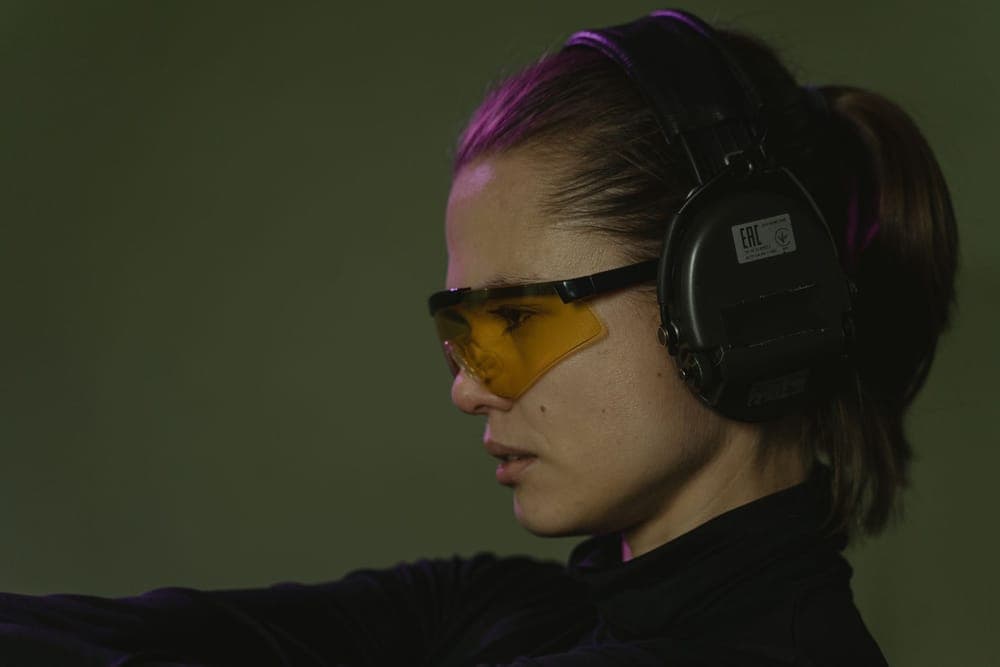
- Eye protection marked Z87+. NSSF's Rule 7 is "Always Wear Eye and Ear Protection When Shooting", and NRA explains why: guns "can also emit debris and hot gasses that could cause eye injury" ( NRA). Look for glasses marked Z87+; safety-eyewear maker HexArmor explains the "+" means the eyewear "meets a higher impact standard and goes through a much tougher set of tests than Z87" (HexArmor). Everyday sunglasses aren't a safe bet unless they carry that mark. Our picks: best shooting glasses, or over-the-glasses frames if you wear prescription glasses.
- Ear protection with a published NRR. ASHA's guide on firearm noise says to "Always use HPDs any time you fire a gun or are around someone firing a gun," and to "pack HPDs in your bag ahead of time" ( ASHA; HPD means hearing protection device). Muffs, plugs, or both. Our picks: best hearing protection for shooting.
- Foam earplugs, for indoors. ASHA advises that at an indoor facility you "wear double hearing protection", meaning plugs under your muffs. A spare pair also covers a friend who forgot theirs. See best earplugs for shooting.
- A government-issued ID. The Range 702: "You'll be required to present a government-issued ID, such as a driver's license or passport."
- Your firearm, unloaded and in a case, if you're bringing one. Shoot Indoors near Philadelphia: "It is required that you bring any outside firearms into the range cased and unloaded" ( Shoot Indoors). How you carry it there is governed by state and local law, which varies; our guide to transporting a gun to the range links the official sources, and lockable pistol cases covers the case itself.
- Ammunition that matches your firearm and that the range allows. NRA's rule: "Use only the correct ammunition for your gun." We don't recommend or link ammunition; check your firearm's manual for what it takes, and ask the range whether it has ammunition rules.
- Targets, if the range doesn't sell them. For a first trip, a target that shows your hits clearly makes the day more useful. See best shooting targets for beginners.
- The right clothes. Triangle Shooting Academy's dress code exists "for safety reasons – such as preventing hot brass from making contact with your skin" ( Triangle Shooting Academy). A crew-neck or collared shirt, closed-toe shoes and a cap cover most dress codes. The full rundown is in what to wear to a shooting range.
Nice to have: the things that make the day easier
- A range bag. One bag that holds your eye and ear pro, targets, ID and small tools means nothing gets left in the car. Our best range bags page sizes them for one pistol or three, and what to put in a range bag is the packing list for it.
- Electronic ear muffs. Passive muffs work, but electronic ones let you hear the range brief and commands. ASHA describes them as letting through sounds "that are soft or average in volume" until "there is a loud noise." See best electronic ear muffs.
- A magazine loader. A loader takes the thumb work out of filling pistol magazines. Maglula says its UpLULA "loads and unloads" virtually all 9mm to .45 ACP pistol magazines (Maglula). It's the loader pick in our first range kit.
- A stapler and pasters, for outdoor stands. If you'll hang paper on a backer, a staple gun saves fumbling with tape. Champion sells one that takes JT21 staples to "keep your paper targets securely in place" ( Champion). Pasters, small stickers that cover old holes, let you shoot a sheet again.
- A target stand, for outdoor ranges that let you set up your own. See best target stands.
- Lead-removal wipes. For hands and face when there's no sink nearby. Our guide to lead exposure at the range explains why they help.
- Water and a snack, kept away from the firing line, for breaks. Florida's range rules: "Food, beverages and smoking are not allowed on the firing line" ( Florida FWC). Wash up before you eat.
- A small first-aid kit in the bag or the car.
- A pen and a spare target to note what worked, so your next trip starts where this one ended.
Leave at home
- Anything loaded. Firearms arrive and leave unloaded. Mississippi's public ranges: "Firearms shall be unloaded and either holstered or cased, as you enter or depart the range area!" ( Mississippi MDWFP)
- Alcohol. NRA: "Never use alcohol, over-the-counter drugs or prescription drugs before or while shooting."
- Sandals, tank tops and low-cut shirts. Triangle Shooting Academy bans "open-toed shoes or high heels" and "tank tops, low-cut, see-through or cropped shirts".
- Sunglasses as your only eye protection, unless they're marked Z87+. See shooting glasses vs sunglasses.
- Snap caps and dummy rounds, unless an instructor asks for them. Training rounds should never share a box or pouch with live ammunition; our snap caps vs dummy rounds guide explains why.
- Steel targets, unless the range allows them. Where it does, follow the target maker's rules. Champion, for example, sets "15 yards" as "the minimum shooting distance when using non-magnum class handgun, supersonic .22LR rimfire, and shotgun birdshot ammunition" for its steel (Champion steel target warnings). See steel target safe distance.
Indoor vs outdoor: what changes on the list
Most of the must-bring list is the same everywhere. What changes is noise, light and how targets get set up.
| Item | Indoor range | Outdoor range |
|---|---|---|
| Ear protection | Plugs and muffs together (ASHA: "wear double hearing protection" indoors) | Muffs or plugs at minimum; doubling up still adds protection |
| Lens color | Clear | A gray or smoke lens for bright sun, or clear on overcast days |
| Targets | Ask what the range allows and how targets are hung | Ask; you may need your own stand, stapler and backer |
| Clothing | High neckline and closed-toe shoes for hot brass | The same, plus a brimmed cap, layers and sunscreen |
| Extras | Lead-removal wipes for the drive home | Water, and a trash bag if the range asks you to pack out |
Why the noise difference? Researchers writing with NIOSH put it plainly: "Shooting in an enclosed, reflective, reverberant environment (indoors or hunting blind) increases the hazard to hearing" (Meinke et al., 2017). For lenses, Honeywell's Uvex tint guide (written for workplace eyewear) recommends clear lenses where "normal to low light conditions exist" and gray "in outdoor environments where sunlight and glare causes eyestrain and fatigue" ( Uvex tint guide). Shooting-glasses maker Decot adds a simple rule: "We recommend you stay with the lightest lens shade that is comfortable for you" (Decot). Our indoor vs outdoor shooting range comparison goes deeper, and the lens color guide covers every tint.
Renting or tagging along: a lighter list
Not everyone brings a firearm on a first trip. If you're renting at the range, or going with a friend who owns one, your list gets short:
- Your own eye and ear protection (loaners exist at some ranges, but yours fits)
- A government-issued ID
- The right clothes
- A friend, if the range requires one for rentals
That last one is real. The Range 702 notes that "a friend is also a measure that many ranges require for firearm rentals, at least until the staff gets to know you." And if you're only watching, you still need eye and ear protection: NRA's rules say "shooting glasses and hearing protection should be worn by shooters and spectators." Bringing kids? Check the range's age policy and pack kid-size gear; our guide to taking kids to the shooting range covers both.
What to look for in the gear you buy
If you're buying for this trip, spend on the two things that protect you before anything else. Here's what matters in each piece:
- Ear protection: a published NRR, a cup that seals over your glasses arms, and, if you can, electronics so you hear commands. At an indoor range, plan on plugs underneath whatever muff you choose.
- Eye protection: a Z87+ mark on the frame or lens, a lens color for where you'll shoot, and thin enough arms to sit under your muffs.
- A bag: enough room for the must-bring list, with published dimensions so you can check what fits.
- Targets: something that shows your hits from the bench, so you learn from each string of shots.
Our picks for this
The first-trip checklist, bought once
One pick for each checklist item worth buying before a first trip: ear pro, eye pro, a bag and targets. Every spec comes from the maker's own page.
- Stock photo
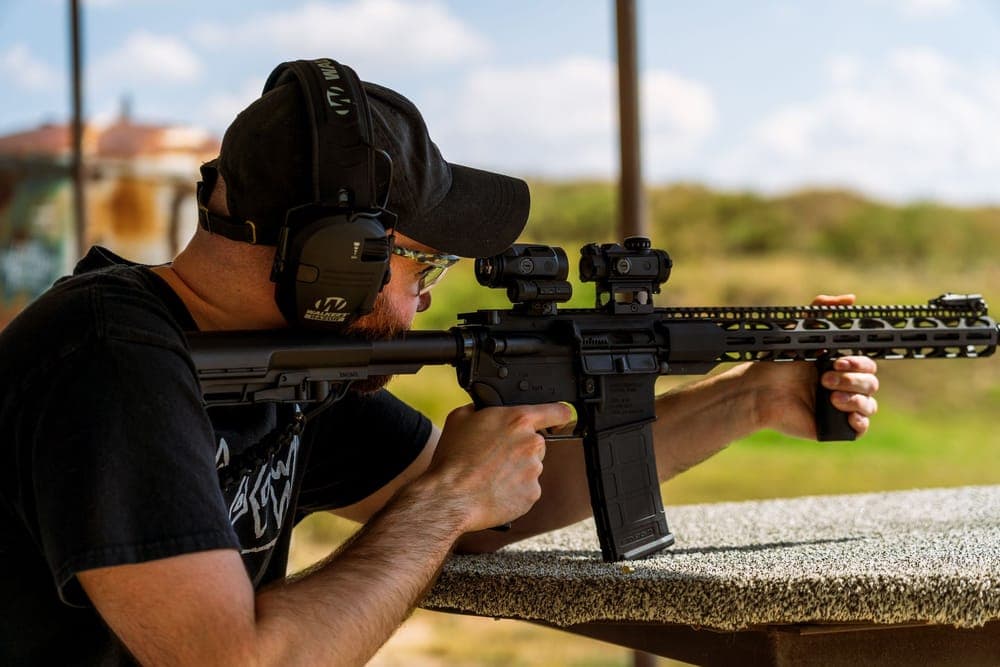
Best first electronic muff
Howard Leight Impact Sport
NRR 227.2/10ResearchedElectronic, so you hear the brief and the commands: NRR 22 with a 4-hour auto shut-off. Wear foam plugs under it indoors.
Check price · Amazon#ad · Price set by Amazon · How we make money for the link to Howard Leight Impact Sport
- Stock photo

Best first pair of shooting glasses
Pyramex Intruder
Z87+6.9/10ResearchedPyramex states ANSI/ISEA Z87.1-2020 + High Impact. Order clear for indoor ranges, or gray for bright outdoor days.
Check price · Amazon#ad · Price set by Amazon · How we make money for the link to Pyramex Intruder
- Stock photo
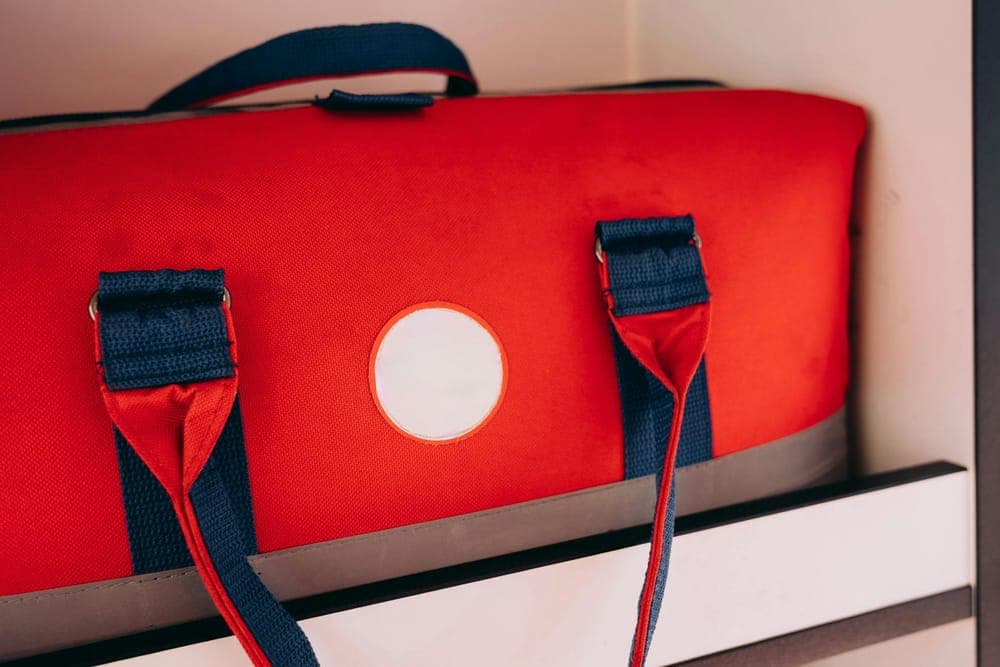
Best for carrying up to three pistols
Savior Equipment Specialist Range Bag
7.0/10ResearchedPublished internal dimensions (13 x 8.5 x 9 in), three cushioned pistol sleeves, a divider and lockable zippers.
Check price · Amazon#ad · Price set by Amazon · How we make money for the link to Savior Equipment Specialist Range Bag
- Stock photo
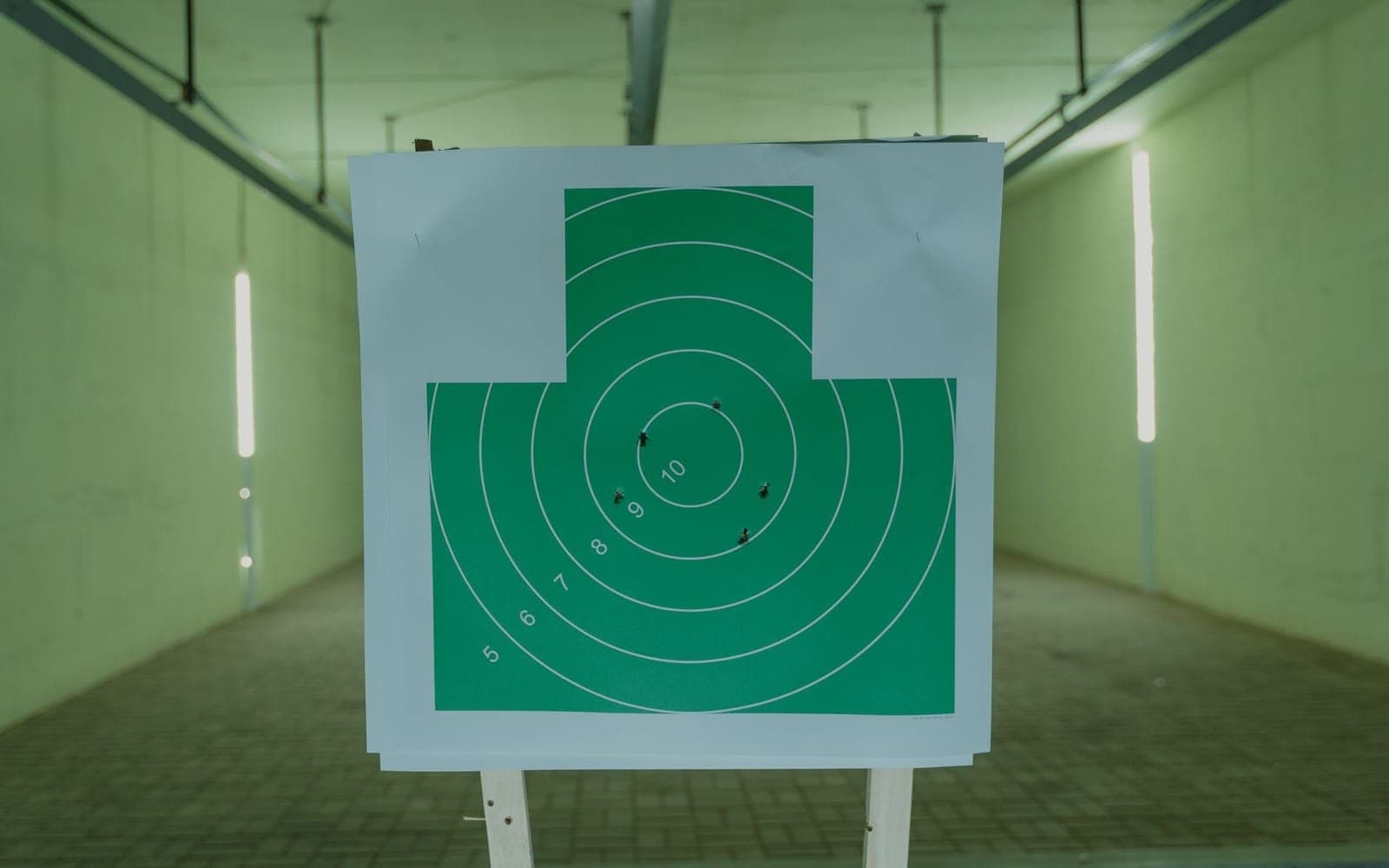
Best first reactive target
Birchwood Casey Shoot-N-C 12 x 18 Handgun Trainer
7.9/10ResearchedSelf-adhesive 12 x 18 sheets Birchwood Casey says leave chartreuse rings around each hit, with 110 pasters to reuse them.
Check price · Amazon#ad · Price set by Amazon · How we make money for the link to Birchwood Casey Shoot-N-C 12 x 18 Handgun Trainer
Specs come from Howard Leight, Pyramex, Savior Equipment and Birchwood Casey. For the whole kit in buy-first order, including a cleaning kit and a loader, see our best shooting range gear for beginners. If you'd rather buy eyes and ears in one box, see our ear and eye protection combos.
Packing the night before
A checklist only helps if you use it before you leave. A simple routine:
- Eye and ear protection go in first. ASHA's tip is to "Always have HPDs handy (e.g., packed in your firearm case and in your vehicle)". A spare set of foam plugs in the car covers the day you forget.
- Check electronic muffs. If yours take batteries, put fresh ones in the bag.
- ID and waiver in the same pocket every time.
- Firearm unloaded and cased, following your state's transport rules. NSSF's Rule 2 says that when not in use, "firearms and ammunition should be secured in a safe place, separate from each other" ( NSSF).
- Targets, stapler and pasters, if your range needs them.
- Clothes laid out: high neckline, closed-toe shoes, a cap.
Five packing mistakes first-timers make
- Bringing plugs but no muffs. Foam plugs are great under muffs, but some ranges won't accept them on their own. Triangle Shooting Academy says "Ear muffs are required to be worn while inside the range. Ear plugs are not considered to be sufficient ear protection." If your only ear pro is a pack of plugs, call first.
- Counting on the range for everything. Glastonbury provides no ammunition, firearms, eye and ear protection or targets. Other ranges sell all of it. Assume nothing until you've asked.
- Dead batteries in electronic muffs. Flat batteries cost you the part that lets you hear the brief and the commands. Howard Leight builds a 4-hour auto shut-off into its Impact Sport so a forgotten switch doesn't drain the AAAs (Howard Leight), but a spare set in the bag is still worth carrying.
- Relying on everyday prescription glasses. Some ranges accept them; Triangle Shooting Academy lists prescription eyeglasses as "an approved replacement for standard eye protection." That's one range's policy, not an impact rating. If you wear glasses, read can you wear glasses at a shooting range before you go.
- Packing training rounds with live ammunition. Snap caps and dummy rounds belong in their own marked container at home, never in the same pouch as the rounds you'll fire.
When you get home
The range trip isn't quite over at the parking lot. Wash your hands and face before you eat; North Carolina's public-health fact sheet on indoor ranges says to wash "after shooting, picking up spent ammunition, cleaning guns, reloading and before eating drinking, smoking or contact with other people" ( NC DHHS, via CDC Stacks). NRA Women's attire guide adds that "It is also a good idea to wash your range clothes separately from your other clothing" ( NRA Women).
Then there's the firearm. Many manuals call for cleaning after every range session; follow yours, and unload and verify it's clear before you start, with no ammunition in the cleaning area. A cleaning kit waiting at home makes that easy: see best gun cleaning kits and our step-by-step guide to cleaning a pistol.
How we scored this
Units we claim to have tested: none
Most gear sites say they tested thirty muffs. We haven't put these on a sound meter, and we say so. Every pick here is labeled Researched: we compiled each maker's published specs (the EPA-labeled NRR on hearing protection, the Z87+ mark on glasses), read the manuals, and scored everything on a public rubric. Every figure links to where it came from, and marketing claims are labeled “maker's claim.”
Scores are editorial judgments from that documented research, not test results. Commissions never set a score or decide a pick. The rubric and its weights are published.
Questions
Common questions
What do I need to bring to a shooting range for the first time?
Do I need to bring my own ear and eye protection?
What should I bring to an indoor shooting range?
What should I bring to an outdoor shooting range?
Should I bring my own gun on my first range trip?
Can I bring my own targets to the shooting range?
Where this comes from
Sources
- NSSF Let's Go Shooting, New Shooters, accessed 2026-09-19
- The Range 702 (Las Vegas), "First-Time Indoor Range Visit? Your Complete Beginner Guide" (range rules example), accessed 2026-09-19
- Shoot Indoors (King of Prussia, PA), "Pistol Range Etiquette: 4 Things To Know" (range rules example), accessed 2026-09-19
- Triangle Shooting Academy, Dress Code (range rules example), accessed 2026-09-19
- Connecticut DEEP, Glastonbury Shooting Range (range rules example), accessed 2026-09-19
- Florida Fish and Wildlife Conservation Commission, Range Safety Rules (range rules example), accessed 2026-09-19
- Mississippi Dept. of Wildlife, Fisheries, and Parks, Shooting Facility Rules & Regulations (range rules example), accessed 2026-09-19
- NRA, NRA Gun Safety Rules, accessed 2026-09-19
- NSSF, Firearm Safety: 10 Rules of Safe Gun Handling, accessed 2026-09-19
- NRA Women, "The Dos and Don'ts of Gun Range Attire" (2020), accessed 2026-09-19
- ASHA, Recreational Firearm Noise Exposure (Audiology Information Series, 2024), accessed 2026-09-19
- Meinke DK et al., "Prevention of Noise-Induced Hearing Loss from Recreational Firearms," Seminars in Hearing, 2017 (CDC Stacks), accessed 2026-09-19
- HexArmor, "Safety eyewear: What do lens markings and ANSI Z87+ mean?", accessed 2026-09-19
- Honeywell Uvex, Ultra-spec 2000 / SCT Filters and Tints lens guide (PDF), accessed 2026-09-19
- Decot Hy-Wyd Sport Glasses, Shooting Glasses Lens Color Guide, accessed 2026-09-19
- Champion / Primos, Steel Target Warnings, accessed 2026-09-19
- North Carolina DHHS, "Preventing Lead Exposure at Indoor Shooting Ranges" fact sheet (CDC Stacks), accessed 2026-09-19
- Howard Leight Shooting Sports, Impact Sport Electronic Earmuff product page, accessed 2026-09-19
- Pyramex, Intruder product page, accessed 2026-09-19
- Savior Equipment, Specialist Range Bag product page, accessed 2026-09-19
- Birchwood Casey, Shoot-N-C 12 x 18 Inch Handgun Trainer Target product page, accessed 2026-09-19
- Champion (primos.com), Staple Gun product page, accessed 2026-09-19
- Maglula, UpLULA universal pistol magazine loader product page, accessed 2026-09-19
We haven't tested the gear on this page and we don't pretend to. Specs come from each maker's own pages and data sheets (linked on every product); ratings like NRR and Z87+ are explained from the standards and agencies behind them. Prices are set by Amazon and change often, so we don't print them. Where a figure isn't published, we say so. Read the full method.