Safety first. This is general information, not a substitute for hands-on instruction. Follow your range's rules and your firearm's manual, and consider a certified safety course. See our gun safety rules.

Why magazines matter
Most new owners clean the bore religiously and never touch the magazine. That is backwards in terms of what actually goes wrong at a range. Ruger's Mark IV manual puts magazines at the top of its malfunction list: failures of a cartridge to feed or to chamber properly "typically are caused by a damaged magazine, improper firearm handling or defective ammunition".
A magazine is a spring-loaded box that lives in a bag, gets dropped on the ground, collects grit through the witness holes and carries residue off every round you load into it. Then it is asked to present a cartridge at exactly the right angle, every time. Of all the parts you own, it has the hardest job and the least attention.
Bench & Berm does not test gear, and we are not gunsmiths. Everything on this page comes from instructions firearm makers publish themselves. Your manual is the authority for your gun, and where it differs from anything here, follow your manual.
How often, per the manuals
Makers are consistent on the pistol and quieter on the magazine, which is why the one explicit instruction is worth quoting. Ruger's Mark IV care section lists the steps for cleaning the pistol and then adds: "If magazine becomes dirty, it should be disassembled and thoroughly cleaned." That is a condition trigger, not a schedule.
For the pistol itself, Glock's care guidance says to clean and lubricate when it is brand new before first firing, after each time it is fired, at least once a month if unused, and if it has been exposed to rain, snow, perspiration, salt water, dirt or dust. A sensible magazine interval sits inside that:
- Wipe the outside whenever you clean the pistol. Thirty seconds.
- Strip and clean when it is visibly dirty, has been dropped in dirt or sand, has been through rain, or has caused a malfunction.
- Strip and clean anyway once in a while if the magazine is for defensive use, because "visibly dirty" is hard to judge through a steel body.
Our how often should you clean your gun page collects what the manuals say about intervals generally, and how to clean a pistol is the full routine this fits inside.
Before you start
Work on a surface that will hold small parts. A cleaning mat does this better than a kitchen table — see best gun cleaning mats — and it keeps solvent off furniture.
Taking a magazine apart
Every design is slightly different and your manual has the sequence for yours. Ruger's published Mark IV procedure is a good example of the shape of the job, and of how careful the maker expects you to be:
- Withdraw the magazine and remove all cartridges. Retract the bolt or slide and check the chamber to be certain no cartridge remains in the pistol.
- Release the floorplate or base — on the Mark IV, Ruger has you depress a retaining plunger through a hole with a drift punch and slide the magazine block forward.
- Ruger's warning for that step is the one to take literally: slide it forward slowly, "BEING VERY CAREFUL TO KEEP PLUNGER AND SPRING UNDER CONTROL. If not contained, these parts will fly out with considerable force. Therefore keep bottom end of magazine pointed away from persons and objects."
- Withdraw the spring slowly, then remove the follower.
On most modern polymer-framed pistols the equivalent is simpler: push the floorplate forward or press a retaining button, catch the plate, and let the spring out under control. The constant across all of them is "under control" and "pointed away from your face".
Note the parts as they come out and their orientation. The follower goes back in one way round, and a follower installed backwards is a magazine that does not work.
The clean itself
This is a dry job, and short:
- Brush the inside of the body. A bore brush of roughly the right size or a nylon utility brush from a cleaning kit. Ruger's malfunction procedure says to "use a bristle brush and solvent to remove grease and fouling" from the chamber area, and the same tool suits the magazine body.
- Wipe the body out with a patch or cloth. Dry, until the cloth comes out clean.
- Wipe the spring and the follower. Carbon and grit collect on both, and the follower's job is to slide without binding.
- Use solvent only if you need it, and let it dry. Ruger's caution applies here as anywhere on the gun: caustic or acetone-based cleaners are not recommended because the solvent "may harm the finished surfaces, plastics, laminates, composites, rubber grips, or other materials". Test anything in an inconspicuous place first.
- Leave it dry. No oil inside. See the next section.
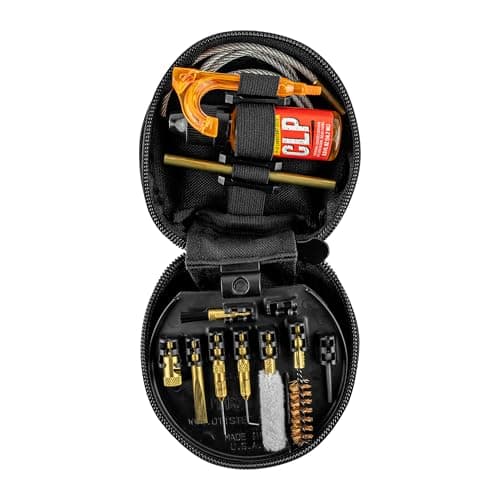
Our gun cleaning supplies list covers the brushes and patches, and best pistol cleaning kits covers the boxed sets that include them.
Why you do not oil a magazine
This is the part people get wrong, and the manuals support the answer from two directions.
First, oil inside a magazine collects exactly what you just removed. Ruger's lubrication note: "Excess accumulations of oil tend to attract particles of dust and dirt and may congeal in cold weather which can interfere with the safe and reliable function of the pistol." A magazine body is a dust trap with a spring in it; adding oil makes it a grinding paste.
Second, and more seriously, oil must not reach your ammunition. Ruger warns: "Do not spray or apply lubricants directly on ammunition. If the powder of a cartridge is affected by the lubricant, it may not be ignited, but the primer firing may push the bullet into the bore where it may become lodged." That is a description of a squib load, and firing another round into an obstructed bore is how guns and hands get wrecked. Our misfire, hangfire or squib page covers what to do if it happens.
So: a dry magazine. If the exterior is rusty or you live somewhere humid, the defensible move is the lightest possible film on the outside of a steel body, wiped until nothing transfers to a cloth — and nothing at all inside. Glock's care page makes the general point about restraint: "Applying the correct amount of lubrication is key. Too much lubrication can affect the pistol's performance." Our CLP vs gun oil page covers what the bottle is actually for.
What to inspect while it is apart
A strip-down is the only time you can see the three things that decide whether a magazine works. Ruger's malfunction procedure names all three:
- The feed lips. "Check the magazine lips to be certain they are free of nicks and burrs and are not deformed." This is the single most common cause of a magazine-related malfunction, and the damage usually comes from dropping a loaded magazine on concrete.
- The spring. "Check to see that the magazine spring tension is adequate." No maker publishes a number for this, so it is a comparison against a magazine you trust, and the honest advice when the spring is suspect is to replace it with a factory part.
- The follower. After reassembly, Ruger says to "test magazine follower to ensure it has free movement". A follower that binds is a magazine that will stop feeding at some point in the stack.
Putting it back together
- Reassemble in reverse order, keeping the spring and any plunger contained as the base goes back on. Same eye protection, same direction discipline.
- Check the follower moves freely through its whole travel.
- Ride the follower down, do not let it snap. Ruger's instruction is to "always 'ride' the magazine follower button up and down with your thumb. Do not lower follower button and then permit it to snap up."
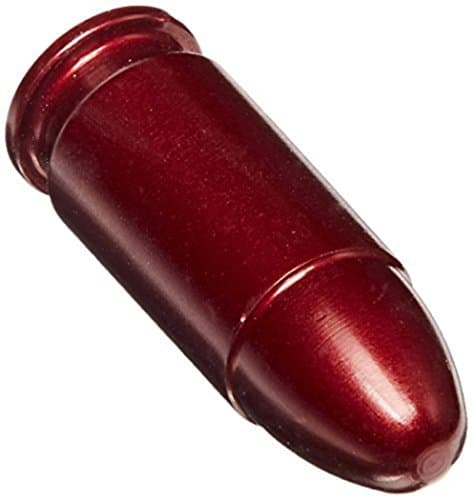
- Load it with dummy rounds and function-check before you trust it with live ammunition. Snap caps and dummy rounds are made for this — see snap caps vs dummy rounds.
- Then check it at the range, not in your living room. Ruger's own procedure for returning a pistol to service after a malfunction ends with eye and hearing protection on and the face a safe distance from the pistol.
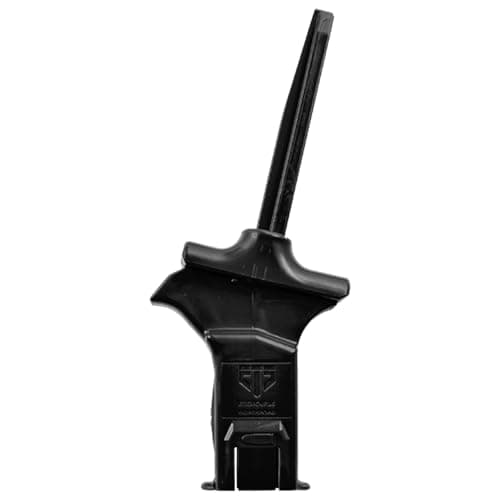
If loading the magazine is the part you dread, a loader removes the thumb pain entirely: best magazine loaders.
What you need
Our picks for this
A brush, a bottle you use sparingly, and somewhere to work
You do not need a magazine-specific product. You need the brushes from a handgun cleaning kit, a CLP for the pistol itself rather than for the magazine's insides, and a surface that holds small parts.
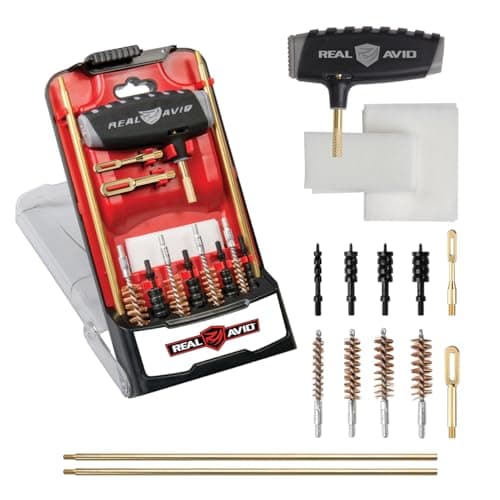
Best handgun-only kit with a stand-up case
Real Avid Gun Boss Pro Handgun Cleaning Kit
9.3/10ResearchedThe brushes and patches that do this job, in a case that fits a range bag. Nothing here is magazine-specific, which is the point.
$23.99Amazon#ad · Price as of November 4, 2026 · How we make money for the link to Real Avid Gun Boss Pro Handgun Cleaning Kit
Best all-in-one CLP
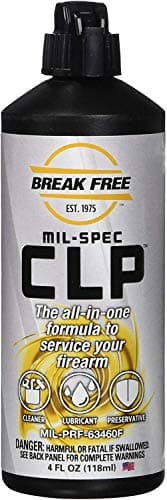
Break Free CLP
9.8/10ResearchedFor the pistol, not the inside of the magazine. Mentioned here so you know which product the restraint applies to.
$35.99Amazon#ad · Price as of November 4, 2026 · How we make money for the link to Break Free CLP
Best cleaning mat overall
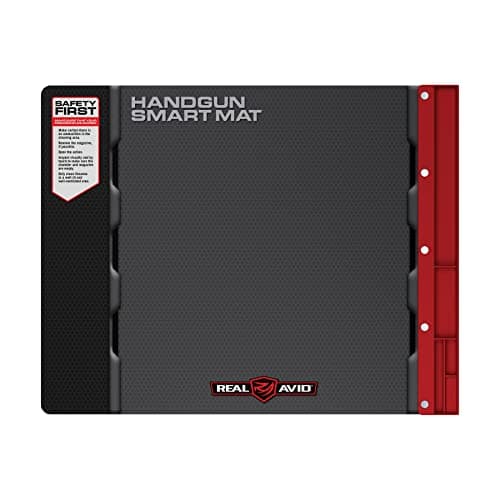
Real Avid Smart Mat - Handgun
9.8/10ResearchedA magazine comes apart into small parts under spring pressure. A mat with trays is the difference between finding the plunger and buying another one.
$24.99Amazon#ad · Price as of November 4, 2026 · How we make money for the link to Real Avid Smart Mat - Handgun
Wash your hands afterwards
Magazine cleaning puts your fingers directly into the residue from every round you have fired. Ruger's LCP MAX manual warns that discharging firearms in poorly ventilated areas, cleaning firearms or handling ammunition may result in exposure to lead, and instructs you to wash hands thoroughly after exposure.
A CDC health alert about indoor ranges adds the detail that makes a product category exist: NIOSH research shows washing hands with soap and water "is not completely effective in removing lead (and other toxic metals) from the surface of the skin". Our lead exposure page covers the routine, and best lead removal wipes covers the products. Ventilate the room, keep food out of it, and wash up when you finish.
How we scored this
Every pick, scored on numbers you can check
Every pick here is labeled Researched: we compiled each maker's published specs (the EPA-labeled NRR on hearing protection, the Z87+ mark on glasses), read the manuals, checked the standards behind them, and scored everything on a public rubric. Every figure links to where it came from, and marketing claims are labeled “maker's claim,” so you can see exactly why a pick ranks where it does.
Scores are editorial judgments built from that documented research, published on our 8.4–9.8 scale: anything that fails a gate, or that we wouldn't hand a new shooter, never reaches a page, so the number tells you how much better one good option is than the next. Commissions never set a score or decide a pick. The rubric and its weights are published.
Questions
Common questions
Should you clean pistol magazines?
Should you oil the inside of a magazine?
How do you take a pistol magazine apart?
What should I check while the magazine is apart?
How often should you clean a magazine?
Can you use solvent on a magazine?
Where this comes from
Sources
- Ruger, Mark IV owner's manual (magazine disassembly, care and cleaning, malfunction procedure)
- Ruger, LCP MAX owner's manual (lead exposure warning)
- Glock, Caring for Your Pistol, accessed 2026-10-17
- NRA, Gun Safety Rules
- NSSF, Rules of Firearm Safety
- CDC MMWR, health alert on lead exposure at indoor firing ranges, 2014
- Real Avid, Gun Boss Pro Handgun Cleaning Kit product page, accessed 2026-10-17
- Safariland, Break Free CLP product page, accessed 2026-10-17
Specs come from each maker's own pages and data sheets (linked on every product); ratings like NRR and Z87+ are explained from the standards and agencies behind them. Prices are set by Amazon and change often, so the buy button always takes you to the current one. Where a figure isn't published, we say so. Read the full method.