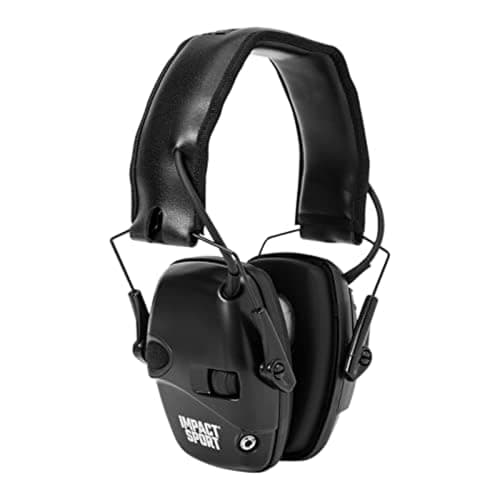
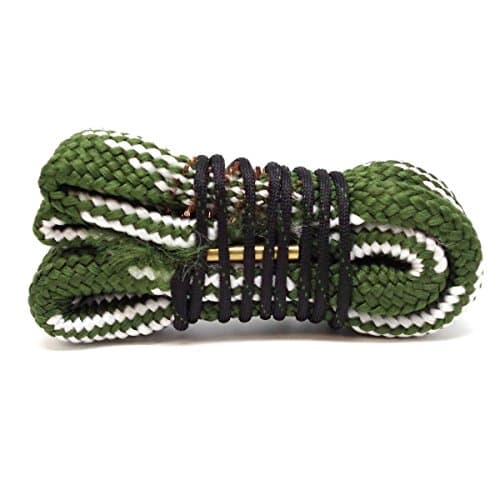
Safety first. This is general information, not a substitute for hands-on instruction. Follow your range's rules and your firearm's manual, and consider a certified safety course. See our gun safety rules.

These three words get used interchangeably on firing lines and they describe three different events with three different correct responses. The reason it matters is that the instinctive reaction to one of them, opening the action to see what went wrong, is exactly the wrong reaction to another.
Nothing on this page is a substitute for your firearm's manual or for instruction from somebody standing next to you. It is the vocabulary and the sequence, so you are not learning it for the first time while holding the gun.
The three, defined
The NRA's Shooting Sports USA publishes definitions worth quoting rather than paraphrasing (SSUSA):
- Misfire: "A misfire is diagnosed when a cartridge fails to fire after the trigger is pulled and the hammer or firing pin has fallen." You pull, you hear a click, nothing happens.
- Hangfire: "When there is a noticeable delay between the time the hammer or firing pin drops and the discharge of the firearm, a hangfire has occurred." It fires, just not when you expected.
- Squib load: "A cartridge or shell that produces projectile velocity and sound substantially lower than normal is called a squib load." It went off, quietly and weakly.
The cruel part: at the instant it happens, a misfire and a hangfire are indistinguishable. You cannot tell whether the round is dead or merely slow. Which is why the response starts the same way for both.
The rule that covers all three
In order, every time, regardless of which malfunction you think you have:
- Keep the muzzle downrange. Do not turn, do not look into the ejection port, do not lower the gun to your lap.
- Finger off the trigger. Out of the guard.
- Wait 30 seconds for a modern cartridge, counting rather than estimating. Two minutes with a muzzleloader.
- Say it out loud. "Malfunction" is enough, and it is what Georgia DNR's rules require of you.
- Then unload, still pointed downrange, and look at what came out.
Thirty seconds of standing still feels absurd and it is the cheapest insurance on a range. The alternative is having a round discharge while the action is coming open and your face is over it.
Misfire: what to do
A click and nothing else. Most often a bad primer, sometimes a light primer strike from the firearm, occasionally a round that was not fully chambered.
You still wait the 30 seconds, because at that moment you do not know it is a misfire rather than a hangfire. After the wait: unload with the muzzle downrange, catch the round rather than letting it bounce off the floor, and look at the primer.
- A clear, centered dent in the primer: the firearm did its job and the ammunition failed. Separate that round from your good ammunition and dispose of it properly. Set it aside, do not re-chamber it.
- A light, shallow or off-center mark: the firearm may be the problem. If it happens more than once in a session, stop and have the firearm looked at rather than working through the box.
- No mark at all: the round probably was not fully chambered, or something is wrong with the firing mechanism. Stop and check.
Do not re-chamber a round that has already been struck. The primer may be partially initiated, and you have no way to know.
Hangfire: the dangerous one
A hangfire is the reason the 30-second rule exists, and it is the malfunction most likely to injure somebody, precisely because it looks exactly like the harmless one.
The failure mode is simple to describe and ugly to be part of. You get a click, you assume a dead round, you start working the action, and the round fires as the case is clearing the chamber or as your hand is over the ejection port. The SSUSA article's advice is the right default: when in doubt, treat every delayed or absent discharge as a hangfire.
Which in practice means there is no "probably fine, it is just a dud" shortcut. The only version of this you ever perform is the slow one. Count the thirty seconds out loud if that helps you actually wait, the way NIOSH suggests counting while a foam earplug expands on our how to wear foam earplugs page.
Squib load: stop shooting
A squib is different in kind from the other two, because the round did fire. The danger is not a delayed discharge, it is a bullet stuck partway down your barrel and the next round arriving behind it.
What a squib feels and sounds like:
- A noticeably quieter report and much less recoil than the round before it. SSUSA's definition is a cartridge producing velocity and sound substantially lower than normal.
- The action does not cycle on a semi-automatic, because there was not enough gas or impulse to work it.
- No new hole in the target. The clearest confirmation, and the one most people are too busy to check.
That last point is worth being blunt about: clearing a squib means driving a lodged bullet out of a barrel, and getting it wrong damages the bore. A cleaning rod is the right tool and a hurried afternoon is the wrong time. The Otis-style kits on this site use flexible cables rather than rigid rods, which are excellent for cleaning and the wrong thing entirely for pushing out an obstruction, so this is one case where a rod kit matters. Our bore snake vs cleaning rod page covers the difference.
What to say on the line
Georgia DNR requires you to advise all persons at the firing line of the malfunction, and Florida FWC's rules say to immediately stop shooting when anyone calls a cease fire. Both of those put words in your mouth, so have them ready:
- "Malfunction!" Loud, while the muzzle stays downrange. Then hold position.
- "Cease fire!" If what you have is a squib, or if you are unsure and want the line stopped while somebody looks. You are allowed to call it.
- Ask for help. A range officer handles malfunctions for a living. On a first trip, asking is the correct move rather than a failure.
The thing not to do is turn around with the firearm to show somebody the problem. Our range commands page covers the rest of the vocabulary, and cold range vs hot range covers what the line does next.
What you need afterward
Nothing on this page is solved by a purchase. Two things do help: the means to practice the clearing motions safely at home, and a kit with a rod in it for the squib case.
Our picks for this
Practicing the response, and clearing the aftermath
Published specs from each maker. Snap caps and dummy rounds are for rehearsing the motions at home; they are never mixed with live ammunition.
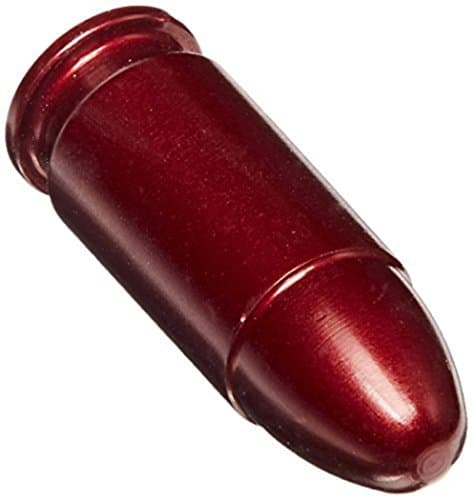
Best snap caps for dry fire
A-Zoom Precision Pistol Snap Caps 9mm
9.6/10ResearchedFor rehearsing an unload-and-clear sequence at home with no live ammunition in the room. Check your manual before dry-firing any firearm.
$16.99Amazon#ad · Price as of November 4, 2026 · How we make money for the link to A-Zoom Precision Pistol Snap Caps 9mm
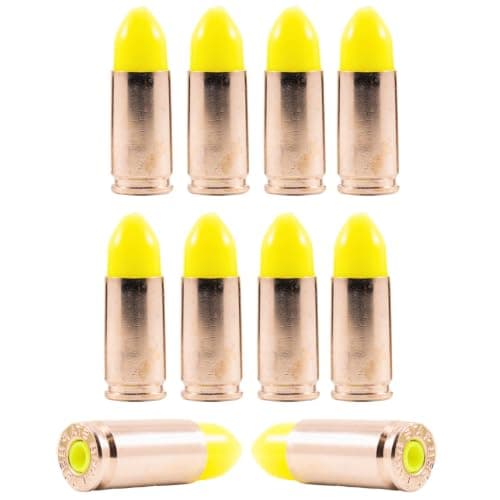
Best dummy rounds for drills and classes
ST Action Pro 9mm Action Trainer Dummy Round
9.6/10ResearchedA dummy round to load into a magazine so you can practice recognizing and clearing a click-no-bang without a live round present.
$12.59Amazon#ad · Price as of November 4, 2026 · How we make money for the link to ST Action Pro 9mm Action Trainer Dummy Round
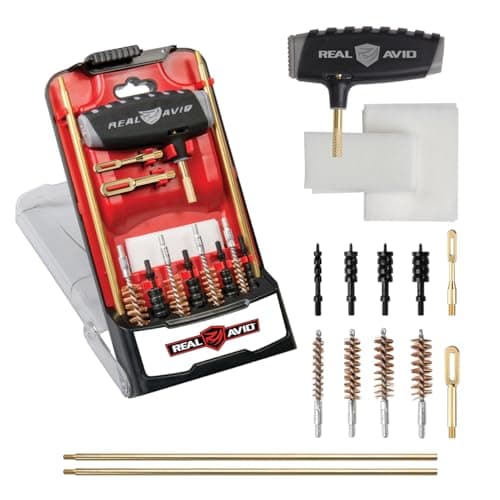
Best handgun-only kit with a stand-up case
Real Avid Gun Boss Pro Handgun Cleaning Kit
9.3/10ResearchedA rod-based handgun kit, which is the format you want for inspecting and clearing a bore rather than a flexible cable.
$23.99Amazon#ad · Price as of November 4, 2026 · How we make money for the link to Real Avid Gun Boss Pro Handgun Cleaning Kit
Reducing the odds
You cannot eliminate ammunition faults, but most of what goes wrong is avoidable:
- Buy factory ammunition from a reputable maker for your first few hundred rounds. Reloaded and remanufactured ammunition is where squibs concentrate, because a missing or short powder charge is a hand-loading failure mode.
- Store it dry. Primers and powder are chemistry, and damp storage is how a box turns into a collection of misfires years later.
- Keep the right caliber in the right magazine. Obvious, and still a real source of problems in a bag with three calibers in it. Our how to organize a range bag page covers separating them.
- Clean and lubricate the firearm as its maker specifies. Light primer strikes track back to a dirty or dry firing-pin channel more often than people expect. Ruger's own LCP MAX manual is an example of a maker publishing the schedule, and our how often to clean your gun page covers it.
And the underlying habit that makes all three malfunctions survivable is the one the NRA and NSSF put first: the muzzle always points somewhere safe. The NSSF's new shooter guidance is worth reading before a first trip, and our gun safety rules page has the rules themselves.
How we scored this
Every pick, scored on numbers you can check
Every pick here is labeled Researched: we compiled each maker's published specs (the EPA-labeled NRR on hearing protection, the Z87+ mark on glasses), read the manuals, checked the standards behind them, and scored everything on a public rubric. Every figure links to where it came from, and marketing claims are labeled “maker's claim,” so you can see exactly why a pick ranks where it does.
Scores are editorial judgments built from that documented research, published on our 8.4–9.8 scale: anything that fails a gate, or that we wouldn't hand a new shooter, never reaches a page, so the number tells you how much better one good option is than the next. Commissions never set a score or decide a pick. The rubric and its weights are published.
Questions
Common questions
What is the difference between a misfire and a hangfire?
How long should you wait after a misfire?
What is a squib load and what does it feel like?
What do you do after a squib load?
Can you reuse a round that misfired?
What should you say at the range if your gun malfunctions?
Where this comes from
Sources
- NRA Shooting Sports USA, "What Are The Differences Between A Squib Load, A Misfire And A Hangfire?", accessed 2026-10-10
- Georgia DNR, firearm range rules, accessed 2026-10-10
- Florida FWC, shooting range safety rules, accessed 2026-10-10
- NRA, Gun Safety Rules, accessed 2026-10-10
- NSSF, Rules of Firearm Safety, accessed 2026-10-10
- NSSF letsgoshooting.org, New Shooters, accessed 2026-10-10
- Ruger, LCP MAX instruction manual (PDF), accessed 2026-10-10
Specs come from each maker's own pages and data sheets (linked on every product); ratings like NRR and Z87+ are explained from the standards and agencies behind them. Prices are set by Amazon and change often, so the buy button always takes you to the current one. Where a figure isn't published, we say so. Read the full method.