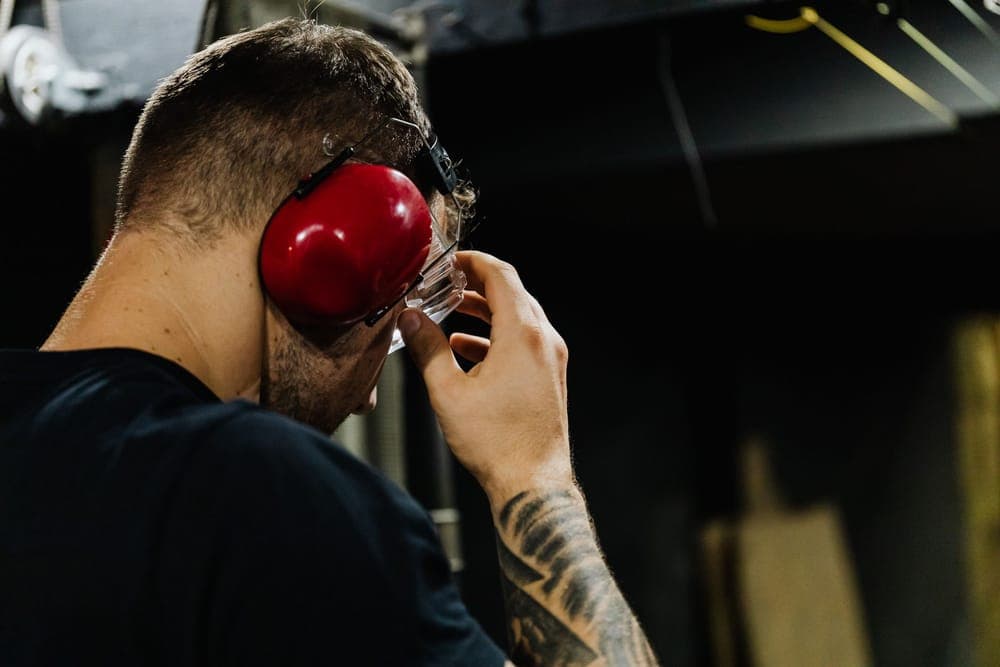
What range rules actually say
There is no single national rule, so the honest way to answer this is to quote real published range rules. Here are four, in the words their own agencies use.
| Range authority | Published rule |
|---|---|
| Georgia DNR firing ranges | "Any person using DNR firing ranges must wear hearing and eye protection." |
| Mississippi Department of Wildlife, Fisheries and Parks | "Unless you are inside of a building or vehicle (not including golf carts) eye and ear protection must be worn by everyone on the entire range facility, at any time during which firearms are being discharged." |
| Florida FWC shooting range safety rules | "Wear eye and ear protection." |
| Texas Parks and Wildlife shooting safety rules | "While shooting at the range, you must wear hearing and eye protection at all times... Wear glasses to protect your eyes from escaping gases, burnt powder (especially in blackpowder shooting), and other debris." |
Private ranges and clubs set their own rules and are generally no more relaxed than these. If you are planning a first visit, our first time at a shooting range page walks through what happens at the desk and on the line, and what to bring to the shooting range is the packing list.
Does it apply to spectators?
Read the Mississippi rule again: eye and ear protection "must be worn by everyone on the entire range facility" while firearms are being discharged, with an exception only for people inside a building or a vehicle. Georgia's applies to "any person using" the range.
So yes, in the general case. If you are bringing somebody along to watch, bring a second pair of glasses and a second set of muffs. The hazards on this page do not distinguish between the person who pulled the trigger and the person standing behind them — in fact ejected brass and bounced fragments are more likely to reach a bystander standing at the wrong angle. Our taking kids to the shooting range page covers the family version of this, and best kids shooting glasses covers small-fit pairs.
What eye protection is actually for
This is the part the rules skip, and it matters because people assume eye protection is about stray bullets. It is not. Texas Parks and Wildlife names three of the real hazards in its own rule — escaping gases, burnt powder and other debris — and the full list a range shooter faces is:
- Ejected brass. A hot case leaving a semi-automatic at speed, sometimes from the gun beside you rather than your own.
- Burnt powder and unburnt particles. Blown back at your face, most noticeably from a semi-automatic at the top of the slide and from revolvers at the cylinder gap.
- Gas and residue. The TPWD rule's "escaping gases", which is also why your glasses get a film on them after a session.
- Fragments coming back from the target. Jacket material, paint, paper staples, and from steel plates, spall. Our steel target safe distance page covers the distances steel makers publish for precisely this reason.
- Case ruptures and other malfunctions. Rare, and the reason manuals are emphatic. Ruger's Mark IV manual warns that a ruptured case can send fragments out of the firearm "with sufficient force to cause injury" and instructs: "Always wear shooting glasses and hearing protectors!"
- Solvent and oil. Not on the line, but at the cleaning bench afterwards, which is a hazard most people never think to protect against.
The safety bodies treat it as baseline rather than optional. The NSSF's rules of firearm safety and the NRA's gun safety rules both list eye and ear protection, and NSSF's new shooter resources put it in the first kit.
What counts as eye protection
A range officer is looking for wraparound or full-coverage glasses that look like safety glasses. What you should be looking for is a marking.
The civilian standard is ANSI/ISEA Z87.1, and the level that matters is the high-impact one, marked with a plus: Z87+. The ISEA summary of the standard is the standards body's own description, and OSHA's workplace eye protection rule, 29 CFR 1910.133, requires protectors that comply with it for workplaces with flying-particle hazards — which is a reasonable description of a firing line.
Our Z87 vs Z87+ page explains where the marking appears and what the plus adds. The short version: the marking is physically on the lens and the temple, so you can check it in your hand, and it costs essentially nothing — our best shooting glasses under 50 page exists because the rating is not a premium feature.
Do my prescription glasses count?
Usually not, and this catches a lot of people out. Ordinary prescription spectacles are made to an optical standard, not an impact standard. The lenses may well be polycarbonate and reasonably tough, but the frame is not designed to retain a lens under impact, there are no side shields, and nothing on them carries a Z87 marking.
Three honest routes exist and we compare them properly on prescription shooting glasses: wear an over-the-glasses frame over your own spectacles, use an insert or carrier behind a rated lens, or have a rated lens made to your prescription. Our can you wear glasses at a shooting range page answers the practical version of the question, and glasses for glasses wearers ranks the OTG frames.
Do sunglasses count?
Almost never. The overwhelming majority of sunglasses carry no impact rating at all, and a dark lens on an indoor range is actively unhelpful. We go through this in detail on shooting glasses vs sunglasses.
The exception is a pair of sunglasses that happens to be built to Z87+ — some makers do produce rated frames in sunglass styling, and our best polarized shooting glasses page lists pairs whose makers publish the marking. Check the lens and temple, not the brand.
The marking to look for
- Z87+ on the lens and the temple. The plus is the high-impact level. No marking, no purchase.
- Wraparound or side coverage. Brass arrives from the side, which is where ordinary spectacles have nothing.
- Clear lenses first. Indoors, and in flat light, clear is correct. Tints are a second pair, not a first one.
- Temple arms thin enough for earmuffs. A thick temple breaks a muff seal and costs you real hearing protection: glasses to wear under earmuffs.
- Anti-fog, if you shoot indoors. See how to stop shooting glasses from fogging.
What to buy
Our picks for this
Three ways to satisfy the rule
One cheap rated pair, one over-the-glasses pair for prescription wearers, and one kit that covers the eye and ear requirement in a single purchase.
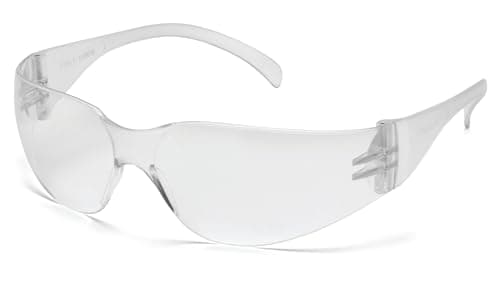
Best first pair of shooting glasses
Pyramex Intruder
Z87+6.9/10ResearchedThe cheapest Z87+ pair we recommend anywhere, in a long list of lens colors. Buy it clear first; a second pair in amber costs very little more.
$4.85Amazon#ad · Price as of November 3, 2026 · How we make money for the link to Pyramex Intruder
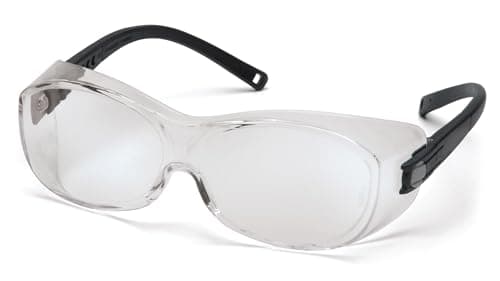
Best over-the-glasses pair
Pyramex OTS
Z87+7.1/10ResearchedAn over-the-glasses frame that fits over your own spectacles, with clear, gray and indoor/outdoor mirror lenses, for the most common version of this problem.
$6.08Amazon#ad · Price as of November 3, 2026 · How we make money for the link to Pyramex OTS
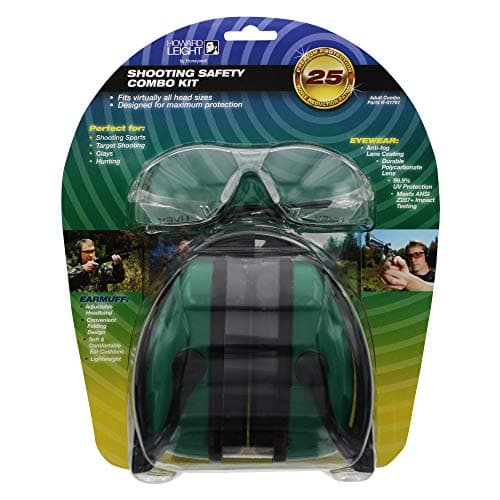
Best first eye-and-ear kit
Howard Leight Shooting Sports Safety Combo Kit
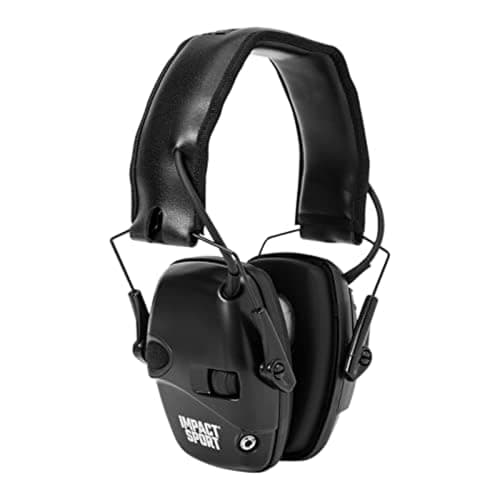
NRR 257.6/10ResearchedEarmuffs at NRR 25 plus clear glasses Howard Leight states meet ANSI Z87.1-2015 high impact, which satisfies both halves of every rule quoted above in one box.
$44.75Amazon#ad · Price as of November 3, 2026 · How we make money for the link to Howard Leight Shooting Sports Safety Combo Kit
Indoors, outdoors and dry fire
Indoors is where eye protection matters most and where tints matter least. A warm, humid bay is also where fogging becomes the practical problem, which is why our indoor range glasses page is clear-lens-first and anti-fog-second.
Outdoors the rules are the same, as the state range rules above show. What changes is light: tinted lenses start to earn their place, and our lens color guide covers which tint for which day. Mississippi's rule is worth noting here because it applies across the whole facility rather than only at the firing line.
Dry fire at home with no live ammunition in the room is the one case where there is no impact hazard to protect against. Even then, eye protection is the habit to keep when disassembling a magazine — Ruger's manual says to "always wear safety glasses when disassembling or reassembling a magazine" because the spring and plunger can leave the body with force. Our how to clean a pistol magazine page covers that, and snap caps vs dummy rounds covers dry fire itself.
How we scored this
Every pick, scored on numbers you can check
Every pick here is labeled Researched: we compiled each maker's published specs (the EPA-labeled NRR on hearing protection, the Z87+ mark on glasses), read the manuals, checked the standards behind them, and scored everything on a public rubric. Every figure links to where it came from, and marketing claims are labeled “maker's claim,” so you can see exactly why a pick ranks where it does.
Scores are editorial judgments built from that documented research. Commissions never set a score or decide a pick. The rubric and its weights are published.
Questions
Common questions
Do you have to wear eye protection at a gun range?
Why do you need eye protection when shooting?
Can I use my regular prescription glasses as eye protection?
What rating should shooting glasses have?
Do spectators need eye protection at a shooting range?
Do I need eye protection for dry fire at home?
Where this comes from
Sources
- Georgia DNR, firearm range rules, accessed 2026-10-17
- Mississippi Department of Wildlife, Fisheries and Parks, shooting range rules, accessed 2026-10-17
- Florida FWC, shooting range safety rules, accessed 2026-10-17
- Texas Parks and Wildlife, shooting safety rules, accessed 2026-10-17
- NSSF, Rules of Firearm Safety
- NRA, Gun Safety Rules
- OSHA 29 CFR 1910.133, eye and face protection
- ISEA, updated ANSI/ISEA Z87.1 standard for eye and face protection
- Ruger, Mark IV owner's manual (eye protection and magazine disassembly warnings)
- NSSF, new shooter resources
Specs come from each maker's own pages and data sheets (linked on every product); ratings like NRR and Z87+ are explained from the standards and agencies behind them. Prices are set by Amazon and change often, so the buy button always takes you to the current one. Where a figure isn't published, we say so. Read the full method.