Not medical advice. This page shares general guidance from the public-health sources linked in the text. If you're worried about your hearing or lead exposure, talk to a doctor.
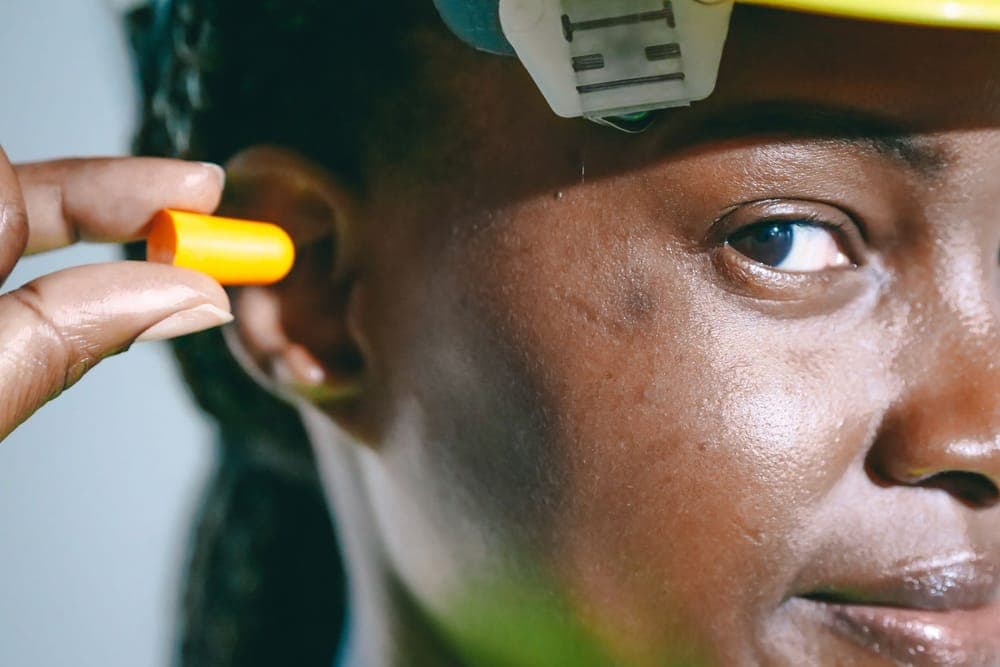
Foam earplugs are the cheapest serious hearing protection you can buy and the easiest to get wrong. They are handed out in a plastic bag at the range counter with no instructions, most people push them into the opening of the ear and stop there, and the result is a plug that looks fitted and performs like a piece of foam resting on a doorway.
There is a published method. NIOSH calls it roll, pull and hold, and it exists because the same plug, inserted two different ways, gives two very different amounts of protection.
The three steps
- Roll. NIOSH: "Roll the earplug up into a small, thin ‘snake’ with your fingers. You can use one or both hands."
- Pull. NIOSH: "Pull the top of your ear up and back with your opposite hand to straighten out your ear canal."
- Hold. NIOSH: "Hold the earplug in with your finger until it expands to fill the ear canal. Your voice will sound muffled when the plug has made a good seal."
NIOSH also says to use clean hands, which is not fussiness: you are putting your fingers into your ear canal, and a range is a place where your hands pick up combustion residue. Our lead exposure at the range page covers the washing routine properly.
Why seating is most of the protection
The rating on the box is a laboratory figure. It is defined by the EPA in 40 CFR Part 211 Subpart B and measured on subjects who were fitted by someone who knew what they were doing. The whole reason OSHA's Appendix B to 1910.95 exists, and the reason 3M tells you to halve the NRR on its own muffs, is that real users rarely match the lab.
With muffs, the gap between the lab and you is mostly hair, glasses arms and clamping force. With foam plugs, it is almost entirely insertion depth. A plug seated so that most of the foam body sits inside the canal is doing what it was rated to do. The same plug perched at the entrance is not, and no amount of a high NRR on the package makes up for it.
Step 1: roll
Roll the plug between finger and thumb until it is a thin cylinder, thinner than you think it needs to be. The goal is a plug narrow enough to pass the first bend of your canal without being forced, because a plug you have to force will stop short and spring back.
Roll it the long way, not into a ball. A ball goes nowhere. If the foam creases rather than compressing smoothly, the plug has been in a pocket too long or has already been used; throw it out. Disposable means disposable.
Step 2: pull
This is the step everyone skips, and it is the step that does the work. Reach your opposite hand over your head, take the top of your ear, and pull it up and back. Your ear canal is not a straight tube; pulling the outer ear straightens the first bend so the rolled plug can travel past it.
Over the head, not round the front. Pulling from the front rotates the ear the wrong way and closes the canal rather than opening it. Insert with the hand on the same side as the ear, pull with the other.
Step 3: hold
Hold your finger against the plug while the foam expands. NIOSH's guidance for mine workers suggests counting to twenty or thirty out loud, which is a useful trick for two reasons: it makes you wait long enough, and hearing your own voice turn muffled is the first sign the seal has taken.
Twenty seconds feels like a long time when there is a lane waiting. Do it anyway, and do it before you walk into the bay rather than while standing at the bench. Our first time at a shooting range page has the order of operations for the rest of the kit.
The fit check
NIOSH publishes two checks, and both take seconds.
- Look. "Most of the foam body of the earplug should be within the ear canal." If a visible stub of foam is standing out of your ear in a mirror, it is not in far enough.
- Cup your hands. NIOSH: "Try cupping your hands tightly over your ears. If sounds are much more muffled with your hands in place, the earplug may not be sealing properly." A properly seated plug should make your cupped hands almost pointless.
Pre-shaped plugs are different
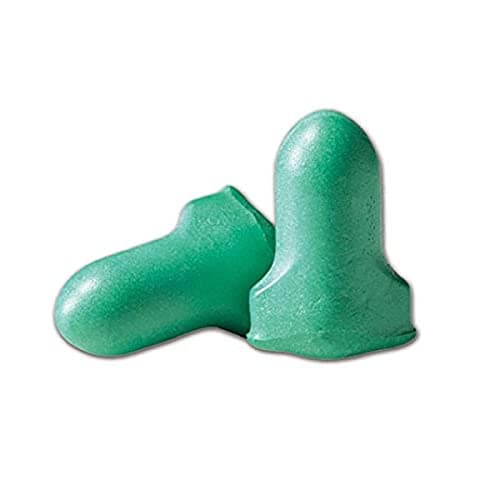
Not every foam plug is a roll-down plug, and rolling the wrong one makes it worse. The Howard Leight MAX-1 is sold as a pre-shaped bell: the licensed Honeywell store listing describes a bell shape that matches the contours of your inner ear and says it "helps resist the tendency to back out of ear canal".
Three families, three techniques:
- Roll-down foam such as the Laser Lite: roll, pull, hold, exactly as above.
- Pre-shaped foam such as the MAX-1: compress it gently rather than rolling it into a snake, then pull and insert. The shape is meant to seat itself.
- Flanged or molded reusable plugs such as the Decibullz: do not roll them at all. Pull the ear, push the body in until the flanges seat, and follow the maker's molding step before first use.
Our best earplugs for shooting page says which family each pick belongs to, and earplugs vs canal caps covers the banded option, which is a different thing again.
Wearing plugs under earmuffs
At an indoor range, plugs under muffs is the standard answer, and the insertion method matters more there rather than less. Two specific points:
- Plugs first, then muffs. Always. Seat and check the plugs, then bring the muffs down over them. Trying to seat a plug with a cup already over your ear is how you end up with a half-inserted plug you cannot see.
- A deeply seated plug does not interfere with the muff. That is the other quiet benefit of getting the depth right: nothing protrudes to hold the cushion off your head.
Our double hearing protection page covers what the two ratings do and do not add up to, and best ear protection for indoor ranges covers the setting that calls for it.
Plugs worth learning on
One pre-shaped, one roll-down, one reusable. All three publish a US EPA NRR from their maker, which is the gate for every pick on this site.
Our picks for this
Three plugs, three insertion techniques
Match the technique to the plug. Rolling a pre-shaped or flanged plug into a snake does not help it seat.
Highest-NRR earplug
Howard Leight MAX-1
NRR 337.1/10ResearchedNRR 33 and pre-shaped: compress gently rather than rolling. 200 pairs to a pack, so there is no reason ever to reuse one.
$39.89Amazon#ad · Price as of November 3, 2026 · How we make money for the link to Howard Leight MAX-1
Best foam plug in corded or uncorded form
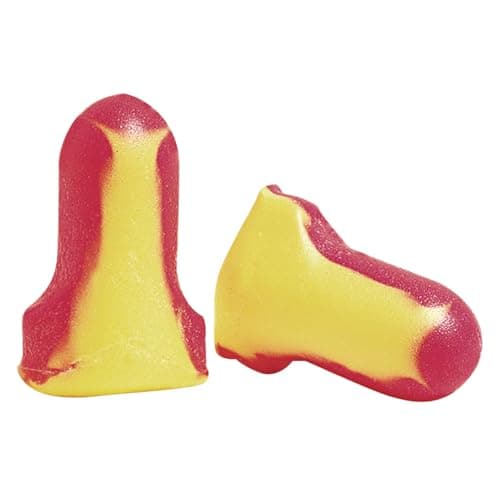
Howard Leight Laser Lite
NRR 327.1/10ResearchedNRR 32 roll-down foam, sold corded and uncorded. This is the plug the roll, pull and hold method was written for.
$32.19Amazon#ad · Price as of November 3, 2026 · How we make money for the link to Howard Leight Laser Lite
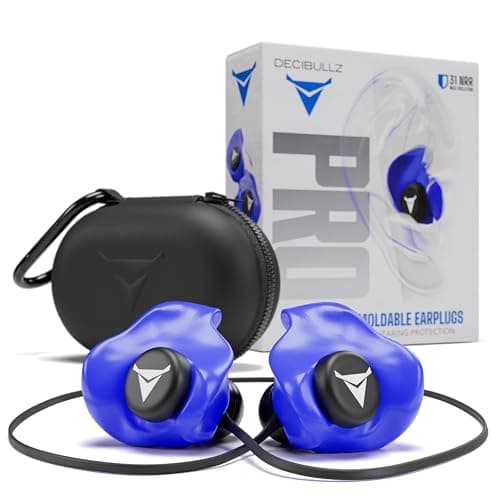
Best reusable earplug
Decibullz Custom Molded Earplugs
NRR 318.3/10ResearchedNRR 31 reusable, with a molding step before first use and three silicone tip sizes. Do not roll it; seat the flanges.
$39.99Amazon#ad · Price as of November 3, 2026 · How we make money for the link to Decibullz Custom Molded Earplugs
What goes wrong
- Skipping the pull. The most common error and the most expensive one. Without straightening the canal, the plug stops at the first bend.
- Letting go too early. Foam takes seconds to expand. Release at five and it backs out as it swells.
- Reusing disposable foam. Used foam has lost elasticity and gained dirt. It will not seal and you do not want it in your canal.
- Rolling a pre-shaped or flanged plug. Different design, different technique.
- One plug in properly and one not. Check both. People are consistently better at their dominant hand's side.
- Taking them out to talk between strings. If you need to hear, that is the argument for electronic muffs over the plugs, not for removing protection on a hot line.
One more thing a correctly inserted plug cannot fix: a plug that has stopped being soft and pliable. Our when to replace hearing protection page is the inspection checklist, and the reason disposables are worth using once.
How we scored this
Every pick, scored on numbers you can check
Every pick here is labeled Researched: we compiled each maker's published specs (the EPA-labeled NRR on hearing protection, the Z87+ mark on glasses), read the manuals, checked the standards behind them, and scored everything on a public rubric. Every figure links to where it came from, and marketing claims are labeled “maker's claim,” so you can see exactly why a pick ranks where it does.
Scores are editorial judgments built from that documented research. Commissions never set a score or decide a pick. The rubric and its weights are published.
Questions
Common questions
How do you put in foam earplugs correctly?
How far should foam earplugs go in?
How do you know if earplugs are in properly?
Can you reuse foam earplugs?
Should you roll every type of earplug?
Do you put earplugs in before or after earmuffs?
Where this comes from
Sources
- NIOSH, How to Wear Soft Foam Earplugs (Roll, Pull, Hold), accessed 2026-10-10
- NIOSH Mining, How to Wear Soft Foam Earplugs handout (PDF), accessed 2026-10-10
- NIOSH, Preventing Occupational Exposures to Lead and Noise at Indoor Firing Ranges (Pub. 2009-136), accessed 2026-10-10
- OSHA, Appendix B to 29 CFR 1910.95, Methods for estimating hearing protector attenuation, accessed 2026-10-10
- US EPA, 40 CFR Part 211 Subpart B, Hearing Protective Devices (eCFR), accessed 2026-10-10
- HoneywellStore.com (licensed Honeywell store), Howard Leight MAX disposable foam earplugs (MAX-1) listing, accessed 2026-10-10
- Honeywell (GB), Laser Lite Disposable Foam Earplugs product page, accessed 2026-10-10
- Meinke DK, Finan DS, Flamme GA, Murphy WJ, et al., Prevention of Noise-Induced Hearing Loss from Recreational Firearms, Seminars in Hearing 2017 (CDC Stacks), accessed 2026-10-10
Specs come from each maker's own pages and data sheets (linked on every product); ratings like NRR and Z87+ are explained from the standards and agencies behind them. Prices are set by Amazon and change often, so the buy button always takes you to the current one. Where a figure isn't published, we say so. Read the full method.