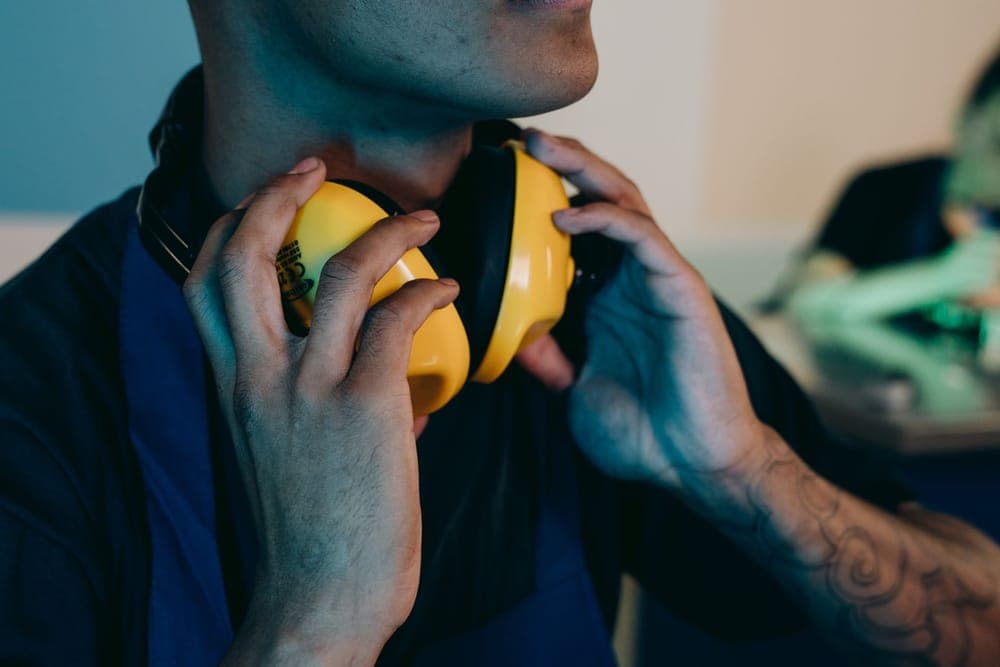
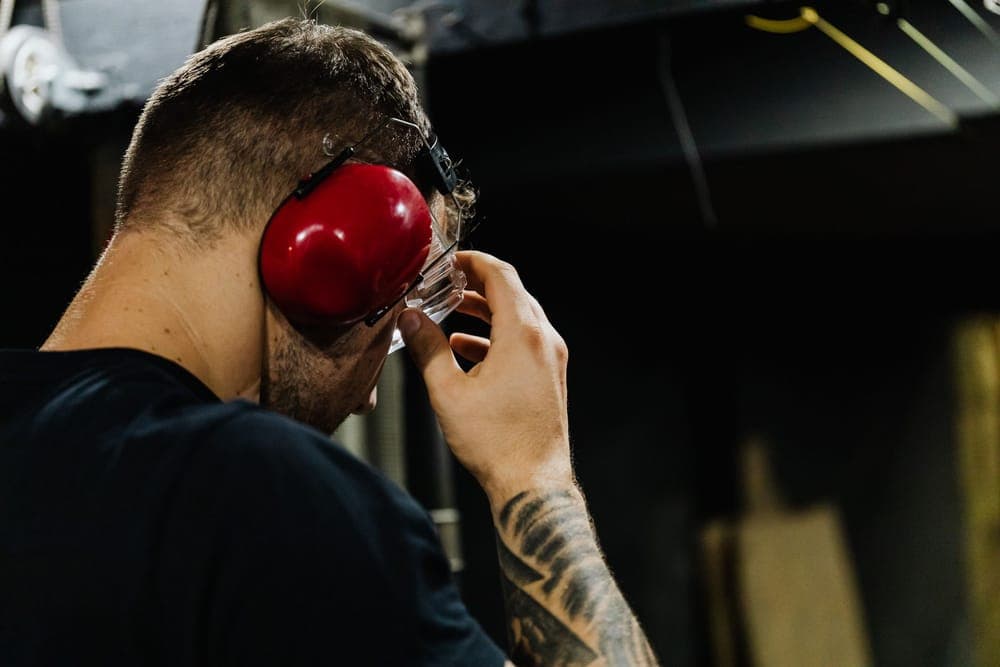
The contenders
Side by side
- Stock photo
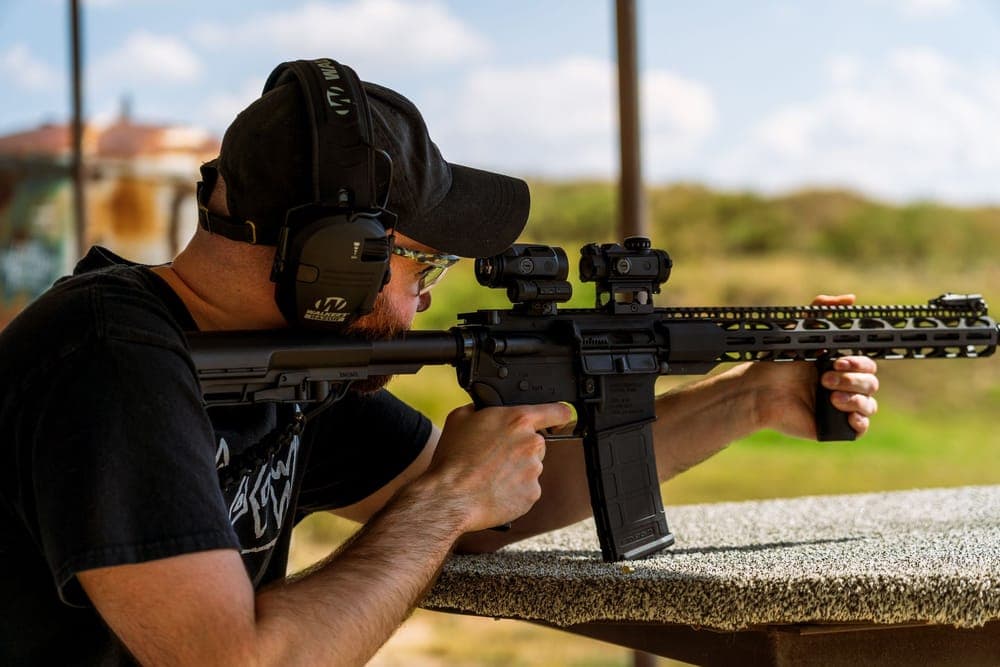
Our muff pick for a first range kit
Howard Leight Impact Sport
NRR 227.2/10An electronic muff at NRR 22 that lets you hear range commands, with a 4-hour auto shut-off. Wear it over foam plugs indoors.
Check price · Amazon#ad · Price set by Amazon · How we make money for the link to Howard Leight Impact Sport
- Stock photo
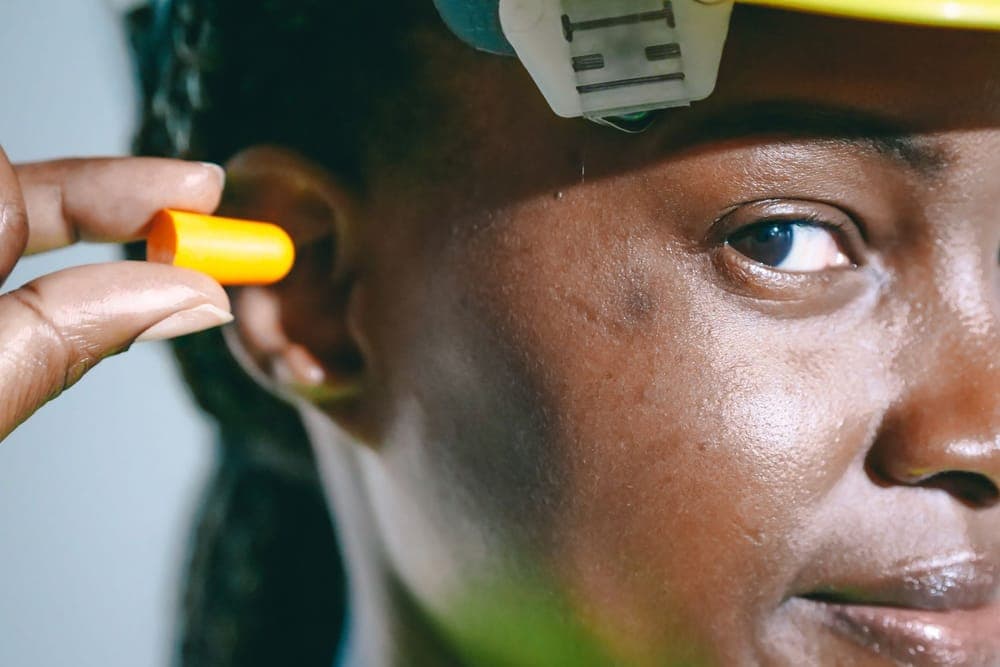
Our disposable plug pick
Howard Leight MAX-1
NRR 337.1/10NRR 33, the highest rating we cover, in a 200-pair pack: enough for your bag, your car and a friend.
Check price · Amazon#ad · Price set by Amazon · How we make money for the link to Howard Leight MAX-1
- Stock photo
Our reusable plug pick
Decibullz Custom Molded Earplugs
NRR 318.3/10NRR 31 with custom-molded earpieces, foam and three sizes of silicone tips, and a carrying pouch.
Check price · Amazon#ad · Price set by Amazon · How we make money for the link to Decibullz Custom Molded Earplugs
How we compared them: we haven't measured these ourselves. We compiled the NRR (Noise Reduction Rating, the number on the package) that each maker publishes, what federal hearing researchers have measured with real gunfire, and the fit and care instructions makers print, then scored our picks on the rubric at how we pick.
Earplugs vs earmuffs at a glance
| What matters | Earplugs | Earmuffs |
|---|---|---|
| Published NRR range in our picks | 17 to 33 (foam plugs 32 to 33; electronic earbuds 17 to 25, depending on tip) | 21 to 31 (passive 23 to 31; electronic 21 to 30) |
| Mean peak reduction NIOSH measured with gunfire | 24 dB | 26 dB (18 dB worn with safety glasses) |
| What decides your real protection | How deeply and correctly you insert them | How well the cushions seal against your head |
| With glasses | Glasses don't touch the seal | Temples under the cushions can break the seal |
| Hearing range commands | Foam turns everything down; electronic earbuds exist | Electronic muffs amplify quiet sounds |
| Upkeep | Disposable foam: use and toss. Reusable: keep clean and bagged | Clean the outside, replace worn cushions; electronic models need batteries |
| Indoor ranges | Wear under muffs | Wear over plugs |
The NRR ranges come from the products we cover, as published by each maker. The peak-reduction row comes from NIOSH measurements at law-enforcement firing ranges, described below. Our three picks side by side:
| Published spec | Howard Leight Impact Sport | Howard Leight MAX-1 | Decibullz Custom Molded Earplugs |
|---|---|---|---|
| NRR | 22 dB | 33 dB | 31 dB |
| Pack contents | Not published | 200 pairs | 1 set of Thermo-fit earpieces, 1 set of Max Isolation foam tips (size M), triple-flange silicone tips in S, M and L, and a carrying pouch |
| Cup profile | Slim earcup; Howard Leight says its Air Flow Control design ensures your firearm stock has clearance while shooting (maker's claim) | Not published | Not published |
| Score | 7.2/10 | 7.1/10 | 8.3/10 |
Protection: the numbers
On the package, earplugs win. The highest-rated product we cover is a foam plug: the Howard Leight MAX-1 at NRR 33. The reusable Decibullz Custom Molded Earplugs are NRR 31, which Decibullz says meets ANSI S3.19. The best muff we cover, the passive 3M Peltor X5A, is NRR 31, and our first-muff pick, the Howard Leight Impact Sport, is NRR 22.
With real gunshots, the gap closes. NIOSH measured hearing protectors on a test head at law-enforcement firing ranges and reported: "The mean peak reduction for earmuffs was 26dB, while earplugs alone provided a mean peak reduction of 24dB. The mean peak reduction for the combined earmuff and earplugs was 44dB" (NIOSH Publication 2009-136). Those are averages for the specific products NIOSH used, not ratings for ours, but they make two points clearly: in practice plugs and muffs land in the same neighborhood, and together they do far more than either alone.
Keep the EPA's own caveat in mind for both: the NRR is measured with continuous noise and "may not be an accurate indicator of the protection attainable against impulsive noise such as gunfire" ( 40 CFR 211.204-4). Our guide to what NRR you need for shooting goes deeper on reading the label.
Getting the fit right
This is the biggest practical difference. Every hearing protector sold in the US must come with "instructions as to the proper insertion or placement of the device", and the label must warn that "improper fit of this device will reduce its effectiveness in attenuating noise" (40 CFR 211.204-4). With earplugs, the fit is a skill: foam plugs have to be inserted the way the package shows, every time. NIOSH hearing researchers describe the best double-protection setup as "a deeply-inserted foam earplug and a well-seated earmuff". Note the word deeply.
NIOSH's 1998 noise criteria reflected how much fit matters by type. That guidance derated labeled NRRs by 25% for earmuffs, 50% for slow-recovery formable (foam) earplugs and 70% for all other earplugs (NIOSH 98-126, Section 1.5). NIOSH has since replaced that derating scheme with a recommendation for individual fit testing (NIOSH 2025-104), so don't use those percentages as a formula. The takeaway still holds: plugs reward a careful fit more than muffs do.
Muffs are simpler, but they have their own fit instructions. 3M's data sheet for its X Series muffs says to "position the earcups over your ears so the cushions fully enclose the ears and seal tightly against the head", and to adjust the height of each cup until you get "a tight and comfortable fit that exerts even pressure around the ears" ( 3M PELTOR X Series data sheet).
Wearing glasses
You'll always wear eye protection at the range, so this matters to everyone, not just prescription wearers. Glasses temples slide between the muff cushion and your head. 3M says a muff's noise reduction "may be lower when eyeglasses, goggles or respirator straps are worn between the sealing surface of the earmuff cushions and the sides of the wearer's head". NIOSH measured the effect: earmuffs worn with safety glasses had a peak reduction of 18 dB, against 26 dB for earmuffs alone (NIOSH 2009-136).
Earplugs sidestep the problem entirely, because nothing sits between a cushion and your head. That's one more reason for glasses wearers to put plugs under their muffs. Our guide to ear protection with glasses covers thin temples and slim cups, and shooting glasses for glasses wearers covers the eye side.
Hearing commands and comfort
Foam plugs and passive muffs turn everything down, including the range officer. Electronic muffs fix that: Howard Leight says the Impact Sport's directional microphones "amplify range commands and other ambient sounds to a safe 82dB" and stop amplifying above that level. Electronic earbuds do the same job in a plug shape, though their ratings in our picks are lower. Walker's rates its Suppressor and Isolator earbuds NRR 25 without naming the ear tip, and AXIL rates the GS Extreme 3.0 at NRR 21 with its foam tips and NRR 17 with silicone tips. Our best earplugs for shooting covers both foam and electronic options.
Comfort is personal, and it's the one thing we can't measure for you. What makers publish helps: the Impact Sport has a padded headband with "telescopic height adjustment", and the Decibullz come with custom-molded earpieces plus foam and small, medium and large silicone tips, so more ear shapes can find a seal. If one type bothers you over a long session, that's a good reason to own the other.
Hygiene and upkeep
Plugs go in your ear canal, so they're personal gear. Disposable foam like the MAX-1 is meant to be used and thrown away, which is why it comes 200 pairs to a pack: hand a friend a fresh pair rather than lending yours. Reusable plugs like the Decibullz come with a carrying pouch; follow the maker's cleaning instructions and keep them bagged between trips.
Muffs are easier to share, but the cushions wear. 3M's care instructions for its X Series muffs say to "wash outside of earmuffs only" with mild soap and water, and that 3M "recommends replacing foam liners and cushions at least twice a year in order to maintain acceptable noise reduction, hygiene and comfort". Check your own muff's instructions, since care varies by maker.
One range-specific habit: for indoor ranges, NIOSH advises washing hands before eating, drinking or "any hand contact with the face" (NIOSH 2009-136, written for range workers). Rolling a foam plug means handling something that goes in your ear, so put fresh plugs in before you handle guns and brass, and wash up before you swap them. Our guide to lead exposure at the shooting range covers the rest.
What your range may require
Range rules vary, so check before you go. Some ranges accept either. Others don't: Triangle Shooting Academy, an indoor range in North Carolina, states that "ear muffs are required to be worn while inside the range. Ear plugs are not considered to be sufficient ear protection" ( Triangle Shooting Academy dress code). That's one range's policy, not a universal rule, but it's a good reason to own a muff even if you prefer plugs. Our first time at a shooting range guide covers what else to ask when you call ahead.
Why you want both indoors
Indoors, sound reflects off the walls and ceiling. NIOSH recommends that "all workers and shooters should be required to use dual hearing protection devices (earmuffs and earplugs) when the range is in use" at indoor ranges (NIOSH 2009-136). That document was written for range employees and people who shoot for their job, but ASHA gives recreational shooters the same advice: at an indoor facility, "wear double hearing protection" (ASHA, Recreational Firearm Noise Exposure).
Don't expect the two ratings to add up. OSHA's method for estimating dual protection is to take the higher-rated device, subtract 7 dB if working from A-weighted noise measurements, and add just 5 dB for the second device, noting that "using such double protection will add only 5 dB of attenuation" ( OSHA Technical Manual, Section III Chapter 5). NIOSH's gunfire measurements found a bigger gain for the pair, as the numbers above show. Either way, both together beats either alone. Our double hearing protection guide shows how to wear them together, and best ear protection for indoor ranges has the pairs we'd start with.
Which to buy first
- Most beginners: an electronic muff (our pick: Impact Sport) plus a pack of foam plugs (our pick: MAX-1). You can shoot outdoors in the muff and double up indoors.
- Glasses wearers who fight muff seals: foam plugs first, then add a slim muff on top.
- You want plugs you keep: the reusable Decibullz, which come with foam and silicone tips.
- Your range requires muffs: a muff, obviously, and plugs underneath if it's indoors.
For more muff choices, see electronic vs passive ear muffs and our overall best hearing protection for shooting.
In detail
The contenders, in full
Our muff pick for a first range kit
Howard Leight Impact Sport
An electronic muff at NRR 22 that lets you hear range commands, with a 4-hour auto shut-off. Wear it over foam plugs indoors.
Published specsResearched · not tested by us
| NRR | 22 dB |
|---|---|
| Batteries | 2 x AAA |
| Battery life | About 350 hoursMaker's claim |
| Auto shut-off | After 4 hours |
| Bluetooth | No (Howard Leight sells Bluetooth versions as separate products) |
| Cup profile | Slim earcup; Howard Leight says its Air Flow Control design ensures your firearm stock has clearance while shootingMaker's claim |
| Sizing | Medium/Large |
How the 7.2 score breaks down
- Published NRR (30%)
- 6
- Fit with glasses & cup profile (20%)
- 8.5
- Electronics: amplification & shut-off (20%)
- 7
- Power: battery & auto-off (15%)
- 9
- Comfort & adjustment (15%)
- 6.5
What the specs support
- Shuts itself off after 4 hours, so a muff left on in the range bag doesn't flatten the batteries
- Howard Leight quotes about 350 hours from two AAA batteries
- Slim earcup the maker says leaves your firearm stock clearance when you shoulder a long gun
Where it falls short
- NRR 22 is 8 dB below Howard Leight's own Impact Pro (NRR 30)
- No Bluetooth on this version; Bluetooth models are sold separately
- Listed in Medium/Large; smaller heads should look at the Youth/Adult Small version
Skip it if…
…you shoot mostly at an indoor range and want the most protection a muff can give on its own; NRR 22 is on the low side, so pair it with foam plugs or look at the NRR 30 Impact Pro.
#ad · Price set by Amazon · How we make money for the link to Howard Leight Impact Sport
Our disposable plug pick
Howard Leight MAX-1
NRR 33, the highest rating we cover, in a 200-pair pack: enough for your bag, your car and a friend.
Published specsResearched · not tested by us
| NRR | 33 dB |
|---|---|
| Type | Disposable foam, uncorded |
| Pack contents | 200 pairs |
| Model | MAX-1 (the listing shows model MXM-1) |
How the 7.1 score breaks down
- Published NRR (40%)
- 9.5
- Reusability (20%)
- 3
- Fit range & sizes (20%)
- 5
- Works under muffs (20%)
- 8.5
What the specs support
- NRR 33, the highest rating of any plug or muff we cover
- 200 pairs, enough to keep spares in the range bag and hand a pair to a friend
- Foam plugs sit inside the ear canal, so they're an easy first layer under earmuffs
Where it falls short
- The 33 is a lab rating; real protection depends on rolling and seating each plug correctly
- Specs come from Honeywell's licensed store, not a Howard Leight product page; retail listings may now say "Howard Leight by PIP"
- Single-use foam
Skip it if…
…you want plugs that stay together on a cord between strings; the MAX-1 is uncorded, so pick corded Laser Lite or Caldwell's corded Range Plugs.
#ad · Price set by Amazon · How we make money for the link to Howard Leight MAX-1
Our reusable plug pick
Decibullz Custom Molded Earplugs
NRR 31 with custom-molded earpieces, foam and three sizes of silicone tips, and a carrying pouch.
Published specsResearched · not tested by us
How the 8.3 score breaks down
- Published NRR (40%)
- 9
- Reusability (20%)
- 9
- Fit range & sizes (20%)
- 8
- Works under muffs (20%)
- 6.5
What the specs support
- NRR 31, and Decibullz states it meets ANSI S3.19, the US test standard behind the NRR
- Custom-molded Thermo-fit earpieces you keep and reuse
- Three silicone tip sizes (S, M, L) plus a foam tip, so more ears can find a seal
- Carrying pouch included
Where it falls short
- We couldn't confirm which of the included tips the 31 NRR was measured with; use the one that seals best
- The earpieces are custom molded, so there's a fitting step that grab-and-go foam doesn't need
- Only one foam tip set (size M) is included
Skip it if…
…you need plugs for a group or a class; one custom-molded set fits one person, while a 200-pair pack of MAX-1 foam covers everyone.
#ad · Price set by Amazon · How we make money for the link to Decibullz Custom Molded Earplugs
How we scored this
Units we claim to have tested: none
Most gear sites say they tested thirty muffs. We haven't put these on a sound meter, and we say so. Every pick here is labeled Researched: we compiled each maker's published specs (the EPA-labeled NRR on hearing protection, the Z87+ mark on glasses), read the manuals, and scored everything on a public rubric. Every figure links to where it came from, and marketing claims are labeled “maker's claim.”
Scores are editorial judgments from that documented research, not test results. Commissions never set a score or decide a pick. The rubric and its weights are published.
Questions
Common questions
Are earplugs or earmuffs better for shooting?
Can you wear ear plugs at a shooting range?
Should I wear earplugs and earmuffs together?
Are foam earplugs enough for shooting?
Which is better with glasses, earplugs or earmuffs?
Where this comes from
Sources
- HoneywellStore.com (licensed Honeywell store), Howard Leight MAX-1 disposable foam earplugs listing, accessed 2026-09-19
- Decibullz, Custom Molded Earplugs 31dB NRR product page, accessed 2026-09-19
- Howard Leight Shooting Sports, Impact Sport Electronic Earmuff product page, accessed 2026-09-19
- 3M, PELTOR X Series passive earmuff technical data sheet (PDF), accessed 2026-09-19
- US EPA, 40 CFR Part 211 Subpart B, Hearing Protective Devices (eCFR), accessed 2026-09-19
- OSHA Technical Manual, Section III Chapter 5 (Noise), Appendix F, accessed 2026-09-19
- NIOSH, Preventing Occupational Exposures to Lead and Noise at Indoor Firing Ranges (Pub. 2009-136), accessed 2026-09-19
- NIOSH, Criteria for a Recommended Standard: Occupational Noise Exposure, Revised Criteria 1998 (Pub. 98-126; historical derating guidance), accessed 2026-09-19
- NIOSH, Individual Fit-Testing Recommendation for Hearing Protection Devices (Pub. 2025-104), accessed 2026-09-19
- ASHA, Audiology Information Series: Recreational Firearm Noise Exposure (PDF, 2024), accessed 2026-09-19
- Triangle Shooting Academy, Dress Code (range policy example), accessed 2026-09-19
- Walker's, Suppressor Earbuds product page, accessed 2026-09-19
- Walker's, Isolator Earbuds product page, accessed 2026-09-19
- AXIL, GS Extreme 3.0 product page, accessed 2026-09-19
We haven't tested the gear on this page and we don't pretend to. Specs come from each maker's own pages and data sheets (linked on every product); ratings like NRR and Z87+ are explained from the standards and agencies behind them. Prices are set by Amazon and change often, so we don't print them. Where a figure isn't published, we say so. Read the full method.