Quick picks
The picks at a glance
| # | Product | Best for | Score | Price |
|---|---|---|---|---|
| 1 | 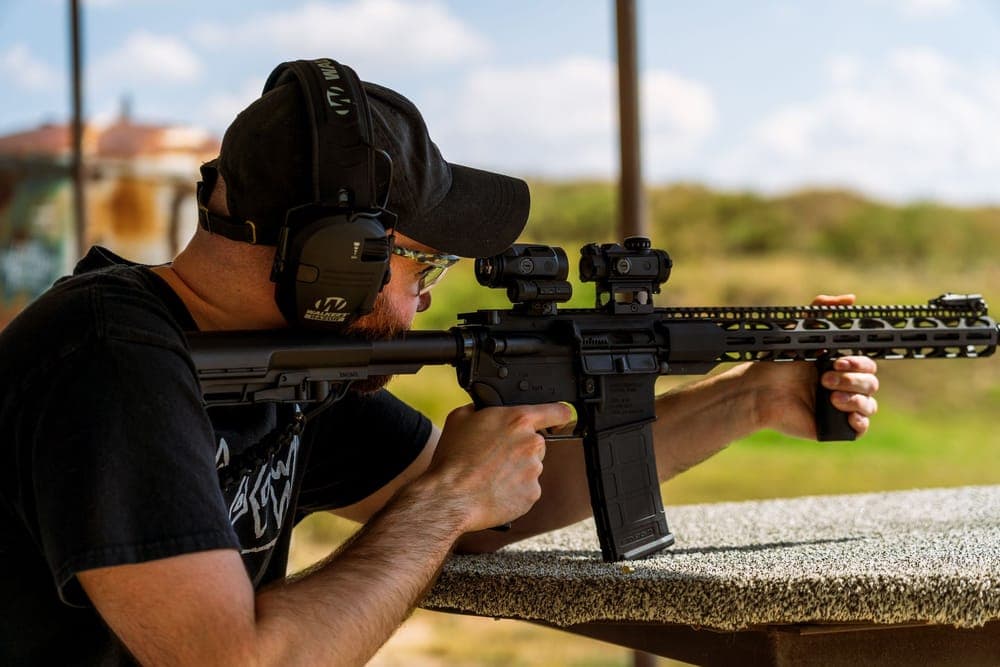 Howard Leight Impact Pro NRR 30, the highest of any electronic muff we cover, and Howard Leight pitches it at indoor ranges. Electronics let you hear commands even with foam plugs underneath. | Best muff for indoor rangesNRR 30 | 7.4/10Researched | Check price · Amazon #ad · Disclosure |
| 2 | 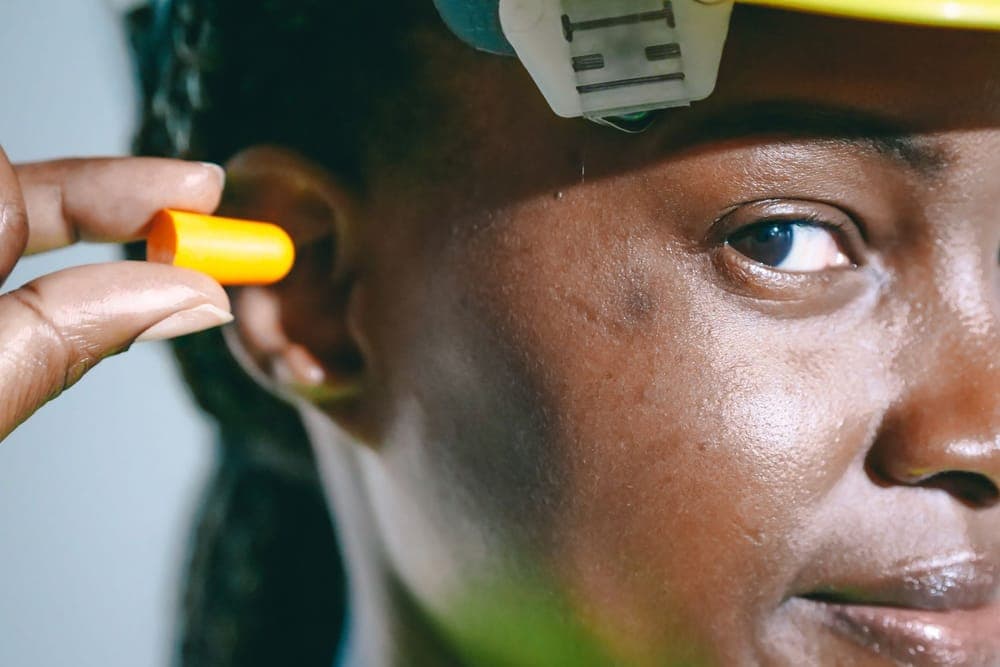 Howard Leight MAX-1 NRR 33 disposable foam, 200 pairs to a box. The layer that goes under whichever muff you choose. | Best plug to wear underneathNRR 33 | 7.1/10Researched | Check price · Amazon #ad · Disclosure |
| 3 | 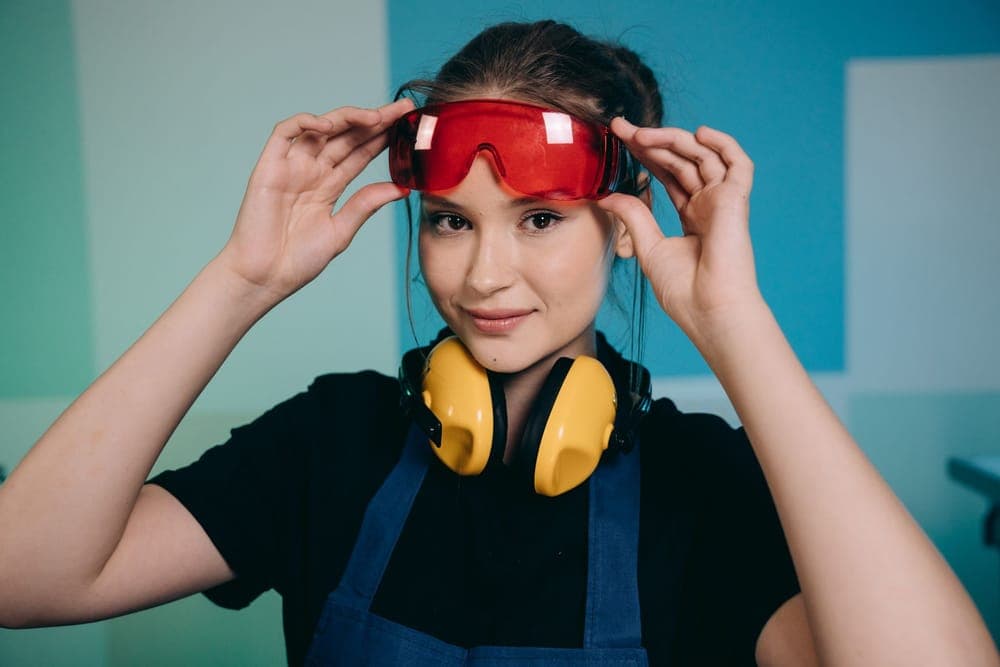 Walker's Pro Safety Combo Kit NRR 31 low-profile muffs, NRR 31 foam plugs and sport glasses in one kit, so a first-timer has both layers and eye protection from a single purchase. | Best one-box double-up kitNRR 31 | 7.9/10Researched | Check price · Amazon #ad · Disclosure |
| 4 | 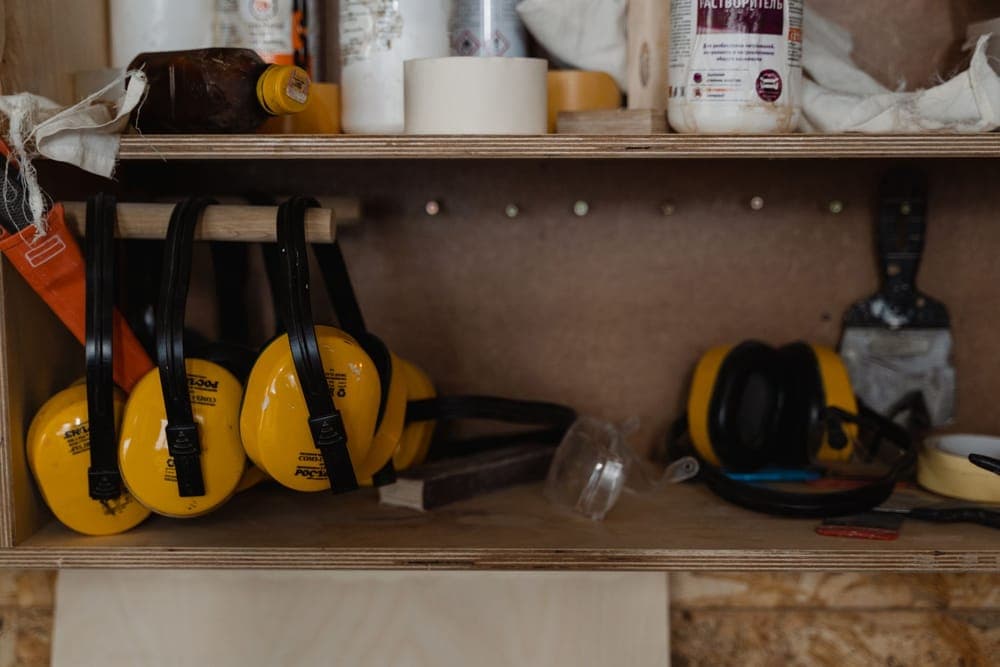 3M Peltor X5A The highest-rated standalone muff we cover: NRR 31 on 3M's own data sheet for the headband X5A. Pick it for protection; the 3M specs we could source don't describe a slim or folding design. | Highest-NRR passive muff for indoor baysNRR 31 | 6.7/10Researched | Check price · Amazon #ad · Disclosure |
| 5 | Howard Leight Leightning L3 The high-rating Howard Leight passive muff: NRR 30 and nothing to charge. Pick it for protection; Howard Leight doesn't state a slim cup or a folding design for it. | High-NRR passive muff, no batteriesNRR 30 | 6.7/10Researched | Check price · Amazon #ad · Disclosure |
| 6 | Howard Leight Laser Lite NRR 32 foam in corded or uncorded form. The corded version keeps the pair together when you take them out between sessions. | Best corded plug for indoor baysNRR 32 | 7.1/10Researched | Check price · Amazon #ad · Disclosure |
#ad · Prices are set by Amazon and change often, so we don't print them. Scores are ours, built from published specs and manuals, not hands-on tests. Photos are illustrative stock. Tap a row for the full write-up.
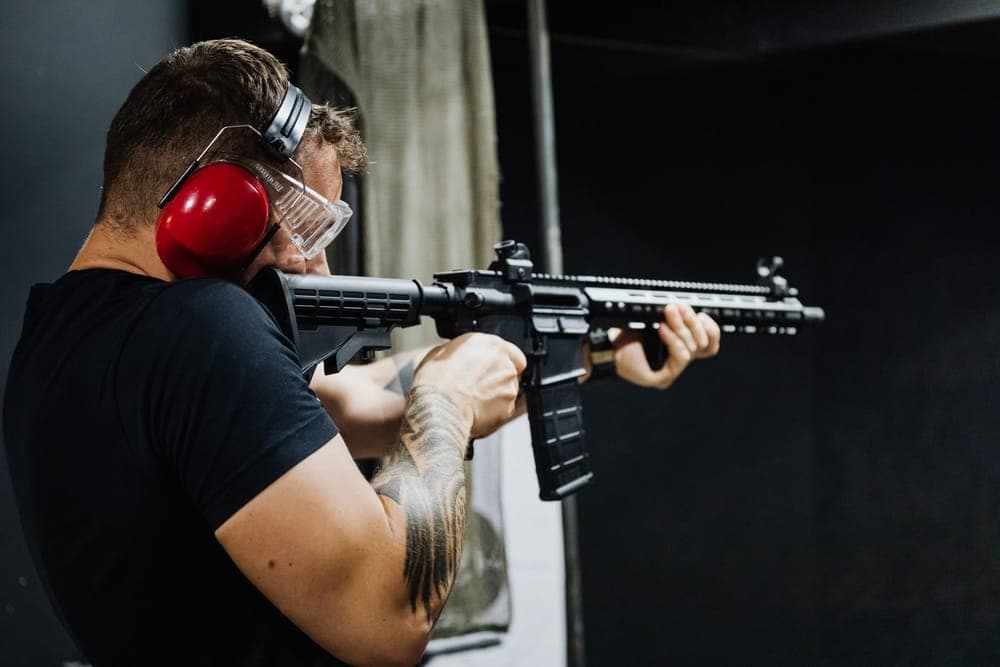
If your first range trip is indoors, this page is for you: indoor lanes are where your hearing protection has the most work to do. It picks the best hearing protection for an indoor shooting range, which in practice means the best plugs and the best muffs to wear together, because the public-health sources we cite all point to two layers indoors, not one.
If you're choosing between an indoor and an outdoor range for your first trip, our indoor vs outdoor shooting range guide compares them. Building a whole first kit? Start with our first range kit.
How we picked
We haven't measured any of these at a range; we compiled the NRR (Noise Reduction Rating, the number on the package) each maker publishes and scored every product on the rubrics on our How we pick page. For this page we only considered the higher-rated protection in our registry: muffs at NRR 30 or above, foam plugs at NRR 32 or above, and one kit that puts NRR 31 muffs and NRR 31 plugs in the same box.
The rank is built around pairs rather than single products. The Impact Pro and MAX-1 come first because together they're the pairing NIOSH describes for shooters who need to communicate: an electronic muff over a passive plug. The Walker's kit is third because it's the simplest way to get both layers at once. The passive muffs and the corded plug follow as alternatives to each half of the pair.
Why indoor ranges are harder on your ears
Indoors, the sound of every shot bounces off walls, ceiling and baffles instead of spreading out. A 2017 review by hearing researchers, including a NIOSH scientist, puts it directly: "Shooting in an enclosed, reflective, reverberant environment (indoors or hunting blind) increases the hazard to hearing." The same review adds that "shooting from a bench or over a table also increases the peak SPL reaching the shooter's ear" (Meinke et al., 2017), and many indoor lanes put you at a bench or shelf. NIOSH researchers writing in 2007 note that "in an indoor firing range, reflected sound (reverberation) also becomes an important factor" (Murphy, Byrne and Franks, 2007).
You also hear everyone else. At a busy indoor range, the lanes on either side are firing while you reload, and ASHA's advice covers that too: "Always use HPDs any time you fire a gun or are around someone firing a gun" (ASHA, Recreational Firearm Noise Exposure). For scale, NIOSH's own measurements of law-enforcement handguns, shotguns and rifles for its indoor-range alert found peak levels of 155 to 168 dB, far above the 140 dB peak level that NIOSH and OSHA use as a limit for impulse noise (NIOSH Alert 2009-136). Our how loud is a gunshot guide lays out the published figures and why they vary.
ASHA's advice for indoor shooting has two halves: "choose one that has been acoustically treated for reverberation (i.e., sound bouncing off the walls) and wear double hearing protection." You can ask a range about acoustic treatment; the second half is up to you.
Double up: plugs under muffs
NIOSH's indoor-range alert is written for range employees and people who shoot as part of their job, not hobby shooters, but its recommendation for ranges is worth copying: "All workers and shooters should be required to use dual hearing protection devices (earmuffs and earplugs) when the range is in use. For shooters requiring improved communication, NIOSH recommends using electronic level-limiting or sound restoration earmuffs with passive earplugs." The 2007 NIOSH article goes further for all shooters, recommending "double hearing protection every time a weapon is fired," and names the best combination as "a deeply-inserted foam earplug and a well-seated earmuff."
The measured difference is large. In NIOSH's evaluations for the 2009 alert, earmuffs gave a mean peak reduction of 26 dB, earplugs alone 24 dB, and "the combined earmuff and earplugs was 44dB." The 2007 article says the combination "can provide as much as 50 dB of peak reduction, which is adequate in most cases."
There's a second reason to double up that matters a lot for beginners: it forgives mistakes. In the same alert, NIOSH recommended double hearing protection "to ensure maximum protection against impulsive noise, improper fitting and other incompatibility with other protective equipment." If your plug isn't seated quite right on your first visit, or your glasses lift the muff's seal a little, the other layer is still working.
What the second layer adds, by OSHA's estimate
You can't add two NRRs together. OSHA's method for estimating dual protection is: "Determine the hearing protector with the higher rated NRR (NRRh) and subtract 7 dB if using A-weighted sound level data. Add 5 dB to this field-adjusted NRR to account for the use of the second hearing protector." OSHA adds, "It is important to note that using such double protection will add only 5 dB of attenuation" (OSHA Technical Manual, Noise, Appendix F). Here is that arithmetic applied to our picks' published NRRs:
| Pair | Higher NRR | OSHA estimate for the pair (higher NRR - 7 + 5) |
|---|---|---|
| MAX-1 plugs (33) + Impact Pro (30) | 33 | 31 dB |
| MAX-1 plugs (33) + 3M Peltor X5A (31) | 33 | 31 dB |
| Laser Lite plugs (32) + Leightning L3 (30) | 32 | 30 dB |
| Walker's Pro kit: foam plugs (31) + muffs (31) | 31 | 29 dB |
Two things fall out of that table. First, under OSHA's method the higher-rated protector sets the estimate, and in every pair here that's the plug, so a high-NRR foam plug is the most important item you buy for an indoor range. Second, the muff's job becomes seal and comfort as much as its own number, which is why an electronic muff you'll keep on is a sensible choice over the plug.
Keep two caveats in mind. OSHA's formula is a workplace estimate for averaged noise, and NIOSH's measured peak reductions for plugs plus muffs were far larger than 5 dB over either one alone. And the EPA's own label rule warns that the NRR "may not be an accurate indicator of the protection attainable against impulsive noise such as gunfire" (40 CFR 211.204-4(f)). Use the table to compare pairs, not to predict what reaches your ear. Our NRR guide explains the method in full.
Which muff to wear over your plugs
Two passive layers are quiet, sometimes too quiet. NIOSH researchers warned in 2007 that double protection "can severely compromise one's ability to communicate when both devices are passive," and that an electronic level-dependent earmuff with a deeply inserted foam earplug "can compensate for this loss of communication ability." They add that "in some cases, the earmuff may provide sufficient gain (~20 dB) to overcome the attenuation of the earplug." For a beginner who needs to hear the range officer and a coach, that's the case for an electronic muff.
- Hear commands through both layers: the Howard Leight Impact Pro. Howard Leight says it's "designed for handgun and pistol shooters looking for high NRR" and "perfect for indoor ranges, covered ranges or other extremely loud shooting environments" (Howard Leight). It runs on two AAA batteries with a 4-hour auto shut-off.
- No batteries, most muff protection: the 3M Peltor X5A (NRR 31 on 3M's data sheet) or the Howard Leight Leightning L3 (NRR 30, Howard Leight). Expect to hear little of the range with plugs underneath.
- Already own an Impact Sport or another NRR 22 to 23 electronic muff? Keep it. Over MAX-1 plugs, OSHA's estimate for the pair is the same 31 dB as with the Impact Pro, because the plug has the higher rating.
Comfort counts for more with two layers on, because you'll wear them for the whole session. The 2017 review calls wearer comfort "an important consideration driving the choice of protector to assure adequate wear time." If a muff presses hard over your plugs, try another before you give up on one of the layers.
No maker we cite publishes a rating for how well its muff seals over earplugs, so we can't rank muffs on that. What affects the muff's seal is what's under the cushions, which is the next section. For more electronic options, see our best electronic ear muffs for shooting.
Keep the seal: glasses, hats and hoods
You'll wear safety glasses at every indoor range, and their temples pass right under the muff cushions. NIOSH's 2009 alert found that "earmuffs with safety glasses had a peak reduction of 18dB," against a 26 dB mean for earmuffs, and says "wearing earmuffs on top of safety glasses created a leakage in the seal of the earmuff cushions." NIOSH's recommendation: "shooters wear the safety glasses over the top of the earmuff cushions, or use glasses with a strap or low profile stem." The 2017 review adds hats, caps and hoods to the list of things that "interfere with the seal," reducing mean attenuation "by 5 to 15 dB."
That's another reason the plug layer matters indoors: it sits in the ear canal, where glasses can't break it. Thin temples help the muff layer. See ear protection with glasses and our best shooting glasses.
Your first indoor session, layer by layer
Most of doubling up is routine. Here's how the pieces above fit into an actual range visit:
- Before you leave home: pack the muffs, a handful of foam plug pairs, your safety glasses and, for an electronic muff, two spare AAA batteries. ASHA's tip is to "pack HPDs in your bag ahead of time." Our what to bring to the shooting range checklist covers the rest.
- In the lobby, before the range door: put the plugs in following the package instructions, then your glasses, then the muffs over both. You'll be "around someone firing a gun" the moment that door opens, so everything goes on first.
- At the lane: check that the cushions sit flat around each ear, with the glasses temples as thin and low as they'll go. If you're wearing electronic muffs, switch them on before you start so you can hear the range officer.
- Between strings: leave everything on. If a plug works loose or a muff needs a real adjustment, step out to the lobby, fix it, and come back. The review we cite also warns that recoil "may kick the earmuff off the ear," so recheck the seal after you've been shooting a while.
- After the session: muffs off only once you're outside the range door, then wash your hands before you eat or drink; NIOSH recommends washing "hands, forearms, and faces" after shooting at ranges.
If you're bringing a child, the same routine applies with muffs sized for them; our kids' ear protection picks list the ages and sizes makers actually state.
Our plug-and-muff pairs
| If you want | Plug (published NRR) | Muff (published NRR) |
|---|---|---|
| To hear commands and coaching | Howard Leight MAX-1 (33) | Howard Leight Impact Pro, electronic (30) |
| Both layers and glasses in one box | Walker's Pro kit foam plugs (31) | Walker's Pro kit low-profile muffs (31) |
| No batteries, highest muff rating | Howard Leight MAX-1 (33) | 3M Peltor X5A (31) |
| Corded plugs, no batteries | Howard Leight Laser Lite, corded (32) | Howard Leight Leightning L3 (30) |
NRRs are from Honeywell's licensed store (MAX-1), Honeywell's Laser Lite page (a UK page; check the US package), Walker's Pro Safety Combo Kit, and the Howard Leight and 3M pages linked above. The Walker's kit's glasses are listed by Walker's as exceeding the ANSI Z87.1-2003 high-impact requirement (the page writes it as "287.1").
In detail
The picks, in full
Rank 1
Best muff for indoor ranges
Howard Leight Impact Pro
NRR 30, the highest of any electronic muff we cover, and Howard Leight pitches it at indoor ranges. Electronics let you hear commands even with foam plugs underneath.
Published specsResearched · not tested by us
| NRR | 30 dB |
|---|---|
| Batteries | 2 x AAA (included) |
| Battery life | About 350 hoursMaker's claim |
| Auto shut-off | After 4 hours |
| Bluetooth | No |
| Cup profile | Not stated by Howard Leight; the page says rubberized pressure points prevent gunstock scratchingMaker's claim |
How the 7.4 score breaks down
- Published NRR (30%)
- 8.5
- Fit with glasses & cup profile (20%)
- 6
- Electronics: amplification & shut-off (20%)
- 7
- Power: battery & auto-off (15%)
- 9
- Comfort & adjustment (15%)
- 6
What the specs support
- NRR 30: the highest rating of any electronic muff in our picks, and 8 dB more than the Impact Sport
- Both AAA batteries come in the box
- 4-hour auto shut-off and a quoted 350-hour battery life, same as the Impact Sport
- Rubberized pressure points that Howard Leight says prevent gunstock scratching
Where it falls short
- Howard Leight doesn't describe a slim or low-profile cup for this model
- No Bluetooth
Skip it if…
…you mostly shoot a rifle or shotgun and want a cup the maker describes as slim or low-profile; Howard Leight doesn't state one for the Impact Pro, while the Impact Sport and Walker's Razor muffs do.
#ad · Price set by Amazon · How we make money for the link to Howard Leight Impact Pro
Rank 2
Best plug to wear underneath
Howard Leight MAX-1
NRR 33 disposable foam, 200 pairs to a box. The layer that goes under whichever muff you choose.
Published specsResearched · not tested by us
| NRR | 33 dB |
|---|---|
| Type | Disposable foam, uncorded |
| Pack contents | 200 pairs |
| Model | MAX-1 (the listing shows model MXM-1) |
How the 7.1 score breaks down
- Published NRR (40%)
- 9.5
- Reusability (20%)
- 3
- Fit range & sizes (20%)
- 5
- Works under muffs (20%)
- 8.5
What the specs support
- NRR 33, the highest rating of any plug or muff we cover
- 200 pairs, enough to keep spares in the range bag and hand a pair to a friend
- Foam plugs sit inside the ear canal, so they're an easy first layer under earmuffs
Where it falls short
- The 33 is a lab rating; real protection depends on rolling and seating each plug correctly
- Specs come from Honeywell's licensed store, not a Howard Leight product page; retail listings may now say "Howard Leight by PIP"
- Single-use foam
Skip it if…
…you want plugs that stay together on a cord between strings; the MAX-1 is uncorded, so pick corded Laser Lite or Caldwell's corded Range Plugs.
#ad · Price set by Amazon · How we make money for the link to Howard Leight MAX-1
Rank 3
Best one-box double-up kit
Walker's Pro Safety Combo Kit
NRR 31 low-profile muffs, NRR 31 foam plugs and sport glasses in one kit, so a first-timer has both layers and eye protection from a single purchase.
Published specsResearched · not tested by us
How the 7.9 score breaks down
- Published NRR (30%)
- 9
- Glasses impact rating as published (30%)
- 7.5
- Fit & adjustment (20%)
- 5.5
- What's in the box (20%)
- 9
What the specs support
- Muffs and foam plugs both list NRR 31, the highest muff rating in any kit we cover
- Foam plugs in the box, so you can double up at a loud indoor range
- Low-profile muffs
Where it falls short
- Walker's cites the older 2003 edition of Z87.1, and its page writes it as "287.1"
- A muff's NRR is a lab figure; glasses temples under the cushions can lower it, so thin temples help
Skip it if…
…you want glasses rated to a recent edition of Z87.1; Walker's cites 2003, while Howard Leight's standard kit states Z87.1-2015 (High Impact).
#ad · Price set by Amazon · How we make money for the link to Walker's Pro Safety Combo Kit
Rank 4
Highest-NRR passive muff for indoor bays
3M Peltor X5A
The highest-rated standalone muff we cover: NRR 31 on 3M's own data sheet for the headband X5A. Pick it for protection; the 3M specs we could source don't describe a slim or folding design.
Published specsResearched · not tested by us
How the 6.7 score breaks down
- Published NRR (40%)
- 9
- Fit with glasses & cup profile (25%)
- 5
- Folding & portability (15%)
- 4
- Comfort & adjustment (20%)
- 6
What the specs support
- NRR 31, the highest of any standalone muff we cover
- 3M's own data sheet spells out how fit and glasses can lower real-world protection
- Passive headband design: no batteries or electronics to manage
Where it falls short
- The 31 is a lab rating; 3M says many users get less because of fit, and glasses under the cushions can lower it further
- No folding or slim-cup design is described in the 3M specs we could source
- Passive, so there's no amplification to help you hear range commands
Skip it if…
…you want one muff that folds into a small range bag; the 3M specs we could source don't describe a folding X5A, while Howard Leight's Leightning L0F collapses to four inches.
#ad · Price set by Amazon · How we make money for the link to 3M Peltor X5A
Rank 5
High-NRR passive muff, no batteries
Howard Leight Leightning L3
The high-rating Howard Leight passive muff: NRR 30 and nothing to charge. Pick it for protection; Howard Leight doesn't state a slim cup or a folding design for it.
Published specsResearched · not tested by us
| NRR | 30 dB |
|---|---|
| Cup technology | "Patented Air Flow Control technology"Maker's claim |
| Folding | Not stated on Howard Leight's page |
| Batteries | None (passive earmuff) |
How the 6.7 score breaks down
- Published NRR (40%)
- 8.5
- Fit with glasses & cup profile (25%)
- 5.5
- Folding & portability (15%)
- 4.5
- Comfort & adjustment (20%)
- 6
What the specs support
- NRR 30, seven points more than Howard Leight's folding Leightning L0F
- Among the standalone passive muffs we cover, only the 3M Peltor X5A (NRR 31) rates higher
- Passive, so there are no batteries to die mid-session
Where it falls short
- Howard Leight doesn't state whether it folds
- No cup-profile detail is published, so rifle shooters can't confirm stock clearance
Skip it if…
…you shoot a rifle or shotgun and need a cup you know will clear the stock; Howard Leight doesn't describe the L3's profile, while its Leightning L0F is sold as ultra-slim.
#ad · Price set by Amazon · How we make money for the link to Howard Leight Leightning L3
Rank 6
Best corded plug for indoor bays
Howard Leight Laser Lite
NRR 32 foam in corded or uncorded form. The corded version keeps the pair together when you take them out between sessions.
Published specsResearched · not tested by us
| NRR | 32 dB |
|---|---|
| Type | Disposable foam |
| Versions | Uncorded and corded, plus dispensers and refills |
| Part numbers | 3301105 / 3301106 |
How the 7.1 score breaks down
- Published NRR (40%)
- 9
- Reusability (20%)
- 3
- Fit range & sizes (20%)
- 6
- Works under muffs (20%)
- 8.5
What the specs support
- NRR 32, one point under the MAX-1
- Sold in corded and uncorded versions, so you can choose whether a pair stays together
- Dispensers and refills exist, handy for a club, class or family range box
Where it falls short
- Our source is Honeywell's UK (GB) page; check the NRR printed on the US package you buy
- The 50-pair retail pack (R-01204) is marked discontinued on Honeywell's licensed US store, so check the pack size on the listing you buy
Skip it if…
…you'd rather buy one reusable set than keep restocking disposables; Laser Lite are single-use foam, and the Decibullz Custom Molded (NRR 31) is the reusable pick here.
#ad · Price set by Amazon · How we make money for the link to Howard Leight Laser Lite
What to look for in indoor-range ear protection
- A high-NRR plug. Under OSHA's dual-protection estimate, the higher-rated protector sets the number, so start with the plug: NRR 32 or 33 foam in our picks.
- A muff you'll keep sealed. Electronic if you need to hear, passive and high-rated if you shoot alone. The cushions have to close fully around your ears.
- Thin glasses temples. NIOSH measured a lower peak reduction for muffs worn with safety glasses. A strap or low-profile temple helps.
- Enough plugs to spare. A 200-pair box of MAX-1 means you'll never skip the plug layer because you ran out.
- Batteries in the bag, if your muff is electronic. The Impact Pro's AAAs come in the box, and Howard Leight quotes about 350 hours from them.
- A published NRR, not an SNR, on every product. The SNR is a European rating on a different scale.
Beginner mistakes at indoor ranges
- One layer because "it's only a .22" or "only a few rounds." The 2017 review found that even .22 pistols peak around 155 to 158 dB at the shooter's ear, and your neighbors may be firing something louder.
- Adding the NRRs. A 33 plug under a 30 muff isn't 63. OSHA's estimate for the pair is 31.
- Taking the muffs off to talk in the lane. Step out of the bay, or use electronic muffs.
- A plug perched at the ear opening. NIOSH's best combination uses a "deeply-inserted" foam plug. Follow the package instructions.
- Thick temples or a hood under the cushions. Both break the seal.
- Bringing kids without their own sized muffs. Adult muffs are sized for adults. See our kids' ear protection picks first.
How we scored this
Units we claim to have tested: none
Most gear sites say they tested thirty muffs. We haven't put these on a sound meter, and we say so. Every pick here is labeled Researched: we compiled each maker's published specs (the EPA-labeled NRR on hearing protection, the Z87+ mark on glasses), read the manuals, and scored everything on a public rubric. Every figure links to where it came from, and marketing claims are labeled “maker's claim.”
Scores are editorial judgments from that documented research, not test results. Commissions never set a score or decide a pick. The rubric and its weights are published.
What changed
- Published. NRRs checked on each maker's page, data sheet or licensed store; indoor-range guidance checked against NIOSH, ASHA and OSHA.
Questions
Common questions
What is the best hearing protection for an indoor shooting range?
Do you need double ear protection at an indoor range?
What NRR do I need for an indoor shooting range?
Are electronic ear muffs good for indoor ranges?
Are earplugs alone enough for an indoor range?
Why is shooting indoors louder than outdoors?
Where this comes from
Sources
- NIOSH Alert 2009-136, Preventing Occupational Exposures to Lead and Noise at Indoor Firing Ranges, accessed 2026-09-19
- OSHA Technical Manual, Section III Chapter 5 (Noise), Appendix F, accessed 2026-09-19
- eCFR, 40 CFR Part 211 Subpart B, Hearing Protective Devices (EPA label rule), accessed 2026-09-19
- Meinke DK et al. (NIOSH co-author), Prevention of Noise-Induced Hearing Loss from Recreational Firearms, Seminars in Hearing 2017 (CDC Stacks), accessed 2026-09-19
- Murphy WJ, Byrne DC, Franks JR (NIOSH), Firearms and Hearing Protection, The Hearing Review 2007 (CDC Stacks), accessed 2026-09-19
- ASHA Audiology Information Series, Recreational Firearm Noise Exposure (2024 PDF), accessed 2026-09-19
- Howard Leight Shooting Sports, Impact Pro Electronic Earmuff product page, accessed 2026-09-19
- Howard Leight Shooting Sports, Leightning L3 Passive Earmuff product page, accessed 2026-09-19
- 3M PELTOR X Series passive earmuff technical data sheet, accessed 2026-09-19
- HoneywellStore.com (licensed Honeywell store), Howard Leight MAX-1 foam earplugs listing, accessed 2026-09-19
- Honeywell (GB), Laser Lite Disposable Foam Earplugs product page, accessed 2026-09-19
- Walker's, Pro Safety Combo Kit (GWP-FPM1GFP) product page, accessed 2026-09-19
We haven't tested the gear on this page and we don't pretend to. Specs come from each maker's own pages and data sheets (linked on every product); ratings like NRR and Z87+ are explained from the standards and agencies behind them. Prices are set by Amazon and change often, so we don't print them. Where a figure isn't published, we say so. Read the full method.