Does hearing protection expire?
This is the question, and the honest answer takes two sentences. None of the maker pages we checked prints an expiry date, a service life in months, or a replacement interval for a muff or a plug. What exists instead is published guidance on condition, and a classification — disposable or reusable — that tells you what the maker intended.
So there is no date to look up. There is a checklist to use, and there is one category that answers itself: anything the maker calls disposable is meant to be thrown away, and in practice that means after one session.
Bench & Berm does not test gear. Everything below comes from maker classifications, a regulator's published inspection criteria and federal hearing-protection guidance, all linked in Sources.
Why condition changes the rating
The Noise Reduction Rating is not a property of the object sitting in your bag. It is the result of laboratory testing, defined in an EPA regulation, 40 CFR Part 211 Subpart B, as a single-number factor derived from measured attenuation with fit variability taken into account. The test is done on protectors in new condition, worn correctly.
Every way a protector degrades is a way of moving away from that condition:
- Foam that has lost its slow recovery does not expand back against the canal wall, so the seal is incomplete.
- A cushion that has gone hard cannot conform to the shape of your head, and a muff seals or it does not.
- A stretched headband reduces the clamping force that holds the cushion against your skull.
- A cracked or stiff plug is a leak path, and a leak of a millimeter is a leak.
HSE puts the principle in one line: hearing protection "will only be effective when used and fitted correctly", and notes that removing it for even a few minutes considerably lowers the protection. A worn-out protector is a version of the same failure.
Disposable foam plugs: once
This is the easy case, because the makers classify it for you. Honeywell lists the Howard Leight MAX-1 as "disposable foam, uncorded" and sells it in packs of 200 pairs; the Laser Lite is likewise listed as disposable foam.
Treat disposable as meaning exactly that. A pair that has been in your ears for a morning at a range has collected sweat, skin and whatever was airborne in the bay, and the foam has been compressed and recovered repeatedly. The reason to be strict about this is not fussiness, it is arithmetic: the pack contains 200 pairs, so a fresh pair costs you almost nothing per session.
Two related points. First, NIOSH's guidance on earplug use — see its earplug fitting resources and the roll, pull, hold insertion guide — is about clean hands and correct insertion, both of which argue for a fresh plug. Second, inserting a dirty plug is a hygiene question as well as an attenuation one. Our how to wear foam earplugs page covers the technique.
Reusable and custom plugs
Reusable plugs, pods and custom-molded plugs are a condition judgment rather than a session count, and the criterion that matters is whether the material still behaves like new.
HSE's inspection guidance names the test directly: check that "compressible earplugs are soft, pliable and clean". If a reusable plug has gone stiff, discolored, tacky or permanently deformed, it is finished. Washing helps with clean; it does nothing for stiff.
Custom-molded plugs such as the Decibullz are a special case worth knowing about: Decibullz's own product page describes a thermoplastic mold you fit yourself, which means a poor first fit is remoldable rather than wasted. That is a genuine advantage over a disposable, and it is also a reason to re-check the fit if your ears have changed or the mold has been left somewhere hot.
Banded canal caps sit between the two. Howard Leight sells the Quiet Band with reusable pods, which tells you the pods are the consumable and the band is the durable part — so the replacement question becomes "can I still get pods?" rather than "should I buy another band?". Our earplugs vs canal caps page covers what the band costs you in rating.
Earmuff cushions and headbands
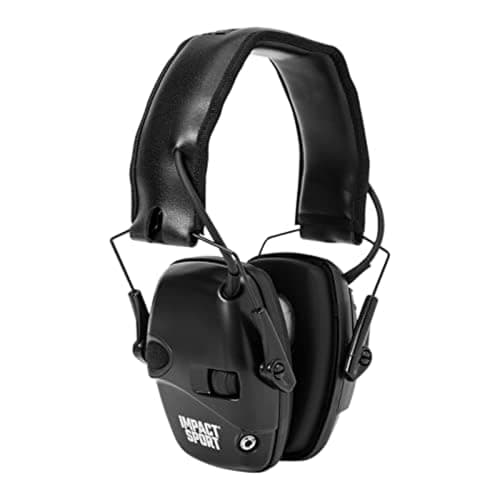
An earmuff is three things that age at different speeds: a shell that essentially does not wear out, a headband that slowly loses tension, and cushions that harden, flatten, split and absorb sweat. The cushions are the failure point, and they are the cheapest part.
HSE's criterion again: check that "earmuff seals are undamaged". Practically, run a thumb around each cushion and ask three questions. Does it still compress and spring back? Is the surface intact, with no splits, cracks or peeling? Does it still feel the same on both sides, or has one gone flatter than the other?
The headband is harder to judge because the change is gradual. The usable test is comparative: a muff you have worn for several seasons that now feels loose, slides when you look down, or no longer needs adjusting to go on has lost clamping force. If a muff has spent a year stretched over a bag handle or a gun safe hook, assume the band is part of the problem.
Electronics, batteries and pads
Electronic muffs add two failure modes that passive muffs do not have, and neither of them is about attenuation:
- Dead or leaking batteries. A flat battery does not reduce your protection — an electronic muff still works as a passive muff — but it removes the reason you bought it, and a cell left in over a winter can corrode a contact. Take the batteries out of anything going into long storage. Our how electronic earmuffs work page explains what the circuit does.
- Microphone and speaker failure. If amplification is intermittent, hissing or dead on one side, the muff has become a passive muff with a worse rating than a dedicated passive one. The published figures make that trade visible: our NRR rating chart puts the best electronic muff at NRR 30 and several slim ones at 21.
One more practical point for earbud users: a change of ear tip can change the published rating. AXIL publishes 21 dB with foam tips and 17 dB with silicone on the same earbud, so replacing a lost tip with whatever fits is a real decision, not a cosmetic one.
The inspection checklist
Thirty seconds, at the bench, before you put anything on:
- Disposable plugs: are these a fresh pair? If not, open a new one.
- Reusable plugs and pods: soft, pliable and clean? Any stiffness, tackiness, discoloration or permanent deformation means replace.
- Muff cushions: intact and still springy, with no splits, flat spots or peeling? Both sides the same?
- Headband: does the muff still need adjusting to go on, and does it stay put when you look down?
- Electronics: both sides amplifying, batteries fresh, no corrosion in the compartment?
- Ear tips on earbuds: the tips the maker rated, in the right size, not a substitute?
- Overall: is it in good, clean condition — the standard HSE applies to protectors in use?
What to restock with
Our picks for this
Two consumables and two reusables
If the checklist above sends something to the bin, these are the replacements we recommend: bulk disposables so a fresh pair is never a decision, plus two reusable options.
Highest-NRR earplug
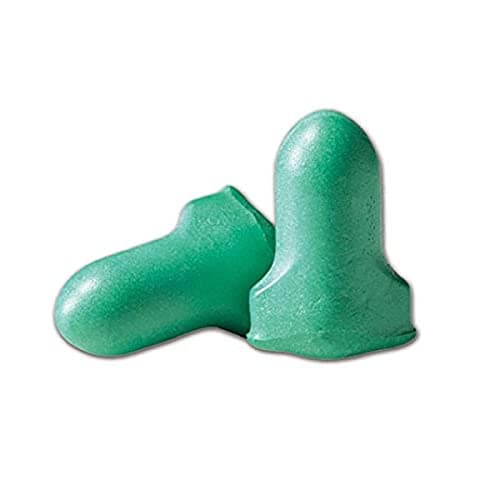
Howard Leight MAX-1
NRR 337.1/10ResearchedNRR 33 and sold in 200 pairs, so a fresh pair per session costs almost nothing. Honeywell classes them as disposable foam.
$39.89Amazon#ad · Price as of November 3, 2026 · How we make money for the link to Howard Leight MAX-1
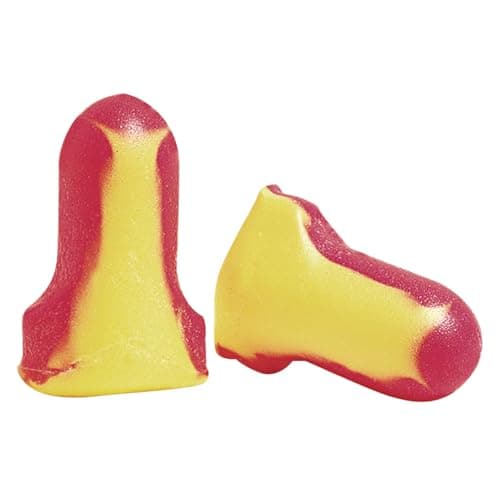
Best foam plug in corded or uncorded form
Howard Leight Laser Lite
NRR 327.1/10ResearchedNRR 32 disposable foam, the softer alternative if MAX-1 feels too firm in your canal. Same single-session logic.
$32.19Amazon#ad · Price as of November 3, 2026 · How we make money for the link to Howard Leight Laser Lite
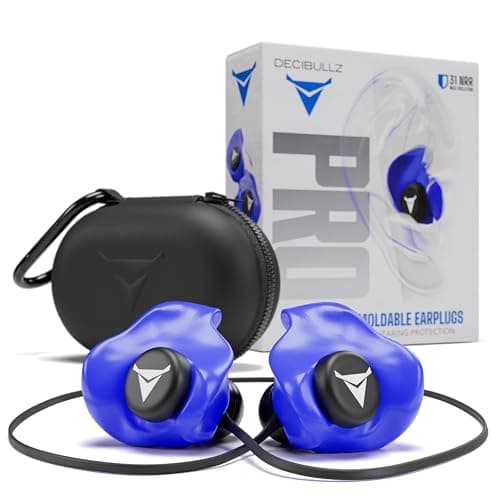
Best reusable earplug
Decibullz Custom Molded Earplugs
NRR 318.3/10ResearchedNRR 31 and remoldable, so a bad fit is fixable rather than wasted. The reusable answer if you resent throwing foam away.
$39.99Amazon#ad · Price as of November 3, 2026 · How we make money for the link to Decibullz Custom Molded Earplugs
- Howard LeightNo image
Best canal cap for between strings
Howard Leight Quiet Band QB2HYG
NRR 255.8/10ResearchedNRR 25, and Howard Leight sells it with reusable pods, which makes the pods the consumable rather than the whole product.
Check price · Amazon#ad · Price as of November 3, 2026 · How we make money for the link to Howard Leight Quiet Band QB2HYG
The only real test
There is one way to know what a protector is actually doing on your head, and it is not an inspection. In January 2025 NIOSH published a science policy update that recommends individual, quantitative fit testing of hearing protection "in lieu of the derating scheme". Fit testing produces a Personal Attenuation Rating for one person wearing one protector, which is exactly the number a chart cannot give you.
That is normally available through occupational health programs rather than at a gun club, so for most recreational shooters it is context rather than an action item. The useful takeaway is the principle: fit beats rating, condition is part of fit, and the checklist above is the free version of the same idea. Our what NRR do I need for shooting page covers the derating history in full.
Storage, which is half the problem
Most protectors that fail early were not worn out, they were stored badly. Four habits that cost nothing:
- Do not leave muffs in a hot vehicle all summer. Heat is what hardens cushions, and a trunk in July is the worst place in your life for foam.
- Do not store a muff stretched over anything. Hanging it by the band on a hook is slow damage to the clamping force.
- Keep plugs in a case, not loose in a pocket. A plug that has been in a bag with brass and grit is not clean, and clean is one of the published criteria.
- Pull the batteries before long storage. Corrosion in a contact is a repair, not a wipe.
A dedicated pocket in the range bag solves most of this; our how to organize a range bag page has a place for ear pro that is not the bottom of the main compartment. And if you are replacing a muff rather than a cushion, our main hearing protection roundup and best passive earmuffs are the places to start. For the data sheet behind the highest-rated muff we list, see 3M's X Series technical data sheet.
How we scored this
Every pick, scored on numbers you can check
Every pick here is labeled Researched: we compiled each maker's published specs (the EPA-labeled NRR on hearing protection, the Z87+ mark on glasses), read the manuals, checked the standards behind them, and scored everything on a public rubric. Every figure links to where it came from, and marketing claims are labeled “maker's claim,” so you can see exactly why a pick ranks where it does.
Scores are editorial judgments built from that documented research. Commissions never set a score or decide a pick. The rubric and its weights are published.
Questions
Common questions
Does hearing protection expire?
How often should you replace foam earplugs?
How do I know when earmuff cushions need replacing?
Can you wash reusable earplugs instead of replacing them?
Do electronic earmuffs stop protecting when the batteries die?
Does changing the ear tips change the rating?
Where this comes from
Sources
- HSE, hearing protection guidance (inspection criteria for plugs and earmuff seals)
- eCFR, 40 CFR Part 211 Subpart B (EPA hearing protector labeling and NRR definition)
- NIOSH 2025-104, science policy update recommending individual fit testing
- NIOSH Mining, earplug fitting resources
- NIOSH, roll-pull-hold earplug insertion guide
- Honeywell Store, Howard Leight MAX-1 (disposable foam, 200 pairs), accessed 2026-10-17
- Honeywell, Howard Leight Laser Lite (disposable foam), accessed 2026-10-17
- Decibullz, Custom Molded Earplugs product page, accessed 2026-10-17
- Howard Leight, Quiet Band hearing protector with reusable pods, accessed 2026-10-17
- 3M, PELTOR X Series passive earmuff technical data sheet
Specs come from each maker's own pages and data sheets (linked on every product); ratings like NRR and Z87+ are explained from the standards and agencies behind them. Prices are set by Amazon and change often, so the buy button always takes you to the current one. Where a figure isn't published, we say so. Read the full method.