Safety first. This is general information, not a substitute for hands-on instruction. Follow your range's rules and your firearm's manual, and consider a certified safety course. See our gun safety rules.
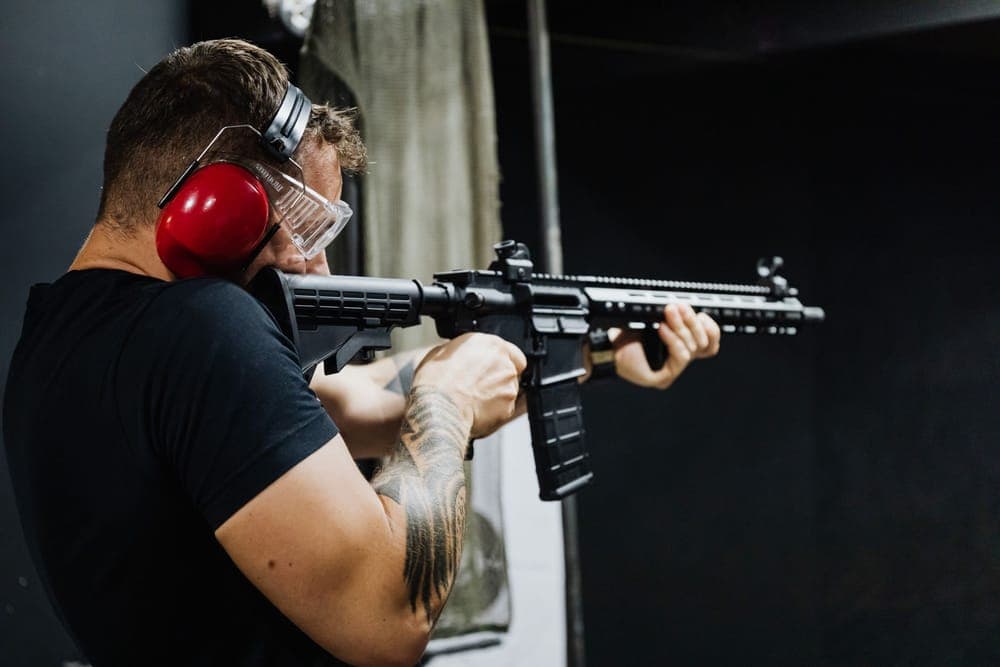
A range runs on a short vocabulary spoken loudly through hearing protection, and nobody explains it to you. The first time somebody says "the line is cold" you will either know what to do or you will watch everyone else and copy. This page is so you know.
These are not invented terms. State agencies publish them in their range rulebooks, and the wording below is quoted from those rules rather than paraphrased. Our range etiquette page covers the unwritten half of the same subject.
The one command that matters most
What you do, in this order, and nothing else until told:
- Stop. Finger off the trigger, immediately, mid-string if necessary.
- Keep the muzzle pointed downrange.
- Unload, open the action, and set the firearm down on the bench.
- Step back from the bench and wait. Do not pick anything up, and do not go downrange unless told to.
The thing not to do is ask why first. A cease fire exists because something is already wrong, and the whole point is that it works faster than an explanation.
The core commands
Georgia DNR's published rules name three of these directly: "Any person on the range shall obey the range commands of department Range Safety Officers. This includes, but is not limited to: Begin Fire commands, Cease Fire commands, and Resume Fire commands."
- "Begin fire" / "commence firing" / "the range is hot". You may load and shoot. Nobody is downrange.
- "Cease fire". Stop, unload, ground the firearm with the action open, step back.
- "Resume fire". The condition that caused the cease fire is resolved and you may continue.
- "The range is cold" / "the line is cold". No firearm may be handled at all. This is the window in which people walk downrange.
- "Muzzle!" Your muzzle has drifted off a safe direction. Correct it immediately without arguing. It is the most common thing a new shooter hears and it is not an accusation, it is a correction.
- "Going downrange" / "anyone downrange?" A question you answer out loud. Silence is taken as agreement, so say "clear" or raise a hand.
- "Unload and show clear". Empty the firearm and hold it so an officer can see an empty chamber and magazine well.
Hot range and cold range
These two words describe the state of the whole firing line, and they are the most important pair of terms on a range after cease fire. Florida FWC publishes both: for a cold range, "Shooters must check with others to ensure firearms are unloaded, actions open and firearms laid down on the shooting bench before going down range"; for a hot range, "Shooters must check with others to ensure there is no one down range; when the range is declared ‘HOT’ shooters are permitted to commence firing."
The part people miss is that the check runs both ways and is your job as well as the officer's. You do not wait to be told there is nobody downrange; you look, and you ask. Our cold range vs hot range page goes through the rest, including the version of "cold range" that applies to the whole facility rather than a moment in a session.
Two more published details worth carrying with you. Georgia DNR: "All firearms on the firing line must be grounded and unloaded, with actions open whenever anyone is downrange", and "The muzzle of every firearm when in the firing position must be in front of the front edge of the bench upon which it rests." Florida FWC: "When going downrange, stay on the walkways to and from the targets."
Commands you will hear at a match
Competition uses a longer, more formal script, and if you ever shoot a club match somebody will run you through it. In rough order:
- "Make ready". Load, holster or bench as the stage requires, and take your start position.
- "Are you ready?" Answer only if you are not. Silence means yes.
- "Standby". The start signal is coming within a few seconds. Do not move.
- "Stop". Freeze exactly as you are. This is the competition cease fire and it is absolute.
- "If you are finished, unload and show clear". The end-of-stage sequence, usually followed by "slide down", "hammer down" and "holster".
- "Range is clear". Scoring and resetting can begin.
You do not need any of this for a first range trip, and no recreational range will use it. It is here so the vocabulary is not a surprise the first time you watch a match.
What to say when something goes wrong
This is the one place where you are the one issuing the command, and most new shooters freeze instead. Georgia DNR publishes exactly what to do: "In the event of a firearm malfunction, the shooter shall keep his/her firearm pointed down range, advise all persons at the firing line of the malfunction, and unload as soon possible."
Three words are enough:
- "Malfunction!" or "Problem!" Said loudly, while the muzzle stays downrange. Then wait for help rather than turning around with the gun.
- "Cease fire!" If what you have noticed affects anybody else, you call it. You do not need permission or a job title.
- "Clear!" Your answer when somebody asks whether anyone is downrange, or whether your firearm is empty.
A delayed discharge is the specific malfunction where the command and the waiting matter most. Our misfire vs hangfire vs squib page covers what each one is and how long to keep the muzzle pointed downrange before you open anything.
You have to be able to hear them
Here is the practical problem with everything above. You are wearing hearing protection designed to remove loud sound, and a range command is a person shouting across a concrete bay. This is the real argument for electronic earmuffs, and it is a safety argument rather than a comfort one.
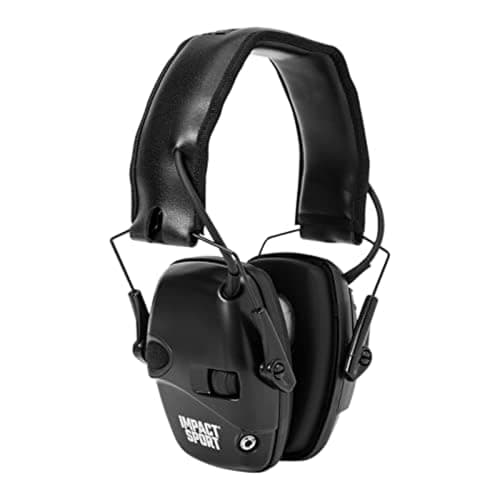
Howard Leight describes the mechanism on its own Impact Sport page: built-in directional microphones that amplify ambient sounds to a safe 82 dB, so that "you can hear important commands on the range", with amplification stopping automatically when a shot arrives. Two microphones rather than one is what keeps a voice locatable, which matters when the person speaking is not in front of you. Our how electronic earmuffs work page explains the circuit.
If you wear passive muffs or plugs, the compensations are behavioral: watch the line rather than your target between strings, and lift a cup the moment anybody near you speaks or moves. Our best passive earmuffs page is honest about this being the one real cost of going passive.
Ear pro that lets you hear the line
Two electronic muffs that publish what their amplification does, plus the foam plug to wear underneath them indoors.
Our picks for this
Hearing the command and still being protected
Published figures from each maker. The electronics are what let you hear a range officer; the plug is what keeps the arithmetic honest indoors.
Best first electronic muff
Howard Leight Impact Sport
NRR 227.2/10ResearchedNRR 22, with directional microphones Howard Leight says amplify ambient sound to a safe 82 dB so you can hear range commands. Four-hour auto shut-off.
$60.00Amazon#ad · Price as of November 3, 2026 · How we make money for the link to Howard Leight Impact Sport
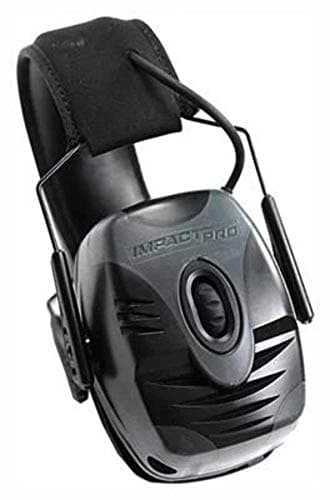
Best electronic muff for indoor ranges
Howard Leight Impact Pro
NRR 307.4/10ResearchedNRR 30, the highest electronic rating we cover, with the same amplification approach. The pick if your range is a loud indoor bay.
$101.59Amazon#ad · Price as of November 3, 2026 · How we make money for the link to Howard Leight Impact Pro
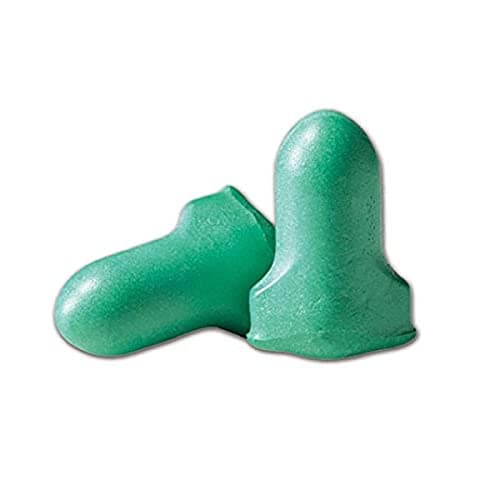
Highest-NRR earplug
Howard Leight MAX-1
NRR 337.1/10ResearchedNRR 33 pre-shaped foam, 200 pairs to a pack. Wear it under the muffs indoors; the electronics still carry the commands over it.
$39.89Amazon#ad · Price as of November 3, 2026 · How we make money for the link to Howard Leight MAX-1
Answering a command
Three habits that mark you as somebody who knows what they are doing, none of which involves gear.
- Acknowledge out loud. "Clear" or "copy" or a thumbs up. An officer who cannot tell whether you heard has to come and check, and that slows the whole line down.
- Do the action before you ask the question. Ground the gun first, ask afterward. Every time.
- Say it louder than feels natural. Everybody on the line is wearing hearing protection, including the person you are talking to.
The commands sit on top of the four rules that never change, published by both the NRA and the NSSF, and the NSSF's new shooter guidance is a good half hour before a first trip. Our gun safety rules page covers them, and first time at a shooting range walks through the trip in order.
How we scored this
Every pick, scored on numbers you can check
Every pick here is labeled Researched: we compiled each maker's published specs (the EPA-labeled NRR on hearing protection, the Z87+ mark on glasses), read the manuals, checked the standards behind them, and scored everything on a public rubric. Every figure links to where it came from, and marketing claims are labeled “maker's claim,” so you can see exactly why a pick ranks where it does.
Scores are editorial judgments built from that documented research. Commissions never set a score or decide a pick. The rubric and its weights are published.
Questions
Common questions
What does cease fire mean at a shooting range?
Who can call a cease fire?
What does it mean when a range is hot or cold?
What do you say if your gun malfunctions at the range?
Can you hear range commands through hearing protection?
What does the command muzzle mean?
Where this comes from
Sources
- Georgia DNR, firearm range rules, accessed 2026-10-10
- Florida FWC, shooting range safety rules, accessed 2026-10-10
- Louisiana Department of Wildlife and Fisheries, shooting ranges, accessed 2026-10-10
- Connecticut DEEP, Glastonbury Shooting Range information, accessed 2026-10-10
- NRA, Gun Safety Rules, accessed 2026-10-10
- NSSF, Rules of Firearm Safety, accessed 2026-10-10
- NSSF letsgoshooting.org, New Shooters, accessed 2026-10-10
- Howard Leight Shooting Sports, Impact Sport Electronic Earmuff product page, accessed 2026-10-10
Specs come from each maker's own pages and data sheets (linked on every product); ratings like NRR and Z87+ are explained from the standards and agencies behind them. Prices are set by Amazon and change often, so the buy button always takes you to the current one. Where a figure isn't published, we say so. Read the full method.