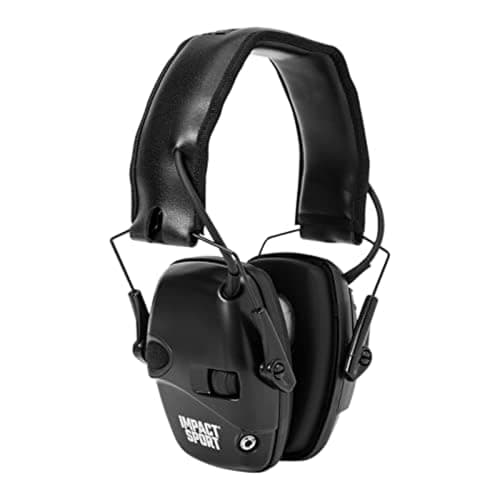
Quick picks
The picks at a glance
| # | Product | Best for | Score | Price |
|---|---|---|---|---|
| 1 | 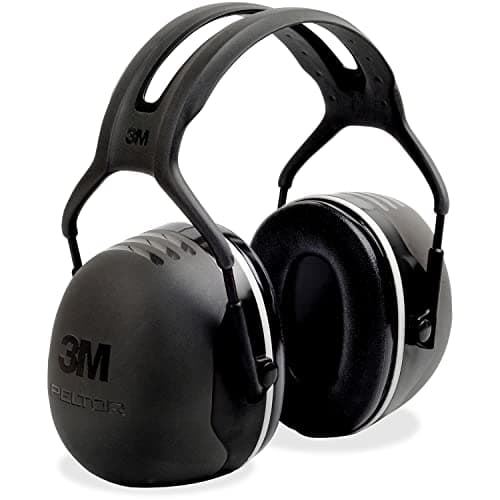 3M Peltor X5A NRR 31 on 3M's own X Series data sheet, the highest rating of any standalone muff on this site. Nothing to charge, nothing to switch on. | Best passive muff overallNRR 31 | 6.7/10Researched | $47.27Amazon #ad · Disclosure |
| 2 | 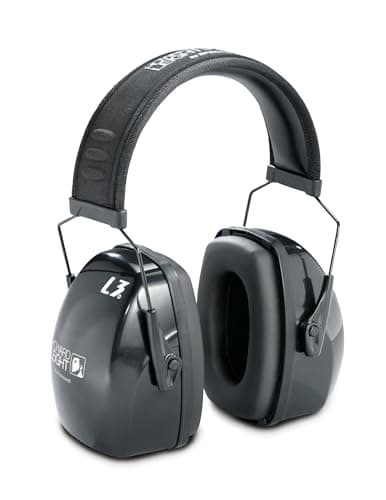 Howard Leight Leightning L3 NRR 30 for one point less than the X5A, from the brand most first-time buyers already recognize on the shelf. | Best value at a high ratingNRR 30 | 6.7/10Researched | $39.32Amazon #ad · Disclosure |
| 3 | 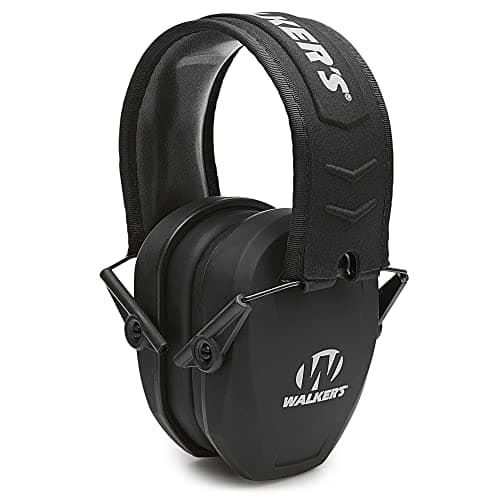 Walker's Razor Slim Passive NRR 27 with ultra low profile cups and a folding design, which is the best rating you can get in a muff that packs flat. | Best slim passive muffNRR 27 | 7.5/10Researched | $22.83Amazon #ad · Disclosure |
| 4 | No image Caldwell Passive Low Pro Earmuff A low-profile muff at NRR 24, but Caldwell's listing publishes only the rating, the name and the color. | Low-profile pick at NRR 24NRR 24 | 5.6/10Researched | Check price · Amazon #ad · Disclosure |
| 5 | 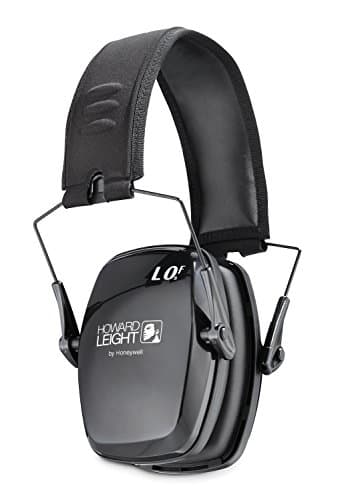 Howard Leight Leightning L0F The only muff here with a published folded size: Howard Leight says it collapses to four inches. NRR 23 means plugs underneath indoors. | Best folding passive muffNRR 23 | 7.2/10Researched | Check price · Amazon #ad · Disclosure |
#ad · Prices come live from Amazon, last checked November 3, 2026. Scores are ours, built from published specs and manuals, not hands-on tests. Photos come from the product's own Amazon listing. Tap a row for the full write-up.
A passive earmuff is a sealed cup with foam inside. There is no microphone, no circuit board, no battery compartment and no switch. That means there is also almost nothing to compare between models except the number the maker prints on the EPA label and the shape of the cup, which is why this is one of the shortest buying decisions in a first range kit.
It is also the decision most new shooters get talked out of. Electronic muffs are what the range counter sells, and they genuinely do something passive muffs cannot: they let you hear a range officer without lifting a cup. But they cost more, they need batteries, and at the budget end they rate lower than passive muffs do. Our electronic vs passive earmuffs page lays out that trade in full.
Every pick below is currently sold, every rating comes from the maker's own published material, and every spec links to its source.
Why buy passive at all
Four reasons, in the order they matter for a first setup:
- The ratings run higher. The two highest-rated muffs on this site are both passive: the 3M Peltor X5A at NRR 31 and the Howard Leight Leightning L3 at NRR 30. The best electronic muff we cover, the Howard Leight Impact Pro, reaches NRR 30 and most sit at 21 to 23.
- Nothing fails. No dead AAAs halfway through a box of ammunition, no switch left on in the range bag, no electronics to drown in a rainstorm at an outdoor bay.
- They are the right second pair. If you already own electronic muffs, a cheap high-NRR passive pair is what you hand a friend or a family member who comes along.
- They cost less for the same protection. A passive muff spends none of its price on a circuit, so the money goes into cushions and clamping force.
How we picked
Bench & Berm does not test gear, so nothing here is a measurement of ours. Picks are researched from published maker information and scored on the passive-muff rubric published on how we pick: published NRR at 40 percent, fit with glasses and cup profile at 25, folding and portability at 15, and comfort and adjustment at 20. The gate is a US EPA Noise Reduction Rating published by the maker. A European SNR figure on its own does not qualify, which is the distinction our NRR vs SNR page covers.
One honest limit on this category: passive muffs are the least documented gear in a range kit. Several makers publish the NRR and nothing else, so a muff that may well be excellent scores lower here simply because the page it is sold on says less. We say so on each card rather than filling the gap in.
The ratings side by side
Everything on this page in one view. Every figure links to the maker page or data sheet it came from, and a blank row means the maker does not publish that detail at all.
| Published spec | 3M Peltor X5A | Howard Leight Leightning L3 | Walker's Razor Slim Passive | Howard Leight Leightning L0F |
|---|---|---|---|---|
| NRR | 31 dB (X5A row of 3M's NRR table) | 30 dB | 27 dB | 23 dB |
| Cup profile | Not published | "Patented Air Flow Control technology" (maker's claim) | "Ultra low profile ear cups with rubberized coating" (maker's claim) | Ultra-slim earcup that Howard Leight says won't interfere with your shooting (maker's claim) |
| Folding | Not published | Not stated on Howard Leight's page | Yes ("compact folding design") | Yes; Howard Leight says it collapses to just four inches (maker's claim) |
| Batteries | Not published | None (passive earmuff) | None (passive earmuff) | None (passive earmuff) |
| Score | 6.7/10 | 6.7/10 | 7.5/10 | 7.2/10 |
What the NRR actually promises
The Noise Reduction Rating is a US figure, defined and required by the EPA under 40 CFR Part 211 Subpart B. It is measured in a lab on a panel of fitted subjects. It is not a promise about your ears on a Saturday morning.
3M says this itself in the X Series data sheet for the X5A: many users will receive less noise reduction than indicated by the NRR because of variation in fit, fitting skill and motivation, and it recommends halving the NRR to estimate typical workplace protection. OSHA's own Appendix B to 1910.95 applies a similar derating.
So read the NRR as a ranking tool between products, not as a subtraction you can trust. Our what NRR do I need for shooting page works the numbers through properly.
Cup profile and long guns
Here is the one real trade-off in passive muffs, and it runs in exactly the opposite direction from what you would hope: the highest-rated muffs have the biggest cups.
A thick cup holds more foam and seals better, which is where NRR 30 and 31 come from. A thick cup also sticks out from your head, and when you shoulder a rifle or a shotgun the stock arrives at the same place. The cup gets knocked, the seal breaks, and the rating on the box stops describing your ear. Howard Leight does not state a cup profile for the Leightning L3, and the 3M material we could source does not describe a slim or folding X5A.
Which is why the slim muffs matter despite their lower numbers. Walker's publishes ultra low profile ear cups with rubberized coating at NRR 27, the best rating among slim passive muffs here. Howard Leight sells the Leightning L0F as an ultra-slim earcup it says will not interfere with your shooting, and publishes the only folded dimension in this group: four inches.
Passive muffs indoors
An indoor pistol bay is the loudest place a new shooter will ever stand: concrete walls, a low ceiling and other people's muzzle blast arriving from both sides. NIOSH-authored work on indoor ranges is the basis for most of what our indoor range page says.
Passive muffs have one real disadvantage there, and it is not protection. It is that you cannot hear the range officer. On a cold range, commands are how the line stays safe, and a passive muff makes you the person who misses one. The fix is simple: watch the line, not your target, and lift a cup when someone speaks. Our range commands page lists the words you need to recognize.
If that trade bothers you, the honest answer is to buy electronic. Our best electronic earmuffs page is the other side of this decision.
Which muff for which shooter
- You want the most protection a muff can give: 3M Peltor X5A, NRR 31.
- You want nearly that from a brand on every shelf: Howard Leight Leightning L3, NRR 30.
- You shoot a rifle or shotgun: Walker's Razor Slim Passive, NRR 27 with low-profile cups.
- You need the muff to live in a range bag: Howard Leight Leightning L0F, folded to four inches.
- You want a spare pair for guests: the Leightning L3, with a box of foam plugs to go under them.
A passive muff is mostly a pair of cushions, and cushions harden, flatten and split. Before you replace a muff, check whether it is the seals rather than the shell that are finished: when to replace hearing protection.
In detail
The picks, in full
Rank 1
Best passive muff overall
3M Peltor X5A
NRR 31 on 3M's own X Series data sheet, the highest rating of any standalone muff on this site. Nothing to charge, nothing to switch on.
Published specsResearched · every value sourced
How the 6.7 score breaks down
- Published NRR (40%)
- 9
- Fit with glasses & cup profile (25%)
- 5
- Folding & portability (15%)
- 4
- Comfort & adjustment (20%)
- 6
What the specs support
- NRR 31, the highest of any standalone muff we cover
- 3M's own data sheet spells out how fit and glasses can lower real-world protection
- Passive headband design: no batteries or electronics to manage
Where it falls short
- The 31 is a lab rating; 3M says many users get less because of fit, and glasses under the cushions can lower it further
- No folding or slim-cup design is described in the 3M specs we could source
- Passive, so there's no amplification to help you hear range commands
Skip it if…
…you want one muff that folds into a small range bag; the 3M specs we could source don't describe a folding X5A, while Howard Leight's Leightning L0F collapses to four inches.
#ad · Price as of November 3, 2026 · How we make money for the link to 3M Peltor X5A
Rank 2
Best value at a high rating
Howard Leight Leightning L3
NRR 30 for one point less than the X5A, from the brand most first-time buyers already recognize on the shelf.
Published specsResearched · every value sourced
| NRR | 30 dB |
|---|---|
| Cup technology | "Patented Air Flow Control technology"Maker's claim |
| Folding | Not stated on Howard Leight's page |
| Batteries | None (passive earmuff) |
How the 6.7 score breaks down
- Published NRR (40%)
- 8.5
- Fit with glasses & cup profile (25%)
- 5.5
- Folding & portability (15%)
- 4.5
- Comfort & adjustment (20%)
- 6
What the specs support
- NRR 30, seven points more than Howard Leight's folding Leightning L0F
- Among the standalone passive muffs we cover, only the 3M Peltor X5A (NRR 31) rates higher
- Passive, so there are no batteries to die mid-session
Where it falls short
- Howard Leight doesn't state whether it folds
- No cup-profile detail is published, so rifle shooters can't confirm stock clearance
Skip it if…
…you shoot a rifle or shotgun and need a cup you know will clear the stock; Howard Leight doesn't describe the L3's profile, while its Leightning L0F is sold as ultra-slim.
#ad · Price as of November 3, 2026 · How we make money for the link to Howard Leight Leightning L3
Rank 3
Best slim passive muff
Walker's Razor Slim Passive
NRR 27 with ultra low profile cups and a folding design, which is the best rating you can get in a muff that packs flat.
Published specsResearched · every value sourced
| NRR | 27 dB |
|---|---|
| Cup profile | "Ultra low profile ear cups with rubberized coating"Maker's claim |
| Folding | Yes ("compact folding design") |
| Batteries | None (passive earmuff) |
| SKU | GWP-RSMPAS-VAR |
How the 7.5 score breaks down
- Published NRR (40%)
- 7.5
- Fit with glasses & cup profile (25%)
- 8.5
- Folding & portability (15%)
- 8
- Comfort & adjustment (20%)
- 6
What the specs support
- NRR 27, the best rating among the slim or folding passive muffs we cover
- Walker's describes ultra low profile cups with a rubberized coating
- Compact folding design for the range bag
Where it falls short
- Three to four points below the Leightning L3 (NRR 30) and 3M Peltor X5A (NRR 31)
- Walker's gives no folded size, so you can't compare packed size with the L0F's four inches
Skip it if…
…you want the highest single-muff rating for a loud indoor bay; NRR 27 trails the Leightning L3 (30) and 3M Peltor X5A (31).
#ad · Price as of November 3, 2026 · How we make money for the link to Walker's Razor Slim Passive
Rank 4
Low-profile pick at NRR 24
Caldwell Passive Low Pro Earmuff
A low-profile muff at NRR 24, but Caldwell's listing publishes only the rating, the name and the color.
Published specsResearched · every value sourced
| NRR | 24 dB |
|---|---|
| Color | Gray |
| Listed as | Passive Low Pro Earmuff Gray 24NRR |
How the 5.6 score breaks down
- Published NRR (40%)
- 6.5
- Fit with glasses & cup profile (25%)
- 5.5
- Folding & portability (15%)
- 4
- Comfort & adjustment (20%)
- 5
What the specs support
- NRR 24 from Caldwell's own listing
- Sold as a low-profile ("Low Pro") muff
- Passive: nothing to charge or switch on
Where it falls short
- Caldwell's listing gives only the NRR, name and color; we couldn't confirm folding, cup size or cushions
- NRR 24 trails the Walker's Razor Slim Passive (NRR 27) among low-profile passive muffs
Skip it if…
…you want published details before you buy; this pick rests on one line of Caldwell's listing (NRR, name and color), while the Walker's Razor Slim Passive publishes its rating, cup and folding design.
#ad · Price as of November 3, 2026 · How we make money for the link to Caldwell Passive Low Pro Earmuff
Rank 5
Best folding passive muff
Howard Leight Leightning L0F
The only muff here with a published folded size: Howard Leight says it collapses to four inches. NRR 23 means plugs underneath indoors.
Published specsResearched · every value sourced
| NRR | 23 dB |
|---|---|
| Folding | Yes; Howard Leight says it collapses to just four inchesMaker's claim |
| Cup profile | Ultra-slim earcup that Howard Leight says won't interfere with your shootingMaker's claim |
| Batteries | None (passive earmuff) |
How the 7.2 score breaks down
- Published NRR (40%)
- 6.5
- Fit with glasses & cup profile (25%)
- 8
- Folding & portability (15%)
- 9
- Comfort & adjustment (20%)
- 6
What the specs support
- Collapses to four inches, the only folded size any muff here publishes
- Ultra-slim earcup that Howard Leight says won't interfere with your shooting
- No batteries to replace
Where it falls short
- NRR 23 is seven points under Howard Leight's own Leightning L3
- At that rating, plan on foam plugs underneath at a loud indoor range
Skip it if…
…you want to skip plugs at an indoor range; at NRR 23 the L0F is really a muff to wear over foam plugs there, so trade up to the NRR 27 Walker's Razor Slim Passive if you still want a folding design.
#ad · Price as of November 3, 2026 · How we make money for the link to Howard Leight Leightning L0F
What to look for
- A published US EPA NRR. Not an SNR, not a decibel claim in the marketing copy. If the maker will not print the NRR, the muff does not belong in a range bag.
- NRR 27 or better if the muff is your only protection. Below that, plan on plugs underneath at an indoor range.
- A stated cup profile if you shoot long guns. "Low profile", "slim" or "ultra low profile" in the maker's own words, not your guess from a photograph.
- Folding, if the muff travels. Only one muff here publishes a folded size, and a muff that never fits in the bag is a muff you leave at home.
- Headband travel you can see. A wire band with a long slider adjusts to more heads than a molded plastic one.
- Replaceable cushions. Foam cushions flatten and go hard. A muff with a sold replacement kit lasts years longer than one without.
Beginner mistakes
- Treating the NRR as a subtraction. 3M says plainly that many users get less. Halve it, then decide.
- Buying the highest number for rifle shooting. The big cup that earns that number is the cup your stock will hit.
- Comparing an NRR against an SNR. Different scales, different test standards. They are not interchangeable numbers.
- Wearing muffs over a baseball cap brim or long hair. Anything between cushion and skull is a leak, and a leak costs more than the difference between any two muffs here.
- Skipping plugs indoors because the muff rates 30. Derate it and a centerfire pistol still clears 140 dB.
- Owning one pair. Someone will come with you, and handing them nothing is not an option.
How we scored this
Every pick, scored on numbers you can check
Every pick here is labeled Researched: we compiled each maker's published specs (the EPA-labeled NRR on hearing protection, the Z87+ mark on glasses), read the manuals, checked the standards behind them, and scored everything on a public rubric. Every figure links to where it came from, and marketing claims are labeled “maker's claim,” so you can see exactly why a pick ranks where it does.
Scores are editorial judgments built from that documented research. Commissions never set a score or decide a pick. The rubric and its weights are published.
Questions
Common questions
Are passive earmuffs good enough for shooting?
What NRR do passive earmuffs need for shooting?
Do passive earmuffs protect better than electronic ones?
Which passive earmuff is best for a rifle or shotgun?
Do passive earmuffs need batteries?
Can you wear earplugs under passive earmuffs?
Where this comes from
Sources
- 3M, PELTOR X Series passive earmuff technical data sheet (official 3M PDF), accessed 2026-10-10
- Howard Leight Shooting Sports, Leightning L3 Passive Earmuff product page, accessed 2026-10-10
- Howard Leight Shooting Sports, Leightning L0F Folding Ultra-Slim Passive Earmuff product page, accessed 2026-10-10
- Walker's, Razor Slim Passive Ear Muff product page, accessed 2026-10-10
- Caldwell, safety-gear listing page, accessed 2026-10-10
- US EPA, 40 CFR Part 211 Subpart B, Hearing Protective Devices (eCFR), accessed 2026-10-10
- OSHA, Appendix B to 29 CFR 1910.95, Methods for estimating hearing protector attenuation, accessed 2026-10-10
- Meinke DK, Finan DS, Flamme GA, Murphy WJ, et al., Prevention of Noise-Induced Hearing Loss from Recreational Firearms, Seminars in Hearing 2017 (CDC Stacks), accessed 2026-10-10
Specs come from each maker's own pages and data sheets (linked on every product); ratings like NRR and Z87+ are explained from the standards and agencies behind them. Prices are set by Amazon and change often, so the buy button always takes you to the current one. Where a figure isn't published, we say so. Read the full method.