Quick picks
The picks at a glance
| # | Product | Best for | Score | Price |
|---|---|---|---|---|
| 1 | 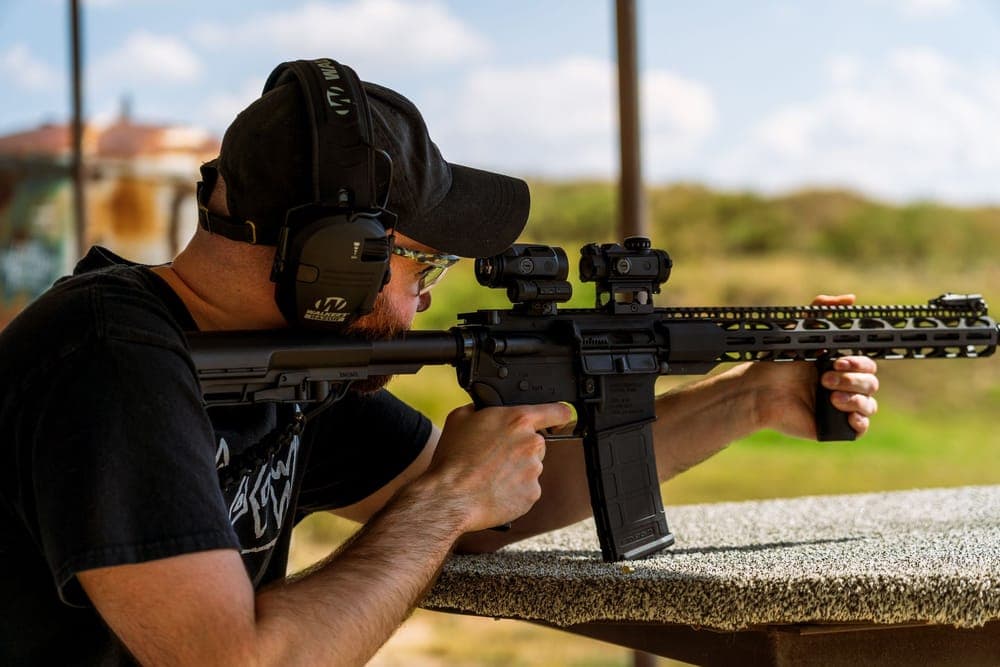 Howard Leight Impact Sport Start here. You hear range commands without lifting a cup, the cup is slim enough for a rifle stock (per Howard Leight), and a 4-hour auto shut-off saves the AAAs. NRR 22, so add foam plugs underneath indoors. | Best first ear pro for most beginnersNRR 22 | 7.2/10Researched | Check price · Amazon #ad · Disclosure |
| 2 | Howard Leight Impact Pro The same electronics and battery setup as the Impact Sport with NRR 30, the highest of any electronic muff we cover. Howard Leight pitches it at handgun shooters and indoor ranges. | Best for indoor rangesNRR 30 | 7.4/10Researched | Check price · Amazon #ad · Disclosure |
| 3 | 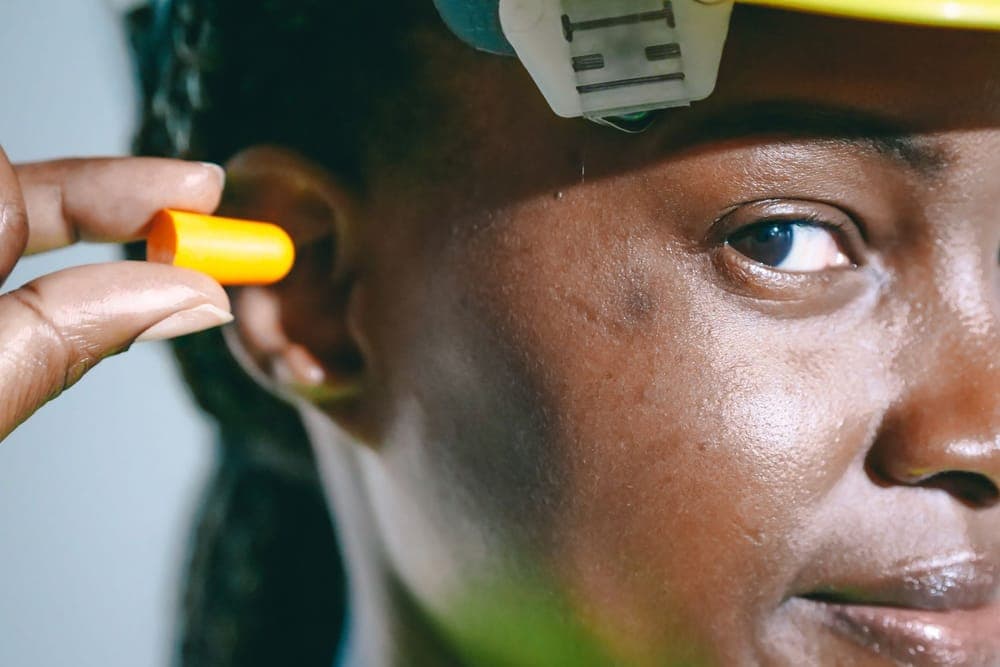 Howard Leight MAX-1 NRR 33 foam plugs in a 200-pair pack. Wear them alone outdoors if you prefer plugs, or under either Howard Leight muff when you shoot indoors. | Best earplugs, and the layer to add under any muffNRR 33 | 7.1/10Researched | Check price · Amazon #ad · Disclosure |
| 4 | 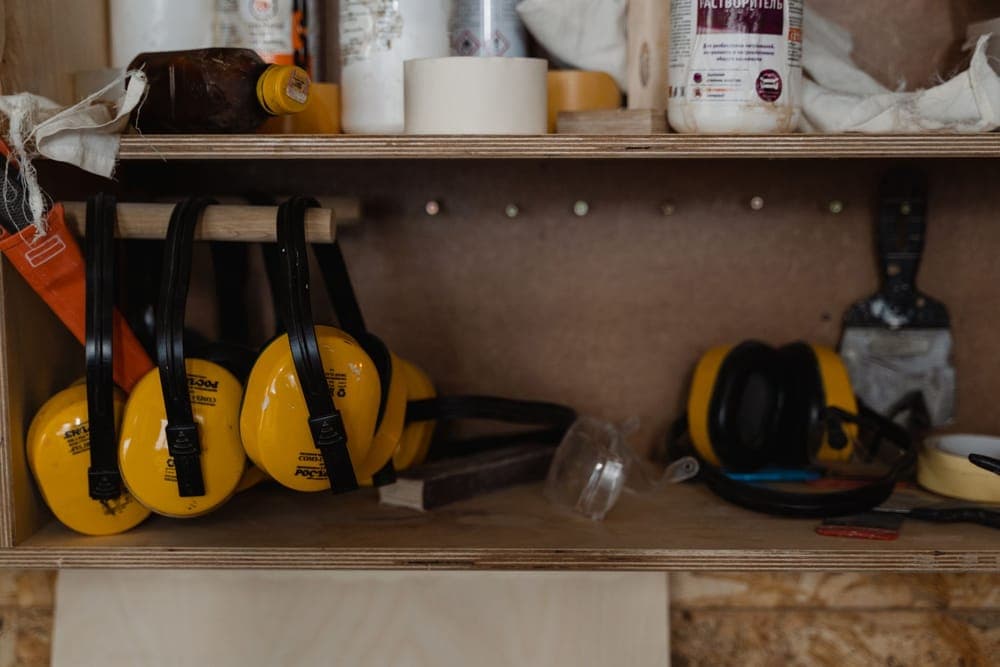 Walker's Razor Slim Passive NRR 27, ultra low profile cups and a folding design. The pick if you want a muff with no batteries that still clears a long gun's stock. | Best passive muff (nothing to charge)NRR 27 | 7.5/10Researched | Check price · Amazon #ad · Disclosure |
| 5 | 3M Peltor X5A NRR 31 on 3M's own data sheet, the highest standalone muff rating we cover. Passive, so you hear less of the range between strings. | Most protection from a single muffNRR 31 | 6.7/10Researched | Check price · Amazon #ad · Disclosure |
| 6 | Decibullz Custom Molded Earplugs NRR 31 custom-molded plugs you keep, with foam and three sizes of silicone tips. Worth it if you shoot often; plan on a molding step first. | Best reusable earplugsNRR 31 | 8.3/10Researched | Check price · Amazon #ad · Disclosure |
#ad · Prices are set by Amazon and change often, so we don't print them. Scores are ours, built from published specs and manuals, not hands-on tests. Photos are illustrative stock. Tap a row for the full write-up.
Hearing protection (ear pro) is the one piece of range gear you can't skip. ASHA (the American Speech-Language-Hearing Association) puts it plainly: "Always use HPDs any time you fire a gun or are around someone firing a gun." It also warns that people who shoot without protection, or wear it badly, "can suffer hearing loss or ringing in their ears (known as tinnitus) with as little as one shot" (ASHA, Recreational Firearm Noise Exposure).
This page ranks the best hearing protection for shooting for someone buying their first set: two electronic muffs, two passive muffs and two earplugs. Every one carries an NRR (Noise Reduction Rating, the number on the package) published by its maker, and we explain what that number can and can't tell you. Building a whole first kit? Start with our first range kit, which puts ear pro alongside eye protection, a range bag and targets.
How we picked
Most gear sites say they tested thirty muffs. We haven't put these on a sound meter, and we say so. What we did instead: every pick had to clear one gate, a US EPA Noise Reduction Rating published by the maker, and then we scored it on the public rubric on our How we pick page.
- Electronic muffs: published NRR (30%), fit with glasses and cup profile (20%), amplification and shut-off as the maker describes them (20%), battery and auto-off (15%), comfort and adjustment (15%).
- Passive muffs: published NRR (40%), fit with glasses and cup profile (25%), folding and portability (15%), comfort and adjustment (20%).
- Earplugs: published NRR (40%), reusability, fit range and sizes, and how well they work under muffs (20% each).
The rank order isn't the score order, on purpose. The rank answers a beginner's question, "what should I buy first?", which is why an NRR 22 electronic muff sits above an NRR 33 earplug. Every spec on the cards links to the maker's page. When a maker doesn't publish something, the card says so rather than filling the gap.
Why every shot needs ear protection
Gunfire is an impulse: a very short, very loud spike. The loudest moment is measured as peak sound pressure, and the published figures are far above the level safety agencies use as a ceiling. OSHA's noise standard says exposure to impulsive noise "should not exceed 140 dB peak sound pressure level" (29 CFR 1910.95). The 2017 review in Seminars in Hearing puts firearm peaks at roughly 140 to 175 dB, with most recreational firearms (other than small .17 and .22 rifles and air rifles) between 150 and 165 dB (Meinke et al., 2017). NIOSH's own measurements of law-enforcement firearms for its indoor-range alert ranged from 155 to 168 dB.
ASHA's summary is the one to remember: "exposure to noise greater than 140 dBP can permanently damage hearing, even from a single occurrence." That's why the rule at the range is ear pro on before the first shot, for you and for anyone standing near the line, and why "I'm only firing a few rounds" isn't a reason to skip it. The full set of sourced numbers, and why they differ between studies, is in how loud is a gunshot.
Electronic muffs, passive muffs or earplugs?
Shooting hearing protection comes in three families. They all cut noise; they differ in what else you hear and what you have to manage.
Electronic earmuffs
An electronic muff has microphones on the cups that pass quieter sounds through and stop when something loud happens. Howard Leight says the Impact Sport's "built-in directional microphones amplify range commands and other ambient sounds to a safe 82dB" and that it "automatically halts amplification when ambient sound exceeds 82dB" (Howard Leight, Impact Sport). Caldwell describes its E-Max the same way with an 85-decibel line: below it the muff amplifies "normal communication, range commands, and environmental sounds", and above it "the microphones shut off for a split second" (Caldwell, E-Max Low Profile).
For a new shooter, that's the whole point. Ranges run on spoken commands, and Florida's wildlife agency sums up the most important one: "Immediately stop shooting when anyone calls 'Cease firing'" (FWC, Range Safety Rules). With electronic muffs you hear that call, and the person coaching you, without lifting a cup off your ear. The trade-off is batteries, which is why we weight auto shut-off in the score.
Passive earmuffs
Passive muffs have no electronics. ASHA describes standard protectors as devices "designed to decrease the volume of sounds that enter the ear canal." Nothing can go flat, and in our picks the passive muffs carry the higher ratings (NRR 27 and 31). The cost is that conversation is muffled too, so you'll find yourself wanting to lift a cup to hear, which is exactly the habit to avoid.
Earplugs
The EPA calls earplugs "ear insert devices", held in place "principally by virtue of its fit inside the ear canal" (40 CFR Part 211, Subpart B). They carry the highest ratings on this page (NRR 31 and 33), fit in a pocket, and are the layer you add under muffs at an indoor range. Their protection depends heavily on how well each plug seals, so they reward a little practice.
What the NRR on the box means
US hearing protectors have to carry an EPA label. It must say "Noise Reduction Rating", give the value in decibels, add the phrase "(When used as directed)", and state that "the range of Noise Reduction Ratings for existing hearing protectors is approximately 0 to 30 (higher numbers denote greater effectiveness)" (EPA label rule, 40 CFR 211.204). So a higher number means more protection in the lab test, and the NRR is the fair way to compare two products.
What the number isn't is a promise. OSHA calls it "a laboratory-derived numerical estimate of the attenuation achieved by the protector", and when OSHA uses it to estimate what a worker actually gets, it subtracts 7 dB first (for A-weighted measurements) and, in some cases, applies a further 50% safety factor (OSHA Technical Manual, Noise, Appendix F). 3M's own data sheet for its X Series muffs says "many users will receive less noise reduction than indicated by the NRR due to variation in fit, fitting skill and motivation of the user" (3M PELTOR X Series data sheet).
So use the NRR to compare products, then put your effort into fit, because fit is where real-world protection is won or lost. Our guide to what NRR you need for shooting walks through the OSHA math with real product numbers.
The six picks at a glance
| Pick | Type | Published NRR | Power |
|---|---|---|---|
| Howard Leight Impact Sport | Electronic muff | 22 dB | 2 x AAA, auto shut-off after 4 hours |
| Howard Leight Impact Pro | Electronic muff | 30 dB | 2 x AAA (included), auto shut-off after 4 hours |
| Howard Leight MAX-1 | Disposable foam earplug | 33 dB | None |
| Walker's Razor Slim Passive | Passive muff, folding | 27 dB | None |
| 3M Peltor X5A | Passive headband muff | 31 dB | None |
| Decibullz Custom Molded | Reusable molded earplug | 31 dB | None |
Figures come from the pages linked on each card: Howard Leight Impact Sport, Impact Pro, MAX-1 (Honeywell's licensed store), Walker's Razor Slim Passive, 3M's X Series data sheet and Decibullz. Want more electronic options? Our best electronic ear muffs for shooting ranks six, and our best earplugs for shooting covers foam, reusable and electronic earbuds.
Which pick fits the way you'll shoot
- You're new, and you'll shoot with a friend or take a lesson. The Impact Sport. Hearing the person coaching you, and every range command, without touching your muffs is the feature a first-timer uses most. It still carries a published NRR 22; keep MAX-1 plugs in the bag for loud days.
- Your nearest range is indoors and you'll mostly shoot handguns. The Impact Pro. Howard Leight says it's "designed for handgun and pistol shooters looking for high NRR" and "perfect for indoor ranges, covered ranges or other extremely loud shooting environments" (Howard Leight, Impact Pro). Wear foam plugs underneath there too.
- You'll shoot a rifle or shotgun. Look at cup profile first. The Impact Sport and the Walker's Razor Slim Passive both come with a slim-cup claim from the maker; Howard Leight doesn't describe one for the Impact Pro, and the 3M specs we could source don't describe one for the X5A.
- You don't want to think about batteries. The Walker's Razor Slim Passive (NRR 27, folds) or, for the most protection from a single muff, the 3M Peltor X5A (NRR 31).
- You'd rather wear plugs, or you shoot often. MAX-1 foam plugs for grab-and-go, or Decibullz if you want one reusable set. Decibullz says its plugs meet ANSI S3.19 and ships foam tips plus triple-flange silicone tips in small, medium and large.
- You're buying for a whole family. A 200-pair box of MAX-1 plugs covers the adults' spares, and children get muffs sized for them (see below).
Shooting indoors? Plan on plugs and muffs
Indoor ranges are harder on your ears. Hearing researchers write that "shooting in an enclosed, reflective, reverberant environment (indoors or hunting blind) increases the hazard to hearing" (Meinke et al., 2017), and ASHA advises that if you shoot at an indoor facility, you "choose one that has been acoustically treated for reverberation (i.e., sound bouncing off the walls) and wear double hearing protection."
NIOSH's alert on indoor firing ranges goes further. It's written for range employees and people who shoot for their job, but its recommendation for ranges is clear: shooters should use "dual hearing protection devices (earmuffs and earplugs) when the range is in use", and for shooters who need to communicate, "electronic level-limiting or sound restoration earmuffs with passive earplugs" (NIOSH Alert 2009-136). In NIOSH's own measurements for that alert, earmuffs alone gave a mean peak reduction of 26 dB, earplugs alone 24 dB, and the two together 44 dB.
Don't add the two NRRs together, though. OSHA's method for estimating dual protection takes the higher of the two NRRs, subtracts 7 dB, then adds 5 dB for the second protector, and notes that double protection "will add only 5 dB of attenuation" in that estimate (OSHA Technical Manual, Appendix F). In practice: a foam plug under your electronic muff. Our indoor-range picks pair specific plugs and muffs, and the step-by-step is in how to double up on hearing protection.
Wearing glasses with earmuffs
You'll wear safety glasses at every range, and their temples (the arms) pass right under the muff cushions. 3M's data sheet warns that noise reduction "may be lower when eyeglasses, goggles or respirator straps are worn between the sealing surface of the earmuff cushions and the sides of the wearer's head." NIOSH measured it: in the 2009 alert, earmuffs worn with safety glasses had a peak reduction of 18 dB, against a mean of 26 dB for earmuffs. The 2017 review by hearing researchers puts the general effect of eyeglass temples, hats and hoods that break the seal at 5 to 15 dB of lost attenuation (Meinke et al., 2017).
NIOSH's fix is to use glasses "with a strap or low profile stem" (NIOSH Alert 2009-136). Thin, flat temples help the cushion close around them, and a foam plug underneath is a good backup, since it sits in the ear canal where the glasses can't reach. For frames that fit over prescription lenses, see our shooting glasses for glasses wearers, and for the full fit problem, ear protection with glasses.
Getting the fit right on day one
Every EPA label carries the same reminder: "Improper fit of this device will reduce its effectiveness. Consult the enclosed instructions for proper fit" (40 CFR 211.204-4(d)). ASHA adds that protectors "must be properly selected and fit to individuals to ensure loud sounds will be lowered effectively. If the HPDs are ill fitting, loud sounds will not be reduced, and the individual may suffer hearing damage." A few habits cover most of it:
- Read the insert that comes in the box. The rating on the label applies "(When used as directed)", which matters most for foam plugs, so follow the package instructions for inserting them.
- Adjust the headband before your first trip. Howard Leight describes the Impact Sport's padded headband as having "telescopic height adjustment for a secure, customized fit." Set it at home so the cushions sit fully around your ears.
- Clear the seal. Thick glasses temples, cap straps and hoods under the cushions all let sound in, per the sources above.
- Practice wearing it. ASHA's tip: "Practice wearing your HPDs before being exposed to loud sounds." A short session around the house tells you whether a muff pinches or a plug works loose.
Bringing a child along
Adult muffs are sized for adult heads. The Impact Sport on this page is listed as Medium/Large; Howard Leight sells a separate Youth/Adult Small version. Only two makers we found state an age: Walker's says its Baby & Kid's Folding Ear Muffs are "suitable from ages 6 months to 8 years" (Walker's), and Allen says its ULTRX children's muff is "designed to fit comfortably on children aged 3 and above" (Allen). Our best kids' ear protection ranks seven youth muffs, and taking kids to the shooting range covers range rules and what to pack.
In detail
The picks, in full
Rank 1
Best first ear pro for most beginners
Howard Leight Impact Sport
Start here. You hear range commands without lifting a cup, the cup is slim enough for a rifle stock (per Howard Leight), and a 4-hour auto shut-off saves the AAAs. NRR 22, so add foam plugs underneath indoors.
Published specsResearched · not tested by us
| NRR | 22 dB |
|---|---|
| Batteries | 2 x AAA |
| Battery life | About 350 hoursMaker's claim |
| Auto shut-off | After 4 hours |
| Bluetooth | No (Howard Leight sells Bluetooth versions as separate products) |
| Cup profile | Slim earcup; Howard Leight says its Air Flow Control design ensures your firearm stock has clearance while shootingMaker's claim |
| Sizing | Medium/Large |
How the 7.2 score breaks down
- Published NRR (30%)
- 6
- Fit with glasses & cup profile (20%)
- 8.5
- Electronics: amplification & shut-off (20%)
- 7
- Power: battery & auto-off (15%)
- 9
- Comfort & adjustment (15%)
- 6.5
What the specs support
- Shuts itself off after 4 hours, so a muff left on in the range bag doesn't flatten the batteries
- Howard Leight quotes about 350 hours from two AAA batteries
- Slim earcup the maker says leaves your firearm stock clearance when you shoulder a long gun
Where it falls short
- NRR 22 is 8 dB below Howard Leight's own Impact Pro (NRR 30)
- No Bluetooth on this version; Bluetooth models are sold separately
- Listed in Medium/Large; smaller heads should look at the Youth/Adult Small version
Skip it if…
…you shoot mostly at an indoor range and want the most protection a muff can give on its own; NRR 22 is on the low side, so pair it with foam plugs or look at the NRR 30 Impact Pro.
#ad · Price set by Amazon · How we make money for the link to Howard Leight Impact Sport
Rank 2
Best for indoor ranges
Howard Leight Impact Pro
The same electronics and battery setup as the Impact Sport with NRR 30, the highest of any electronic muff we cover. Howard Leight pitches it at handgun shooters and indoor ranges.
Published specsResearched · not tested by us
| NRR | 30 dB |
|---|---|
| Batteries | 2 x AAA (included) |
| Battery life | About 350 hoursMaker's claim |
| Auto shut-off | After 4 hours |
| Bluetooth | No |
| Cup profile | Not stated by Howard Leight; the page says rubberized pressure points prevent gunstock scratchingMaker's claim |
How the 7.4 score breaks down
- Published NRR (30%)
- 8.5
- Fit with glasses & cup profile (20%)
- 6
- Electronics: amplification & shut-off (20%)
- 7
- Power: battery & auto-off (15%)
- 9
- Comfort & adjustment (15%)
- 6
What the specs support
- NRR 30: the highest rating of any electronic muff in our picks, and 8 dB more than the Impact Sport
- Both AAA batteries come in the box
- 4-hour auto shut-off and a quoted 350-hour battery life, same as the Impact Sport
- Rubberized pressure points that Howard Leight says prevent gunstock scratching
Where it falls short
- Howard Leight doesn't describe a slim or low-profile cup for this model
- No Bluetooth
Skip it if…
…you mostly shoot a rifle or shotgun and want a cup the maker describes as slim or low-profile; Howard Leight doesn't state one for the Impact Pro, while the Impact Sport and Walker's Razor muffs do.
#ad · Price set by Amazon · How we make money for the link to Howard Leight Impact Pro
Rank 3
Best earplugs, and the layer to add under any muff
Howard Leight MAX-1
NRR 33 foam plugs in a 200-pair pack. Wear them alone outdoors if you prefer plugs, or under either Howard Leight muff when you shoot indoors.
Published specsResearched · not tested by us
| NRR | 33 dB |
|---|---|
| Type | Disposable foam, uncorded |
| Pack contents | 200 pairs |
| Model | MAX-1 (the listing shows model MXM-1) |
How the 7.1 score breaks down
- Published NRR (40%)
- 9.5
- Reusability (20%)
- 3
- Fit range & sizes (20%)
- 5
- Works under muffs (20%)
- 8.5
What the specs support
- NRR 33, the highest rating of any plug or muff we cover
- 200 pairs, enough to keep spares in the range bag and hand a pair to a friend
- Foam plugs sit inside the ear canal, so they're an easy first layer under earmuffs
Where it falls short
- The 33 is a lab rating; real protection depends on rolling and seating each plug correctly
- Specs come from Honeywell's licensed store, not a Howard Leight product page; retail listings may now say "Howard Leight by PIP"
- Single-use foam
Skip it if…
…you want plugs that stay together on a cord between strings; the MAX-1 is uncorded, so pick corded Laser Lite or Caldwell's corded Range Plugs.
#ad · Price set by Amazon · How we make money for the link to Howard Leight MAX-1
Rank 4
Best passive muff (nothing to charge)
Walker's Razor Slim Passive
NRR 27, ultra low profile cups and a folding design. The pick if you want a muff with no batteries that still clears a long gun's stock.
Published specsResearched · not tested by us
| NRR | 27 dB |
|---|---|
| Cup profile | "Ultra low profile ear cups with rubberized coating"Maker's claim |
| Folding | Yes ("compact folding design") |
| Batteries | None (passive earmuff) |
| SKU | GWP-RSMPAS-VAR |
How the 7.5 score breaks down
- Published NRR (40%)
- 7.5
- Fit with glasses & cup profile (25%)
- 8.5
- Folding & portability (15%)
- 8
- Comfort & adjustment (20%)
- 6
What the specs support
- NRR 27, the best rating among the slim or folding passive muffs we cover
- Walker's describes ultra low profile cups with a rubberized coating
- Compact folding design for the range bag
Where it falls short
- Three to four points below the Leightning L3 (NRR 30) and 3M Peltor X5A (NRR 31)
- Walker's gives no folded size, so you can't compare packed size with the L0F's four inches
Skip it if…
…you want the highest single-muff rating for a loud indoor bay; NRR 27 trails the Leightning L3 (30) and 3M Peltor X5A (31).
#ad · Price set by Amazon · How we make money for the link to Walker's Razor Slim Passive
Rank 5
Most protection from a single muff
3M Peltor X5A
NRR 31 on 3M's own data sheet, the highest standalone muff rating we cover. Passive, so you hear less of the range between strings.
Published specsResearched · not tested by us
How the 6.7 score breaks down
- Published NRR (40%)
- 9
- Fit with glasses & cup profile (25%)
- 5
- Folding & portability (15%)
- 4
- Comfort & adjustment (20%)
- 6
What the specs support
- NRR 31, the highest of any standalone muff we cover
- 3M's own data sheet spells out how fit and glasses can lower real-world protection
- Passive headband design: no batteries or electronics to manage
Where it falls short
- The 31 is a lab rating; 3M says many users get less because of fit, and glasses under the cushions can lower it further
- No folding or slim-cup design is described in the 3M specs we could source
- Passive, so there's no amplification to help you hear range commands
Skip it if…
…you want one muff that folds into a small range bag; the 3M specs we could source don't describe a folding X5A, while Howard Leight's Leightning L0F collapses to four inches.
#ad · Price set by Amazon · How we make money for the link to 3M Peltor X5A
Rank 6
Best reusable earplugs
Decibullz Custom Molded Earplugs
NRR 31 custom-molded plugs you keep, with foam and three sizes of silicone tips. Worth it if you shoot often; plan on a molding step first.
Published specsResearched · not tested by us
How the 8.3 score breaks down
- Published NRR (40%)
- 9
- Reusability (20%)
- 9
- Fit range & sizes (20%)
- 8
- Works under muffs (20%)
- 6.5
What the specs support
- NRR 31, and Decibullz states it meets ANSI S3.19, the US test standard behind the NRR
- Custom-molded Thermo-fit earpieces you keep and reuse
- Three silicone tip sizes (S, M, L) plus a foam tip, so more ears can find a seal
- Carrying pouch included
Where it falls short
- We couldn't confirm which of the included tips the 31 NRR was measured with; use the one that seals best
- The earpieces are custom molded, so there's a fitting step that grab-and-go foam doesn't need
- Only one foam tip set (size M) is included
Skip it if…
…you need plugs for a group or a class; one custom-molded set fits one person, while a 200-pair pack of MAX-1 foam covers everyone.
#ad · Price set by Amazon · How we make money for the link to Decibullz Custom Molded Earplugs
What to look for in hearing protection for shooting
- A published NRR. The EPA label rule requires one on the device or its case, and on the package if the device label can't be seen when you buy. If a listing only gives an SNR, that's a European rating on a different scale, so don't compare it with an NRR.
- Electronic or passive. Electronic muffs let you hear commands and coaching; passive muffs and plugs have nothing to switch on or charge. If you'll often shoot with a friend or take a lesson, electronics are worth it. Our electronic vs passive ear muffs comparison goes deeper.
- Cup profile, if you'll shoot a rifle or shotgun. A bulky cup bumps the stock when you rest your cheek on it. Howard Leight says the Impact Sport's slim earcup "ensures your firearm stock has clearance while shooting", and Walker's describes the Razor Slim Passive's "ultra low profile ear cups."
- Fit with your glasses. Thin temples, or plugs as a backup, keep the seal that the NRR assumes.
- Power you won't have to think about. Both Howard Leight muffs here run on two AAA batteries and shut themselves off after four hours; Howard Leight quotes about 350 hours of battery life for each.
- Size. Check whether a muff is sold as Medium/Large or Youth/Adult Small. A muff that sits loosely doesn't seal.
- Comfort. Hearing researchers call wearer comfort "an important consideration driving the choice of protector to assure adequate wear time" (Meinke et al., 2017). ASHA's tip is the same idea: "Choose HPDs that are comfortable to wear." The best protection is the kind you keep on.
Beginner mistakes to skip
- Lifting a cup to hear someone. A single shot from the next lane lands while it's up. If you need to talk at the line, that's the case for electronic muffs.
- Assuming the electronics do the protecting. The 2017 review explains that for gunshot-level impulses above 150 dB, "the passive attenuation characteristics of the electronic protector (i.e., electronics turned off) will determine the attenuation", because the circuitry "is too slow to respond" (Meinke et al., 2017). The NRR still matters on an electronic muff.
- Wearing one layer at an indoor range. NIOSH and ASHA both point to plugs under muffs indoors.
- Buying on the number alone. The EPA label itself warns that "improper fit of this device will reduce its effectiveness." Choose the muff you'll wear properly all session, not just the biggest number.
- Letting recoil knock it loose. The same review notes that "physical movement related to the force of the recoil may kick the earmuff off the ear." Settle the muff before you shoot, and recheck it after you change position.
- Leaving it at home. ASHA's advice: "Always have HPDs handy (e.g., packed in your firearm case and in your vehicle), and pack HPDs in your bag ahead of time." A spare pair of foam plugs in the bag solves the forgotten-muff problem. Our what to bring to the shooting range checklist puts ear pro at the top.
- Running out of batteries mid-session. Keep two spare AAAs in the bag if your muff is electronic.
How we scored this
Units we claim to have tested: none
Most gear sites say they tested thirty muffs. We haven't put these on a sound meter, and we say so. Every pick here is labeled Researched: we compiled each maker's published specs (the EPA-labeled NRR on hearing protection, the Z87+ mark on glasses), read the manuals, and scored everything on a public rubric. Every figure links to where it came from, and marketing claims are labeled “maker's claim.”
Scores are editorial judgments from that documented research, not test results. Commissions never set a score or decide a pick. The rubric and its weights are published.
What changed
- Published. NRRs checked on each maker's page or data sheet; health and standards sources checked on EPA, OSHA, NIOSH and ASHA.
Questions
Common questions
What is the best hearing protection for shooting for a beginner?
Is NRR 22 enough for shooting?
Are electronic ear muffs better than passive muffs for shooting?
Can you wear earplugs and earmuffs together for shooting?
Are earplugs or earmuffs better for shooting?
What is the best hearing protection for shooting if I wear glasses?
Where this comes from
Sources
- eCFR, 40 CFR Part 211 Subpart B, Hearing Protective Devices (EPA label rule), accessed 2026-09-19
- OSHA Technical Manual, Section III Chapter 5 (Noise), Appendix F, accessed 2026-09-19
- OSHA 29 CFR 1910.95, Occupational noise exposure, accessed 2026-09-19
- NIOSH Alert 2009-136, Preventing Occupational Exposures to Lead and Noise at Indoor Firing Ranges, accessed 2026-09-19
- Meinke DK et al. (NIOSH co-author), Prevention of Noise-Induced Hearing Loss from Recreational Firearms, Seminars in Hearing 2017 (CDC Stacks), accessed 2026-09-19
- ASHA Audiology Information Series, Recreational Firearm Noise Exposure (2024 PDF), accessed 2026-09-19
- 3M PELTOR X Series passive earmuff technical data sheet, accessed 2026-09-19
- Florida Fish and Wildlife Conservation Commission, Range Safety Rules, accessed 2026-09-19
- Howard Leight Shooting Sports, Impact Sport Electronic Earmuff product page, accessed 2026-09-19
- Howard Leight Shooting Sports, Impact Pro Electronic Earmuff product page, accessed 2026-09-19
- Howard Leight Shooting Sports, Impact Sport Youth/Adult Small product page, accessed 2026-09-19
- Caldwell, E-Max Low Profile Electronic Hearing Protection product page, accessed 2026-09-19
- Walker's, Razor Slim Passive Ear Muff product page, accessed 2026-09-19
- Walker's, Baby & Kid's Folding Ear Muffs product page, accessed 2026-09-19
- Allen Company, ULTRX Children's Passive Hearing Earmuff product page, accessed 2026-09-19
- Decibullz, Custom Molded Earplugs 31dB NRR product page, accessed 2026-09-19
- HoneywellStore.com (licensed Honeywell store), Howard Leight MAX-1 foam earplugs listing, accessed 2026-09-19
We haven't tested the gear on this page and we don't pretend to. Specs come from each maker's own pages and data sheets (linked on every product); ratings like NRR and Z87+ are explained from the standards and agencies behind them. Prices are set by Amazon and change often, so we don't print them. Where a figure isn't published, we say so. Read the full method.