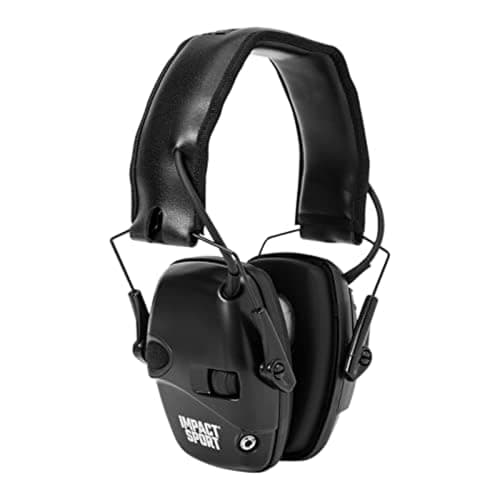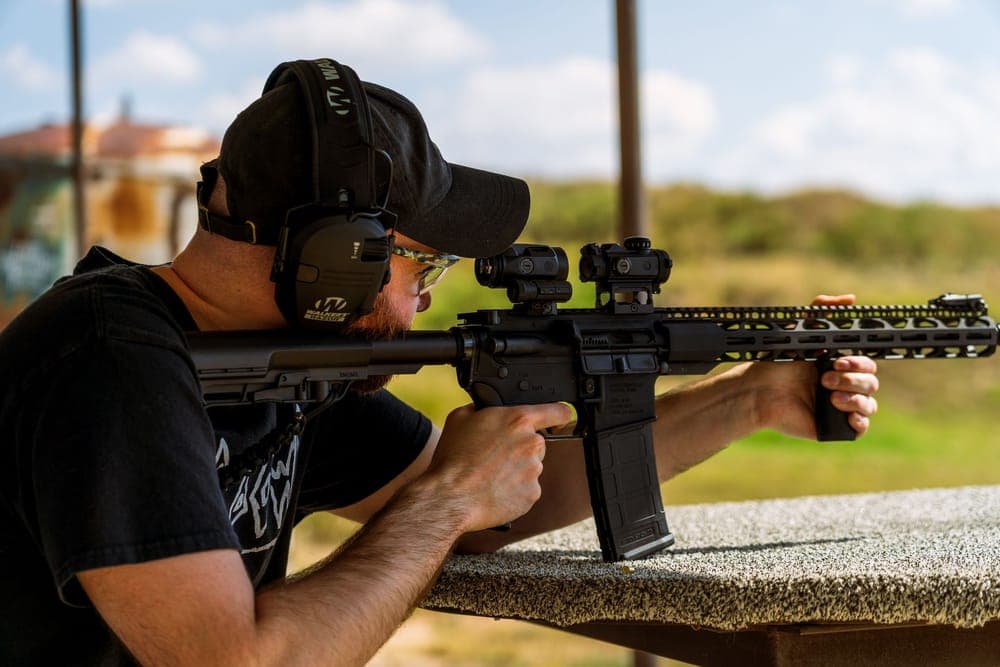
The chart, by protector type
Everything in the tables on this page is the figure the maker publishes on its own page or data sheet, with the source linked at the bottom. Bench & Berm does not measure attenuation, and we do not reprint numbers from listings or forums. Where a maker publishes a figure that differs from another of its own pages, we use the lower one and say so.
What each type tops out at
| Protector type | Published NRR range | Highest-rated example |
|---|---|---|
| Disposable foam earplugs | 32 to 33 | Howard Leight MAX-1 (33) |
| Reusable and custom earplugs | 31 | Decibullz Custom Molded (31) |
| Passive earmuffs | 23 to 31 | 3M Peltor X5A (31) |
| Electronic earmuffs | 21 to 30 | Howard Leight Impact Pro (30) |
| Electronic earbuds | 21 to 28 | Pro Ears Stealth 28 HTBT (28) |
| Canal caps (banded) | 25 | Moldex Jazz Band and Howard Leight Quiet Band (both 25) |
| Kids' and youth earmuffs | 22 to 25 | Walker's Razor Junior Passive (25) |
| Eye-and-ear combo kits (muff rating) | 23 to 31 | Walker's Pro Safety Combo Kit (31) |
The headline that surprises most new shooters: the cheapest product in the whole category has the highest published rating. A pack of disposable foam plugs outrates every earmuff on the market, and it does so by two decibels over the best passive muff and three over the best electronic one.
The full chart, product by product
| Product | Type | Published NRR |
|---|---|---|
| Howard Leight MAX-1 | Foam earplug | 33 dB |
| Howard Leight Laser Lite | Foam earplug | 32 dB |
| 3M Peltor X5A | Passive earmuff | 31 dB |
| Decibullz Custom Molded | Reusable earplug | 31 dB |
| Caldwell Range Plugs (corded) | Foam earplug | 31 dB |
| Walker's Pro Safety Combo Kit | Combo kit (muffs; plugs also 31) | 31 dB |
| Howard Leight Leightning L3 | Passive earmuff | 30 dB |
| Howard Leight Impact Pro | Electronic earmuff | 30 dB |
| Pro Ears Stealth 28 HTBT | Electronic earbud | 28 dB |
| Walker's Razor Slim Passive | Passive earmuff | 27 dB |
| Walker's XCEL 500BT Digital | Electronic earmuff | 26 dB |
| ISOtunes Sport ADVANCE BT | Electronic earbud | 26 dB |
| Champion Eyes & Ears Combo | Combo kit (muffs) | 26 dB |
| Moldex Jazz Band 6506 | Canal cap | 25 dB |
| Howard Leight Quiet Band QB2HYG | Canal cap | 25 dB |
| ISOtunes Sport DEFY BT | Electronic earmuff | 25 dB |
| Walker's Suppressor and Isolator Earbuds | Electronic earbud | 25 dB each |
| Walker's Razor Junior Passive | Kids' earmuff | 25 dB |
| Howard Leight Shooting Combo Kit (and Women's) | Combo kit (earmuff) | 25 dB each |
| Caldwell Passive Low Pro | Passive earmuff | 24 dB |
| Walker's Razor Slim Electronic and Razor Pro Digital | Electronic earmuff | 23 dB each |
| Caldwell E-Max Low Profile | Electronic earmuff | 23 dB |
| Howard Leight Leightning L0F | Passive earmuff (folding) | 23 dB |
| Howard Leight Impact Sport | Electronic earmuff | 22 dB |
| PROHEAR 035 Bluetooth | Electronic earmuff | 22 dB (PROHEAR also lists SNR 27, a European scale) |
| Howard Leight Impact Sport Youth / Adult Small | Kids' earmuff | 22 dB |
| Walker's Razor X-TRM | Electronic earmuff (ultra low profile) | 21 dB |
| Howard Leight Impact Sport Bluetooth | Electronic earmuff | 21 dB |
| AXIL GS Extreme 3.0 | Electronic earbud | 21 dB with foam tips; 17 dB with silicone tips |
Kids' and youth muffs cluster tightly at 22 to 25, which is the single most useful fact on this page for a parent: there is no high-rating option in children's sizes, so fit and consistent wear are the whole game. Our kids' ear protection page ranks on the ages makers actually publish.
How to read a rating
The Noise Reduction Rating is defined by an EPA regulation, 40 CFR Part 211 Subpart B, which still governs the label today. The regulation describes it as a single-number noise reduction factor in decibels derived from laboratory testing that accounts for variation in fit and in noise spectra.
Three things follow from that, and they are the reason a chart alone is not enough:
- It is a single number standing in for performance across frequencies. Two protectors with the same NRR do not necessarily attenuate the same way at every pitch.
- It is a laboratory figure for a correctly fitted protector. It is not what you get from a plug rolled too thin or a muff sitting on a glasses temple.
- It is not subtracted directly from the noise level. See the arithmetic below.
Our what NRR do I need for shooting page works through the whole calculation with the federal sources, and NRR vs SNR explains why a European SNR number on a listing is not a drop-in replacement for an NRR.
The caveat printed on the label
That is why this site treats the NRR as a comparison tool between products rather than as a prediction of what reaches your ear on a firing line. It is the best published figure available for ranking protectors, and it was not designed for the noise you are using it for.
Why the real-world figure is lower
OSHA does not use the printed rating as it stands. Its Appendix B method is to subtract 7 dB from the NRR before subtracting the result from an A-weighted exposure, and OSHA's Technical Manual gives a worked example of it.
You will also see percentage derating quoted — subtract 25 percent for earmuffs, 50 percent for slow-recovery foam plugs, 70 percent for other plugs. That came from NIOSH 98-126, and it is no longer NIOSH's recommendation: a 2025 science policy update states that "NIOSH recommends individual, quantitative fit testing of hearing protection in lieu of the derating scheme". If you ever see those percentages presented as current advice, that is why they are not.
Doubling up does not add
A chart invites the obvious mistake: NRR 33 plugs plus NRR 31 muffs does not equal NRR 64. OSHA's method is to take the higher rating, apply the usual subtraction, then add 5 dB for the second protector, and OSHA's own note says it plainly: "It is important to note that using such double protection will add only 5 dB of attenuation."
Five decibels is still the biggest single improvement most shooters can make, which is why we recommend doubling up indoors. The full argument and arithmetic is on double hearing protection, and ear protection for indoor ranges covers where it matters most.
The highest-rated pick in each type
Our picks for this
Top of the chart, one per category
If you want to buy from the chart rather than read further, these are the highest published ratings we could source in each protector type.
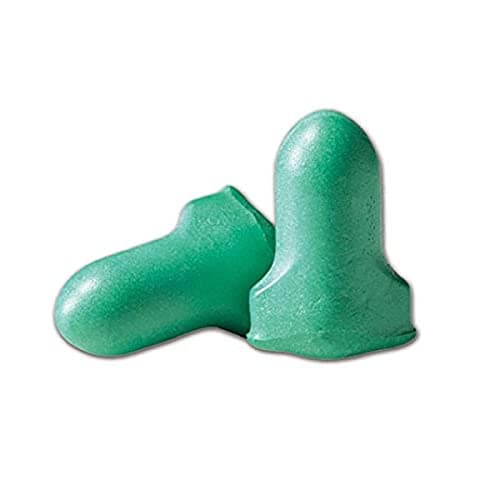
Highest-NRR earplug
Howard Leight MAX-1
NRR 337.1/10ResearchedNRR 33: the highest published rating anywhere on this page, and the cheapest product on it.
$39.89Amazon#ad · Price as of November 3, 2026 · How we make money for the link to Howard Leight MAX-1
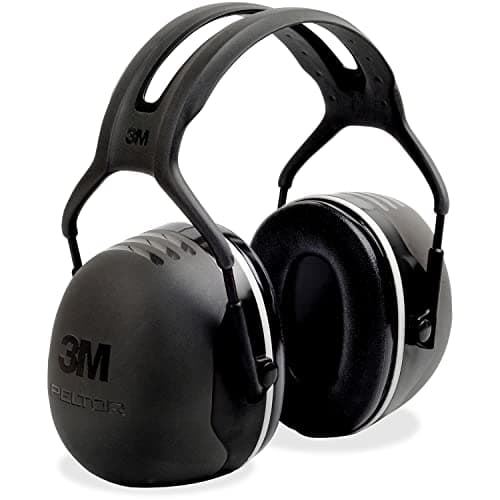
Highest-NRR passive muff
3M Peltor X5A
NRR 316.7/10ResearchedNRR 31 from 3M's own X Series data sheet, the top of the earmuff chart. A deep cup, so check stock clearance.
$47.27Amazon#ad · Price as of November 3, 2026 · How we make money for the link to 3M Peltor X5A
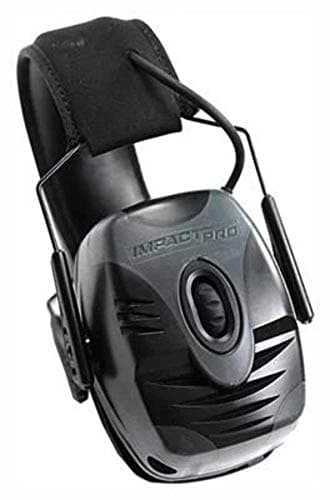
Best electronic muff for indoor ranges
Howard Leight Impact Pro
NRR 307.4/10ResearchedNRR 30 with microphones, the highest-rated electronic muff here, so you can hear commands without lifting a cup.
$101.59Amazon#ad · Price as of November 3, 2026 · How we make money for the link to Howard Leight Impact Pro
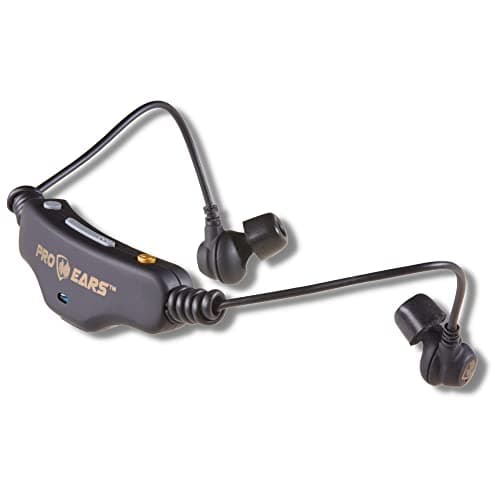
Highest-NRR electronic earplug
Pro Ears Stealth 28 HTBT
NRR 288.1/10ResearchedNRR 28, the highest-rated electronic earbud we could source, and Pro Ears applies the figure to all included tip sizes.
$119.32Amazon#ad · Price as of November 3, 2026 · How we make money for the link to Pro Ears Stealth 28 HTBT
What not to do with this chart
- Do not buy on the number alone. The highest-rated muff is the deepest one, which is exactly wrong for a shotgun — see ear protection for shotgun shooting.
- Do not add two ratings together. Five decibels, per OSHA.
- Do not read an SNR as an NRR. Different scale, different method. The PROHEAR row above shows both figures for the same product so you can see the gap.
- Do not assume a tip change keeps the rating. AXIL publishes 21 dB with foam tips and 17 dB with silicone on the same earbud.
- Do not treat a rating as a seal. How you wear it decides what you get: how to wear foam earplugs and when to replace hearing protection are both more consequential than two decibels on a chart.
How we scored this
Every pick, scored on numbers you can check
Every pick here is labeled Researched: we compiled each maker's published specs (the EPA-labeled NRR on hearing protection, the Z87+ mark on glasses), read the manuals, checked the standards behind them, and scored everything on a public rubric. Every figure links to where it came from, and marketing claims are labeled “maker's claim,” so you can see exactly why a pick ranks where it does.
Scores are editorial judgments built from that documented research. Commissions never set a score or decide a pick. The rubric and its weights are published.
Questions
Common questions
What is a good NRR for shooting?
What is the highest NRR available?
Is NRR 22 enough for a gun range?
Can you add NRR ratings together when doubling up?
Why do kids' earmuffs have lower NRR than adult ones?
Where this comes from
Sources
- eCFR, 40 CFR Part 211 Subpart B (EPA hearing protector labeling, NRR definition and gunfire caveat)
- OSHA 29 CFR 1910.95 Appendix B (NRR minus 7 method, double protection note)
- OSHA Technical Manual, Section 3 Chapter 5 (worked attenuation example)
- NIOSH 98-126, Criteria for a Recommended Standard: Occupational Noise Exposure
- NIOSH 2025-104, science policy update recommending fit testing in lieu of derating
- Honeywell Store, Howard Leight MAX-1 (NRR 33), accessed 2026-10-17
- Honeywell, Howard Leight Laser Lite (NRR 32), accessed 2026-10-17
- Decibullz, Custom Molded Earplugs (NRR 31), accessed 2026-10-17
- 3M, PELTOR X Series passive earmuff technical data sheet (X5A, NRR 31)
- Howard Leight, Leightning L3 (NRR 30), accessed 2026-10-17
- Howard Leight, Impact Pro (NRR 30), accessed 2026-10-17
- Howard Leight, Impact Sport (NRR 22), accessed 2026-10-17
- Walker's, Razor Slim Passive muff (NRR 27), accessed 2026-10-17
- Moldex, Jazz Band 6506 (NRR 25), accessed 2026-10-17
- Pro Ears, Stealth 28 HTBT (NRR 28), accessed 2026-10-17
- Caldwell, safety gear listing (Range Plugs NRR 31; Passive Low Pro NRR 24), accessed 2026-10-17
Specs come from each maker's own pages and data sheets (linked on every product); ratings like NRR and Z87+ are explained from the standards and agencies behind them. Prices are set by Amazon and change often, so the buy button always takes you to the current one. Where a figure isn't published, we say so. Read the full method.