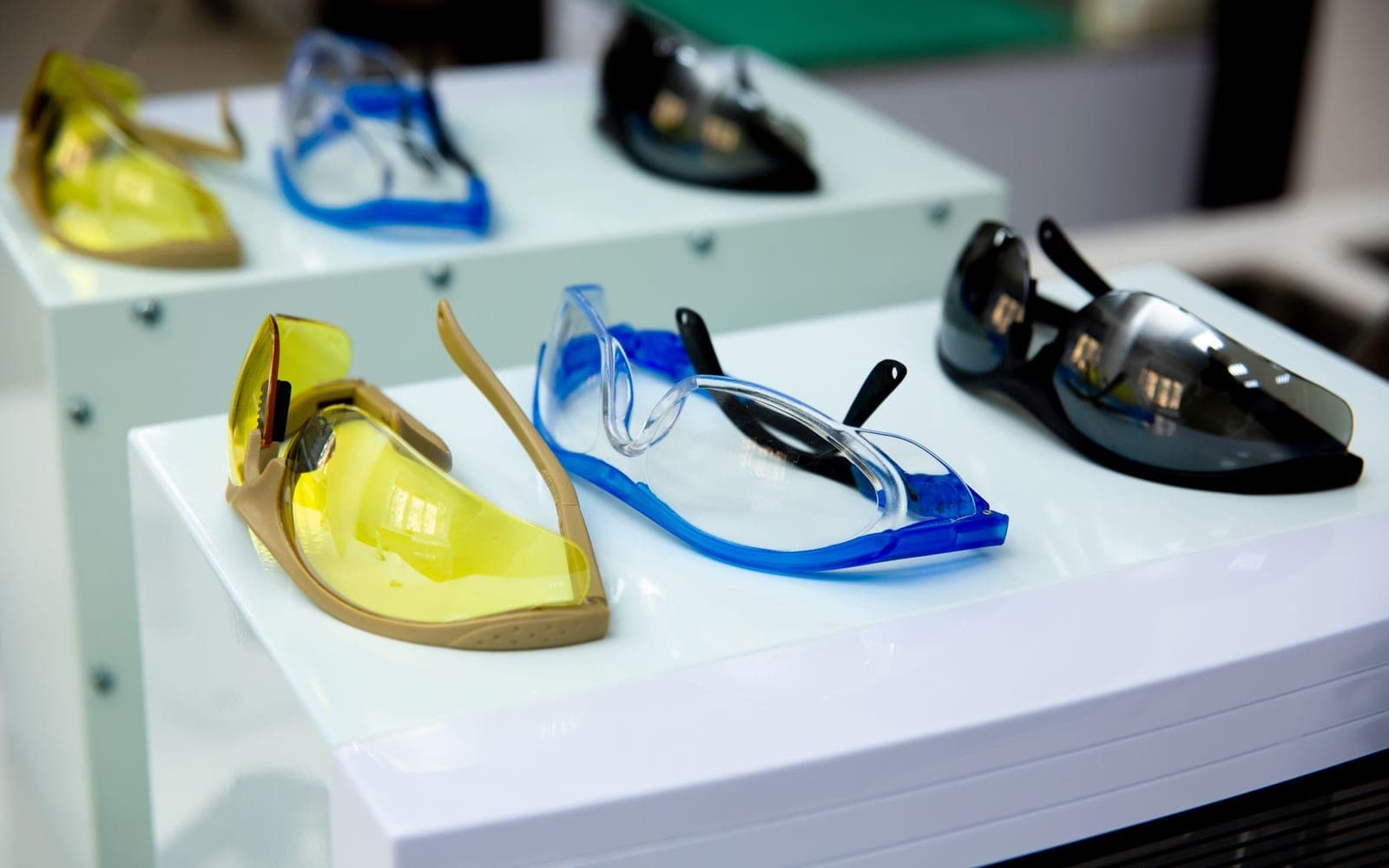
The contenders
Side by side
- Stock photo

Pick for Z87+ safety glasses
Pyramex Intruder
Z87+6.9/10The plain, high-impact choice: Pyramex states ANSI/ISEA Z87.1-2020 + High Impact and makes no ballistic claim. Seven tints and optional anti-fog.
Check price · Amazon#ad · Price set by Amazon · How we make money for the link to Pyramex Intruder
- Stock photo
Pick for Z87+ plus a ballistic claim
Pyramex V2G
Z87+7.6/10Same maker, one step up: Pyramex states Z87.1-2020 + High Impact and says the V2G "Passes MIL-PRF-32432 High Velocity Impact Standards". Foam-sealed, with three anti-fog options.
Check price · Amazon#ad · Price set by Amazon · How we make money for the link to Pyramex V2G
- Stock photo
Pick for a ballistic pair with swap lenses
Wiley X Saber Advanced
Z87+6.7/10A step up in stated protection: Wiley X lists ANSI Z87.1+ high mass/high velocity impact and MIL-PRF-32432A ballistic standards, with interchangeable lenses.
Check price · Amazon#ad · Price set by Amazon · How we make money for the link to Wiley X Saber Advanced
What the two terms mean here
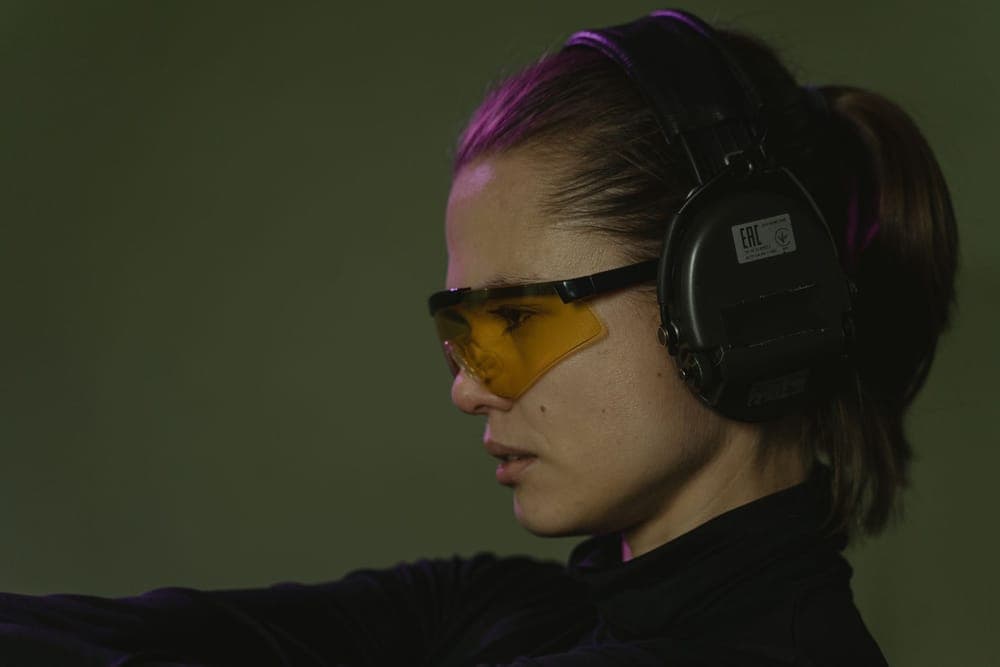
"Ballistic glasses" and "safety glasses" get used loosely, so here's how this page uses them. Safety glasses means a pair whose maker states the high-impact level of ANSI/ISEA Z87.1, marked Z87+ on the frame. Ballistic glasses means a pair whose maker also states the U.S. military standard MIL-PRF-32432. Some products put "ballistic" in the name without stating either standard, which is why the fine print matters more than the title.
If the Z87 marks themselves are new to you, start with Z87 vs Z87+. It explains the plus, the three impact tests and where to find the mark.
| Published spec | Pyramex Intruder | Pyramex V2G | Wiley X Saber Advanced |
|---|---|---|---|
| Impact rating | ANSI/ISEA Z87.1-2020 + High Impact; CAN/CSA Z94.3-2020 | ANSI/ISEA Z87.1-2020 + High Impact | "ANSI Z87.1+ Optical clarity and high mass/high velocity impact standards" |
| Ballistic rating | Not published | "Passes MIL-PRF-32432 High Velocity Impact Standards" | "MIL-PRF-32432A Ballistic safety standards" |
| Lenses | Clear, gray, I/O mirror, amber, Infinity Blue, silver mirror, blue mirror | Clear, gray, amber, I/O mirror | Interchangeable lenses (for example smoke gray and clear shields) |
| Anti-fog | Offered with no anti-fog, Standard anti-fog or H2MAX anti-fog | H2X, H2MAX or Standard anti-fog | Not published |
| Score | 6.9/10 | 7.6/10 | 6.7/10 |
The two standards side by side
| ANSI/ISEA Z87.1, high impact (Z87+) | MIL-PRF-32432 | |
|---|---|---|
| Written for | "workplace and educational settings" (ISEA) | "a US military norm for glasses and goggles" (Swisseye) |
| Projectile, spectacles | A .25-inch (quarter-inch) steel ball | A .15 caliber projectile |
| Speed, spectacles | 150 fps (Wiley X), about 102 mph (HexArmor) | "640-725fps depending on Mil-Standard and model" (Wiley X) |
| Goggles | 250 fps (Wiley X), about 170 mph (HexArmor) | A .22 caliber projectile at "550-590fps depending on Mil-Standard and model" (Wiley X) |
| How you check it | A "+" next to Z87 on the temple arm, or W+ on the lens (HexArmor) | The maker's product page. We couldn't fetch the official spec text |
What Z87+ tests
Z87.1 is the U.S. safety-eyewear standard, run by the International Safety Equipment Association. ISEA describes the current 2025 edition as defining "performance, testing, and marking requirements for eye and face protective devices used in workplace and educational settings" (ISEA). A pair that passes the basic impact test is marked Z87. A pair that also passes the high-impact tests is marked Z87+.
The high-impact tests, as HexArmor describes them, are a 500-gram pointed weight dropped from about 50 inches onto lenses on a head form, and a quarter-inch steel ball "shot at 20 different specified impact points," at 102 mph for safety glasses and 170 mph for goggles. Wiley X puts the same test in feet per second: "Wiley X ANSI Z87.1+ frames and lenses must withstand the impact of a .25" diameter steel ball. For spectacles the projectile must be traveling 150 fps and for a goggle 250 fps" (Wiley X).
What MIL-PRF-32432 tests
MIL-PRF-32432 is a U.S. military performance specification for protective eyewear. Swisseye, a tactical eyewear maker, describes it as "a US military norm for glasses and goggles for both prescription and non-prescription wearers" (Swisseye). Wiley X says several of its models "are tested to simulate shrapnel that may be encountered on the battlefield," and describes the test this way:
"High Mass and VO Ballistic testing consists of a spectacle frame and lens being impacted with a .15 caliber projectile traveling 640-725fps depending on Mil-Standard and model, or a goggle frame and lens with a .22 caliber projectile traveling 550-590fps depending on Mil-Standard and model." (Wiley X)
That's a smaller projectile than the Z87+ steel ball, moving four to five times faster. Wiley X's figures for the two tests work out to 640-725 fps against 150 fps.
We're deliberately not giving a single speed, because the sources disagree. Wiley X gives a range that depends on the version of the standard and the model. METL Optix, another eyewear brand, gives "700 to 725 feet per second" (METL Optix). Swisseye reports that one of its own models showed "no penetration at 660 fps" in its test report. We tried to fetch the official specification and PEO Soldier's approved-products list, and couldn't reach either. So we quote the makers and name them.
It's not either/or
Every pair on our site that claims MIL-PRF-32432 also claims Z87+. That includes the Pyramex V2G and I-Force, the Wiley X Saber Advanced, the Revision StingerHawk and the Edge Super 64 OTG goggle. Wiley X puts both on one line: "Eyewear meets ANSI Z87.1+ and MIL-PRF-32432A impact testing standards."
So "ballistic vs safety" isn't a choice between two different kinds of protection. A ballistic pair is a Z87+ pair that also claims a second, military test. Your real question is whether you want that second claim.
Does a beginner need the military rating?
No. For a first trip to a public or commercial range, Z87+ is the baseline, and here's why we're comfortable saying so:
- Ranges ask for eye protection, not a military spec. Texas Parks and Wildlife's rules say "you must wear hearing and eye protection at all times" ( TPWD). The Range 702 in Las Vegas says "Eye and ear protection are mandatory on the range" (The Range 702). None of the range rules we've read mention MIL-PRF-32432.
- The safety bodies say "shooting glasses". The NRA says "shooting glasses and hearing protection should be worn by shooters and spectators" (NRA), and names no standard.
- Z87+ already covers a small, fast projectile. The high-velocity test is the part of Z87.1 aimed at that kind of hazard, and it's the test plain Z87 glasses skip.
- Glasses only protect while you're wearing them. A pair that fogs, pinches under your muffs or slides down your nose comes off. 3M's anti-fog brochure makes the point for workplaces: "Removing eyewear to wipe away fog can expose eyes to potentially dangerous workplace impact hazards and debris" (3M). Fit, fog and comfort decide whether the glasses stay on.
What we won't say is that Z87+ covers every hazard. None of the tests our sources describe, military or civilian, uses a bullet. Both are lab tests with a defined projectile at a defined speed. Neither is a promise against a direct ricochet. Stay behind the line, follow the range officer, and keep the distances your target maker publishes.
When a ballistic pair makes sense
- You want the extra stated margin. That's a reasonable choice. Our rubric gives a MIL-PRF-32432 claim 20% of the eye-protection score (see how we pick). It's a plus, not a gate.
- You'll shoot steel outdoors. Champion's steel-target warnings start with "Always wear proper eye and ear protection while shooting," and warn that damaged steel "can present a hazardous situation due to unpredictable bullet fragmentation or ricochet" ( Champion). Champion doesn't name an eyewear standard. A ballistic pair is a sensible extra there, but it's no substitute for Champion's minimum distances and an undamaged target. See how far away steel targets should be.
- The features suit you anyway. The V2G's foam seal, the Saber Advanced's swap lenses and the StingerHawk's two frame sizes are reasons to buy those pairs regardless of the ballistic line.
- You wear prescription glasses and want a goggle. Edge lists "MIL-PRF 32432-A" and ANSI Z87.1+ for its Super 64 OTG, a goggle adapted to fit over prescription glasses. See our over-the-glasses picks.
Read the claim carefully
"Ballistic" is a word anyone can put in a product name. Before you pay for it, check what the page actually says:
- The number. MIL-PRF-32432 is not the only military eyewear number you'll see. Champion's Slim Fit glasses state "MIL-PRF-31013 3.5.1.1 Ballistic Resistance and OSHA compliant Z87.1 rating" (Champion). That's a different specification number, and the Z87.1 line has no plus. Makers also write it differently: Pyramex writes "MIL-PRF-32432", Wiley X and Revision write "32432A", and Edge writes "32432-A". We record exactly what each maker wrote.
- A comparison isn't a rating. Champion's Over-Specs page says "Ballistic rated for four times the impact protection of ANSI Z287+" (sic) (Champion). It names no military standard, and it doesn't say the pair is marked Z87+.
- The Z87+ line still matters. For a U.S. range, confirm the high-impact Z87.1 claim first. A ballistic claim without it doesn't clear our gate.
- The pages we check. Pyramex states the Intruder's rating (Z87.1-2020 + High Impact) with no ballistic line. That's a complete, honest claim for a range pair.
Or consider
If you'd rather pick from a ranked list, our best shooting glasses roundup has six pairs, all Z87+. Four of them also claim MIL-PRF-32432, and the card for each shows which. For outdoor ranges, the lens color guide matters more than the ballistic line. If you're building a first kit from scratch, start with our first range kit.
In detail
The contenders, in full
Pick for Z87+ safety glasses
Pyramex Intruder
The plain, high-impact choice: Pyramex states ANSI/ISEA Z87.1-2020 + High Impact and makes no ballistic claim. Seven tints and optional anti-fog.
Published specsResearched · not tested by us
How the 6.9 score breaks down
- Ballistic rating (MIL-PRF-32432) (20%)
- 5
- Lens options & tints (20%)
- 8.5
- Fit: OTG, youth, thin temples (30%)
- 6.5
- Anti-fog & scratch coating (30%)
- 7.5
What the specs support
- Pyramex states the Z87.1-2020 high-impact rating on its own page
- Seven lens tints, including clear for indoor ranges and gray for sun
- Choice of Standard or H2MAX anti-fog
Where it falls short
- No MIL-PRF-32432 ballistic claim on Pyramex's page
- Not made to fit over prescription glasses
- Frame sizing isn't published by the maker
Skip it if…
…you wear prescription glasses at the range; the Intruder isn't built to go over them, so look at the Pyramex OTS instead.
#ad · Price set by Amazon · How we make money for the link to Pyramex Intruder
Pick for Z87+ plus a ballistic claim
Pyramex V2G
Same maker, one step up: Pyramex states Z87.1-2020 + High Impact and says the V2G "Passes MIL-PRF-32432 High Velocity Impact Standards". Foam-sealed, with three anti-fog options.
Published specsResearched · not tested by us
How the 7.6 score breaks down
- Ballistic rating (MIL-PRF-32432) (20%)
- 8.5
- Lens options & tints (20%)
- 7
- Fit: OTG, youth, thin temples (30%)
- 6.5
- Anti-fog & scratch coating (30%)
- 8.5
What the specs support
- States both Z87.1-2020 high impact and the MIL-PRF-32432 high-velocity standard
- Foam seal around the lens, as Pyramex describes it
- Three anti-fog options to choose from
- Clear and amber tints for indoor and low-light ranges
Where it falls short
- Four lens tints, fewer than the Intruder
- Not made to fit over prescription glasses
- Frame sizing isn't published by the maker
Skip it if…
…you wear prescription glasses; the V2G is a sealed pair, not an over-the-glasses design, so the Pyramex OTS is the better fit.
#ad · Price set by Amazon · How we make money for the link to Pyramex V2G
Pick for a ballistic pair with swap lenses
Wiley X Saber Advanced
A step up in stated protection: Wiley X lists ANSI Z87.1+ high mass/high velocity impact and MIL-PRF-32432A ballistic standards, with interchangeable lenses.
Published specsResearched · not tested by us
How the 6.7 score breaks down
- Ballistic rating (MIL-PRF-32432) (20%)
- 9
- Lens options & tints (20%)
- 7
- Fit: OTG, youth, thin temples (30%)
- 6.5
- Anti-fog & scratch coating (30%)
- 5
What the specs support
- States both ANSI Z87.1+ and MIL-PRF-32432A on the maker page
- Lenses swap, so one frame covers indoor (clear) and outdoor (smoke gray) shooting
- All eight variants were listed as available on Wiley X's store on 2026-09-19
Where it falls short
- Anti-fog coating isn't published by the maker
- Frame sizing and over-the-glasses fit aren't mentioned by the maker
Skip it if…
…you only need a basic pair for occasional indoor pistol practice; the Pyramex Intruder carries a Z87.1-2020 high-impact rating without the extra ballistic spec.
#ad · Price set by Amazon · How we make money for the link to Wiley X Saber Advanced
How we scored this
Units we claim to have tested: none
Most gear sites say they tested thirty muffs. We haven't put these on a sound meter, and we say so. Every pick here is labeled Researched: we compiled each maker's published specs (the EPA-labeled NRR on hearing protection, the Z87+ mark on glasses), read the manuals, and scored everything on a public rubric. Every figure links to where it came from, and marketing claims are labeled “maker's claim.”
Scores are editorial judgments from that documented research, not test results. Commissions never set a score or decide a pick. The rubric and its weights are published.
Questions
Common questions
Are safety glasses good for shooting?
Are ballistic glasses bulletproof?
What does MIL-PRF-32432 mean on shooting glasses?
Do I need ballistic glasses for steel targets?
Is Z87+ the same as ballistic rated?
Where this comes from
Sources
- Wiley X, Ballistic Sunglasses page (Z87.1+ and MIL-PRF-32432A test descriptions), accessed 2026-09-19
- Wiley X, Saber Advanced product page, accessed 2026-09-19
- Swisseye Tactical, Standards and certifications, accessed 2026-09-19
- METL Optix, ANSI Z87+ vs. MIL-PRF-32432A (used only for the MIL-PRF velocity), accessed 2026-09-19
- HexArmor, Safety eyewear: What do lens markings and ANSI Z87+ mean?, accessed 2026-09-19
- ISEA, ISEA Releases Updated ANSI/ISEA Z87.1 Standard for Eye and Face Protection (January 8, 2026), accessed 2026-09-19
- Pyramex, Intruder product page, accessed 2026-09-19
- Pyramex, V2G product page, accessed 2026-09-19
- Pyramex, I-Force product page, accessed 2026-09-19
- Revision, StingerHawk Eyewear Polarized Kit product page, accessed 2026-09-19
- Edge Eyewear, Super 64 OTG product page, accessed 2026-09-19
- Champion (Primos), Small-Framed Ballistic Shooting Glasses - Slim Fit product page, accessed 2026-09-19
- Champion (Primos), Over-Specs Ballistic Shooting Glasses product page, accessed 2026-09-19
- Champion Targets (Primos), Steel target warnings, accessed 2026-09-19
- NRA, NRA Gun Safety Rules, accessed 2026-09-19
- Texas Parks and Wildlife Department, Shooting Safety Rules, accessed 2026-09-19
- The Range 702, First-Time Indoor Range Visit guide, accessed 2026-09-19
- 3M, Scotchgard Anti-Fog Coating brochure (PDF), accessed 2026-09-19
We haven't tested the gear on this page and we don't pretend to. Specs come from each maker's own pages and data sheets (linked on every product); ratings like NRR and Z87+ are explained from the standards and agencies behind them. Prices are set by Amazon and change often, so we don't print them. Where a figure isn't published, we say so. Read the full method.