The contenders
Side by side
- Stock photo
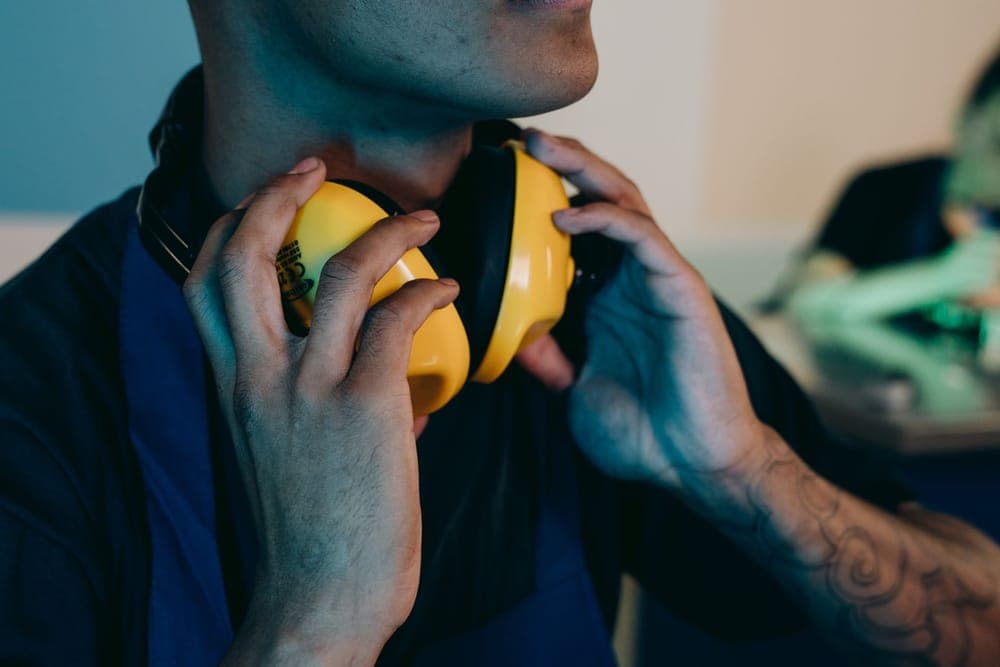
Our electronic pick for a first muff
Howard Leight Impact Sport
NRR 227.2/10NRR 22, amplification Howard Leight says stops above 82 dB, a 4-hour auto shut-off and about 350 hours from two AAAs.
Check price · Amazon#ad · Price set by Amazon · How we make money for the link to Howard Leight Impact Sport
- Stock photo
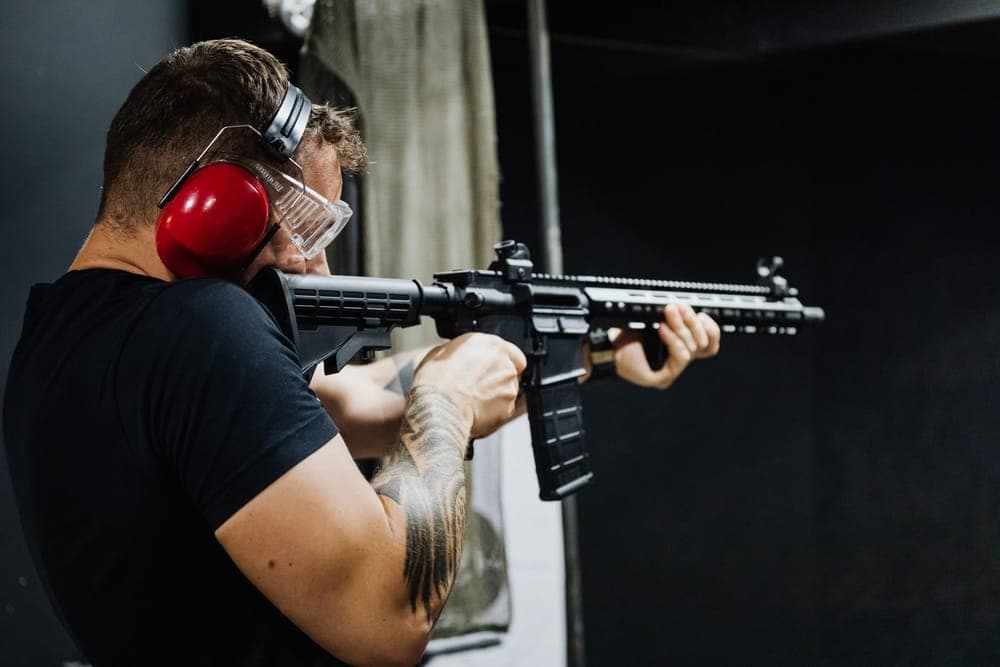
Our passive pick for maximum NRR
Howard Leight Leightning L3
NRR 306.7/10NRR 30 with nothing to switch on or charge. Howard Leight doesn't describe it as slim or folding.
Check price · Amazon#ad · Price set by Amazon · How we make money for the link to Howard Leight Leightning L3
- Stock photo
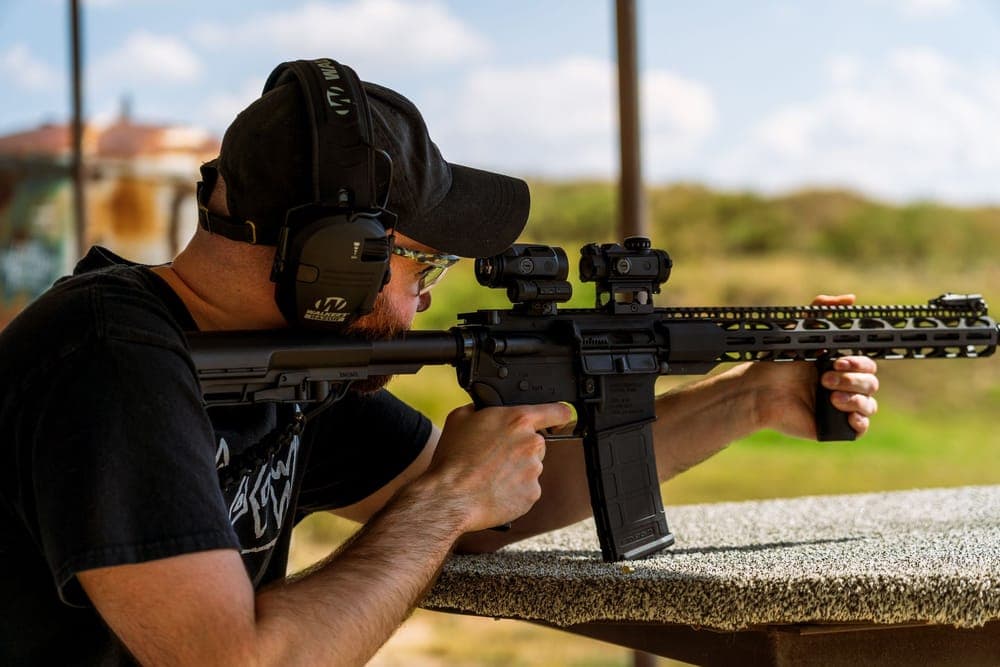
Our passive pick for a slim, folding muff
Walker's Razor Slim Passive
NRR 277.5/10NRR 27, ultra low profile cups with a rubberized coating, and a compact folding design for the range bag.
Check price · Amazon#ad · Price set by Amazon · How we make money for the link to Walker's Razor Slim Passive
How we compared them: we haven't put these muffs on a sound meter. We compiled each maker's published NRR (Noise Reduction Rating, the number on the package), power and cup details, read what hearing researchers at NIOSH (the federal workplace-safety research agency) have measured about electronic muffs, and scored the picks on the rubric on our how we pick page.
How electronic muffs work
A passive earmuff is two sealed cups on a spring headband. The EPA's definition is "two acoustic enclosures which fit over the ears and which are held in place by a spring-like headband" ( 40 CFR 211.203). Sound has to get through the cup or leak past the cushion to reach your ear. That's all there is to it, which is why passive muffs have nothing to charge.
An electronic muff is the same kind of cup with a microphone and a small speaker added. The American Speech-Language-Hearing Association puts it plainly: electronic hearing protectors "allow for sounds to pass through that are soft or average in volume but detect when there is a loud noise. The device then becomes hearing protection" (ASHA, Recreational Firearm Noise Exposure). Howard Leight describes its version on the Impact Sport page: directional microphones "amplify range commands and other ambient sounds to a safe 82dB", and the muff "automatically halts amplification when ambient sound exceeds 82dB".
So in quiet moments, an electronic muff lets the room back in, and can even boost quiet voices. When a gun goes off, the amplification stops and you're left with the cups and cushions doing their job, exactly like a passive muff.
The published specs side by side
| Published spec | Howard Leight Impact Sport | Howard Leight Leightning L3 | Walker's Razor Slim Passive |
|---|---|---|---|
| NRR | 22 dB | 30 dB | 27 dB |
| Batteries | 2 x AAA | None (passive earmuff) | None (passive earmuff) |
| Auto shut-off | After 4 hours | Not published | Not published |
| Cup profile | Slim earcup; Howard Leight says its Air Flow Control design ensures your firearm stock has clearance while shooting (maker's claim) | "Patented Air Flow Control technology" (maker's claim) | "Ultra low profile ear cups with rubberized coating" (maker's claim) |
| Folding | Not published | Not stated on Howard Leight's page | Yes ("compact folding design") |
| Score | 7.2/10 | 6.7/10 | 7.5/10 |
Protection: the NRR isn't about electronics
A common worry is that an electronic muff protects less because it lets sound in. The ratings say otherwise. Across the muffs we cover, the electronic ones run from NRR 21 to NRR 30 and the passive ones from NRR 23 to NRR 31. They overlap almost completely. Howard Leight's electronic Impact Pro and its passive Leightning L3 are both rated NRR 30. Howard Leight even describes the Impact Pro as passively blocking noise "at 30dB". The rating comes from the cups, not the circuit.
What happens during a gunshot backs that up. In a review of recreational firearm noise, NIOSH-affiliated researchers wrote that for impulse sounds above 150 dB, "the passive attenuation characteristics of the electronic protector (i.e., electronics turned off) will determine the attenuation", because "the circuitry is too slow to respond, and the high-level impulse signal is clipped when it is processed" (Meinke et al., 2017). An earlier NIOSH summary reports that when level-dependent muffs were measured with the volume at maximum, at unity gain and turned off, "the peak reduction was mostly unaffected by the change in the volume setting" (Murphy, Byrne and Franks, 2007).
Two caveats apply to both kinds equally. First, the EPA's label rule says the NRR "may not be an accurate indicator of the protection attainable against impulsive noise such as gunfire", because it's measured with steady noise. Second, fit matters: 3M's data sheet warns that "many users will receive less noise reduction than indicated by the NRR due to variation in fit, fitting skill and motivation of the user" (3M PELTOR X Series data sheet). Our guide to what NRR you need for shooting explains how to read the number.
Hearing commands between shots
Here's where electronic muffs earn their keep for a new shooter. At a public range, the range officer calls commands, the person in the next lane may need your attention, and if you're taking a class, the instructor is talking the whole time. Passive muffs turn all of that down along with the gunfire. It's tempting to lift a cup to hear, and that's exactly the moment a shot from the next lane can arrive with your ear uncovered. Our shooting range etiquette guide covers the commands you'll hear.
The difference gets bigger when you double up. At indoor ranges, NIOSH recommends earplugs and earmuffs worn together, and for anyone who needs to hear instructions it suggests "electronic level-limiting or sound restoration earmuffs with passive earplugs" (NIOSH Publication 2009-136, written for range workers and people who shoot for their job). NIOSH authors explain why: double protection "can severely compromise one's ability to communicate when both devices are passive", and "the use of an electronic level-dependent earmuff with a deeply-inserted foam earplug can compensate for this loss of communication ability" (Murphy, Byrne and Franks, 2007). If you expect to shoot indoors, that alone is a strong case for electronic. See double hearing protection for how to wear both.
Batteries, and when they die
The trade-off for hearing better is power. The Impact Sport runs on two AAA batteries, which Howard Leight includes, and quotes approximately 350 hours of use, with an automatic shut-off after four hours. Not every electronic muff publishes those details, so check before you buy. A passive muff like the Leightning L3 or the Razor Slim Passive has no batteries at all.
What if the batteries die at the range? None of the maker pages we cite spells out what happens, and your muff's manual is the authority for your model. The closest published evidence is the NIOSH work above: protection from gunshots comes from the passive cups, and measurements with the electronics turned off showed about the same peak reduction as with them on. Expect to lose the amplified hearing, not the cups. Still, a spare pair of AAAs in your bag solves the problem before it starts.
Cup profile, folding and the range bag
Being electronic doesn't make a muff bulky, and being passive doesn't make it slim. It depends on the model. Howard Leight says the Impact Sport's "slim earcup design" ensures "your firearm stock has clearance while shooting" and that it has "a compact folding design". Walker's describes the Razor Slim Passive with "ultra low profile ear cups with rubberized coating" and a "compact folding design". Howard Leight doesn't state whether the Leightning L3 folds or how slim its cup is. If packed size is your priority, its passive sibling the Leightning L0F collapses to four inches, at NRR 23.
If you wear glasses, the seal problem is the same for both kinds: temples under the cushions can let sound leak in. Our guide to ear protection with glasses covers the fixes.
Are electronic ear muffs worth it?
For most beginners, yes. We mean worth it in features, since we don't talk prices here. What you get is the ability to hear safety commands and instruction without taking your hearing protection off, and a muff that pairs well with foam plugs at indoor ranges. What you give up is simplicity: batteries to keep fresh and a switch to remember.
Passive muffs still make sense in a few situations:
- A loaner or spare. A passive muff in the car or range bag has nothing to go flat, which makes it the easy one to hand a friend.
- Shooting alone on private land. With no range officer or neighbor to hear, amplification matters less.
- You want the highest single-muff rating. The passive 3M Peltor X5A (NRR 31) and Leightning L3 (NRR 30) are at the top of our list, level with or above the best electronic muff we cover.
- Kids. Several kids' muffs are passive, and some fold. Our best kids' ear protection roundup covers both kinds.
Owning one of each is a sensible setup: an electronic muff to wear, and a passive one as the spare that never needs batteries.
Or consider
Ready to choose a model? Our best electronic ear muffs for shooting ranks six electronic muffs, and best hearing protection for shooting mixes muffs and plugs. If you're torn between muffs and earplugs altogether, read earplugs vs earmuffs for shooting.
In detail
The contenders, in full
Our electronic pick for a first muff
Howard Leight Impact Sport
NRR 22, amplification Howard Leight says stops above 82 dB, a 4-hour auto shut-off and about 350 hours from two AAAs.
Published specsResearched · not tested by us
| NRR | 22 dB |
|---|---|
| Batteries | 2 x AAA |
| Battery life | About 350 hoursMaker's claim |
| Auto shut-off | After 4 hours |
| Bluetooth | No (Howard Leight sells Bluetooth versions as separate products) |
| Cup profile | Slim earcup; Howard Leight says its Air Flow Control design ensures your firearm stock has clearance while shootingMaker's claim |
| Sizing | Medium/Large |
How the 7.2 score breaks down
- Published NRR (30%)
- 6
- Fit with glasses & cup profile (20%)
- 8.5
- Electronics: amplification & shut-off (20%)
- 7
- Power: battery & auto-off (15%)
- 9
- Comfort & adjustment (15%)
- 6.5
What the specs support
- Shuts itself off after 4 hours, so a muff left on in the range bag doesn't flatten the batteries
- Howard Leight quotes about 350 hours from two AAA batteries
- Slim earcup the maker says leaves your firearm stock clearance when you shoulder a long gun
Where it falls short
- NRR 22 is 8 dB below Howard Leight's own Impact Pro (NRR 30)
- No Bluetooth on this version; Bluetooth models are sold separately
- Listed in Medium/Large; smaller heads should look at the Youth/Adult Small version
Skip it if…
…you shoot mostly at an indoor range and want the most protection a muff can give on its own; NRR 22 is on the low side, so pair it with foam plugs or look at the NRR 30 Impact Pro.
#ad · Price set by Amazon · How we make money for the link to Howard Leight Impact Sport
Our passive pick for maximum NRR
Howard Leight Leightning L3
NRR 30 with nothing to switch on or charge. Howard Leight doesn't describe it as slim or folding.
Published specsResearched · not tested by us
| NRR | 30 dB |
|---|---|
| Cup technology | "Patented Air Flow Control technology"Maker's claim |
| Folding | Not stated on Howard Leight's page |
| Batteries | None (passive earmuff) |
How the 6.7 score breaks down
- Published NRR (40%)
- 8.5
- Fit with glasses & cup profile (25%)
- 5.5
- Folding & portability (15%)
- 4.5
- Comfort & adjustment (20%)
- 6
What the specs support
- NRR 30, seven points more than Howard Leight's folding Leightning L0F
- Among the standalone passive muffs we cover, only the 3M Peltor X5A (NRR 31) rates higher
- Passive, so there are no batteries to die mid-session
Where it falls short
- Howard Leight doesn't state whether it folds
- No cup-profile detail is published, so rifle shooters can't confirm stock clearance
Skip it if…
…you shoot a rifle or shotgun and need a cup you know will clear the stock; Howard Leight doesn't describe the L3's profile, while its Leightning L0F is sold as ultra-slim.
#ad · Price set by Amazon · How we make money for the link to Howard Leight Leightning L3
Our passive pick for a slim, folding muff
Walker's Razor Slim Passive
NRR 27, ultra low profile cups with a rubberized coating, and a compact folding design for the range bag.
Published specsResearched · not tested by us
| NRR | 27 dB |
|---|---|
| Cup profile | "Ultra low profile ear cups with rubberized coating"Maker's claim |
| Folding | Yes ("compact folding design") |
| Batteries | None (passive earmuff) |
| SKU | GWP-RSMPAS-VAR |
How the 7.5 score breaks down
- Published NRR (40%)
- 7.5
- Fit with glasses & cup profile (25%)
- 8.5
- Folding & portability (15%)
- 8
- Comfort & adjustment (20%)
- 6
What the specs support
- NRR 27, the best rating among the slim or folding passive muffs we cover
- Walker's describes ultra low profile cups with a rubberized coating
- Compact folding design for the range bag
Where it falls short
- Three to four points below the Leightning L3 (NRR 30) and 3M Peltor X5A (NRR 31)
- Walker's gives no folded size, so you can't compare packed size with the L0F's four inches
Skip it if…
…you want the highest single-muff rating for a loud indoor bay; NRR 27 trails the Leightning L3 (30) and 3M Peltor X5A (31).
#ad · Price set by Amazon · How we make money for the link to Walker's Razor Slim Passive
How we scored this
Units we claim to have tested: none
Most gear sites say they tested thirty muffs. We haven't put these on a sound meter, and we say so. Every pick here is labeled Researched: we compiled each maker's published specs (the EPA-labeled NRR on hearing protection, the Z87+ mark on glasses), read the manuals, and scored everything on a public rubric. Every figure links to where it came from, and marketing claims are labeled “maker's claim.”
Scores are editorial judgments from that documented research, not test results. Commissions never set a score or decide a pick. The rubric and its weights are published.
Questions
Common questions
Are electronic ear muffs worth it?
Are electronic ear muffs safe for shooting?
Do electronic ear muffs work without batteries?
Do passive earmuffs protect as well as electronic ones?
Can you use electronic ear muffs at an indoor range?
Where this comes from
Sources
- Howard Leight Shooting Sports, Impact Sport Electronic Earmuff product page, accessed 2026-09-19
- Howard Leight Shooting Sports, Impact Pro Electronic Earmuff product page, accessed 2026-09-19
- Howard Leight Shooting Sports, Leightning L3 Passive Earmuff product page, accessed 2026-09-19
- Howard Leight Shooting Sports, Leightning L0F Folding Ultra-Slim Passive Earmuff product page, accessed 2026-09-19
- Walker's, Razor Slim Passive Ear Muff product page, accessed 2026-09-19
- 3M, PELTOR X Series passive earmuff technical data sheet (PDF), accessed 2026-09-19
- US EPA, 40 CFR Part 211 Subpart B, Hearing Protective Devices (eCFR), accessed 2026-09-19
- ASHA, Audiology Information Series: Recreational Firearm Noise Exposure (PDF, 2024), accessed 2026-09-19
- Meinke DK et al., Prevention of Noise-Induced Hearing Loss from Recreational Firearms, Seminars in Hearing 2017 (CDC Stacks), accessed 2026-09-19
- Murphy WJ, Byrne DC, Franks JR (NIOSH), Firearms and Hearing Protection, The Hearing Review 2007 (CDC Stacks), accessed 2026-09-19
- NIOSH, Preventing Occupational Exposures to Lead and Noise at Indoor Firing Ranges (Pub. 2009-136), accessed 2026-09-19
We haven't tested the gear on this page and we don't pretend to. Specs come from each maker's own pages and data sheets (linked on every product); ratings like NRR and Z87+ are explained from the standards and agencies behind them. Prices are set by Amazon and change often, so we don't print them. Where a figure isn't published, we say so. Read the full method.