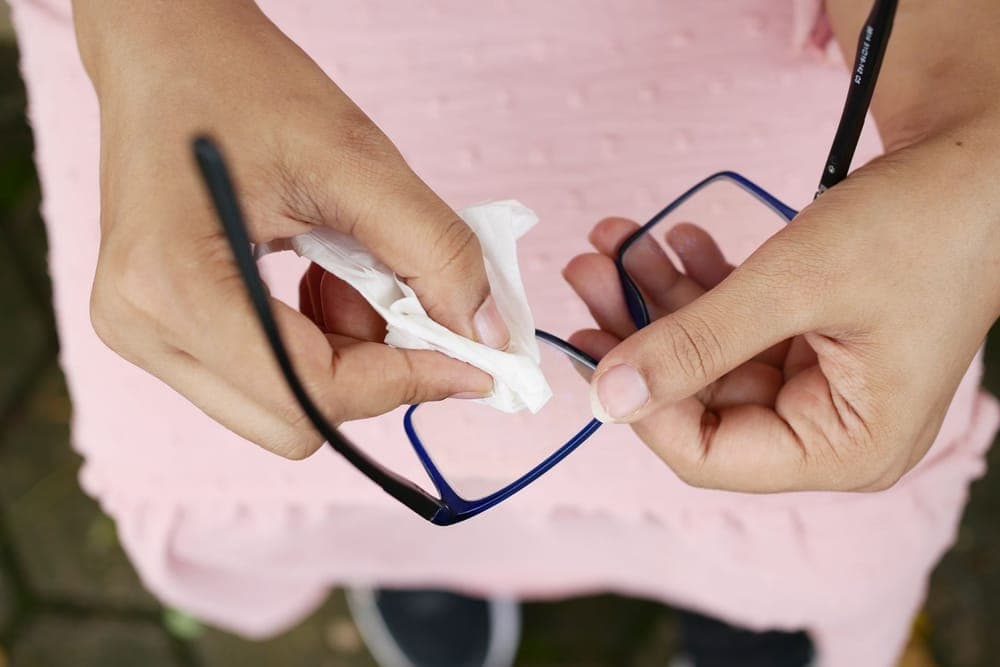
Can you wear glasses at a shooting range? Yes. If you need glasses to see, you'll wear them at the range like anywhere else. What a new shooter in glasses really needs to know is whether those glasses are enough on their own, and what to put over them if they're not. This guide walks through the standard, what ranges actually say, and how to buy an over-the-glasses pair that fits the first time.
Are regular glasses enough at a gun range?
Only if they're marked. Everyday prescription glasses are made to correct your vision. Unless the frame or lens carries a Z87 marking, nothing tells you they've passed an impact test. Look at the temple arms: safety-eyewear maker HexArmor says markings on safety glasses sit on the sidearm of the frame or on the right side of the lens, and a "+" next to the Z87 mark means the pair passed the high-impact tests.
That plus sign is the level to look for. HexArmor describes the basic Z87 test as a one-inch steel ball dropped from 50 inches, and the Z87+ high-velocity test as a 1/4-inch steel ball fired at safety glasses at 102 mph. Our Z87 vs Z87+ guide explains every test behind the mark.
Coverage matters as well. OSHA's workplace rule says that where there's a hazard from flying objects, eye protection must provide side protection (OSHA 1910.133(a)(2)). An everyday frame that's open at the sides doesn't give you that, even if its lenses are tough.
What the eye-protection standard says about prescription glasses
The clearest official answer comes from OSHA's eye and face protection rule, the standard employers follow for their workers. Paragraph (a)(3) covers people who wear glasses:
"The employer shall ensure that each affected employee who wears prescription lenses while engaged in operations that involve eye hazards wears eye protection that incorporates the prescription in its design, or wears eye protection that can be worn over the prescription lenses without disturbing the proper position of the prescription lenses or the protective lenses."
Source: OSHA 29 CFR 1910.133(a)(3). In plain English: either the protection has your prescription built in, or it fits over your glasses without pushing them (or itself) out of place.
What ranges say about prescription glasses
Range rules vary, and some are more relaxed than the standard. Triangle Shooting Academy, an indoor range in North Carolina, says: "Eye protection is required to be worn while inside the range. Prescription eyeglasses are an approved replacement for standard eye protection" (Triangle Shooting Academy). That's that range's policy. It tells you what Triangle will let you wear, not that everyday glasses have passed an impact test.
Other ranges leave more to you. The Range 702 in Las Vegas says "Eye and ear protection are mandatory on the range" and that most ranges provide protective gear you can rent or buy (The Range 702). Connecticut's public range at Glastonbury says "Ammunition, firearms, eye and ear protection, and targets are not provided" (CT DEEP). Whether a rental pair fits over your glasses is something to ask, not assume. The NSSF's advice for a first visit is to ask "the range manager, safety officer or counter staff to go over the range rules" (NSSF Let's Go Shooting).
Our take: even where a range accepts plain prescription glasses, a Z87+ pair over them, or Z87+ prescription safety glasses, is the choice that matches the standard.
Your three options
- Over-the-glasses (OTG) shooting glasses. An OTG frame is a Z87+ pair made big enough to sit over your regular glasses. It's the quickest fix: no optician visit, and it works with the glasses you already own. The catch is size, which the next section covers.
- Prescription safety glasses. Your prescription built into frames and lenses marked Z87+. This is the "incorporates the prescription in its design" route in OSHA's rule. Ask your optician or eye doctor for safety frames with the Z87+ mark, and check the marking when you pick them up. Questions about your prescription itself belong with your eye doctor.
- Prescription inserts. Some protective eyewear takes a prescription insert behind the main lens. Wiley X's ballistic-rated eyewear page lets you filter by "RX Insert" (Wiley X), and 3M's Scotchgard anti-fog brochure lists an optional prescription insert for its Goggle Gear 500 goggle (3M). That 3M brochure is a European one and doesn't state a US Z87 marking, so check any insert-ready product for the Z87+ mark and ask about fit before you buy. None of the pairs we pick below publish an insert option.
For a first range trip, an OTG pair is the simplest of the three. Our best shooting glasses for glasses wearers ranks every OTG pair we've verified.
How to check an OTG pair will fit your glasses
The OTG problem to avoid is simple: a pair that doesn't fit over your frames. Only a few makers publish a limit, and those are worth comparing against your own glasses.
| OTG model | Fits over (maker's figure) | Source |
|---|---|---|
| Pyramex OTS | Frames up to 5 3/8 in wide x 1 3/4 in high (137 x 44 mm) | Pyramex |
| Pyramex OTS XL | Frames up to 5 15/16 in wide x 1 15/16 in high (151 x 49 mm) | Pyramex |
| Edge Eyewear Ossa OTG | Prescription frames "up to 135mm wide" (no height limit given) | Edge Eyewear |
To compare, measure your glasses across the front at the widest point and the lens height at its tallest, using a ruler with millimeters. If you're close to a limit, go up a size: by Pyramex's own numbers, the OTS XL takes frames 14 mm wider and 5 mm taller than the regular OTS. If you're unsure how a maker measures, ask them before you order.
Other OTG pairs, such as the Howard Leight HL100, say they fit "over most prescription eyewear" but don't publish a size (Howard Leight). Those are worth trying on over your glasses before a range day.
Glasses, ear muffs and fog
Two things change when you shoot in glasses. The first is ear protection. Your glasses' temple arms, and an OTG pair on top, sit under the muff cushions. 3M says a muff's noise reduction may be lower "when eyeglasses, goggles or respirator straps are worn between the sealing surface of the earmuff cushions and the sides of the wearer's head" (3M PELTOR X Series data sheet). Our guide to ear protection with glasses covers how to get the best seal you can.
The second is fog. With two pairs on, there are two sets of lenses that can fog. Look for an OTG pair with an anti-fog coating or vents: Pyramex offers H2X anti-fog on the OTS and OTS XL, and Howard Leight says the HL100 "includes indirect vents to help prevent fogging." Our guide on how to stop shooting glasses from fogging has the full fix list.
Your first trip in glasses: a checklist
- Check your everyday glasses for a Z87+ mark on the temple arm or lens.
- Check the range's website or call: do they accept prescription glasses, and do they rent or sell eye protection that fits over glasses?
- If you're bringing an OTG pair, try it on at home over your glasses, with your ear muffs on.
- Pack a soft microfiber cloth for both pairs.
- Wear a brimmed cap. NRA Women says a hat "will protect your head and face from ejected cartridges" (NRA Women).
The rest of the day is the same as for anyone else. Our what to bring to the shooting range checklist and our guide to your first time at a shooting range cover it.
What to look for in over-the-glasses shooting glasses
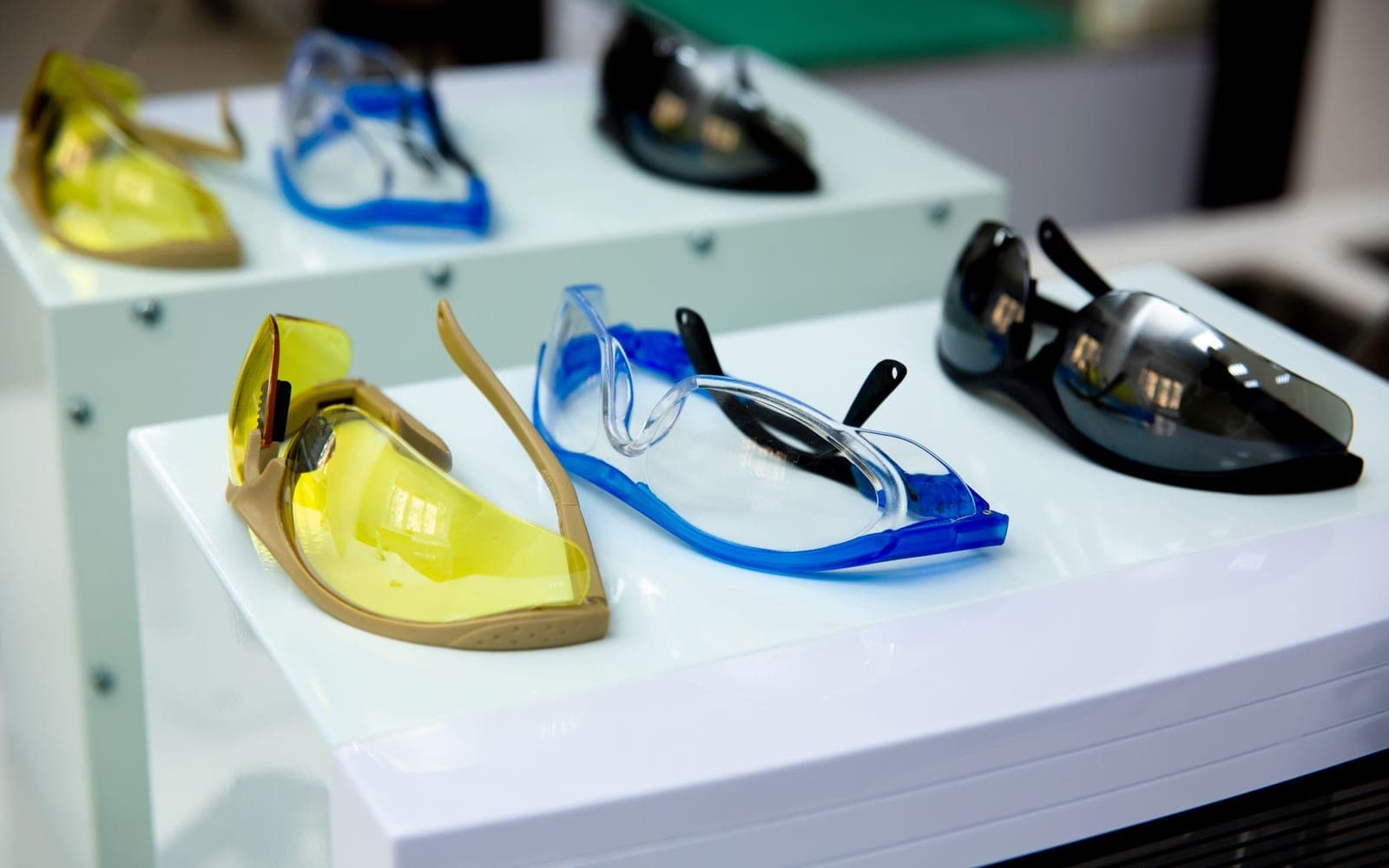
- A Z87+ rating on the maker's page (or "Z87.1 ... High Impact"), not just "safety" or "shooting" in the name.
- A published fit-over size you can check against your own frames, or a store where you can try it on.
- An anti-fog coating or vents, because you'll have two pairs of lenses to keep clear.
- A lens tint that suits where you shoot: clear for an indoor range, gray for sun. Our lens color guide goes color by color.
- Temple arms that sit flat under your ear muffs, since both pairs share that space.
See our top picks for shooting glasses for glasses wearers, or start below with four OTG pairs that fit the list.
Our picks for this
Over-the-glasses pairs with a Z87+ rating
Each is designed to fit over prescription glasses and states a Z87+ or Z87.1 high-impact rating on its maker's page. The first three publish how big a frame they fit over.
- Stock photo
Best over-the-glasses pair
Pyramex OTS
Z87+7.1/10ResearchedFits over frames up to 137 x 44 mm (5 3/8 x 1 3/4 in), per Pyramex. Clear, gray or I/O mirror, with an H2X anti-fog option.
Check price · Amazon#ad · Price set by Amazon · How we make money for the link to Pyramex OTS
- Stock photo
Best for larger prescription frames
Pyramex OTS XL
Z87+7.1/10ResearchedThe bigger OTS: fits over frames up to 151 x 49 mm (5 15/16 x 1 15/16 in). Clear or gray; check the listing says H2X if you want anti-fog.
Check price · Amazon#ad · Price set by Amazon · How we make money for the link to Pyramex OTS XL
- Stock photo
Best OTG pair with published frame measurements
Edge Eyewear Ossa OTG
Z87+6.2/10ResearchedEdge says it takes prescription frames up to 135 mm wide and publishes its frame measurements. Clear or smoke; the clear was out of stock on Edge's store on 2026-09-19.
Check price · Amazon#ad · Price set by Amazon · How we make money for the link to Edge Eyewear Ossa OTG
- Stock photo
Best vented OTG pair
Howard Leight HL100 Series OTG Glasses
Z87+6.2/10ResearchedFits over most prescription eyewear with indirect vents against fog, per Howard Leight. No fit-over size is published, so try it on first.
Check price · Amazon#ad · Price set by Amazon · How we make money for the link to Howard Leight HL100 Series OTG Glasses
How we scored this
Units we claim to have tested: none
Most gear sites say they tested thirty muffs. We haven't put these on a sound meter, and we say so. Every pick here is labeled Researched: we compiled each maker's published specs (the EPA-labeled NRR on hearing protection, the Z87+ mark on glasses), read the manuals, and scored everything on a public rubric. Every figure links to where it came from, and marketing claims are labeled “maker's claim.”
Scores are editorial judgments from that documented research, not test results. Commissions never set a score or decide a pick. The rubric and its weights are published.
Questions
Common questions
Can you wear glasses at a gun range?
Do you need shooting glasses if you wear glasses?
Will over-the-glasses shooting glasses fit my frames?
Do shooting ranges provide eye protection for glasses wearers?
Are prescription safety glasses good for shooting?
Where this comes from
Sources
- OSHA, 29 CFR 1910.133 Eye and face protection, accessed 2026-09-19
- ISEA, ISEA Releases Updated ANSI/ISEA Z87.1 Standard for Eye and Face Protection (January 8, 2026), accessed 2026-09-19
- HexArmor, Safety eyewear: What do lens markings and ANSI Z87+ mean?, accessed 2026-09-19
- Triangle Shooting Academy, Dress Code, accessed 2026-09-19
- The Range 702, First-Time Indoor Range Visit? Your Complete Beginner Guide, accessed 2026-09-19
- Connecticut DEEP, Glastonbury Shooting Range, accessed 2026-09-19
- NSSF Let's Go Shooting, New Shooters, accessed 2026-09-19
- NRA Women, The Dos and Don'ts of Gun Range Attire (August 27, 2020), accessed 2026-09-19
- 3M, PELTOR X Series passive earmuff technical data sheet (PDF), accessed 2026-09-19
- 3M, Scotchgard Anti-Fog Coating brochure (PDF), accessed 2026-09-19
- Wiley X, Ballistic Rated Sunglasses, accessed 2026-09-19
- Pyramex, OTS Over the Spectacle product page, accessed 2026-09-19
- Pyramex, OTS XL product page, accessed 2026-09-19
- Edge Eyewear, Ossa Clear OTG Safety Glasses product page, accessed 2026-09-19
- Howard Leight Shooting Sports, HL100 Series OTG Glasses, Clear Lens product page, accessed 2026-09-19
We haven't tested the gear on this page and we don't pretend to. Specs come from each maker's own pages and data sheets (linked on every product); ratings like NRR and Z87+ are explained from the standards and agencies behind them. Prices are set by Amazon and change often, so we don't print them. Where a figure isn't published, we say so. Read the full method.