Safety first. This is general information, not a substitute for hands-on instruction. Follow your range's rules and your firearm's manual, and consider a certified safety course. See our gun safety rules.

Knowing how to stop shooting glasses from fogging up matters for more than comfort. When your lenses fog, the natural move is to pull them off and wipe them, and on a firing line that's the one thing you shouldn't do. 3M puts it plainly in its anti-fog brochure: "Removing eyewear to wipe away fog can expose eyes to potentially dangerous workplace impact hazards and debris" (3M). Fixing fog is how you keep your eye protection on.
Why shooting glasses fog up
Fog is condensation. In 3M's words: "When microscopic water droplets land on the lenses, they bead up and form condensation and fog, obscuring your vision." An anti-fog coating changes how that water sits. 3M says its Scotchgard coating "produces a reduced-contact angle, flattening the water beads into a thin, transparent film of water that allows light to pass through" (3M Scotchgard brochure).
The water comes from you and the air around you: warm breath, sweat, and humid air meeting a cooler lens. 3M lists the conditions its coating is designed for as hot and humid conditions, indoor and outdoor work, physically demanding tasks and climate-controlled areas. At the range, that looks like a sticky summer afternoon, a cold morning in a face gaiter, or walking from a cold car into a warm indoor range.
How to stop shooting glasses from fogging: the fix list
- Buy glasses with a factory anti-fog coating, and check the exact listing. Some models, like the Pyramex Intruder, are sold with or without it.
- Keep warm breath off the lenses. Seat a mask or gaiter so your breath goes out the sides and bottom, not up.
- Give the air somewhere to go. Choose vents, or a sealed frame that comes with an anti-fog coating.
- Get the fit right with your ear muffs, so you're not pressing the glasses hard against your face.
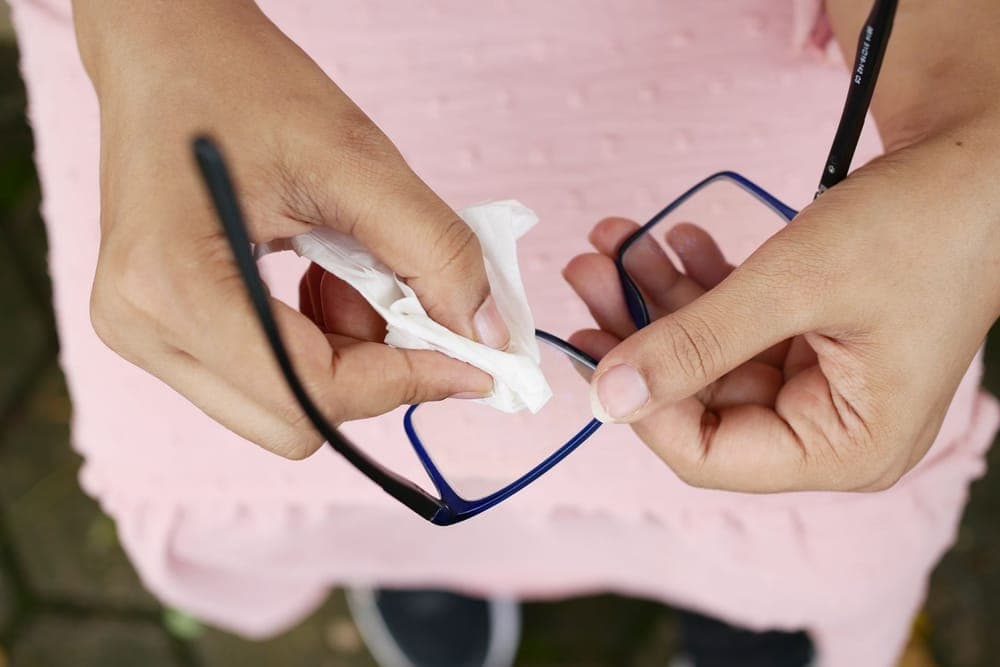
- Clean the way the maker says: remove grit, rinse with water or mild soap, pat dry with a soft cloth.
- Treat uncoated lenses with an anti-fog wipe or spray, and keep one in your range bag.
- Never lift your glasses on the firing line. Step off the line first.
Anti-fog coatings: what the makers claim
A factory coating is the fix that's always there. The eye-protection standard now recognizes it: ISEA says the 2020 edition of ANSI/ISEA Z87.1 "includes testing, performance and marking criteria for lenses with anti-fog properties" (ISEA, 2020), and the current 2025 edition keeps that anti-fog option (ISEA, 2026). When the 2020 edition came out, the chair of the Z87 committee explained why: "It is known that fogging can impede a wearer's ability to perform work safely."
Here's what three big safety-eyewear brands say about their own coatings. These are maker claims, not independent results, and each maker compares against its own baseline.
- Pyramex H2MAX. Pyramex calls H2MAX "one of the most advanced anti-fog and anti-abrasion coatings to come to the protective eyewear market" and says it "passes ANSI Z87.1+ standards." In its own steam test, Pyramex placed treated lenses 40 cm from a steam nozzle: "The competition fogged over in 2 minutes, but an hour later, the H2MAX lenses were still clear" (Pyramex). Pyramex also sells an H2X coating on models like the V2G and OTS. We didn't find a Pyramex page that explains how H2X differs from H2MAX, so we don't rank one above the other.
- Uvex HydroShield (Honeywell). Honeywell says the coating is "permanently bonded to the lens to withstand extended wear and repeated washings" (Honeywell, 2017) and that it "means no application or maintenance" (HydroShield brochure). Honeywell's own performance numbers don't line up, though. The 2017 press release says HydroShield eliminates fog "60 times longer" than any other Uvex coated product; the current brochure says "Fog-free 90X longer" than the majority of other anti-fog products. They compare against different things, so we don't lean on either number.
- 3M Scotchgard. 3M says the coating "retains its effectiveness for at least 25 washings," is bonded to the lens, and "can be disinfected with diluted bleach soaking or alcohol wipes without losing its anti-fog performance" (3M). 3M bases its comparisons on its own internal testing against traditional anti-fog coatings.
The takeaway for a beginner: a named factory coating is the first thing to look for, and you don't need to pick a winner among these three. Just make sure the listing you buy names the coating, because the same frame is often sold without it. Pyramex, for example, sells the Intruder with no anti-fog, Standard anti-fog or H2MAX (Pyramex), and the OTS XL as "No Anti-fog" or "H2X Anti-fog" (Pyramex).
Vents, seals and fit
Airflow is the other half of the fix, and makers take two opposite approaches.
- Vented. Howard Leight says its HL100 over-the-glasses pair "includes indirect vents to help prevent fogging" (Howard Leight). 3M says the removable foam insert on its Solus glasses "has small vents to help reduce fogging" (3M).
- Sealed. The Pyramex V2G is foam-sealed (Pyramex calls it "Sealed Eyewear") and is sold with a choice of H2X, H2MAX or Standard anti-fog (Pyramex). A seal closes the gap around the lens, so it leans on the coating to stay clear. That's the design logic: seal plus coating, never seal alone.
Fit plays a part too. If a frame presses hard against your cheeks and brow, warm air around your eyes has less room to escape. If yours fog quickly, check how they sit before you blame the coating. A pair that fits your face without pinching is also easier to wear under ear muffs, which is the next problem.
Face masks, gaiters and ear muffs
A face mask or neck gaiter will fog your glasses fast if your breath escapes upward. Warm, wet air from the top edge rises straight into the back of your lenses. Snug the top edge across the bridge of your nose (a nose wire helps) so your breath leaves through the sides and bottom, and try resting the glasses on the mask's upper edge rather than tucking the mask over them. Then add the coating or a wipe on top.
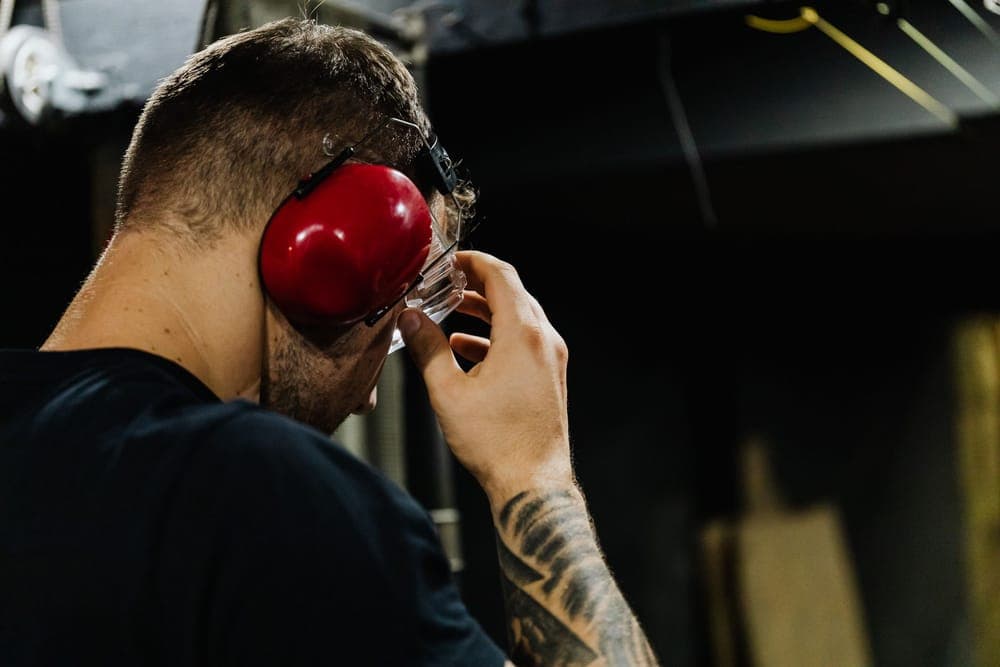
Ear muffs don't cause fog, but they change how your glasses sit. The temple arms run under the muff cushions, and 3M notes a muff's noise reduction may be lower when eyeglasses are worn between the cushions and your head (3M PELTOR X Series data sheet). Pushing your glasses harder against your face to keep them steady under muffs can trap more warm air around your eyes. A pair whose arms sit flat under your muffs solves both problems; our guide to ear protection with glasses covers the fit.
Wear prescription glasses? Two layers of lenses means two to keep clear. The Pyramex OTS over-the-glasses frame comes with an H2X anti-fog option (Pyramex), and our guide to wearing glasses at a shooting range covers sizing.
If your glasses fog on the firing line
- Stop shooting. Keep the muzzle pointed in a safe direction and set the firearm down on the bench the way your range's rules require.
- Step back from the line to wherever your range allows you to remove eye protection. At a range like Triangle, where it's required inside the range, that means leaving the range itself.
- Clean and treat the lenses with a soft cloth or an anti-fog wipe, put the glasses back on, and only then return to the line.
If you're new to range routine, our guide to shooting range etiquette explains the line and the commands you'll hear.
Cleaning without wrecking the coating
Coatings last longest when you clean them the way the maker says. Pyramex's directions for H2MAX lenses: "Start by removing loose debris and then rinse with water or a soap and water solution. Use a Pyramex cleaning cloth, or any other soft cotton or microfiber cloth to gently pat lens dry." Pyramex adds that H2MAX can be cleaned with its lens cleaning towelettes, and that "repeated cleaning in testing showed no loss of adhesion to the coating" (Pyramex).
3M says Scotchgard keeps working for at least 25 washings and tolerates diluted bleach or alcohol wipes; Honeywell says HydroShield needs no maintenance. Those directions differ, so if your glasses carry a factory coating, follow that maker's cleaning advice first. For every lens, start the way Pyramex does: get the grit off before you wipe.
Lenses without a factory coating are where anti-fog wipes and sprays earn their place. ZEISS says its AntiFOG Wipes "gently and thoroughly clean lenses with added fog prevention for up-to 24 hours," and that its Fog Defender spray gives "up-to 72 hours of fog prevention" (ZEISS). Radians says its lens cleaning towelettes "will clean greasy and oily glasses while providing an anti-fog / anti-static coating" (Radians). Those times are the makers' claims. A pack of wipes and a microfiber cloth belong in the bag; our list of what to put in a range bag has the rest.
What to look for in anti-fog safety glasses
- Z87+ first. Anti-fog doesn't replace the impact mark. Check the maker's page for Z87+ or "Z87.1 ... High Impact."
- A named coating on the exact listing: H2MAX, H2X, HydroShield, Scotchgard or the maker's own. If the listing doesn't name one, assume there isn't one.
- Vents or a seal to suit your conditions. Vented frames move air; sealed frames rely on the coating.
- A fit that works with your muffs and, if you wear them, over your glasses.
- For kids, the same rules. Howard Leight says its HL200 Youth pair has a "Uvextra anti-fog coating" (Howard Leight); our best kids shooting glasses covers sizing.
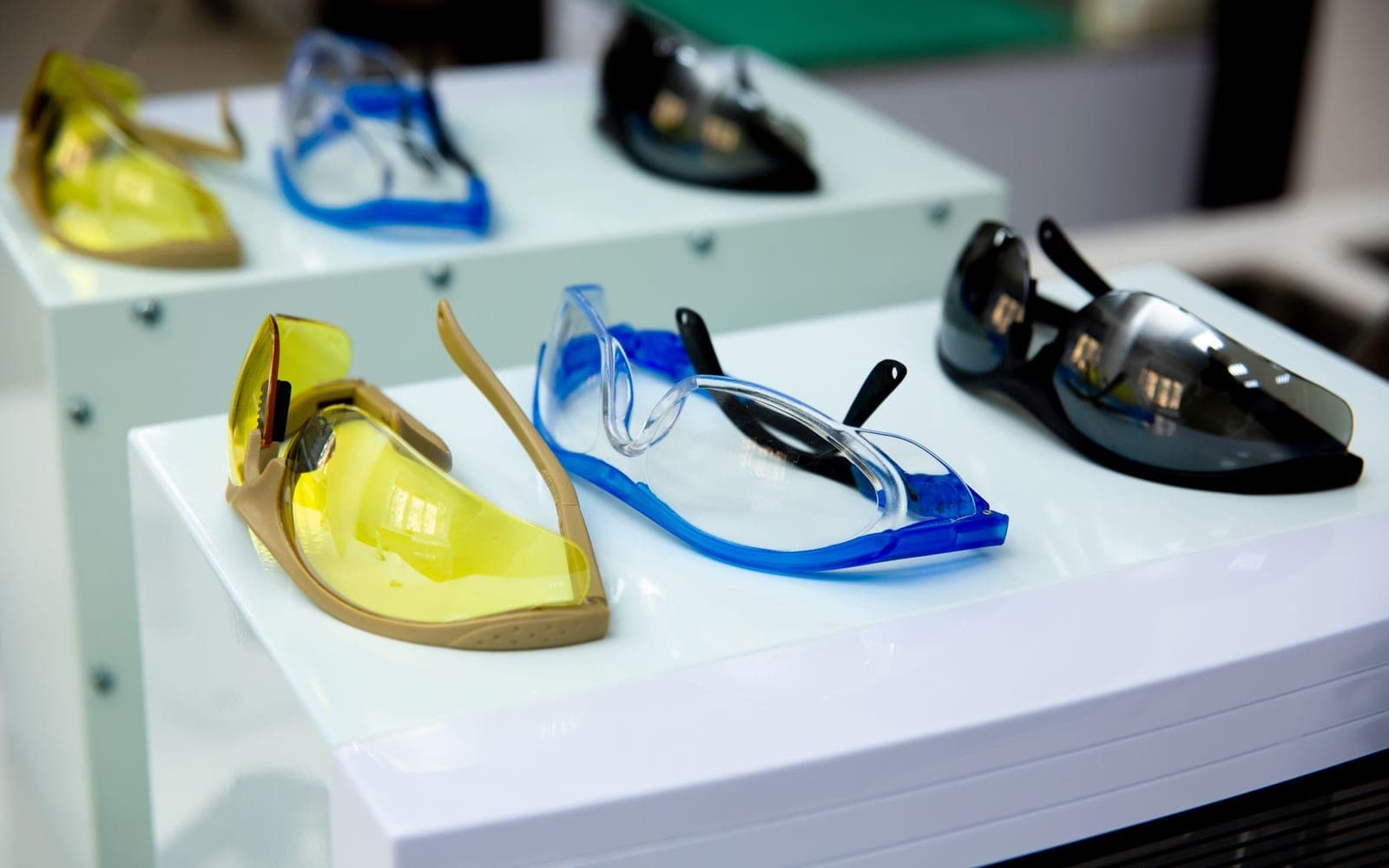
- A lens tint that suits the light, since fog and a dark lens together make a dim lane worse. See our lens color guide.
See our top picks for the best shooting glasses, all marked Z87+, or start with the four picks below.
Our picks for this
Anti-fog glasses and lens care
Two Z87+ pairs sold with factory anti-fog coatings, plus two lens-care picks for glasses you already own. Coating and fog-time figures are the makers' claims.
- Stock photo

Best sealed glasses for fog-prone days
Pyramex V2G
Z87+7.6/10ResearchedFoam-sealed, with a choice of H2X, H2MAX or Standard anti-fog. Pyramex states Z87.1-2020 + High Impact and a MIL-PRF-32432 high-velocity pass.
Check price · Amazon#ad · Price set by Amazon · How we make money for the link to Pyramex V2G
- Stock photo
Best first pair of shooting glasses
Pyramex Intruder
Z87+6.9/10ResearchedChoose the H2MAX or Standard anti-fog version (it's also sold without). Pyramex states Z87.1-2020 + High Impact, in seven lens tints.
Check price · Amazon#ad · Price set by Amazon · How we make money for the link to Pyramex Intruder
- Stock photo
Best anti-fog wipes
ZEISS AntiFOG Wipes
7.6/10ResearchedCleans and treats in one wipe; ZEISS claims fog prevention for up to 24 hours. A handy backup for uncoated lenses.
Check price · Amazon#ad · Price set by Amazon · How we make money for the link to ZEISS AntiFOG Wipes
- Stock photo
Best lens wipes made for safety glasses
Radians Lens Cleaning Towelettes
7.5/10ResearchedMade for safety glasses: Radians says they clean greasy lenses and leave an anti-fog / anti-static coating. 25-count bag or 100-count box.
Check price · Amazon#ad · Price set by Amazon · How we make money for the link to Radians Lens Cleaning Towelettes
How we scored this
Units we claim to have tested: none
Most gear sites say they tested thirty muffs. We haven't put these on a sound meter, and we say so. Every pick here is labeled Researched: we compiled each maker's published specs (the EPA-labeled NRR on hearing protection, the Z87+ mark on glasses), read the manuals, and scored everything on a public rubric. Every figure links to where it came from, and marketing claims are labeled “maker's claim.”
Scores are editorial judgments from that documented research, not test results. Commissions never set a score or decide a pick. The rubric and its weights are published.
Questions
Common questions
Why do my shooting glasses fog up?
Do anti-fog safety glasses really work?
Does anti-fog coating wear off?
Can I use anti-fog spray on safety glasses?
How do I stop my glasses fogging with a face mask?
Where this comes from
Sources
- 3M, Scotchgard Anti-Fog Coating brochure (PDF), accessed 2026-09-19
- ISEA, ISEA Publishes ANSI/ISEA Z87.1 Eye and Face Protection Standard Update (April 13, 2020), accessed 2026-09-19
- ISEA, ISEA Releases Updated ANSI/ISEA Z87.1 Standard for Eye and Face Protection (January 8, 2026), accessed 2026-09-19
- Pyramex, H2MAX anti-fog coating press release (March 18, 2019), accessed 2026-09-19
- Honeywell, Uvex HydroShield Anti-Fog Lens Coating press release (March 4, 2017), accessed 2026-09-19
- Honeywell, Uvex HydroShield Anti-Fog Coating brochure (PDF), accessed 2026-09-19
- Triangle Shooting Academy, Dress Code, accessed 2026-09-19
- 3M, PELTOR X Series passive earmuff technical data sheet (PDF), accessed 2026-09-19
- Pyramex, V2G product page, accessed 2026-09-19
- Pyramex, Intruder product page, accessed 2026-09-19
- Pyramex, OTS Over the Spectacle product page, accessed 2026-09-19
- Pyramex, OTS XL product page, accessed 2026-09-19
- Howard Leight Shooting Sports, HL100 Series OTG Glasses, Clear Lens product page, accessed 2026-09-19
- Howard Leight Shooting Sports, HL200 Youth Sharp-Shooter Shooting Glasses product page, accessed 2026-09-19
- ZEISS Vision Care US, eyeglass cleaning solutions page, accessed 2026-09-19
- Radians, Lens Cleaning Towelettes product page, accessed 2026-09-19
We haven't tested the gear on this page and we don't pretend to. Specs come from each maker's own pages and data sheets (linked on every product); ratings like NRR and Z87+ are explained from the standards and agencies behind them. Prices are set by Amazon and change often, so we don't print them. Where a figure isn't published, we say so. Read the full method.