Quick picks
The picks at a glance
| # | Product | Best for | Score | Price |
|---|---|---|---|---|
| 1 |  Pro Ears Stealth 28 HTBT NRR 28 with nothing between your cheek and the stock, plus seven tip sets so the seal is yours rather than average. | Best for hunting overallNRR 28 | 8.1/10Researched | Check price · Amazon #ad · Disclosure |
| 2 | 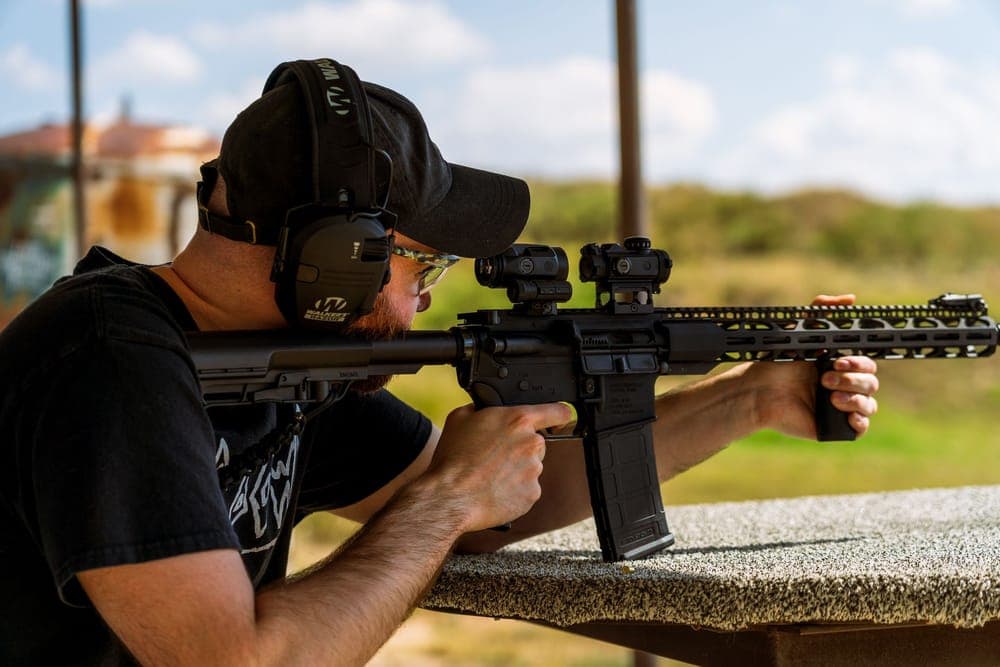 Walker's Razor X-TRM The only muff here Walker's calls ultra low-profile, which is the spec that matters when a stock meets the cup. | Best muff for a shouldered long gunNRR 21 | 6.2/10Researched | Check price · Amazon #ad · Disclosure |
| 3 | Walker's Razor Slim Electronic Low-profile cups at NRR 23 with both AAAs in the box: the default choice if you want a muff, not a plug. | Best all-round hunting muffNRR 23 | 6.3/10Researched | Check price · Amazon #ad · Disclosure |
| 4 | Walker's Suppressor Earbuds NRR 25 rechargeable buds that sit under a hat and a hood, with a dock Walker's rates at 36 hours total. | Best for a blind or a treestandNRR 25 | 6.8/10Researched | Check price · Amazon #ad · Disclosure |
| 5 | Howard Leight Impact Sport About 350 hours from two AAAs and a 4-hour auto shut-off, which is the spec that saves you when you forget. | Best value for an occasional huntNRR 22 | 7.2/10Researched | Check price · Amazon #ad · Disclosure |
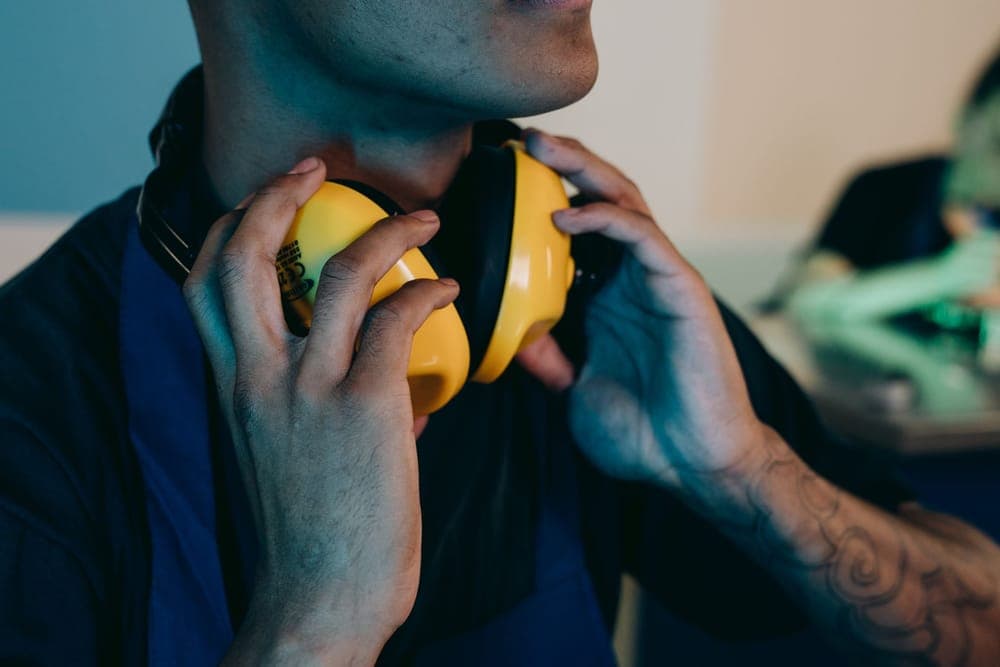
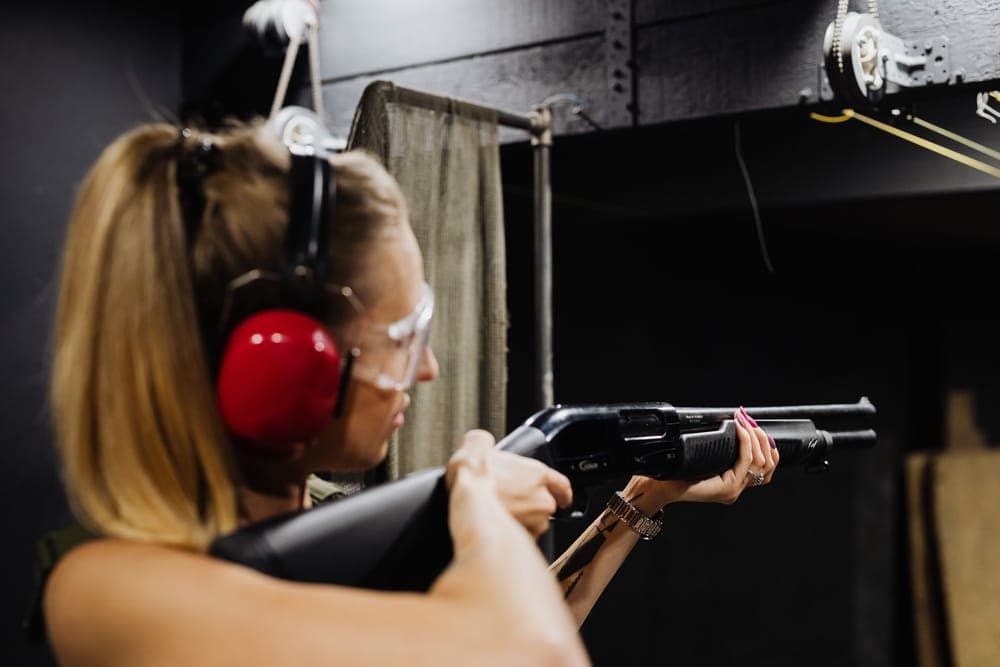
#ad · Prices are set by Amazon and change often, so we don't print them. Scores are ours, built from published specs and manuals, not hands-on tests. Photos are illustrative stock. Tap a row for the full write-up.
Most "best hearing protection" lists are written for a shooting bench, where you park a pair of muffs on your head for an hour and take them off in the car. Hunting is a different job. You are wearing protection for hours while trying to hear a twig break, you are mounting a gun to your face rather than resting it on a rest, and the whole thing has to work in weather that would send a range day home early.
That reorders the priorities. Raw noise reduction still matters, and we will not recommend anything without a published rating, but the specs that decide a hunting purchase are amplification, cup profile and how long the power lasts. Everything below is a currently sold product, and every spec comes from the maker's own page, linked in Sources. If you are also shooting at a range, start with our best hearing protection for shooting roundup, which is written for that trip instead.
Why hunting is different
Three things change once you leave the bench, and each one moves a different spec up the list:
- You need to hear better than unaided, not worse. Plain foam plugs are excellent protection and useless for hunting, because they take away the quiet sounds you are there to listen for. Electronic protection amplifies the quiet and clamps the loud, which is the only design that serves both needs at once.
- The gun touches your face. A rifle or shotgun stock has to meet the same spot on your cheek every time. A thick earmuff cup is directly in the way, and a muff that shifts on the mount is a muff that changes your point of aim.
- You might fire once all day, or not at all. Which tempts people to skip protection entirely. That is the reasoning that ends in permanent hearing loss, for reasons the numbers below make plain.
How we picked
Bench & Berm does not test gear, so nothing here is a test result. Picks are researched from published maker information and scored on the rubrics published on how we pick. Every pick had to clear the same gate as the rest of the hub: a US EPA Noise Reduction Rating published by the maker. An SNR, the European scale, does not count, and it is the reason several popular hunting-branded electronics are not on this page.
On top of that gate, four things carried the weight for hunting specifically:
- Published amplification. A number or a description from the maker, not an implication. Pro Ears and Howard Leight both state 5X amplification for the models here.
- A published cup profile or a design that avoids the problem. Either the maker says the cup is slim or low-profile, or the product sits in your ear canal and the question does not arise.
- Power you can plan around. A published runtime, an auto shut-off, or batteries you can swap with cold fingers. A hunt is not the place to discover a dead battery.
- Fit range. For plugs, how many tip sizes come in the box. For muffs, what the maker says about sizing and adjustment.
We did not rank on price. The site shows live prices where it can and a "check price" link where it cannot, because a number typed into an article is stale the week after it is published.
Amplification is the point, not a bonus
This is the single biggest difference between hunting ear pro and range ear pro. At a range, amplification is a convenience: it lets you hear a range command without lifting a cup. In the field it is the reason you are wearing the thing at all.
A practical warning about amplification in the field: it amplifies wind and rustling fabric as enthusiastically as it amplifies a deer. Turn the volume down when the wind picks up, and expect to spend the first hour of your first hunt learning where the useful setting is. Our electronic vs passive ear muffs page covers how the circuits behave in more detail.
The cheek weld problem
On a handgun, the size of an earmuff cup does not matter. On a rifle or shotgun it matters a great deal, because the stock and the cup want the same space. Push through it and one of three things happens: the muff lifts off your ear and stops protecting, the stock sits lower on your face than it should, or you flinch away from the contact and your shot goes wide.
Makers know this, and the ones who have solved it say so in specific language worth learning to read: Walker's calls the X-TRM an "ultra low-profile design" ( Walker's), Howard Leight says its Air Flow Control design "ensures your firearm stock has clearance while shooting", and Pro Ears sidesteps the whole issue: an in-ear bud on a behind-the-head cable puts nothing on the side of your face at all.
One shot, unprotected, still counts
The most common hunting hearing-protection decision is to skip it, on the reasoning that a single shot cannot do much. The published numbers say otherwise. A NIOSH-authored review puts gunshots at roughly 140 to 175 dB at the shooter's ear, with most recreational firearms larger than a .22 between 150 and 165 dB. ASHA notes that rifles and shotguns are "often reaching 160-170 dB peak sound pressure levels" ( ASHA). The impulse-noise limit in OSHA's own standard is 140 dB peak. A hunting rifle clears that limit by more than 20 dB, and decibels are logarithmic, so 20 dB is not a small margin.
There is a second, quieter risk. ASHA notes that when shooting rifles and shotguns, right-handed shooters typically suffer more hearing loss in the left ear, because the left ear is the one facing the muzzle across the stock. Our how loud is a gunshot page has the full set of published figures by firearm type if you want to see the measurements rather than the summary.
Plugs or muffs in the field
There is no universal answer, but the hunt usually decides it for you:
- Sitting still in a blind or a stand: electronic plugs. They go under a hat, a hood and a face covering without fighting any of them, they weigh grams rather than ounces, and nothing gets knocked askew when you turn your head against a window frame.
- Walking up birds or working dogs: muffs. You are mounting a shotgun repeatedly, protection comes on and off between covers, and a muff you can push up onto your head is faster to manage than a bud you have to re-seat in a cold ear.
- A range session before the season: either, plus consider doubling up. Our double hearing protection page explains how plugs and muffs actually combine, which is not by adding the two ratings together.
The one comparison worth reading before you commit is our earplugs vs earmuffs page, because the trade-offs it lays out do not change in the field, they just get sharper.
Cold, wet and all-day wear
Three published specs matter here and most makers skip all three, which is why the ones who publish them earn points on this page.
- Runtime. Walker's quotes up to 9 hours per charge for the Suppressor buds and 36 hours total with the included dock. Pro Ears quotes up to 15 working hours per charge. Howard Leight quotes about 350 hours from two AAAs for the Impact Sport. Walker's publishes no runtime at all for the Razor Slim or the X-TRM, which is a real gap on an all-day hunt.
- Battery type. Rechargeable is tidier; replaceable AAAs mean a spare pair in a pocket solves the problem at dawn on the second morning. In genuine cold, both lose capacity, so charge or replace the night before rather than the week before.
- Water rating. Almost nobody publishes one for hunting muffs. Neither Walker's page nor Howard Leight's states an IP rating for the models here, so treat all of them as electronics that need to stay under a hood in sustained rain.
Which one for which hunt
- Deer rifle from a stand: Pro Ears Stealth 28 HTBT. Highest published NRR of the five, nothing near your cheek, and 15 hours a charge covers a long sit.
- Upland or waterfowl with a shotgun: Walker's Razor X-TRM. The ultra low-profile cup is the spec for repeated shotgun mounts, as long as you accept NRR 21 as the trade.
- One gun, several uses, want muffs: Walker's Razor Slim Electronic. NRR 23 low-profile cups and both batteries in the box.
- Layered up in the cold: Walker's Suppressor Earbuds. Nothing to displace when you pull a hood up, and NRR 25 is strong for a plug-style product.
- A hunt or two a year, spend little: Howard Leight Impact Sport. The auto shut-off means the muffs you left in a truck box in March still work in October.
In detail
The picks, in full
Rank 1
Best for hunting overall
Pro Ears Stealth 28 HTBT
NRR 28 with nothing between your cheek and the stock, plus seven tip sets so the seal is yours rather than average.
Published specsResearched · not tested by us
How the 8.1 score breaks down
- Published NRR (40%)
- 8.5
- Reusability (20%)
- 8.5
- Fit range & sizes (20%)
- 9.5
- Works under muffs (20%)
- 5.5
What the specs support
- NRR 28, the highest published rating of any electronic hearing protection we cover
- Pro Ears applies the 28 dB figure to every tip in the box, rather than one unnamed tip
- Seven tip sets, including an extra-small foam, so more ear sizes can get a real seal
- Behind-the-head cable, so nothing sits between your cheek and a rifle stock
Where it falls short
- A behind-the-head cable is harder to wear under earmuffs than a flush in-ear bud
- Pro Ears publishes no IP or water rating for this model
- Rechargeable only, so once it is flat you are charging rather than shooting
Skip it if…
…you want plugs to double up under muffs at an indoor range; the behind-the-head cable fights a muff cushion, so flush foam plugs like the Howard Leight MAX-1 do that job better.
#ad · Price set by Amazon · How we make money for the link to Pro Ears Stealth 28 HTBT
Rank 2
Best muff for a shouldered long gun
Walker's Razor X-TRM
The only muff here Walker's calls ultra low-profile, which is the spec that matters when a stock meets the cup.
Published specsResearched · not tested by us
| NRR | 21 dB |
|---|---|
| Batteries | 2 x AAA (included) |
| Cup profile | "Ultra low-profile design"Maker's claim |
| Battery life | Not stated on Walker's page |
| Bluetooth | Not mentioned on Walker's page |
How the 6.2 score breaks down
- Published NRR (30%)
- 5.5
- Fit with glasses & cup profile (20%)
- 8.5
- Electronics: amplification & shut-off (20%)
- 6
- Power: battery & auto-off (15%)
- 5
- Comfort & adjustment (15%)
- 6
What the specs support
- The only muff here Walker's describes as "ultra low-profile"
- A lower cup leaves more room for the stock when you shoulder a rifle or shotgun
- Both AAA batteries come in the box
Where it falls short
- NRR 21 is the lowest of the electronic muffs we list
- No battery life or auto shut-off time is published by Walker's
Skip it if…
…most of your shooting is handguns at an indoor range; the ultra-low cup matters less there, and NRR 21 is the least protection of any electronic muff on our list.
#ad · Price set by Amazon · How we make money for the link to Walker's Razor X-TRM
Rank 3
Best all-round hunting muff
Walker's Razor Slim Electronic
Low-profile cups at NRR 23 with both AAAs in the box: the default choice if you want a muff, not a plug.
Published specsResearched · not tested by us
| NRR | 23 dB |
|---|---|
| Batteries | 2 x AAA (included) |
| Cup profile | "Low-profile design"Maker's claim |
| Battery life | Not stated on Walker's page |
| Bluetooth | Not mentioned on Walker's page |
How the 6.3 score breaks down
- Published NRR (30%)
- 6.5
- Fit with glasses & cup profile (20%)
- 7.5
- Electronics: amplification & shut-off (20%)
- 6
- Power: battery & auto-off (15%)
- 5
- Comfort & adjustment (15%)
- 6
What the specs support
- Walker's calls it a low-profile design, which matters when a rifle or shotgun stock meets the cup
- NRR 23, one point above the Impact Sport
- Both AAA batteries come in the box
Where it falls short
- No battery life or auto shut-off time is published by Walker's
- Easy to confuse with Walker's separate "Razor Slim Muffs" listing, which doesn't state an NRR; check the listing says Electronic
Skip it if…
…you want a muff that switches itself off when you forget; Walker's doesn't publish an auto shut-off for this model, while the Razor Pro Digital lets you set 2, 4 or 6 hours.
#ad · Price set by Amazon · How we make money for the link to Walker's Razor Slim Electronic
Rank 4
Best for a blind or a treestand
Walker's Suppressor Earbuds
NRR 25 rechargeable buds that sit under a hat and a hood, with a dock Walker's rates at 36 hours total.
Published specsResearched · not tested by us
How the 6.8 score breaks down
- Published NRR (40%)
- 7
- Reusability (20%)
- 8.5
- Fit range & sizes (20%)
- 5
- Works under muffs (20%)
- 6.5
What the specs support
- NRR 25, above the AXIL GS Extreme 3.0's 21 with foam tips
- Charging dock included; Walker's quotes 36 hours of total use with it
- No Bluetooth to pair, which keeps setup simple for a first-timer
Where it falls short
- Walker's gives one NRR without naming the ear tip, and with earbuds the tip you use changes the protection
- Once the buds and dock both run down, you're charging, not shooting
Skip it if…
…you'll be away from power for days; once the buds and dock run down they need a charge, while Walker's Isolator runs on replaceable #10 batteries.
#ad · Price set by Amazon · How we make money for the link to Walker's Suppressor Earbuds
Rank 5
Best value for an occasional hunt
Howard Leight Impact Sport
About 350 hours from two AAAs and a 4-hour auto shut-off, which is the spec that saves you when you forget.
Published specsResearched · not tested by us
| NRR | 22 dB |
|---|---|
| Batteries | 2 x AAA |
| Battery life | About 350 hoursMaker's claim |
| Auto shut-off | After 4 hours |
| Bluetooth | No (Howard Leight sells Bluetooth versions as separate products) |
| Cup profile | Slim earcup; Howard Leight says its Air Flow Control design ensures your firearm stock has clearance while shootingMaker's claim |
| Sizing | Medium/Large |
How the 7.2 score breaks down
- Published NRR (30%)
- 6
- Fit with glasses & cup profile (20%)
- 8.5
- Electronics: amplification & shut-off (20%)
- 7
- Power: battery & auto-off (15%)
- 9
- Comfort & adjustment (15%)
- 6.5
What the specs support
- Shuts itself off after 4 hours, so a muff left on in the range bag doesn't flatten the batteries
- Howard Leight quotes about 350 hours from two AAA batteries
- Slim earcup the maker says leaves your firearm stock clearance when you shoulder a long gun
Where it falls short
- NRR 22 is 8 dB below Howard Leight's own Impact Pro (NRR 30)
- No Bluetooth on this version; Bluetooth models are sold separately
- Listed in Medium/Large; smaller heads should look at the Youth/Adult Small version
Skip it if…
…you shoot mostly at an indoor range and want the most protection a muff can give on its own; NRR 22 is on the low side, so pair it with foam plugs or look at the NRR 30 Impact Pro.
#ad · Price set by Amazon · How we make money for the link to Howard Leight Impact Sport
What to look for in hunting ear protection
Five things, in the order they actually decide the purchase. Check each on the maker's own page before you buy, because retailer listings copy each other and drop the awkward details.
- A published NRR. If a product only gives you an SNR, you cannot compare it to anything sold in the US. The rating exists because of an EPA rule, 40 CFR Part 211 Subpart B, and the same rule requires the label to warn that the figure "may not be an accurate indicator of the protection attainable" against gunfire. Treat it as a comparison tool between products, not a promise about your ears.
- Amplification, stated by the maker. "Sound enhancement" on a box is not a spec. A multiple, or a sentence describing what it is meant to help you hear, is.
- Cup profile, or no cup at all. Look for the words slim, low-profile or stock clearance. If the maker will not say it, assume the cup is a normal thickness and try the mount before the season.
- Runtime and how it is powered. A published number, plus whether you can fix a flat battery in the field.
- Fit range. For plugs, count the tip sets in the box; Pro Ears ships seven, which is unusual and genuinely useful because a plug that does not seal does not protect. For muffs, check the sizing, since most adult muffs are sold in one Medium/Large size.
Beginner mistakes hunting with ear protection
- Buying plain foam plugs for a hunt. Great protection, wrong tool. You will take them out to hear something and then forget to put them back in before you shoot.
- Turning amplification to maximum and leaving it there. You will hear your own coat, your own breathing and the wind, and miss the thing you are listening for.
- Buying a muff without mounting the gun first. The cheek weld is the whole test, and a store will not run it for you.
- Assuming an electronic muff protects with the battery dead. Most do, passively, but at their rated NRR only when the cups are sealed on your head. Check the maker's wording rather than assuming.
- Skipping protection for the walk in and the walk out. A lot of unplanned shots happen at both ends of a hunt, which is exactly when protection is usually off.
- Treating one unprotected shot as free. Peak levels of 160 to 170 dB are 20 to 30 dB past the 140 dB impulse limit, and that damage does not heal.
How we scored this
Units we claim to have tested: none
Most gear sites say they tested thirty muffs. We haven't put these on a sound meter, and we say so. Every pick here is labeled Researched: we compiled each maker's published specs (the EPA-labeled NRR on hearing protection, the Z87+ mark on glasses), read the manuals, and scored everything on a public rubric. Every figure links to where it came from, and marketing claims are labeled “maker's claim.”
Scores are editorial judgments from that documented research, not test results. Commissions never set a score or decide a pick. The rubric and its weights are published.
Questions
Common questions
What is the best ear protection for hunting?
Do you really need hearing protection for hunting if you only fire one shot?
Are electronic earmuffs or electronic earplugs better for hunting?
Will earmuffs get in the way of my cheek weld?
What NRR do I need for hunting?
Can I wear hunting ear protection with glasses?
Where this comes from
Sources
- Pro Ears, Stealth 28 HTBT product page, accessed 2026-09-26
- Walker's, Razor X-TRM Ear Muffs product page, accessed 2026-09-26
- Walker's, Razor Slim Electronic Ear Muffs product page, accessed 2026-09-26
- Howard Leight Shooting Sports, Impact Sport Electronic Earmuff product page, accessed 2026-09-26
- ASHA, "Recreational Firearm Noise Exposure" information series (PDF), accessed 2026-09-26
- NIOSH Alert, "Preventing Occupational Exposures to Lead and Noise at Indoor Firing Ranges" (DHHS/NIOSH Pub. 2009-136), PDF, accessed 2026-09-26
- eCFR, 40 CFR Part 211 Subpart B (EPA hearing protector labeling, the rule behind the NRR), accessed 2026-09-26
- NRA, NRA Gun Safety Rules, accessed 2026-09-26
We haven't tested the gear on this page and we don't pretend to. Specs come from each maker's own pages and data sheets (linked on every product); ratings like NRR and Z87+ are explained from the standards and agencies behind them. Prices are set by Amazon and change often, so we don't print them. Where a figure isn't published, we say so. Read the full method.