Not medical advice. This page shares general guidance from the public-health sources linked in the text. If you're worried about your hearing or lead exposure, talk to a doctor.
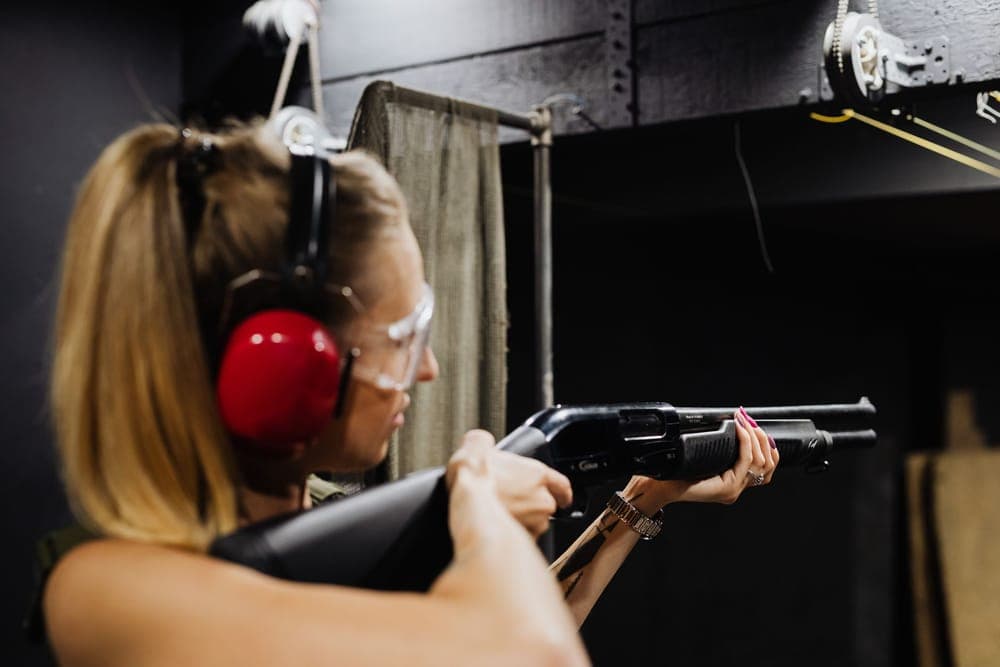
A gunshot is loud enough that a single one can matter. The honest answer to "how loud" is a range, not a number, because it depends on the firearm, the ammunition, where the microphone sits and whether you're indoors. Below you'll find the published measurements from federal hearing researchers and professional bodies, each with its source and how it was measured, so you can see where the popular figures come from.
We don't measure gunfire ourselves, and we don't fill gaps with estimates. If no source we could check gives a number for your exact caliber, we say so.
Gunshot decibels by firearm type
The most detailed breakdown for recreational shooters comes from a 2017 review by Meinke, Finan, Flamme, Murphy (NIOSH) and colleagues in Seminars in Hearing, hosted by the CDC (Meinke et al., 2017). Their Table 1 lists the range of mean unweighted peak sound pressure levels for recreational firearms, measured at the left ear of a right-handed shooter (the ear ASHA says typically takes more hearing loss when right-handed shooters fire rifles and shotguns):
| Recreational firearm type | Peak sound pressure level (dB) |
|---|---|
| Rifles (larger than .22 caliber) | About 159 to 174 |
| Pistols (larger than .22 caliber) | About 148 to 171 |
| Shotguns | About 152 to 170 |
| Starter pistols (blanks) | About 148 to 165 |
| Pistols (.22 caliber) | About 155 to 158 |
| Rifles (.17 and .22 caliber) | About 140 to 144 |
| Air rifles | About 117 to 134 |
The same review sums it up: "Peak sound pressure levels (SPLs) from firearms range from [about] 140 to 175 dB. The majority of recreational firearms (excluding smallcaliber 0.17 and 0.22 rifles and air rifles) generate between 150 and 165 dB peak SPLs."
What other published measurements say
Other official sources land in the same territory, each measuring something slightly different. That's why you see different "gunshot decibel" figures quoted online.
| Source | What was measured | Published figure |
|---|---|---|
| Murphy, Byrne and Franks (NIOSH), 2007 | Peak levels from NIOSH studies, small-caliber rifles to revolvers | 144 dB SPL (.22 caliber rifle) to 172 dB SPL (.357 caliber revolver) |
| NIOSH Publication 2009-136 | Law-enforcement firearms at indoor and outdoor ranges, including .40 pistols, a 12-gauge shotgun, .223 rifles, a .357 revolver, and .45 and 9-mm pistols | 155 to 168 dB SPL peak |
| NIOSH Science Blog, 2017 | Firearms training for law enforcement | "Often reaching 160-170 dB peak sound pressure levels" |
| ASHA, 2024 | General guidance for recreational shooters, in dBP (decibels peak pressure level) | Small-caliber rifles, air rifles, shotguns and pistols "up to 140" dBP; higher-caliber rifles "over 175 dBP" |
Notice that ASHA's simplified guidance puts shotguns and pistols "up to 140", while the NIOSH measurements put them well above that. We report both as published. For deciding whether you need hearing protection, the disagreement doesn't matter: every source above says you do.
How loud is a 9mm, a .22 or a 5.56?
This is the question most people type, and the straight answer is that none of the sources we could verify publishes a single decibel figure for one caliber that you could apply to your gun. Here's what they do publish:
- 9mm: NIOSH measured Colt 9-mm pistols as part of a group of law-enforcement firearms whose peak levels ranged from 155 to 168 dB SPL (NIOSH 2009-136). NIOSH's per-gun results appear only in a chart, so we can't pull out a 9mm-only number. More broadly, Meinke et al. put pistols larger than .22 caliber at about 148 to 171 dB.
- .22 LR: Meinke et al. list .22 caliber pistols at about 155 to 158 dB and .17 and .22 caliber rifles at about 140 to 144 dB. Murphy and colleagues cite 144 dB SPL for a .22 caliber rifle. Even the quietest of these is at or above the 140 dB limit described below.
- 5.56 / .223: NIOSH's law-enforcement group, measured at 155 to 168 dB SPL, included .223-caliber rifles (NIOSH 2009-136). Meinke et al. put rifles larger than .22 caliber at about 159 to 174 dB.
- 12-gauge shotgun: the NIOSH group above included a 12-gauge, and Meinke et al. put shotguns at about 152 to 170 dB.
If a website gives you one exact number for "a 9mm", ask where it came from and how it was measured.
Why the numbers differ
A handful of things move the measured level, and the sources are open about them:
- Where the microphone is. Meinke et al. measured at the left ear of a right-handed shooter. ASHA notes that "when shooting rifles and shotguns, right-handed shooters typically suffer more hearing loss in the left ear."
- Barrel length. Meinke et al. note that shorter barrels, including those on youth firearms, increase the sound pressure level measured at the shooter's left ear.
- What's around you. Walls, a ceiling, a shooting bench or a table all change the result. More on that below.
- Which "decibel". Gunshot figures are peak levels (dB SPL peak or dBP), the highest instantaneous pressure. Everyday noise figures are usually A-weighted averages (dBA). The two aren't directly comparable, which matters for the comparison table below.
The 140 dB line
The key threshold for impulse noise, sudden bangs like gunfire, is 140 dB peak. OSHA's noise standard states: "Exposure to impulsive or impact noise should not exceed 140 dB peak sound pressure level" ( 29 CFR 1910.95). OSHA's technical manual names "the shooting of a firearm" as an example of impulsive noise (OSHA Technical Manual, Section III Chapter 5).
NIOSH explains what that limit means in practice: "exposure to one event at 140 dB SPL would constitute 100% of a person's daily allowable noise exposure" (Murphy, Byrne and Franks, 2007). ASHA goes further for shooters: "exposure to noise greater than 140 dBP can permanently damage hearing, even from a single occurrence," and people who don't wear hearing protection properly "can suffer hearing loss or ringing in their ears (known as tinnitus) with as little as one shot."
Put the table next to that line and the conclusion is plain. Meinke et al. write that "hearing protection should be used for all types of recreational firearms," and that "reliance upon subjective judgments of auditory risk should be discouraged." In other words, a gun that doesn't sound that loud to you is still loud enough to count.
Compared with everyday sounds
For a sense of scale, here are figures the National Institute on Deafness and Other Communication Disorders publishes (NIDCD, Noise-Induced Hearing Loss). They're A-weighted averages, not peak levels, so treat this as a rough guide rather than a like-for-like comparison.
| Sound (NIDCD) | Level |
|---|---|
| Normal conversation | 60 to 70 dBA |
| Sirens | 110 to 129 dBA |
| Fireworks show | 140 to 160 dBA |
NIDCD adds that long or repeated exposure to sounds at or above 85 dBA can cause hearing loss, and that "extremely loud bursts of sound, such as gunshots or explosions" can cause hearing loss that is "immediate and permanent." NIDCD also lists target shooting and hunting among the recreational activities that put you at risk.
Indoor vs outdoor
None of our sources gives a single "indoor adds X dB" figure, so we won't invent one. What they do say is consistent. Meinke et al.: "Shooting in an enclosed, reflective, reverberant environment (indoors or hunting blind) increases the hazard to hearing," and "shooting from a bench or over a table also increases the peak SPL reaching the shooter's ear." NIOSH researchers add that "in an indoor firing range, reflected sound (reverberation) also becomes an important factor" (Murphy, Byrne and Franks, 2007).
That's why the advice changes indoors. ASHA tells recreational shooters: "If you plan to shoot at an indoor facility, choose one that has been acoustically treated for reverberation (i.e., sound bouncing off the walls) and wear double hearing protection." NIOSH recommends earplugs and earmuffs together at indoor ranges for range workers and people who shoot for their job (NIOSH 2009-136), and the physics doesn't change for a weekend visitor. Our indoor vs outdoor shooting range guide covers what else changes.
What this means for your ear protection
With peak levels far above 140 dB, your hearing protection has a lot of work to do. Here's what to look for:
- A published NRR. The NRR (Noise Reduction Rating, the number on the package) is required by the EPA. Higher is more protection on paper. But the EPA's own label rule says the NRR "may not be an accurate indicator of the protection attainable against impulsive noise such as gunfire" ( 40 CFR 211.204-4), so don't subtract the NRR from a gunshot figure and call the result safe. Our guide to what NRR you need explains the label.
- Two layers when it's loud. In one NIOSH example, a David Clark earmuff reduced a 12-gauge shotgun's peak from 161 dB to 130 dB SPL, and adding "a deeply-inserted foam earplug adds another 21 dB to the attenuation" (Murphy, Byrne and Franks, 2007). Those are measurements of specific products, but they show why doubling up is the standard advice indoors. See double hearing protection.
- A good fit. Foam plugs must be inserted the way the package shows, and muffs must seal against your head. Glasses temples under the cushions can let sound leak in; see ear protection with glasses.
- Electronics if you need to hear. NIOSH suggests electronic muffs over passive earplugs for shooters who need to hear instructions (NIOSH 2009-136).
Our picks for this
A plug-and-muff pair for loud ranges
The highest-rated foam plug we cover, and the highest-rated electronic muff. Worn together, they're the pairing NIOSH describes for indoor ranges: passive earplugs under electronic muffs.
- Stock photo
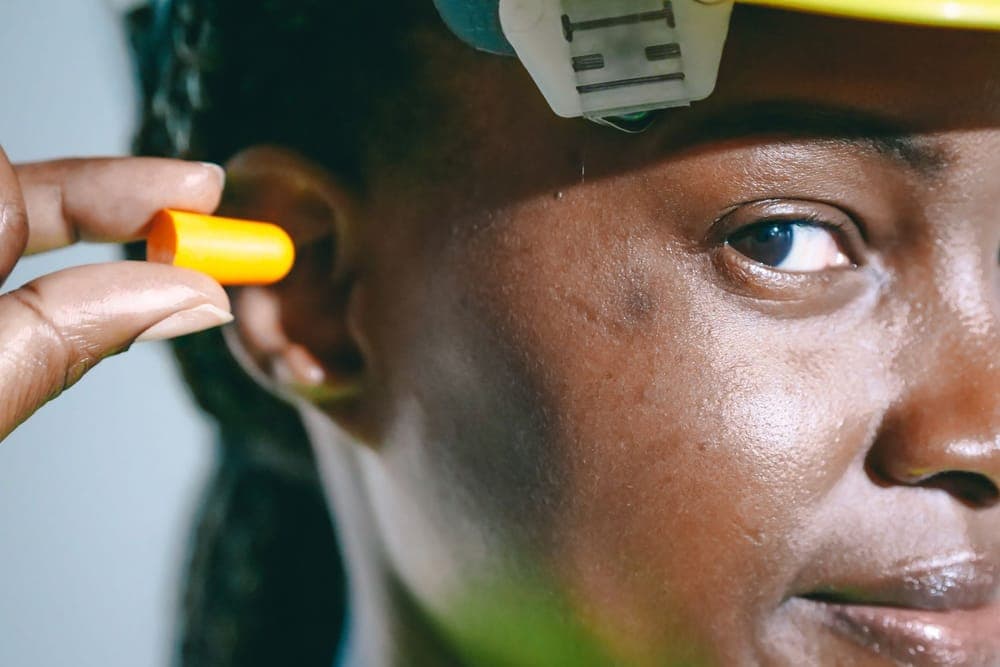
Highest-NRR earplug
Howard Leight MAX-1
NRR 337.1/10ResearchedNRR 33 disposable foam plugs, 200 pairs to a pack. The inner layer: insert them deeply, per the package instructions.
Check price · Amazon#ad · Price set by Amazon · How we make money for the link to Howard Leight MAX-1
- Stock photo
Best electronic muff for indoor ranges
Howard Leight Impact Pro
NRR 307.4/10ResearchedNRR 30, the highest of the electronic muffs we cover. Howard Leight aims it at handgun shooters in indoor and covered ranges.
Check price · Amazon#ad · Price set by Amazon · How we make money for the link to Howard Leight Impact Pro
Specs above come from the MAX-1 listing on Honeywell's licensed store and Howard Leight's Impact Pro page. For the full field, see our best hearing protection for shooting and, for indoor ranges specifically, best ear protection for indoor ranges.
How we scored this
Units we claim to have tested: none
Most gear sites say they tested thirty muffs. We haven't put these on a sound meter, and we say so. Every pick here is labeled Researched: we compiled each maker's published specs (the EPA-labeled NRR on hearing protection, the Z87+ mark on glasses), read the manuals, and scored everything on a public rubric. Every figure links to where it came from, and marketing claims are labeled “maker's claim.”
Scores are editorial judgments from that documented research, not test results. Commissions never set a score or decide a pick. The rubric and its weights are published.
Questions
Common questions
How many decibels is a 9mm gunshot?
How loud is a .22 rifle or pistol?
Can one gunshot cause permanent hearing loss?
Is a gunshot louder indoors?
What is the safe decibel limit for gunfire?
Where this comes from
Sources
- Meinke DK, Finan DS, Flamme GA, Murphy WJ, et al., Prevention of Noise-Induced Hearing Loss from Recreational Firearms, Seminars in Hearing 2017;38:267-281 (CDC Stacks), accessed 2026-09-19
- Murphy WJ, Byrne DC, Franks JR (NIOSH), Firearms and Hearing Protection, The Hearing Review, March 2007 (CDC Stacks), accessed 2026-09-19
- NIOSH, Preventing Occupational Exposures to Lead and Noise at Indoor Firing Ranges (Pub. 2009-136), accessed 2026-09-19
- NIOSH Science Blog, Hit the Mark: Firearms training without damaging your hearing (March 3, 2017), accessed 2026-09-19
- ASHA, Audiology Information Series: Recreational Firearm Noise Exposure (PDF, 2024), accessed 2026-09-19
- OSHA, 29 CFR 1910.95, Occupational noise exposure, accessed 2026-09-19
- OSHA Technical Manual, Section III Chapter 5 (Noise), accessed 2026-09-19
- NIH/NIDCD, Noise-Induced Hearing Loss, accessed 2026-09-19
- US EPA, 40 CFR Part 211 Subpart B, Hearing Protective Devices (eCFR), accessed 2026-09-19
- HoneywellStore.com (licensed Honeywell store), Howard Leight MAX-1 disposable foam earplugs listing, accessed 2026-09-19
- Howard Leight Shooting Sports, Impact Pro Electronic Earmuff product page, accessed 2026-09-19
We haven't tested the gear on this page and we don't pretend to. Specs come from each maker's own pages and data sheets (linked on every product); ratings like NRR and Z87+ are explained from the standards and agencies behind them. Prices are set by Amazon and change often, so we don't print them. Where a figure isn't published, we say so. Read the full method.