Quick picks
The picks at a glance
| # | Product | Best for | Score | Price |
|---|---|---|---|---|
| 1 | 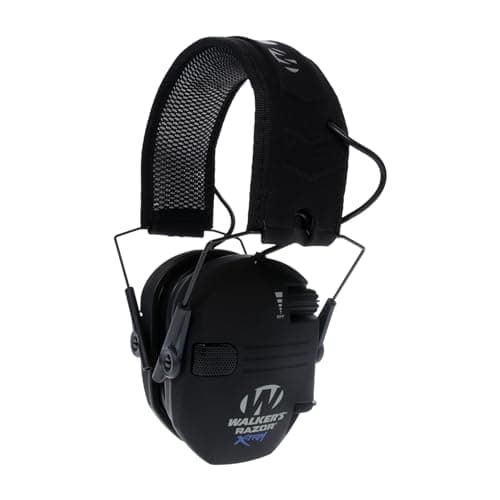 Walker's Razor X-TRM Walker's calls it an "Ultra low-profile design", which is the spec that matters when a stock comb rides up your cheek toward the cup. NRR 21, with amplification so you still hear the puller. | Best for a shotgun mountNRR 21 | 6.2/10Researched | $58.59Amazon #ad · Disclosure |
| 2 | 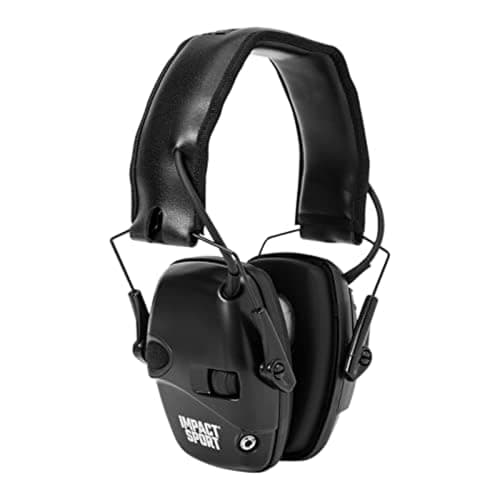 Howard Leight Impact Sport The low-profile cup clears a shotgun stock, NRR 22 is published, and the microphones let you hear a station call and a range officer without lifting a cup. | Best first electronic muff for claysNRR 22 | 7.2/10Researched | $60.00Amazon #ad · Disclosure |
| 3 | 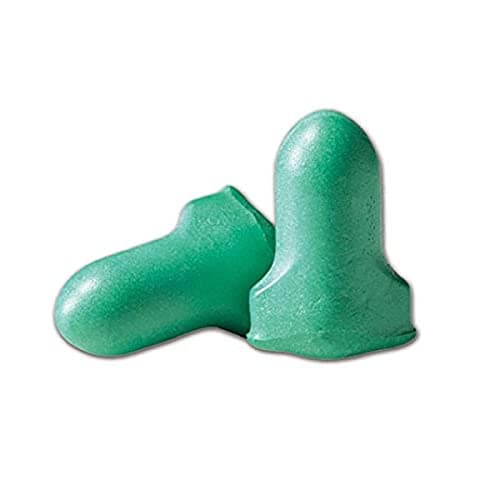 Howard Leight MAX-1 NRR 33 and nothing on your head at all, so a stock cannot break a seal that sits inside your ear canal. The honest answer for a long day of trap. | Highest published rating hereNRR 33 | 7.1/10Researched | $39.89Amazon #ad · Disclosure |
| 4 | 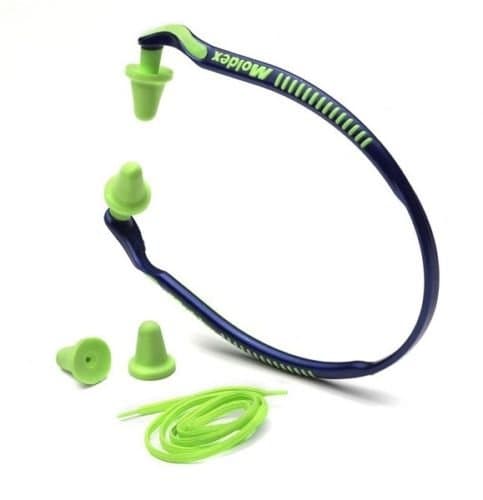 Moldex Jazz Band 6506 A banded pod at NRR 25 that hangs around your neck between stands and goes back in with one hand, which is how a sporting clays course actually works. | Best for in and out between stationsNRR 25 | 6.1/10Researched | $33.43Amazon #ad · Disclosure |
| 5 | 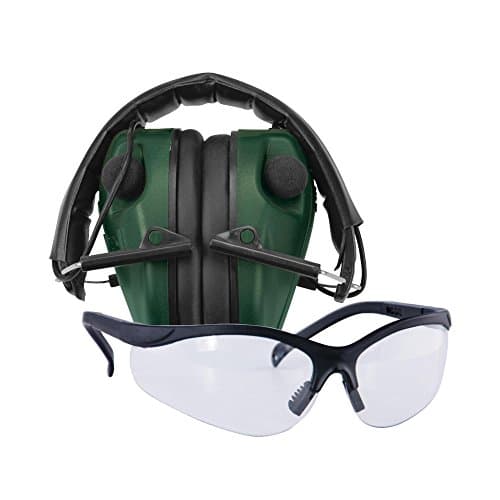 Caldwell E-Max Low Profile Another slim electronic cup at NRR 23 if the Walker's and the Howard Leight do not suit your head; batteries are not included with it. | Best low-profile alternativeNRR 23 | 6.2/10Researched | $15.99Amazon #ad · Disclosure |
#ad · Prices come live from Amazon, last checked November 3, 2026. Scores are ours, built from published specs and manuals, not hands-on tests. Photos come from the product's own Amazon listing. Tap a row for the full write-up.
Why shotguns need different ear pro
Almost everything written about shooting ear protection assumes a pistol or a rifle. With a pistol your head is upright and nothing touches it. With a rifle your cheek meets a stock, but you have time to settle in and the gun stays where you put it.
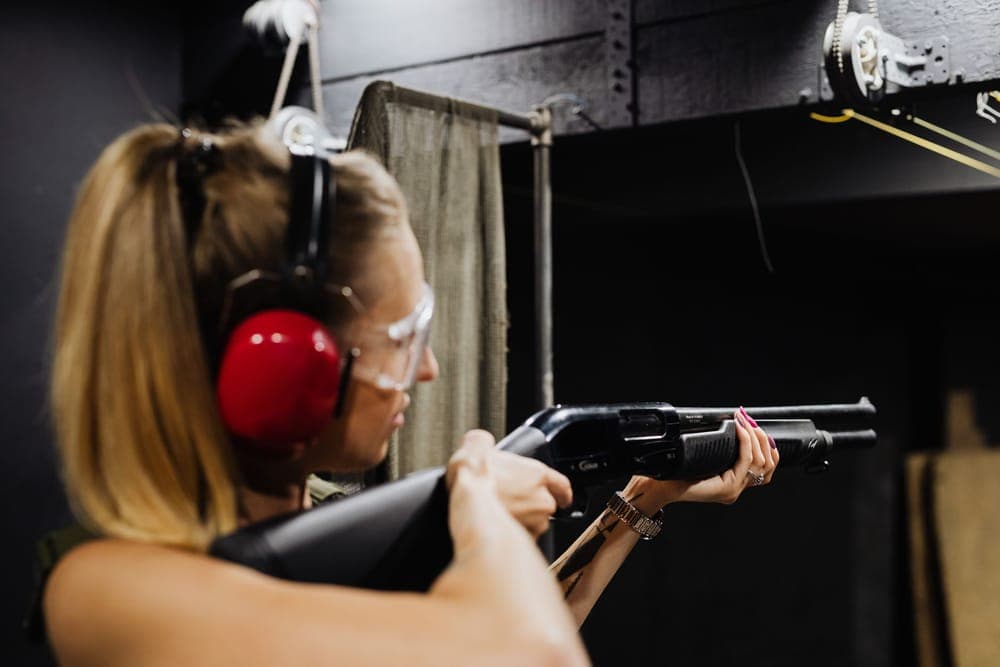
A shotgun is different in a way that matters for hearing protection and that almost nobody says out loud: you mount it fast, you mount it repeatedly, and the comb of the stock sweeps up along your cheek on the way to your shoulder. If there is a thick earmuff cup in that path, one of two things happens. Either the stock catches the bottom of the cup and shifts it off its seal, or you learn to drop your head to miss the cup, which wrecks your gun fit and your shooting.
That is the whole reason this page exists as its own list. The highest-rated muffs on the market are the thickest ones, and on a shotgun the thickest ones are the worst ones. A protector lifted a few millimeters off your skull is not delivering what its label says. So the ranking here starts with clearance and only then asks about the rating.
Bench & Berm does not test gear. Every figure below is published by the maker or by a federal hearing researcher, and every one is linked in Sources.
How we picked
- A published NRR, no exceptions. If a maker will not print a Noise Reduction Rating, the product is not on this list. Our NRR vs SNR page explains why a European SNR figure is not a substitute.
- Clearance for a stock. Either the maker publishes a low-profile or slim cup, or the product is not a cup at all.
- You can still hear a call. On a trap line or a clays course somebody says "pull" and somebody says "cease fire". Electronics or a quick in-and-out band both solve that.
- Nothing invented. Where a maker does not publish a figure, we say so rather than filling the gap.
The clearance problem
Makers are inconsistent about publishing cup depth, so the honest way to compare is by the words they use for the profile. Walker's describes the Razor X-TRM as an "ultra low-profile design", which is the slimmest wording any maker on our list uses, and pairs it with NRR 21. Howard Leight's Impact Sport uses a low-profile cup at NRR 22. Caldwell's E-Max Low Profile sits in the same class at NRR 23.
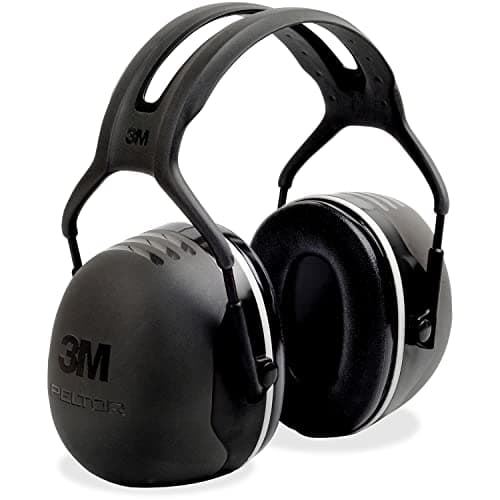
Compare that with the other end of the shelf. 3M publishes NRR 31 for the Peltor X5A, the highest-rated earmuff we list anywhere on this site, and it earns that rating with a deep, heavy cup. It is an outstanding muff for a bench or an indoor pistol bay, and we recommend it on our best passive earmuffs page. On a shotgun it is the wrong shape, and that is not a criticism of the product.
How loud a shotgun actually is
You need a real number to judge whether NRR 21 is enough. The 2017 review by Meinke, Finan, Flamme, Murphy and colleagues at NIOSH, hosted by the CDC, puts shotguns at roughly 152 to 170 dB peak sound pressure level measured at the shooter's ear. NIOSH's own science blog describes firearms training noise as "often reaching 160-170 dB peak sound pressure levels".
Those are peaks from a single impulse, not an eight-hour average, and no commercially sold hearing protector brings a 165 dB impulse down to the level of conversation. What ear protection does is move you out of the worst of it. Our how loud is a gunshot page has the published figures by firearm type, and what NRR do I need for shooting works through the federal arithmetic rather than guessing at it.
The practical conclusion for clay shooting: wear the best-rated thing that genuinely stays sealed while you mount the gun, and do not trade a real seal for a bigger printed number.
Hearing the station call
Trap, skeet and sporting clays are social, verbal disciplines. Somebody calls for the bird, a scorer reads out hits, a squad rotates on command and a range officer stops the line. Passive muffs at NRR 30-plus make all of that hard, and the usual response is the worst possible one: lifting a cup to hear, which is exactly when the next shooter fires.
Two honest fixes. Electronic muffs with microphones, which is what the Walker's, Howard Leight and Caldwell picks above do, amplifying ordinary speech while clamping down on the shot. Or a banded canal cap like the Moldex Jazz Band, which you can pull out and drop against your chest between stands and push back in with one hand, with nothing to take off your head and nothing to lose in the grass. Our how electronic earmuffs work page explains what the circuit does and does not do, and earplugs vs canal caps covers what the band costs you in rating.
The left-ear problem
ASHA's guidance on recreational firearm noise notes that for right-handed shooters firing rifles and shotguns it is typically the left ear that takes more hearing loss, because the muzzle blast arrives from the open side while the right ear sits partly shaded by the gun and the head. Shotgun shooters, who shoot the same side thousands of times a season, are precisely the population this applies to.
There is no product answer to that. There is a habit answer: do not let the exposed ear be the one with the broken seal, check both cups after every mount until it is automatic, and treat a consistently good rating as worth more to you than it is to a casual pistol shooter.
Indoors, and when to double up
Most clay shooting happens outdoors, where the blast leaves rather than bouncing back at you. If you shoot a shotgun indoors, in a bay or a covered patterning stall, everything gets worse: our indoor range ear protection page covers that case, and the answer there is to wear plugs and muffs together.
Doubling up is also the move on a busy trap line where several squads fire at once. It does not add the two ratings together, and our double hearing protection page shows the arithmetic OSHA actually uses. With a shotgun, doubling up has one extra complication worth planning for: plugs under a low-profile electronic muff still work, but plugs under a deep passive muff reintroduce the clearance problem you just solved.
Which one for which shooter
- First season of clays, outdoors: Walker's Razor X-TRM. Slimmest published profile here, amplification for the station call.
- You want the widely stocked muff: Howard Leight Impact Sport. NRR 22, low-profile cup, and the muff our main ear pro roundup leads with.
- A long day of trap and you want maximum rating: Howard Leight MAX-1 foam at NRR 33. Learn the insertion properly first: how to wear foam earplugs.
- Sporting clays, walking a course, in and out all morning: Moldex Jazz Band.
- The low-profile muffs do not fit your head: Caldwell E-Max Low Profile, and buy the batteries with it.
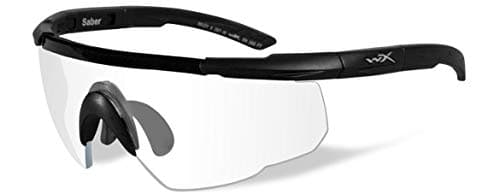
- You also wear glasses: the temple arm matters as much as the cup. See ear protection with glasses, and for the clay sports specifically, shooting glasses for sporting clays.
In detail
The picks, in full
Rank 1
Best for a shotgun mount
Walker's Razor X-TRM
Walker's calls it an "Ultra low-profile design", which is the spec that matters when a stock comb rides up your cheek toward the cup. NRR 21, with amplification so you still hear the puller.
Published specsResearched · every value sourced
| NRR | 21 dB |
|---|---|
| Batteries | 2 x AAA (included) |
| Cup profile | "Ultra low-profile design"Maker's claim |
| Battery life | Not stated on Walker's page |
| Bluetooth | Not mentioned on Walker's page |
How the 6.2 score breaks down
- Published NRR (30%)
- 5.5
- Fit with glasses & cup profile (20%)
- 8.5
- Electronics: amplification & shut-off (20%)
- 6
- Power: battery & auto-off (15%)
- 5
- Comfort & adjustment (15%)
- 6
What the specs support
- The only muff here Walker's describes as "ultra low-profile"
- A lower cup leaves more room for the stock when you shoulder a rifle or shotgun
- Both AAA batteries come in the box
Where it falls short
- NRR 21 is the lowest of the electronic muffs we list
- No battery life or auto shut-off time is published by Walker's
Skip it if…
…most of your shooting is handguns at an indoor range; the ultra-low cup matters less there, and NRR 21 is the least protection of any electronic muff on our list.
#ad · Price as of November 3, 2026 · How we make money for the link to Walker's Razor X-TRM
Rank 2
Best first electronic muff for clays
Howard Leight Impact Sport
The low-profile cup clears a shotgun stock, NRR 22 is published, and the microphones let you hear a station call and a range officer without lifting a cup.
Published specsResearched · every value sourced
| NRR | 22 dB |
|---|---|
| Batteries | 2 x AAA |
| Battery life | About 350 hoursMaker's claim |
| Auto shut-off | After 4 hours |
| Bluetooth | No (Howard Leight sells Bluetooth versions as separate products) |
| Cup profile | Slim earcup; Howard Leight says its Air Flow Control design ensures your firearm stock has clearance while shootingMaker's claim |
| Sizing | Medium/Large |
How the 7.2 score breaks down
- Published NRR (30%)
- 6
- Fit with glasses & cup profile (20%)
- 8.5
- Electronics: amplification & shut-off (20%)
- 7
- Power: battery & auto-off (15%)
- 9
- Comfort & adjustment (15%)
- 6.5
What the specs support
- Shuts itself off after 4 hours, so a muff left on in the range bag doesn't flatten the batteries
- Howard Leight quotes about 350 hours from two AAA batteries
- Slim earcup the maker says leaves your firearm stock clearance when you shoulder a long gun
Where it falls short
- NRR 22 is 8 dB below Howard Leight's own Impact Pro (NRR 30)
- No Bluetooth on this version; Bluetooth models are sold separately
- Listed in Medium/Large; smaller heads should look at the Youth/Adult Small version
Skip it if…
…you shoot mostly at an indoor range and want the most protection a muff can give on its own; NRR 22 is on the low side, so pair it with foam plugs or look at the NRR 30 Impact Pro.
#ad · Price as of November 3, 2026 · How we make money for the link to Howard Leight Impact Sport
Rank 3
Highest published rating here
Howard Leight MAX-1
NRR 33 and nothing on your head at all, so a stock cannot break a seal that sits inside your ear canal. The honest answer for a long day of trap.
Published specsResearched · every value sourced
| NRR | 33 dB |
|---|---|
| Type | Disposable foam, uncorded |
| Pack contents | 200 pairs |
| Model | MAX-1 (the listing shows model MXM-1) |
How the 7.1 score breaks down
- Published NRR (40%)
- 9.5
- Reusability (20%)
- 3
- Fit range & sizes (20%)
- 5
- Works under muffs (20%)
- 8.5
What the specs support
- NRR 33, the highest rating of any plug or muff we cover
- 200 pairs, enough to keep spares in the range bag and hand a pair to a friend
- Foam plugs sit inside the ear canal, so they're an easy first layer under earmuffs
Where it falls short
- The 33 is a lab rating; real protection depends on rolling and seating each plug correctly
- Specs come from Honeywell's licensed store, not a Howard Leight product page; retail listings may now say "Howard Leight by PIP"
- Single-use foam
Skip it if…
…you want plugs that stay together on a cord between strings; the MAX-1 is uncorded, so pick corded Laser Lite or Caldwell's corded Range Plugs.
#ad · Price as of November 3, 2026 · How we make money for the link to Howard Leight MAX-1
Rank 4
Best for in and out between stations
Moldex Jazz Band 6506
A banded pod at NRR 25 that hangs around your neck between stands and goes back in with one hand, which is how a sporting clays course actually works.
Published specsResearched · every value sourced
How the 6.1 score breaks down
- Published NRR (40%)
- 7
- Reusability (20%)
- 8.5
- Fit range & sizes (20%)
- 5
- Works under muffs (20%)
- 3
What the specs support
- Tapered pods that Moldex says conform to the canal, which seats deeper than a flat cap
- Moldex says it reduced band pressure, the specific thing that makes canal caps uncomfortable
- A pair of replacement pods comes in the box
- Moldex states it is made in America and PVC-free
Where it falls short
- NRR 25, the same as the Howard Leight and 8 dB under a MAX-1 foam plug
- Sold in boxes of 10 bands, which is more than a single shooter needs
- Moldex describes it as being for intermittent noise, which is a fair description of its limits
- Still a band across the back of your head, so it fights an earmuff headband
Skip it if…
…you want one pair rather than ten; this is sold as a 10-band box, so a single pair of reusable plugs such as the Decibullz is the better buy for one person.
#ad · Price as of November 3, 2026 · How we make money for the link to Moldex Jazz Band 6506
Rank 5
Best low-profile alternative
Caldwell E-Max Low Profile
Another slim electronic cup at NRR 23 if the Walker's and the Howard Leight do not suit your head; batteries are not included with it.
Published specsResearched · every value sourced
| NRR | 23 dB |
|---|---|
| Batteries | 2 x AAA (not included) |
| Cup profile | "Low profile earcup that's ideal for shotgun shooters and action shooters"Maker's claim |
| Battery life | Not stated on Caldwell's page |
| Bluetooth | No |
How the 6.2 score breaks down
- Published NRR (30%)
- 6.5
- Fit with glasses & cup profile (20%)
- 7.5
- Electronics: amplification & shut-off (20%)
- 6
- Power: battery & auto-off (15%)
- 4.5
- Comfort & adjustment (15%)
- 6
What the specs support
- Caldwell says the low-profile earcup is "ideal for shotgun shooters and action shooters"
- NRR 23, one point above the Howard Leight Impact Sport
- No Bluetooth, so there's nothing to pair
Where it falls short
- Batteries aren't included
- No battery life or auto shut-off time is published by Caldwell
Skip it if…
…you want a battery life you can plan around; Caldwell doesn't publish one, while Howard Leight quotes about 350 hours for the Impact Sport and Impact Pro.
#ad · Price as of November 3, 2026 · How we make money for the link to Caldwell E-Max Low Profile
What to look for in shotgun ear protection
- A published NRR on the maker's own page. Not an SNR, not "blocks harmful noise", not a number from a retailer's bullet list.
- Low-profile or slim wording from the maker, or no cup at all. This is the shotgun-specific test, and it is the one most roundups skip.
- Something that handles speech. Microphones, or a band you can work with one hand between stands.
- A headband you can set and forget. A muff you re-adjust after every mount will eventually be worn wrong.
- Batteries you can buy anywhere. Two of the electronic picks here run on AAA cells; one includes them and one does not.
- Replaceable pads or pods. A compressed seal is a leaking seal. See when to replace hearing protection.
- Fit with your glasses. A thick temple arm under a cup breaks the same seal the stock was going to break.
Beginner mistakes
- Buying for the biggest NRR. On a shotgun the deepest cup is the most likely to be knocked loose, and the number on the box assumes it is not.
- Dropping your head to clear the cup. You will shoot worse and you will blame the gun.
- Lifting a cup to hear the score. Buy electronics or a band instead.
- Assuming outdoors means you can skip protection. Shotguns are 152 to 170 dB at the ear, outdoors included.
- Forgetting eye protection in the same purchase. NSSF's own clay-sports guidance treats lenses as more than just protection. Our ear and eye combos page covers buying both at once.
How we scored this
Every pick, scored on numbers you can check
Every pick here is labeled Researched: we compiled each maker's published specs (the EPA-labeled NRR on hearing protection, the Z87+ mark on glasses), read the manuals, checked the standards behind them, and scored everything on a public rubric. Every figure links to where it came from, and marketing claims are labeled “maker's claim,” so you can see exactly why a pick ranks where it does.
Scores are editorial judgments built from that documented research. Commissions never set a score or decide a pick. The rubric and its weights are published.
Questions
Common questions
What NRR do I need for shotgun shooting?
Are earplugs or earmuffs better for trap and skeet?
Will a shotgun stock knock my earmuffs off?
Do I need electronic ear protection for clay shooting?
Should I double up for shotgun shooting?
Where this comes from
Sources
- Meinke, Finan, Flamme, Murphy et al. (NIOSH), peak levels from recreational firearms, 2017
- NIOSH Science Blog, firearms training noise, 2017
- ASHA, Recreational Firearm Noise Exposure
- Walker's, Razor X-TRM product page, accessed 2026-10-17
- Howard Leight, Impact Sport product page, accessed 2026-10-17
- Caldwell, E-Max Low Profile product page, accessed 2026-10-17
- Honeywell Store, Howard Leight MAX-1 earplugs listing, accessed 2026-10-17
- Moldex, Jazz Band 6506 product page, accessed 2026-10-17
- 3M, PELTOR X Series passive earmuff technical data sheet
- NSSF, Shooting Glasses for the Clay Sports
Specs come from each maker's own pages and data sheets (linked on every product); ratings like NRR and Z87+ are explained from the standards and agencies behind them. Prices are set by Amazon and change often, so the buy button always takes you to the current one. Where a figure isn't published, we say so. Read the full method.