Quick picks
The picks at a glance
| # | Product | Best for | Score | Price |
|---|---|---|---|---|
| 1 | 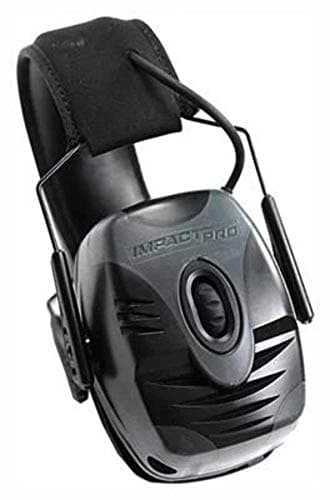 Howard Leight Impact Pro A full-size cup at NRR 30, the highest electronic rating we cover. A deep cup has room for a larger ear, and the headband is a long wire band rather than a short molded one. | Best electronic muff for a larger headNRR 30 | 7.4/10Researched | $101.59Amazon #ad · Disclosure |
| 2 | 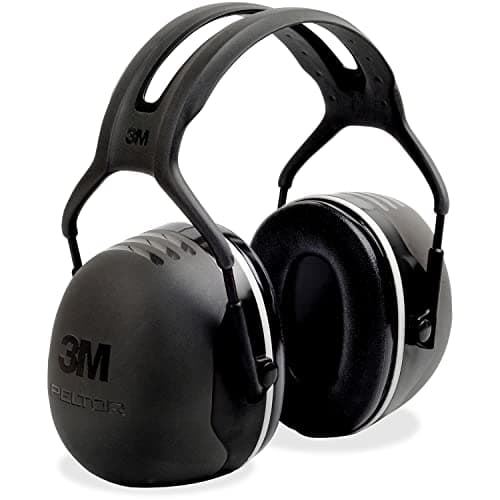 3M Peltor X5A NRR 31 on 3M's own X Series data sheet, in a headband design. 3M also publishes the warning that matters here: anything between cushion and head lowers the reduction you get. | Best passive muff for a larger headNRR 31 | 6.7/10Researched | $47.27Amazon #ad · Disclosure |
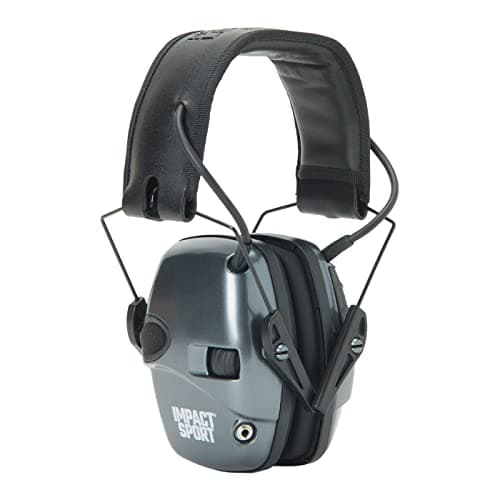
| 3 | 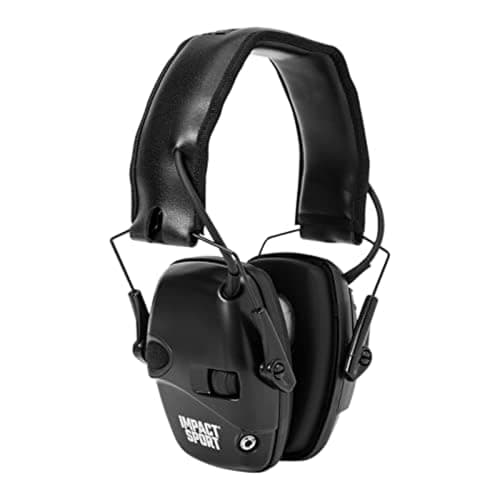 Howard Leight Impact Sport Howard Leight lists this muff as Medium/Large, which is the only published sizing claim on this page. It also notes a separate Youth/Adult Small version, so the label means something. | The one that publishes a sizeNRR 22 | 7.2/10Researched | $60.00Amazon #ad · Disclosure |
| 4 | 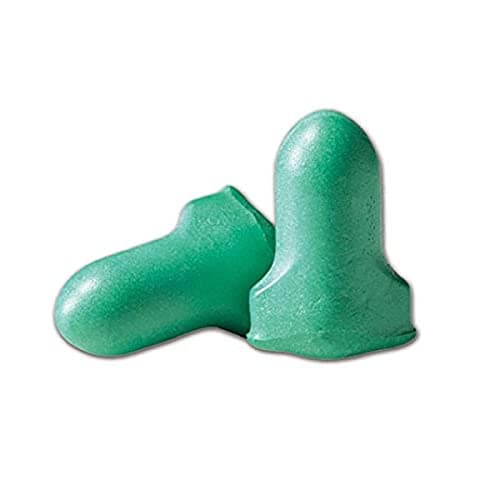 Howard Leight MAX-1 NRR 33 pre-shaped foam, the highest figure on this site. Plugs sit in the canal, so headband travel and clamping force stop being your problem. | The fix that ignores your head entirelyNRR 33 | 7.1/10Researched | $39.89Amazon #ad · Disclosure |
| 5 | 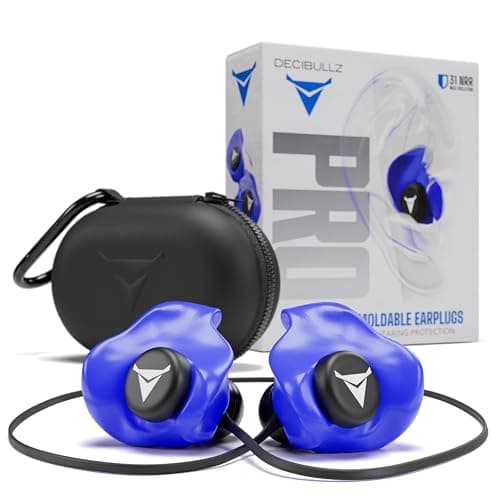 Decibullz Custom Molded Earplugs NRR 31, heat-molded to your own ear once and reused, with three silicone tip sizes plus a foam tip in the box. | Best reusable plug if muffs never fitNRR 31 | 8.3/10Researched | $39.99Amazon #ad · Disclosure |
#ad · Prices come live from Amazon, last checked November 3, 2026. Scores are ours, built from published specs and manuals, not hands-on tests. Photos come from the product's own Amazon listing. Tap a row for the full write-up.
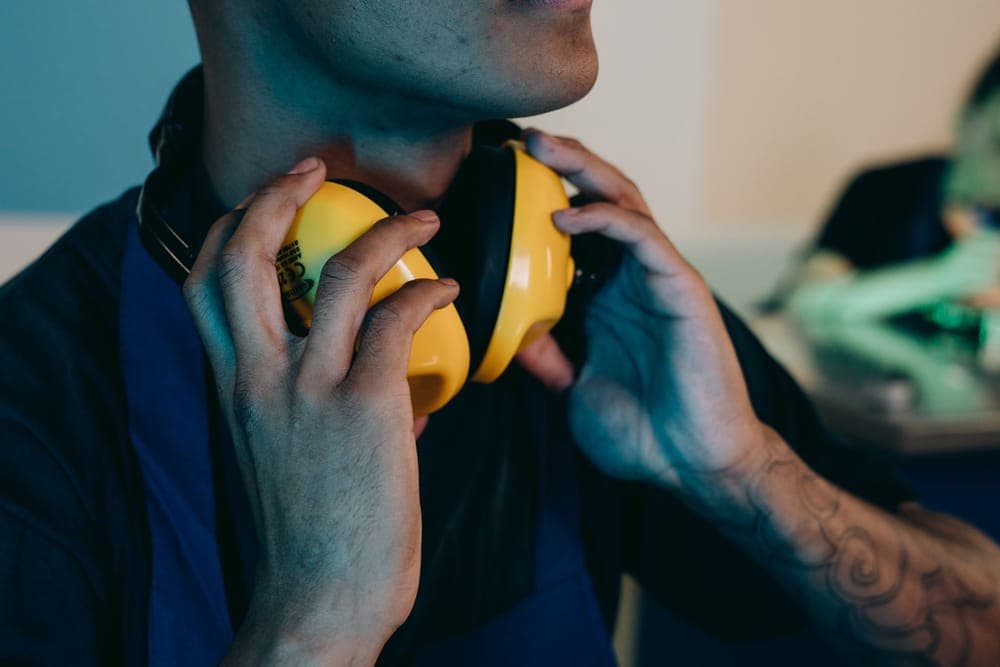
If you have a large head, you already know the symptom: the headband bottoms out at its longest setting, the cushions sit on the edge of your ears rather than around them, and the muffs feel like a clamp for the first hour and like a leak after that.
What you will not find is a spec that addresses it. We went through every maker page in our registry looking for a head circumference, a band length, a clamping force figure, anything measurable. There is almost nothing. So rather than invent a ranking out of marketing adjectives, this page tells you what is published, what you can judge yourself, and what to buy instead if the answer is still no.
The honest answer first
That is worth saying plainly, because the alternative is a page full of confident fit claims nobody can support. What follows is ranked on what is published plus the two things you can observe without a spec sheet: cup depth and headband construction.
What makers actually publish
Three kinds of information exist, in descending order of usefulness:
- A size label. Only Howard Leight, and only on the Impact Sport family. The existence of a separate Youth/Adult Small version is what makes "Medium/Large" meaningful rather than decorative.
- A style descriptor. "Headband earmuff" is how 3M describes the X5A in its X Series data sheet. That rules out the behind-the-neck and cap-mount variants, which matters: a behind-the-neck band has far less travel.
- A warning about fit. 3M publishes the one that applies directly here: noise reduction "may be lower when eyeglasses, goggles or respirator straps are worn between the sealing surface of the earmuff cushions and the sides of the wearer's head". Replace "glasses arms" with "anything at all, including a gap" and you have the physics of a muff that does not fit.
What nobody publishes: cup interior dimensions, so you cannot check whether a larger ear fits inside the cushion rather than under it. That is the second half of the big-head problem and it is entirely undocumented.
How we picked
Bench & Berm does not test gear, so nothing here is a measurement of ours. Picks are researched from published maker information and scored on the rubrics published on how we pick: the electronic-muff and passive-muff rubrics for the muffs, the earplug rubric for the plugs. Every muff carries a maker-published US EPA NRR, which is the gate.
On top of that, the order here reflects three fit-relevant judgments, and we are labeling them as judgments:
- Full-size cups over slim ones. The reverse of our advice for rifle shooters. A slim cup is shallow, and a shallow cup presses on the ear of anyone whose ears are not small. The Impact Pro and X5A are both full-size designs.
- Wire headbands over molded plastic. A sliding wire yoke has visibly more travel and is easier to adjust than a one-piece plastic band.
- A plug route included on purpose. Because for a meaningful number of people the answer really is that muffs are the wrong product.
Side by side
The three muffs on this page as their makers publish them. The sizing row is the one that matters, and it is mostly empty, which is the finding.
| Published spec | Howard Leight Impact Pro | 3M Peltor X5A | Howard Leight Impact Sport |
|---|---|---|---|
| NRR | 30 dB | 31 dB (X5A row of 3M's NRR table) | 22 dB |
| Sizing | Not published | Not published | Medium/Large |
| Cup profile | Not stated by Howard Leight; the page says rubberized pressure points prevent gunstock scratching (maker's claim) | Not published | Slim earcup; Howard Leight says its Air Flow Control design ensures your firearm stock has clearance while shooting (maker's claim) |
| Batteries | 2 x AAA (included) | Not published | 2 x AAA |
| Score | 7.4/10 | 6.7/10 | 7.2/10 |
How to tell your muffs are too small
Four checks, none of which needs a measurement. Do them before you leave for the range, not at the bench.
- Headband travel. Extend the band to its maximum and put the muffs on. If you are at the last setting and they still feel tight, you have no margin, and margin is what lets you wear them over a cap or with glasses.
- Ear inside the cushion. Reach under a cup with a finger. The cushion should ring your ear, not sit on top of it. A cushion resting on the rim of your ear is uncomfortable within twenty minutes and sealing against cartilage instead of skull.
- The talking test. Say a few words. Your voice should sound boomy and closed-in. If it sounds open and normal, there is a leak, and on a large head the leak is usually at the bottom rear of the cushion where the band has run out of reach.
- The top of your head. If the headband pad is digging in hard enough to be a pressure point within an hour, the band is short and all its travel has gone into clamping.
Headband style matters more than cup size
Two muffs with identical cups and different bands fit completely differently, and this is the single most actionable thing on the page.
A sliding wire yoke, where the cups ride on two metal wires that extend out of the band, has the most travel of any common design and distributes pressure over a wider arc. A one-piece molded plastic band with detents has less travel and a fixed curve, which is the design most budget muffs use. A behind-the-neck band has the least adjustment of all and is the worst choice here despite feeling roomier at first.
You can see which is which in any product photograph, and it will tell you more than any marketing copy on the page. Caldwell sells both over-the-head and behind-the-neck E-Max Low Profile muffs at different ratings, which is a reminder to check which variant a listing is actually selling.
Why plugs are the real answer
If you have tried three sets of muffs and none of them worked, stop buying muffs. Earplugs sit inside the ear canal, so headband travel, clamping force, cushion diameter and cup depth all become irrelevant at once. There is no large-head penalty on a plug.
They also rate higher. The Howard Leight MAX-1 is NRR 33, higher than any muff on this site, and comes 200 pairs to a pack. If you want something you keep, the Decibullz Custom Molded set is NRR 31, heat-formed to your own ear once, with three silicone tip sizes plus a foam tip included.
The one thing plugs ask of you is technique. NIOSH publishes the method as roll, pull and hold, and a plug inserted without the pull step performs like a cheaper plug. Our how to wear foam earplugs page covers it, and earplugs vs earmuffs argues the whole trade, including the thing plugs cost you: you cannot flip a plug up to hear the range officer.
Hats, hair and glasses
On a large head every one of these costs you more, because you have no headband travel left to absorb it.
- Baseball caps. Wear the brim forward and keep the band of the cap out from under the cushions. A cap band under a muff cushion is a direct leak, and on a head with no band margin it is the leak you will not be able to adjust away.
- Glasses arms. 3M publishes the warning directly: anything between the cushion and your head lowers the reduction. Thin, flat temple arms cost least. Our ear protection with glasses page covers it, and glasses to wear under earmuffs ranks pairs on exactly this.
- Hair. Thick hair under the cushions is the same leak. Push it clear rather than pulling the muffs tighter.
- Replacement cushions. A thicker aftermarket gel cushion kit effectively increases cup depth and can rescue a muff whose cups press on your ears, though it costs you a little band travel.
If you are shopping for the opposite problem, our best shooting earmuffs for women page covers small-head fit with the same honesty about what is and is not published.
In detail
The picks, in full
Rank 1
Best electronic muff for a larger head
Howard Leight Impact Pro
A full-size cup at NRR 30, the highest electronic rating we cover. A deep cup has room for a larger ear, and the headband is a long wire band rather than a short molded one.
Published specsResearched · every value sourced
| NRR | 30 dB |
|---|---|
| Batteries | 2 x AAA (included) |
| Battery life | About 350 hoursMaker's claim |
| Auto shut-off | After 4 hours |
| Bluetooth | No |
| Cup profile | Not stated by Howard Leight; the page says rubberized pressure points prevent gunstock scratchingMaker's claim |
How the 7.4 score breaks down
- Published NRR (30%)
- 8.5
- Fit with glasses & cup profile (20%)
- 6
- Electronics: amplification & shut-off (20%)
- 7
- Power: battery & auto-off (15%)
- 9
- Comfort & adjustment (15%)
- 6
What the specs support
- NRR 30: the highest rating of any electronic muff in our picks, and 8 dB more than the Impact Sport
- Both AAA batteries come in the box
- 4-hour auto shut-off and a quoted 350-hour battery life, same as the Impact Sport
- Rubberized pressure points that Howard Leight says prevent gunstock scratching
Where it falls short
- Howard Leight doesn't describe a slim or low-profile cup for this model
- No Bluetooth
Skip it if…
…you mostly shoot a rifle or shotgun and want a cup the maker describes as slim or low-profile; Howard Leight doesn't state one for the Impact Pro, while the Impact Sport and Walker's Razor muffs do.
#ad · Price as of November 3, 2026 · How we make money for the link to Howard Leight Impact Pro
Rank 2
Best passive muff for a larger head
3M Peltor X5A
NRR 31 on 3M's own X Series data sheet, in a headband design. 3M also publishes the warning that matters here: anything between cushion and head lowers the reduction you get.
Published specsResearched · every value sourced
How the 6.7 score breaks down
- Published NRR (40%)
- 9
- Fit with glasses & cup profile (25%)
- 5
- Folding & portability (15%)
- 4
- Comfort & adjustment (20%)
- 6
What the specs support
- NRR 31, the highest of any standalone muff we cover
- 3M's own data sheet spells out how fit and glasses can lower real-world protection
- Passive headband design: no batteries or electronics to manage
Where it falls short
- The 31 is a lab rating; 3M says many users get less because of fit, and glasses under the cushions can lower it further
- No folding or slim-cup design is described in the 3M specs we could source
- Passive, so there's no amplification to help you hear range commands
Skip it if…
…you want one muff that folds into a small range bag; the 3M specs we could source don't describe a folding X5A, while Howard Leight's Leightning L0F collapses to four inches.
#ad · Price as of November 3, 2026 · How we make money for the link to 3M Peltor X5A
Rank 3
The one that publishes a size
Howard Leight Impact Sport
Howard Leight lists this muff as Medium/Large, which is the only published sizing claim on this page. It also notes a separate Youth/Adult Small version, so the label means something.
Published specsResearched · every value sourced
| NRR | 22 dB |
|---|---|
| Batteries | 2 x AAA |
| Battery life | About 350 hoursMaker's claim |
| Auto shut-off | After 4 hours |
| Bluetooth | No (Howard Leight sells Bluetooth versions as separate products) |
| Cup profile | Slim earcup; Howard Leight says its Air Flow Control design ensures your firearm stock has clearance while shootingMaker's claim |
| Sizing | Medium/Large |
How the 7.2 score breaks down
- Published NRR (30%)
- 6
- Fit with glasses & cup profile (20%)
- 8.5
- Electronics: amplification & shut-off (20%)
- 7
- Power: battery & auto-off (15%)
- 9
- Comfort & adjustment (15%)
- 6.5
What the specs support
- Shuts itself off after 4 hours, so a muff left on in the range bag doesn't flatten the batteries
- Howard Leight quotes about 350 hours from two AAA batteries
- Slim earcup the maker says leaves your firearm stock clearance when you shoulder a long gun
Where it falls short
- NRR 22 is 8 dB below Howard Leight's own Impact Pro (NRR 30)
- No Bluetooth on this version; Bluetooth models are sold separately
- Listed in Medium/Large; smaller heads should look at the Youth/Adult Small version
Skip it if…
…you shoot mostly at an indoor range and want the most protection a muff can give on its own; NRR 22 is on the low side, so pair it with foam plugs or look at the NRR 30 Impact Pro.
#ad · Price as of November 3, 2026 · How we make money for the link to Howard Leight Impact Sport
Rank 4
The fix that ignores your head entirely
Howard Leight MAX-1
NRR 33 pre-shaped foam, the highest figure on this site. Plugs sit in the canal, so headband travel and clamping force stop being your problem.
Published specsResearched · every value sourced
| NRR | 33 dB |
|---|---|
| Type | Disposable foam, uncorded |
| Pack contents | 200 pairs |
| Model | MAX-1 (the listing shows model MXM-1) |
How the 7.1 score breaks down
- Published NRR (40%)
- 9.5
- Reusability (20%)
- 3
- Fit range & sizes (20%)
- 5
- Works under muffs (20%)
- 8.5
What the specs support
- NRR 33, the highest rating of any plug or muff we cover
- 200 pairs, enough to keep spares in the range bag and hand a pair to a friend
- Foam plugs sit inside the ear canal, so they're an easy first layer under earmuffs
Where it falls short
- The 33 is a lab rating; real protection depends on rolling and seating each plug correctly
- Specs come from Honeywell's licensed store, not a Howard Leight product page; retail listings may now say "Howard Leight by PIP"
- Single-use foam
Skip it if…
…you want plugs that stay together on a cord between strings; the MAX-1 is uncorded, so pick corded Laser Lite or Caldwell's corded Range Plugs.
#ad · Price as of November 3, 2026 · How we make money for the link to Howard Leight MAX-1
Rank 5
Best reusable plug if muffs never fit
Decibullz Custom Molded Earplugs
NRR 31, heat-molded to your own ear once and reused, with three silicone tip sizes plus a foam tip in the box.
Published specsResearched · every value sourced
How the 8.3 score breaks down
- Published NRR (40%)
- 9
- Reusability (20%)
- 9
- Fit range & sizes (20%)
- 8
- Works under muffs (20%)
- 6.5
What the specs support
- NRR 31, and Decibullz states it meets ANSI S3.19, the US test standard behind the NRR
- Custom-molded Thermo-fit earpieces you keep and reuse
- Three silicone tip sizes (S, M, L) plus a foam tip, so more ears can find a seal
- Carrying pouch included
Where it falls short
- We couldn't confirm which of the included tips the 31 NRR was measured with; use the one that seals best
- The earpieces are custom molded, so there's a fitting step that grab-and-go foam doesn't need
- Only one foam tip set (size M) is included
Skip it if…
…you need plugs for a group or a class; one custom-molded set fits one person, while a 200-pair pack of MAX-1 foam covers everyone.
#ad · Price as of November 3, 2026 · How we make money for the link to Decibullz Custom Molded Earplugs
What to look for
- A sliding wire yoke, visible in the photograph. The design with the most adjustment range, and the only one you can identify without a spec sheet.
- A full-size cup, not a slim one. Slim cups are shallow, and shallow cups press on larger ears. This is the one page on this site where we advise against the low-profile option.
- An over-the-head band, never behind-the-neck. Behind-the-neck designs have the least travel of all.
- A published size label if one exists. Howard Leight's Medium/Large is the only one on this page, and it means something because a Small version exists.
- Sold replacement cushion kits. A thicker cushion is the cheapest way to add effective cup depth.
- A returns policy you can use. Fit is the one thing no specification can tell you, and on this particular question the specifications barely exist.
Beginner mistakes
- Buying the slimmest muff on the shelf. Slim is for rifle stocks, not for heads. It is the wrong axis for this problem.
- Trusting a "fits all heads" claim. No maker publishes a circumference, so that phrase is backed by nothing.
- Forcing the band wider by hand. You will bend the yoke permanently and lose clamping force unevenly, which breaks the seal on one side.
- Leaving the cap band under the cushions. A guaranteed leak, and the one you have least room to correct.
- Deciding muffs are the only option. Plugs rate higher and have no fit penalty at all.
- Skipping plugs indoors because the muffs finally fit. Derate the rating and a centerfire pistol still clears 140 dB.
How we scored this
Every pick, scored on numbers you can check
Every pick here is labeled Researched: we compiled each maker's published specs (the EPA-labeled NRR on hearing protection, the Z87+ mark on glasses), read the manuals, checked the standards behind them, and scored everything on a public rubric. Every figure links to where it came from, and marketing claims are labeled “maker's claim,” so you can see exactly why a pick ranks where it does.
Scores are editorial judgments built from that documented research. Commissions never set a score or decide a pick. The rubric and its weights are published.
Questions
Common questions
What ear protection is best for a big head?
Do earmuff makers publish head sizes?
How do you know if earmuffs are too small for your head?
Are slim or low-profile earmuffs good for large heads?
Can you wear earplugs instead of earmuffs if muffs do not fit?
Will thicker replacement cushions help earmuffs fit a bigger head?
Where this comes from
Sources
- Howard Leight Shooting Sports, Impact Sport Electronic Earmuff product page (lists Medium/Large sizing), accessed 2026-10-10
- Howard Leight Shooting Sports, Impact Pro Electronic Earmuff product page, accessed 2026-10-10
- Howard Leight Shooting Sports, Leightning L3 Passive Earmuff product page, accessed 2026-10-10
- 3M, PELTOR X Series passive earmuff technical data sheet (official 3M PDF), accessed 2026-10-10
- HoneywellStore.com (licensed Honeywell store), Howard Leight MAX disposable foam earplugs (MAX-1) listing, accessed 2026-10-10
- Decibullz, Custom Molded Earplugs 31dB NRR product page, accessed 2026-10-10
- NIOSH, How to Wear Soft Foam Earplugs (Roll, Pull, Hold), accessed 2026-10-10
- OSHA, Appendix B to 29 CFR 1910.95, Methods for estimating hearing protector attenuation, accessed 2026-10-10
- Meinke DK, Finan DS, Flamme GA, Murphy WJ, et al., Prevention of Noise-Induced Hearing Loss from Recreational Firearms, Seminars in Hearing 2017 (CDC Stacks), accessed 2026-10-10
Specs come from each maker's own pages and data sheets (linked on every product); ratings like NRR and Z87+ are explained from the standards and agencies behind them. Prices are set by Amazon and change often, so the buy button always takes you to the current one. Where a figure isn't published, we say so. Read the full method.