Not medical advice. This page shares general guidance from the public-health sources linked in the text. If you're worried about your hearing or lead exposure, talk to a doctor.
The contenders
Side by side
- Stock photo
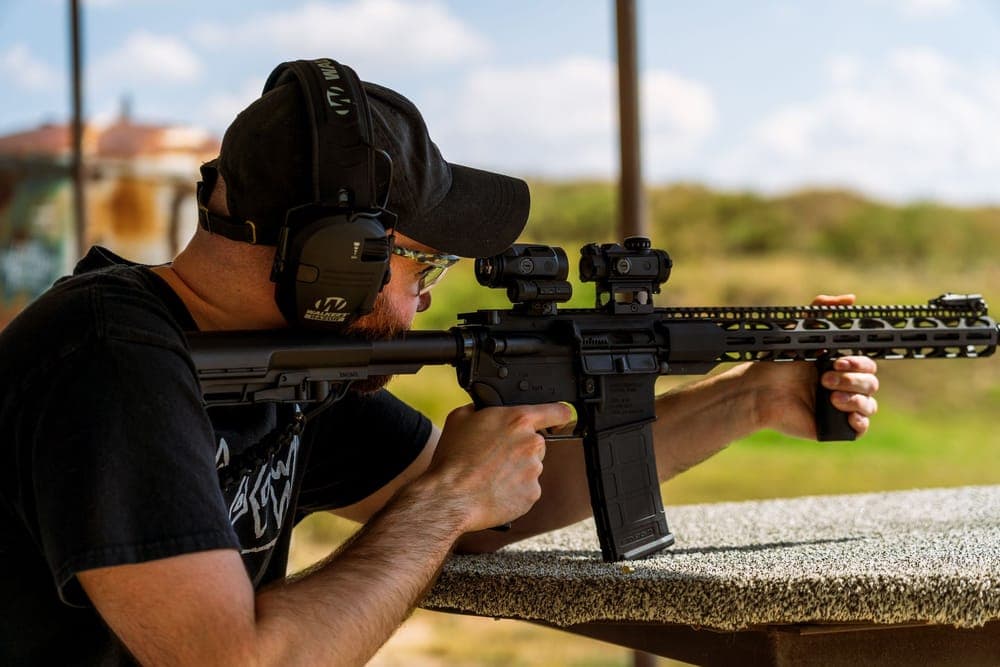
Indoor ear pro: NRR 30 electronic muff
Howard Leight Impact Pro
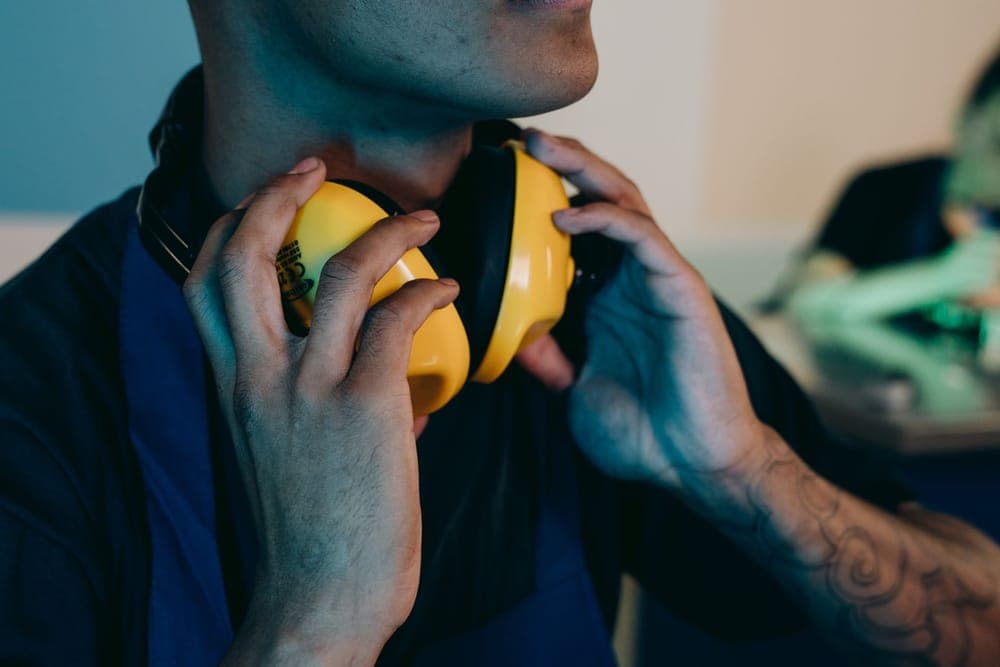
NRR 307.4/10The highest NRR of the electronic muffs we cover, so you still hear commands in a loud bay. Wear it over foam plugs indoors.
Check price · Amazon#ad · Price set by Amazon · How we make money for the link to Howard Leight Impact Pro
- Stock photo
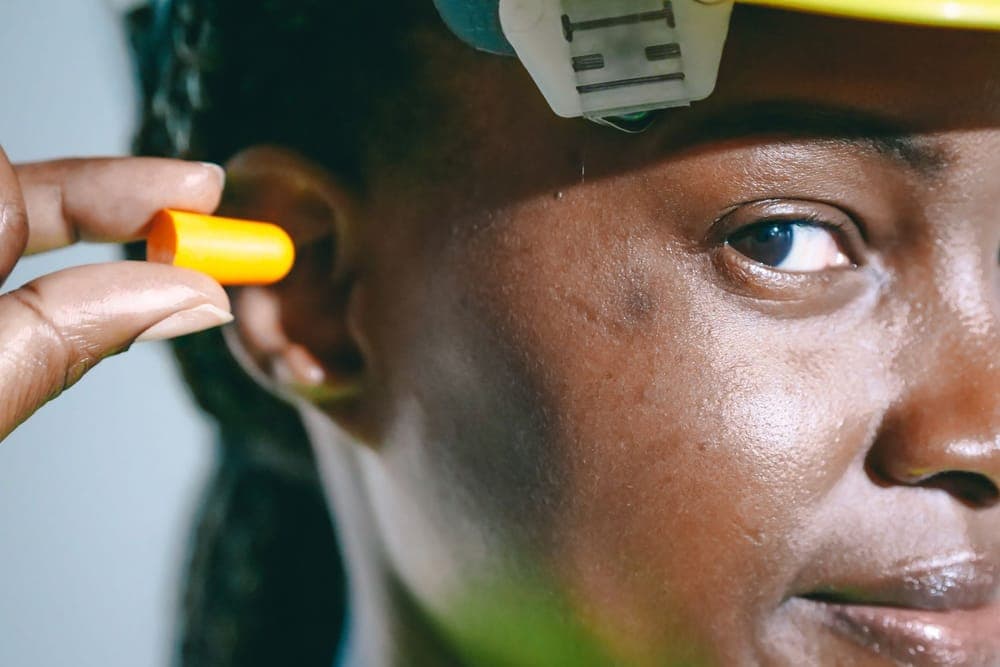
Indoor ear pro: the plugs underneath
Howard Leight MAX-1
NRR 337.1/10NRR 33 disposable foam plugs, the highest rating we cover. The first layer under your muffs at an indoor range.
Check price · Amazon#ad · Price set by Amazon · How we make money for the link to Howard Leight MAX-1
- Stock photo

Outdoor eye pro: clear or smoke gray
Wiley X Saber Advanced
Z87+6.7/10Wiley X lists ANSI Z87.1+ and MIL-PRF-32432A, with interchangeable lenses such as smoke gray and clear, so one frame covers bright sun and shade.
Check price · Amazon#ad · Price set by Amazon · How we make money for the link to Wiley X Saber Advanced
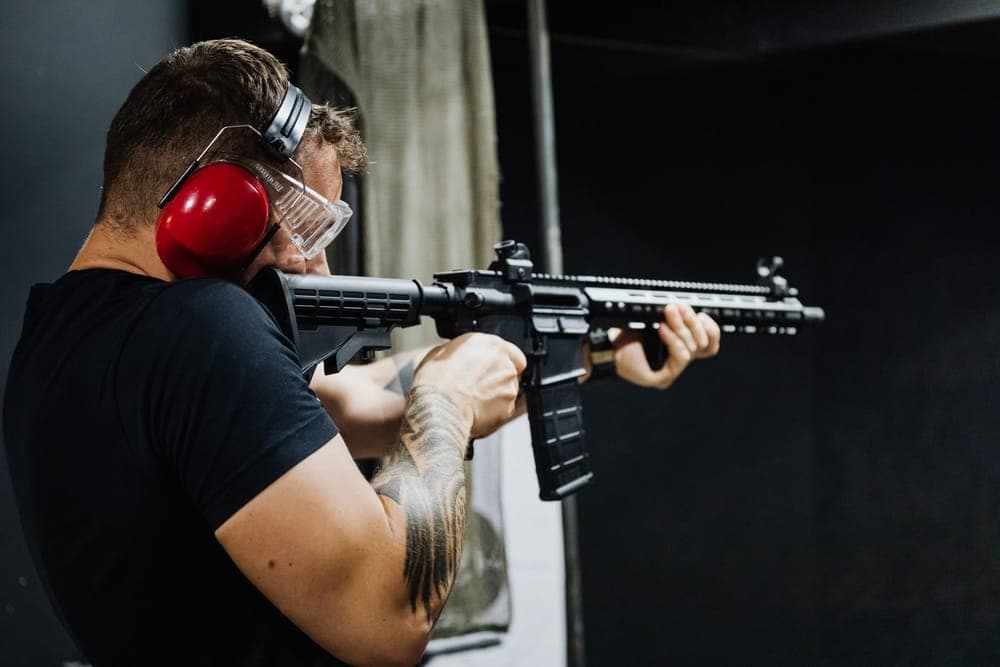
We haven't tested these products; the scores come from published specs and the rubrics on our how we pick page. The three picks aren't rivals: two cover the indoor noise problem together, and one covers the outdoor light problem.
Indoor vs outdoor shooting range at a glance
| Indoor range | Outdoor range | |
|---|---|---|
| Noise | Reflected off walls; ASHA advises double hearing protection | Still loud; protection needed for every shot, and doubling up still helps |
| Eye pro | Z87+ with clear lenses | Z87+ with a gray or smoke lens in bright sun |
| Targets | Ask what's allowed and how targets are hung | You may bring your own stand, stapler and targets; steel only if allowed |
| Lead | The focus of NIOSH's indoor-range guidance; ventilation matters | Targets and stands still collect lead residue, per Champion |
| Comfort | Dress codes for hot brass | Sun, heat, cold and wind; a brimmed cap and layers |
Noise: why indoors means doubling up
A gunshot is loud anywhere. What changes indoors is where the sound goes next. Researchers writing with NIOSH explain that "Shooting in an enclosed, reflective, reverberant environment (indoors or hunting blind) increases the hazard to hearing" (Meinke et al., 2017). An earlier NIOSH-authored article makes the same point: "In an indoor firing range, reflected sound (reverberation) also becomes an important factor" (Murphy, Byrne and Franks, 2007).
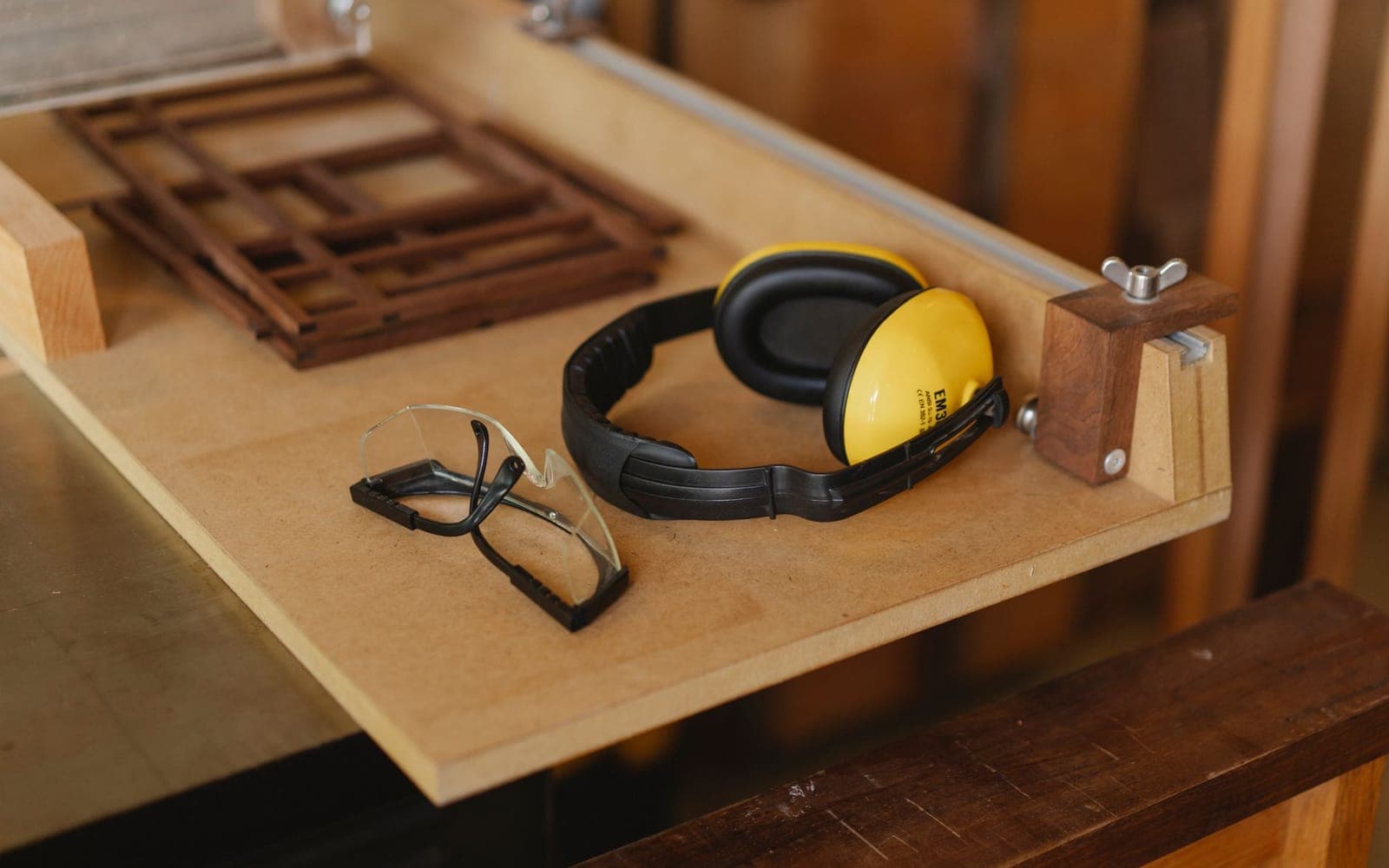
The advice that follows is consistent. ASHA's consumer guide says: "If you plan to shoot at an indoor facility, choose one that has been acoustically treated for reverberation (i.e., sound bouncing off the walls) and wear double hearing protection" ( ASHA). NIOSH's alert on indoor ranges, written for range workers and people who shoot for their jobs, recommends dual protection whenever the range is in use, and for people who need to communicate, "electronic level-limiting or sound restoration earmuffs with passive earplugs" ( NIOSH Alert 2009-136). That's exactly the pairing in our indoor picks: foam plugs under an electronic muff.
How much does the second layer add? It depends on who's counting. OSHA's workplace method for estimating exposure credits dual protection with only 5 dB more than the better protector alone: "using such double protection will add only 5 dB of attenuation" ( OSHA Technical Manual). NIOSH's measurements for its indoor-range alert found a mean peak reduction of 26 dB for earmuffs and 44 dB for earmuffs and earplugs combined. Different methods, different numbers, the same conclusion: two layers beat one. Our guide to double hearing protection explains how to fit them together.
Outdoors, you lose the walls but not the noise. The same researchers note that "Shooting from a bench or over a table also increases the peak SPL reaching the shooter's ear," and outdoor ranges are full of benches. ASHA's general tip applies everywhere: "Double-protect your ears by putting earmuffs over earplugs when shooting firearms."
Light: clear lenses indoors, tinted Z87+ outdoors
Whatever the lens color, the frame should carry the Z87+ mark. Safety-eyewear maker HexArmor explains that the "+" means the eyewear "meets a higher impact standard and goes through a much tougher set of tests than Z87" (HexArmor). The tint is where indoor and outdoor split.
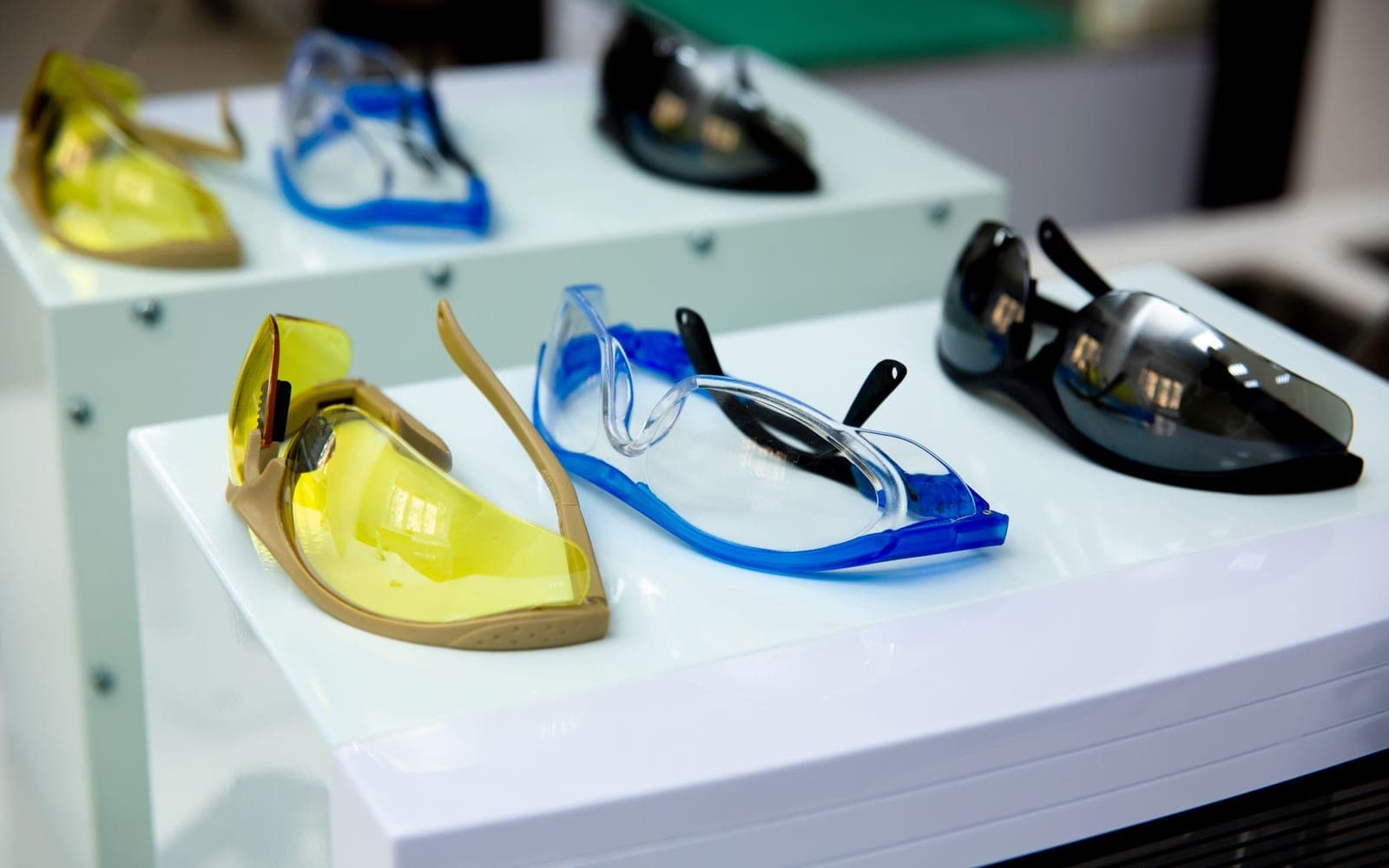
Honeywell's Uvex tint guide, written for workplace eyewear, recommends clear lenses "for indoor and outdoor environments where normal to low light conditions exist" and gray "for workers in outdoor environments where sunlight and glare causes eyestrain and fatigue". It lists the gray lens's visible light transmittance at "about 15%", against 92% for clear (Uvex tint guide). In plain terms: clear for an indoor bay or a cloudy day, gray or smoke for bright sun. Shooting-glasses maker Decot adds a useful limit: "We recommend you stay with the lightest lens shade that is comfortable for you" (Decot).
If you'll shoot both, a frame with swappable lenses saves buying two pairs. Wiley X lists the Saber Advanced with interchangeable lenses, for example smoke gray and clear shields, and states both ANSI Z87.1+ and MIL-PRF-32432A ballistic standards. Our best shooting glasses page covers simpler single-lens pairs too, and the lens color guide goes tint by tint. Thinking of wearing your sunglasses instead? Read shooting glasses vs sunglasses first.
Targets: paper, steel and the rules
Target rules are where ranges differ most, and the difference is usually about the range, not the indoor/outdoor label. Ask what's allowed before you buy anything. Some patterns worth knowing:
- Who supplies targets varies. Connecticut's outdoor Glastonbury range says "Ammunition, firearms, eye and ear protection, and targets are not provided," and it schedules the chance to change them: "Halfway through each session will be a planned cease fire for target change" ( Connecticut DEEP). If you bring your own outdoors, you may need a target stand and a stapler too.
- Paper is the universal first target. It works at any distance a range allows, and a reactive sheet that shows your hits from the bench makes practice more useful. See best shooting targets for beginners.
- Steel needs room and permission. Where a range allows it, follow the target maker's own warnings. Champion's, for its steel, include "All persons must remain behind the shooter when the target is in use," a face angled down ("A 10-20 degree angle from vertical is recommended"), and "15 yards is the minimum shooting distance when using non-magnum class handgun, supersonic .22LR rimfire, and shotgun birdshot ammunition" ( Champion steel target warnings). If a lane is shorter than the target maker's minimum, steel is out. Our paper vs steel targets comparison and steel target safe distance guide cover the rest.
Lead and ventilation
Most of the official guidance on lead at ranges is about indoor ranges, because that's where it builds up in the air and on surfaces. NIOSH's alert, written for range workers and people who shoot for their jobs, says "The primary sources of lead exposure at indoor firing ranges are lead bullets and cartridge primers" (NIOSH Alert 2009-136). A CDC report on indoor firing ranges counted, over 2002 to 2012, "an additional 2,673 persons had non–work-related BLLs likely attributable to target shooting" (BLL means blood lead level), and listed prevention measures that include "improving ventilation systems" ( CDC MMWR, 2014).
You can't inspect a range's ventilation, but you can ask about it, and you can control your own habits. North Carolina's public-health fact sheet warns that "Lead dust that settles on the hair, skin, clothing or shoes can accidentally be brought home and expose children and other family members," and its tips include "Never eat, drink or smoke inside a firing range" (NC DHHS, via CDC Stacks).
Outdoors doesn't mean lead-free. Champion's warning #18: "Targets and target stands will accumulate lead residue when shot. Always wash your hands with soap and water after handling targets, target stands, and before eating or drinking." Wash up after every trip, indoor or out. Our guide to lead exposure at the shooting range covers the habits in detail. If you're worried about exposure, talk to your doctor.
Rules, weather and comfort
The core safety rules don't change with the roof. What changes is how each range applies them:
- Where eye and ear pro is required. Some outdoor facilities require it everywhere, not just on the line. Mississippi's public ranges: "Unless you are inside of a building or vehicle (not including golf carts) eye and ear protection must be worn by everyone on the entire range facility, at any time during which firearms are being discharged" ( Mississippi MDWFP).
- Pace rules. Some ranges limit how fast you shoot. Georgia DNR's ranges: "Shooters shall allow at least one second between shots" ( Georgia DNR).
- Dress codes. Indoor ranges often spell them out. Triangle Shooting Academy's exists "for safety reasons – such as preventing hot brass from making contact with your skin" ( Triangle Shooting Academy). See what to wear to a shooting range.
- Weather. Outdoors, you're dressing for sun, wind and cold too. NRA Women's attire guide notes that "Besides providing shade, a hat will protect your head and face from ejected cartridges" ( NRA Women). Heat and cold also fog lenses; our guide to stopping shooting glasses from fogging has fixes.
The gear for each, side by side
| Published spec | Howard Leight Impact Pro | Howard Leight MAX-1 | Wiley X Saber Advanced |
|---|---|---|---|
| NRR | 30 dB | 33 dB | Not published |
| Batteries | 2 x AAA (included) | Not published | Not published |
| Impact rating | Not published | Not published | "ANSI Z87.1+ Optical clarity and high mass/high velocity impact standards" |
| Ballistic rating | Not published | Not published | "MIL-PRF-32432A Ballistic safety standards" |
| Lenses | Not published | Not published | Interchangeable lenses (for example smoke gray and clear shields) |
| Score | 7.4/10 | 7.1/10 | 6.7/10 |
The indoor pair works as a system. Howard Leight lists the Impact Pro at NRR 30 with a 4-hour auto shut-off, and the MAX-1 foam plugs at NRR 33, per Honeywell's licensed store. Those are lab ratings; a good seal matters as much as the number. The Saber Advanced is the outdoor half, though with its clear lens it works indoors too.
Or consider
These three are one way to cover both kinds of range. For more options, see our best ear protection for indoor ranges, best hearing protection for shooting and best shooting glasses. Packing for a first trip? Our what to bring to the shooting range checklist has an indoor and outdoor column, and the first range kit puts every piece in the order to buy it.
In detail
The contenders, in full
Indoor ear pro: NRR 30 electronic muff
Howard Leight Impact Pro
The highest NRR of the electronic muffs we cover, so you still hear commands in a loud bay. Wear it over foam plugs indoors.
Published specsResearched · not tested by us
| NRR | 30 dB |
|---|---|
| Batteries | 2 x AAA (included) |
| Battery life | About 350 hoursMaker's claim |
| Auto shut-off | After 4 hours |
| Bluetooth | No |
| Cup profile | Not stated by Howard Leight; the page says rubberized pressure points prevent gunstock scratchingMaker's claim |
How the 7.4 score breaks down
- Published NRR (30%)
- 8.5
- Fit with glasses & cup profile (20%)
- 6
- Electronics: amplification & shut-off (20%)
- 7
- Power: battery & auto-off (15%)
- 9
- Comfort & adjustment (15%)
- 6
What the specs support
- NRR 30: the highest rating of any electronic muff in our picks, and 8 dB more than the Impact Sport
- Both AAA batteries come in the box
- 4-hour auto shut-off and a quoted 350-hour battery life, same as the Impact Sport
- Rubberized pressure points that Howard Leight says prevent gunstock scratching
Where it falls short
- Howard Leight doesn't describe a slim or low-profile cup for this model
- No Bluetooth
Skip it if…
…you mostly shoot a rifle or shotgun and want a cup the maker describes as slim or low-profile; Howard Leight doesn't state one for the Impact Pro, while the Impact Sport and Walker's Razor muffs do.
#ad · Price set by Amazon · How we make money for the link to Howard Leight Impact Pro
Indoor ear pro: the plugs underneath
Howard Leight MAX-1
NRR 33 disposable foam plugs, the highest rating we cover. The first layer under your muffs at an indoor range.
Published specsResearched · not tested by us
| NRR | 33 dB |
|---|---|
| Type | Disposable foam, uncorded |
| Pack contents | 200 pairs |
| Model | MAX-1 (the listing shows model MXM-1) |
How the 7.1 score breaks down
- Published NRR (40%)
- 9.5
- Reusability (20%)
- 3
- Fit range & sizes (20%)
- 5
- Works under muffs (20%)
- 8.5
What the specs support
- NRR 33, the highest rating of any plug or muff we cover
- 200 pairs, enough to keep spares in the range bag and hand a pair to a friend
- Foam plugs sit inside the ear canal, so they're an easy first layer under earmuffs
Where it falls short
- The 33 is a lab rating; real protection depends on rolling and seating each plug correctly
- Specs come from Honeywell's licensed store, not a Howard Leight product page; retail listings may now say "Howard Leight by PIP"
- Single-use foam
Skip it if…
…you want plugs that stay together on a cord between strings; the MAX-1 is uncorded, so pick corded Laser Lite or Caldwell's corded Range Plugs.
#ad · Price set by Amazon · How we make money for the link to Howard Leight MAX-1
Outdoor eye pro: clear or smoke gray
Wiley X Saber Advanced
Wiley X lists ANSI Z87.1+ and MIL-PRF-32432A, with interchangeable lenses such as smoke gray and clear, so one frame covers bright sun and shade.
Published specsResearched · not tested by us
How the 6.7 score breaks down
- Ballistic rating (MIL-PRF-32432) (20%)
- 9
- Lens options & tints (20%)
- 7
- Fit: OTG, youth, thin temples (30%)
- 6.5
- Anti-fog & scratch coating (30%)
- 5
What the specs support
- States both ANSI Z87.1+ and MIL-PRF-32432A on the maker page
- Lenses swap, so one frame covers indoor (clear) and outdoor (smoke gray) shooting
- All eight variants were listed as available on Wiley X's store on 2026-09-19
Where it falls short
- Anti-fog coating isn't published by the maker
- Frame sizing and over-the-glasses fit aren't mentioned by the maker
Skip it if…
…you only need a basic pair for occasional indoor pistol practice; the Pyramex Intruder carries a Z87.1-2020 high-impact rating without the extra ballistic spec.
#ad · Price set by Amazon · How we make money for the link to Wiley X Saber Advanced
How we scored this
Units we claim to have tested: none
Most gear sites say they tested thirty muffs. We haven't put these on a sound meter, and we say so. Every pick here is labeled Researched: we compiled each maker's published specs (the EPA-labeled NRR on hearing protection, the Z87+ mark on glasses), read the manuals, and scored everything on a public rubric. Every figure links to where it came from, and marketing claims are labeled “maker's claim.”
Scores are editorial judgments from that documented research, not test results. Commissions never set a score or decide a pick. The rubric and its weights are published.
Questions
Common questions
Is an indoor or outdoor shooting range better for beginners?
Do you need different ear protection for an indoor range?
What color shooting glasses are best for an outdoor range?
Is lead exposure worse at indoor ranges?
What's the difference between a shooting range and a firing range?
Where this comes from
Sources
- Meinke DK et al., "Prevention of Noise-Induced Hearing Loss from Recreational Firearms," Seminars in Hearing, 2017 (CDC Stacks), accessed 2026-09-19
- Murphy WJ, Byrne DC, Franks JR (NIOSH), "Firearms and Hearing Protection," 2007 (CDC Stacks), accessed 2026-09-19
- ASHA, Recreational Firearm Noise Exposure (Audiology Information Series, 2024), accessed 2026-09-19
- NIOSH Alert 2009-136, Preventing Occupational Exposures to Lead and Noise at Indoor Firing Ranges (written for range workers), accessed 2026-09-19
- OSHA Technical Manual, Section III Chapter 5 (Noise), Appendix F, accessed 2026-09-19
- CDC MMWR, "Indoor Firing Ranges and Elevated Blood Lead Levels, United States, 2002-2013" (April 25, 2014), accessed 2026-09-19
- North Carolina DHHS, "Preventing Lead Exposure at Indoor Shooting Ranges" fact sheet (CDC Stacks), accessed 2026-09-19
- Champion / Primos, Steel Target Warnings, accessed 2026-09-19
- Honeywell Uvex, Ultra-spec 2000 / SCT Filters and Tints lens guide (PDF), accessed 2026-09-19
- Decot Hy-Wyd Sport Glasses, Shooting Glasses Lens Color Guide, accessed 2026-09-19
- HexArmor, "Safety eyewear: What do lens markings and ANSI Z87+ mean?", accessed 2026-09-19
- Connecticut DEEP, Glastonbury Shooting Range (range rules example), accessed 2026-09-19
- Mississippi Dept. of Wildlife, Fisheries, and Parks, Shooting Facility Rules & Regulations (range rules example), accessed 2026-09-19
- Georgia DNR Wildlife Resources Division, Firearm Range Rules (range rules example), accessed 2026-09-19
- Triangle Shooting Academy, Dress Code (range rules example), accessed 2026-09-19
- NRA Women, "The Dos and Don'ts of Gun Range Attire" (2020), accessed 2026-09-19
- Howard Leight Shooting Sports, Impact Pro Electronic Earmuff product page, accessed 2026-09-19
- HoneywellStore.com (licensed Honeywell store), Howard Leight MAX-1 foam earplugs listing, accessed 2026-09-19
- Wiley X, Saber Advanced product page, accessed 2026-09-19
We haven't tested the gear on this page and we don't pretend to. Specs come from each maker's own pages and data sheets (linked on every product); ratings like NRR and Z87+ are explained from the standards and agencies behind them. Prices are set by Amazon and change often, so we don't print them. Where a figure isn't published, we say so. Read the full method.