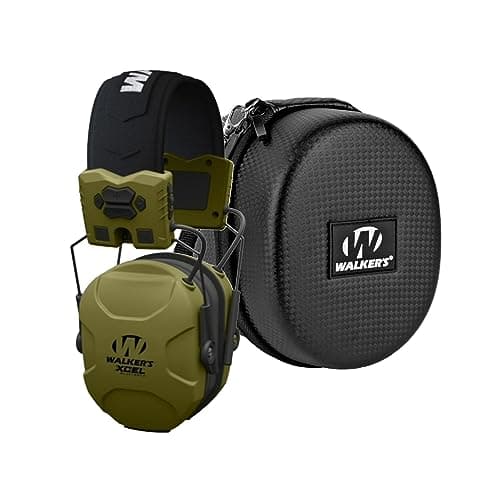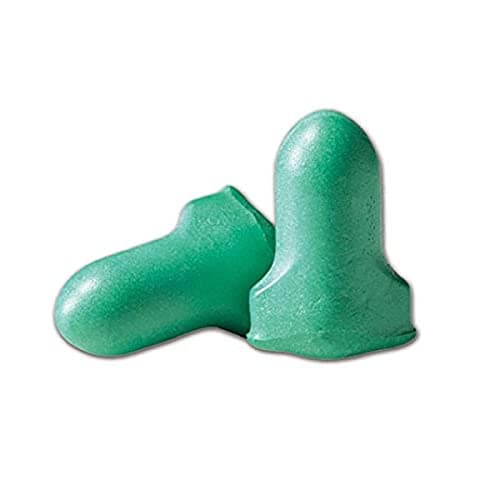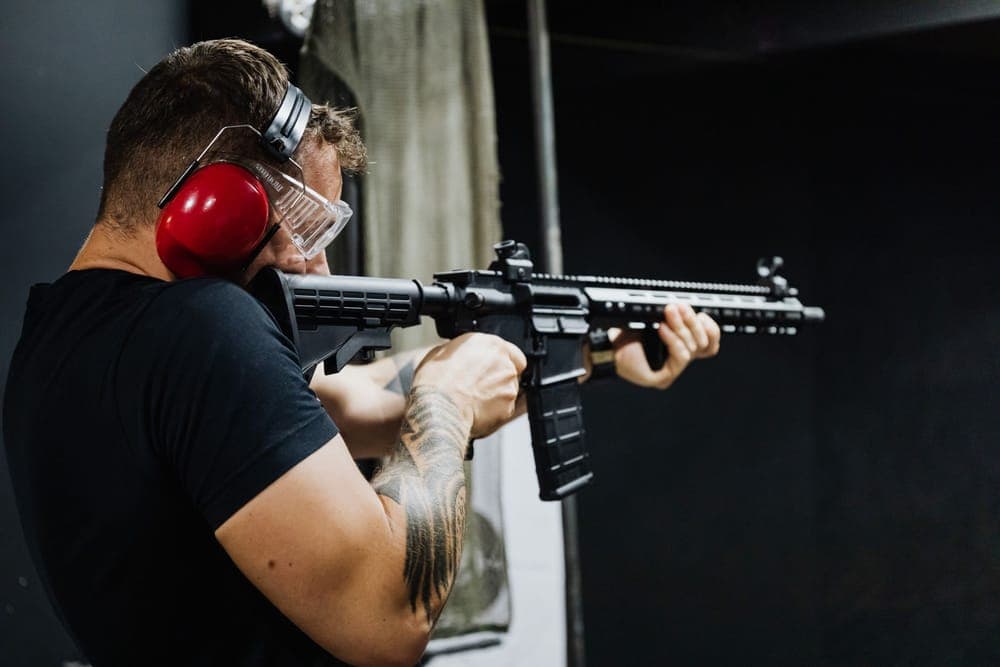
The answer, from Apple
This is one of the rare gear questions where the manufacturer has already answered it in writing, so there is no need for anybody's opinion. On its AirPods Pro page, Apple states:
"The Hearing Protection feature is not suitable for protection against extremely loud impulse sounds, such as gunfire, fireworks, or jackhammers, or against sustained sounds louder than 110 dBA."
Gunfire is named explicitly, by Apple, as something the feature is not for. Apple's support documentation on using Hearing Protection with AirPods Pro is consistent with that: it describes the feature as helping protect hearing in loud environments, says the actual amount of attenuation "depends on how well your AirPods fit, the volume of the sound around you, and the Listening mode you're using", and frames the benefit in terms of time spent in loud environments rather than survival of single impulses.
So: AirPods are not shooting ear protection, by the maker's own account. Everything below is why, what the numbers are, and what to buy instead.
Why the question exists now
The question used to be obviously silly and now is not, which is worth acknowledging. Apple added a feature named Hearing Protection to AirPods Pro, alongside hearing-test and hearing-aid functions. If your earbuds have a mode called Hearing Protection, it is entirely reasonable to wonder whether that is the kind of hearing protection a range means.
It is not. The feature is aimed at sustained environmental noise — a concert, a shop floor, a subway platform — and Apple sets an explicit ceiling at 110 dBA sustained. Gunfire is neither sustained nor anywhere near 110 dBA.
The numbers that make it a no
Two published figures settle it:
- Apple's ceiling: 110 dBA sustained, with impulse sounds such as gunfire excluded entirely.
- Gunfire: about 140 to 175 dB peak. A NIOSH-authored review hosted by the CDC reports that peak sound pressure levels from firearms range from about 140 to 175 dB, with most recreational firearms between 150 and 165.
For reference, OSHA's noise standard sets a 140 dB peak ceiling for impulsive noise. Every published gunshot figure is at or above that line. Our how loud is a gunshot page has the full breakdown by firearm type, and hearing damage from gunshots covers what the research says about the consequences, including NIDCD's position that noise-induced hearing loss can follow a single intense exposure.
There is no NRR on a consumer earbud
Hearing protectors sold in the United States carry a Noise Reduction Rating under an EPA labeling rule, 40 CFR Part 211 Subpart B, which defines the rating and requires the label. That is the number every protector on this site is judged on, and our NRR rating chart lists the published figures side by side.
Consumer music earbuds are not sold as hearing protectors and do not carry that rating. Apple describes attenuation as depending on fit, volume and listening mode rather than publishing a single rated figure, which is a reasonable thing to say about a music product and a disqualifying thing to say about ear protection.
What noise cancelling actually does
Active noise cancellation works by producing a signal that interferes with incoming sound, and it is genuinely effective — against steady, predictable, low-frequency noise. Engine drone and ventilation hum are what it was designed for.
A gunshot is the opposite kind of signal: a single, very high-amplitude pressure spike that is over in milliseconds. There is nothing periodic to predict and no time to react. What is left is whatever the physical ear tip blocks — real but unrated, and much less than a foam plug that was designed and measured for the job.
This is the same reason electronic shooting muffs do not work the way people assume. They do not cancel the shot; they amplify quiet sound and then clamp the amplification, while the passive cup does the actual attenuating. Our how electronic earmuffs work page explains that properly, and electronic vs passive covers whether the electronics are worth paying for at all.
The range may stop you anyway
Beyond the physics, there is a house-rules problem. Ranges require hearing protection, and a range officer who sees white consumer earbuds has no way to tell whether you are protected or listening to a podcast. Expect to be asked to put on real ear pro, and expect no sympathy for the Apple feature name.
There is also a safety-communication issue that applies even if your earbuds blocked the sound perfectly: a range officer needs to be able to stop you. Published range etiquette guidance — such as this indoor range's own etiquette notes — treats hearing and responding to commands as part of basic conduct on the line. Our range commands page lists the words you have to react to, and cold range vs hot range explains why they are not optional.
What to wear instead
If the appeal of AirPods is the form factor rather than the brand — something small, in-ear, with no cups on your head — that product category exists and it is rated. Electronic shooting earbuds publish an NRR, amplify speech so you can hear commands, and in several cases take a Bluetooth connection as well.
The published ratings are lower than foam plugs, which is the honest trade-off: the best electronic earbud we have sourced is NRR 28 against NRR 33 for a disposable foam plug. Our best electronic earplugs for shooting page ranks the category, and best earplugs for shooting covers the simpler options.
Rated electronic earbuds
Our picks for this
In-ear, rated, and built for gunfire
If what you wanted was earbuds rather than earmuffs, these publish an NRR and are sold for shooting. Every one of them is covered in more depth in our electronic earplugs roundup.
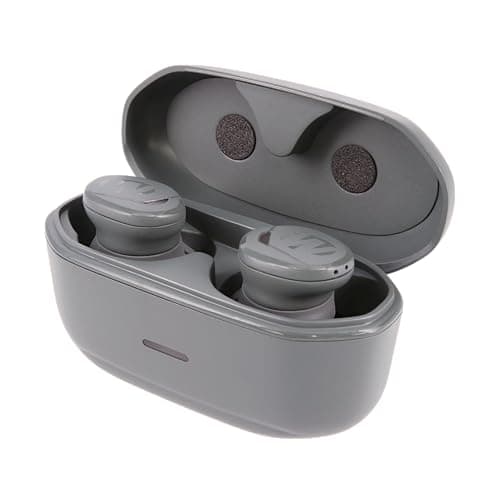
Best rechargeable electronic earbuds
Walker's Suppressor Earbuds
NRR 256.8/10ResearchedNRR 25, rechargeable with a charging dock. The straightforward in-ear option if you want no cups on your head.
$95.95Amazon#ad · Price as of November 3, 2026 · How we make money for the link to Walker's Suppressor Earbuds
Highest-NRR electronic earplug
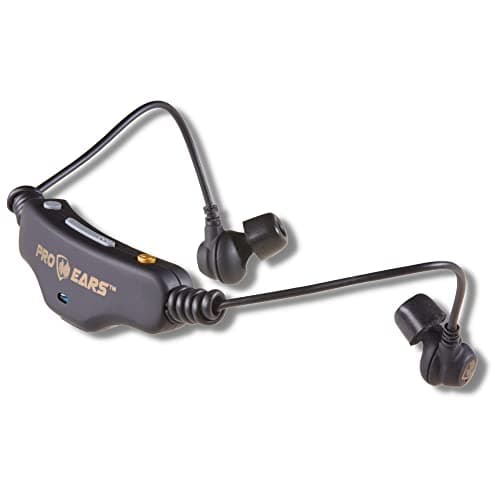
Pro Ears Stealth 28 HTBT
NRR 288.1/10ResearchedNRR 28, the highest-rated electronic earbud we have sourced, and Pro Ears applies the figure to all the included tip sizes.
$119.32Amazon#ad · Price as of November 3, 2026 · How we make money for the link to Pro Ears Stealth 28 HTBT
Best Bluetooth electronic earbuds
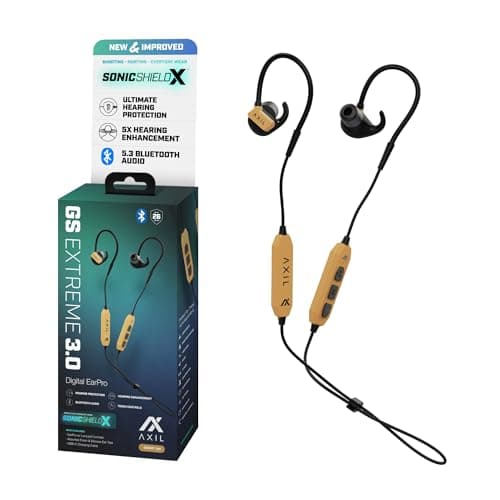
AXIL GS Extreme 3.0
NRR 216.7/10ResearchedNRR 21 with foam tips and 17 with silicone, published by AXIL for the same earbud. Read that as a reason to keep the foam tips in.
$119.95Amazon#ad · Price as of November 3, 2026 · How we make money for the link to AXIL GS Extreme 3.0
Best weather-sealed electronic earplug
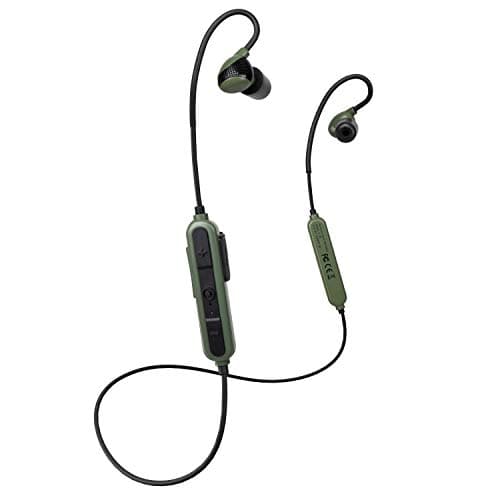
ISOtunes Sport ADVANCE BT
NRR 268.0/10ResearchedNRR 26, which ISOtunes describes as ANSI-certified, with Bluetooth if you want calls or audio between strings.
$119.99Amazon#ad · Price as of November 3, 2026 · How we make money for the link to ISOtunes Sport ADVANCE BT
If you just want music or a phone call
This is usually the real motivation, and it has a clean answer: buy ear protection with Bluetooth in it, not audio gear you hope will protect you.
Several shooting earmuffs publish an NRR and carry a Bluetooth radio, so you get a rated protector and your audio in one product. Our best shooting earmuffs with Bluetooth page ranks the ones that publish a rating and names the ones that do not. Two of the earbuds above do the same thing in-ear.
One courtesy note: audio on the line is not universally welcome, and some ranges prohibit it. A volume you cannot hear a cease-fire over is a problem regardless of what the rules say.
Edge cases people ask about
- AirPods under earmuffs. Physically possible, and a bad idea: the earbud body and its stem break the muff's seal, which costs you the muff's rating. If you want to double up, use proper plugs under muffs — see double hearing protection.
- AirPods Max or other over-ear headphones. Same answer for the same reason: no published NRR, not sold as hearing protection, and the Hearing Protection feature carries Apple's own impulse-noise exclusion.
- Watching rather than shooting. Everyone on a firing line needs protection, spectators included. The blast does not care who pulled the trigger.
- Outdoors, a single .22. Published figures put .22 rifles at about 140 to 144 dB — still at the OSHA impulse ceiling. See do you need ear protection for a .22.
- Dry fire at home. No live round, no noise, no issue. Wear whatever you like, and read snap caps vs dummy rounds first.
How we scored this
Every pick, scored on numbers you can check
Every pick here is labeled Researched: we compiled each maker's published specs (the EPA-labeled NRR on hearing protection, the Z87+ mark on glasses), read the manuals, checked the standards behind them, and scored everything on a public rubric. Every figure links to where it came from, and marketing claims are labeled “maker's claim,” so you can see exactly why a pick ranks where it does.
Scores are editorial judgments built from that documented research. Commissions never set a score or decide a pick. The rubric and its weights are published.
Questions
Common questions
Can you wear AirPods at a shooting range?
Do AirPods have an NRR?
Does noise cancelling protect your hearing from gunshots?
Can I wear AirPods under earmuffs at the range?
What should I wear instead of AirPods if I want earbuds?
Can I listen to music at a shooting range?
Where this comes from
Sources
- Apple, AirPods Pro product page (Hearing Protection impulse-noise exclusion), accessed 2026-10-17
- Apple Support, Use Hearing Protection with your AirPods Pro 2 or AirPods Pro 3, accessed 2026-10-17
- Meinke, Finan, Flamme, Murphy et al. (NIOSH), peak levels from recreational firearms, 2017
- OSHA 29 CFR 1910.95, occupational noise exposure (140 dB peak impulse ceiling)
- eCFR, 40 CFR Part 211 Subpart B (EPA hearing protector labeling and NRR)
- NIDCD (NIH), Noise-Induced Hearing Loss
- Walker's, Suppressor Earbuds product page, accessed 2026-10-17
- Pro Ears, Stealth 28 HTBT product page, accessed 2026-10-17
- AXIL, GS Extreme 3.0 product page, accessed 2026-10-17
- ISOtunes, Sport ADVANCE BT product page, accessed 2026-10-17
- Shoot Indoors Philadelphia, pistol range etiquette
Specs come from each maker's own pages and data sheets (linked on every product); ratings like NRR and Z87+ are explained from the standards and agencies behind them. Prices are set by Amazon and change often, so the buy button always takes you to the current one. Where a figure isn't published, we say so. Read the full method.